Anger is easy to notice. It can be loud, fast and disruptive. A child may shout, slam a door, argue, throw something or refuse to continue. Because the behaviour is visible, adults often focus only on stopping it.
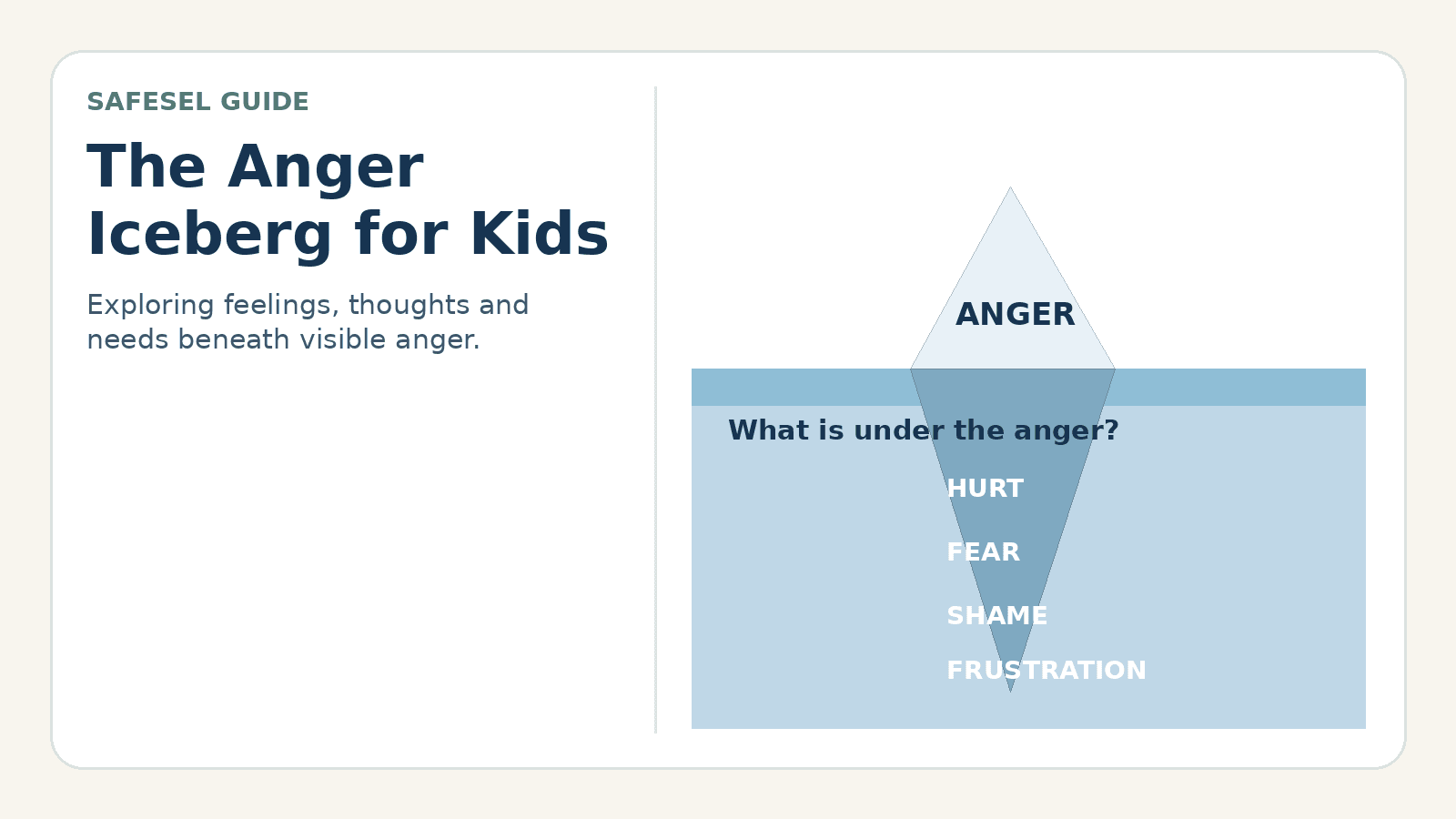
The anger iceberg is a simple metaphor: anger is the part above the water, while other emotions, needs and stressors may sit underneath. The purpose is not to minimise anger. It is to widen the conversation.
What may sit under anger?
- Fear: “I thought I would fail.”
- Shame: “Everyone saw my mistake.”
- Disappointment: “I worked hard and still did not get chosen.”
- Jealousy: “My friend wanted to play with someone else.”
- Hurt: “I thought they were making fun of me.”
- Powerlessness: “Nobody listened to my side.”
- Overload: “The room was noisy and I could not think.”
These emotions do not excuse unsafe behaviour. They help explain what skill, support or repair may be needed after safety is restored.
Do not use the iceberg to overrule the child
Adults sometimes say, “You are not angry, you are actually sad.” That can feel invalidating. The child may be angry and sad. A better approach is curious and tentative: “I wonder whether there was also some embarrassment under the anger. Does that fit, or not?”
Questions that help after the child is calm
- What happened right before the anger rose?
- What did you think the situation meant?
- What did your body notice first?
- Was there another feeling with the anger?
- What did you need in that moment?
- What could help next time without hurting someone or damaging something?
A school example
A child is corrected by a teacher and pushes the worksheet off the desk. The visible emotion is anger. Underneath, the child may have felt embarrassed because peers were watching, frightened of being seen as incapable, and frustrated after struggling for several minutes.
The response can then include more than a consequence. The adult can still set a limit on throwing materials, while also teaching the child how to ask for private feedback, request a short pause or name embarrassment before escalation.
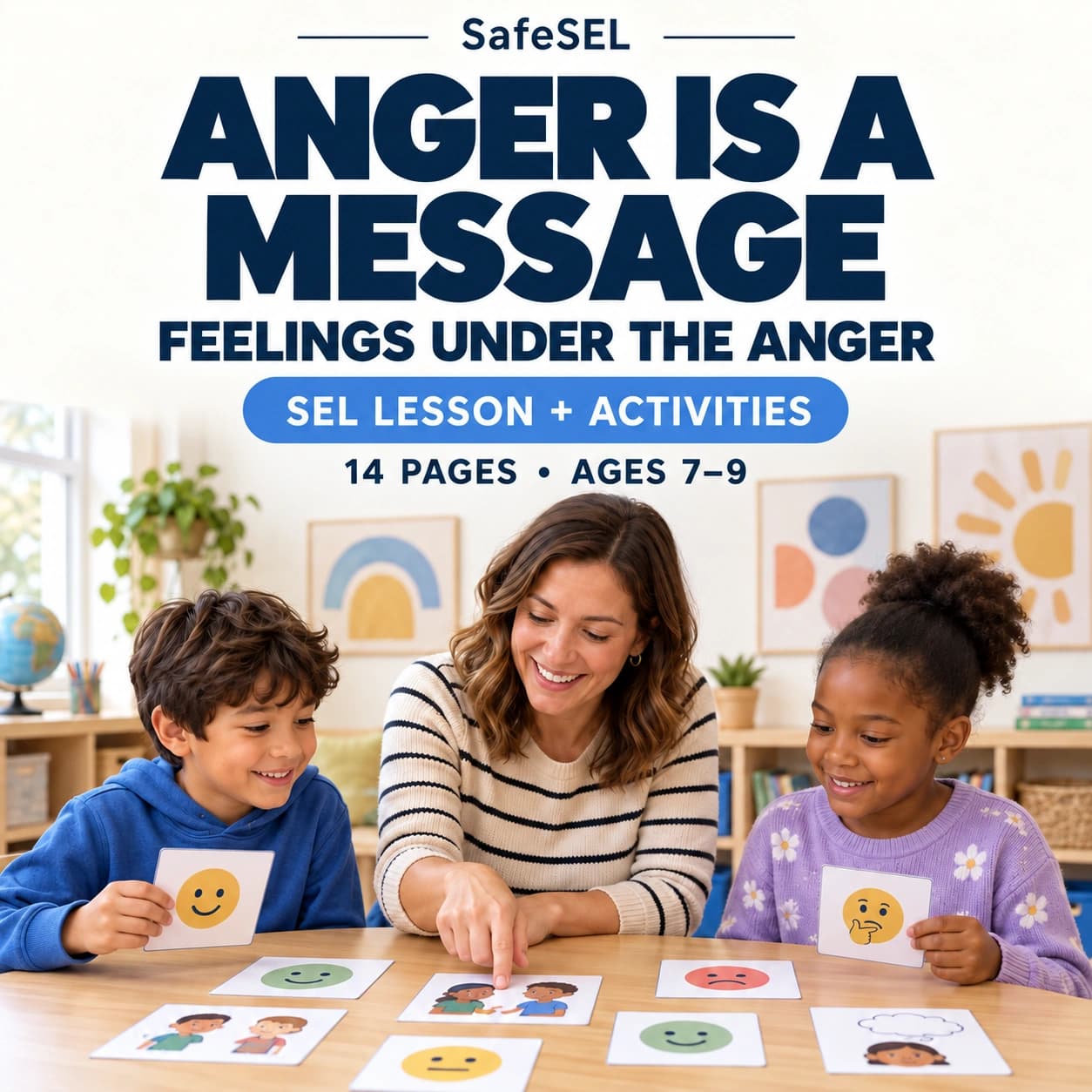
A four-part anger iceberg activity
- Draw or print an iceberg with anger above the water.
- List possible feelings, thoughts, needs and body signals below the water.
- Choose only the items that fit this specific situation.
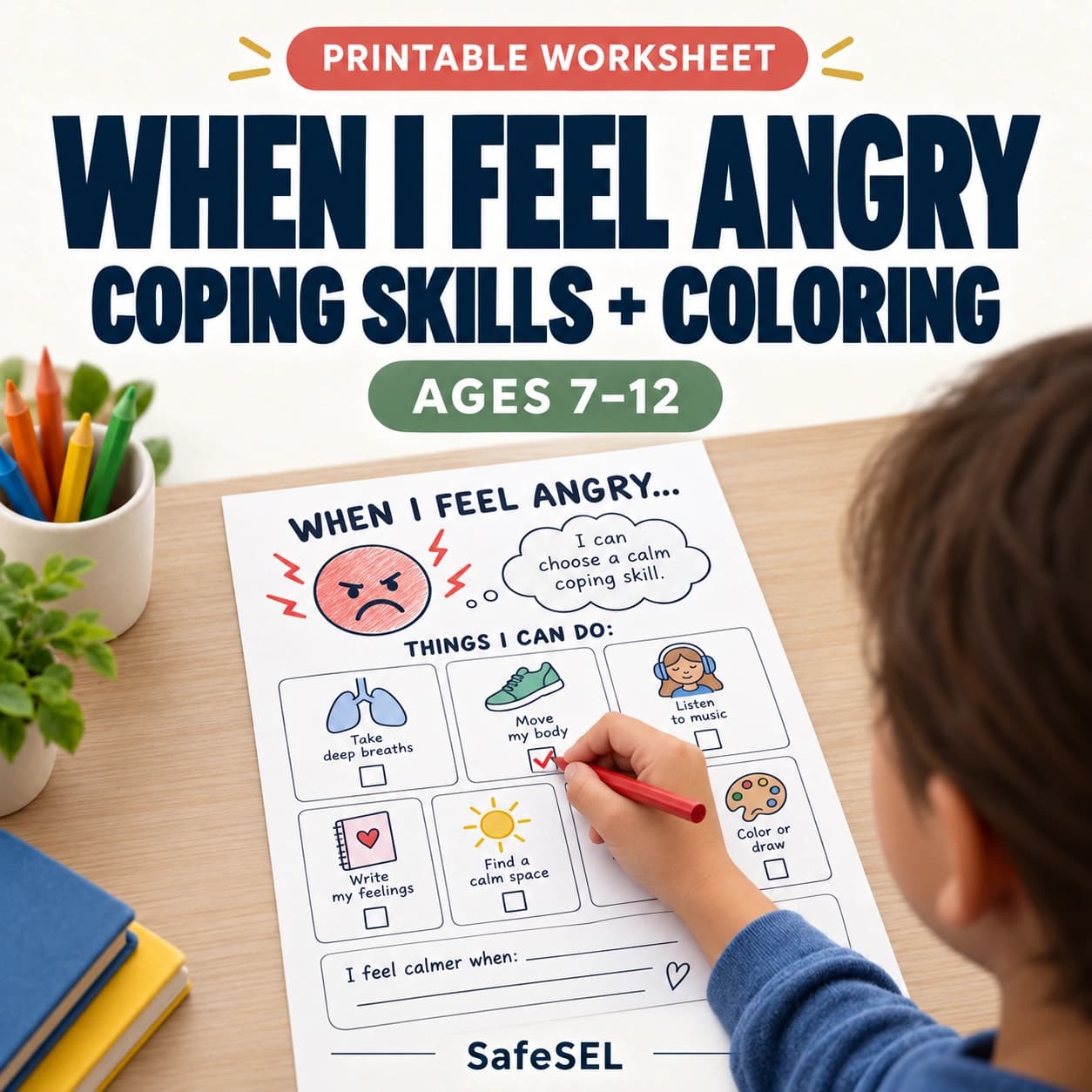
- Add one safer action for next time and one repair action for now.
When anger needs professional assessment
Additional support is important when anger is frequent, severe, dangerous, linked with significant impairment, or accompanied by trauma symptoms, mood changes, developmental concerns, self-harm, aggression or major family stress. The iceberg is an educational tool, not a substitute for assessment.
An anger iceberg example with room for “I do not know”
Fictional situation: a child shouts after their drawing is corrected. Above the waterline, record only what is observable: “shouted and pushed the paper away.” Below it, offer possibilities as questions—not facts: “Was it disappointing? Embarrassing? Were you tired, or was something else happening?” The child may choose a different explanation or not know yet.
The next step is not to uncover a hidden feeling at any cost. Keep the boundary about unsafe behavior clear, then agree on one usable response, such as asking for a pause or asking the adult to explain privately. Anger itself is a valid feeling; the iceberg is a conversation aid, not a diagnostic test.
- Visible: what someone did or said.
- Possible beneath-the-surface experience: ask rather than label.
- Next step: one safe response and support the child can actually use.
Related guidance for the next step
Sources and further reading
- About Children's Mental Health — Centers for Disease Control and Prevention (2026)
- Child and Adolescent Mental Health — National Institute of Mental Health
- Improving Family Communications — American Academy of Pediatrics — HealthyChildren.org
- Helping Little People Manage Big Feelings — American Academy of Pediatrics — HealthyChildren.org
- Parent Training in Behavior Management — Centers for Disease Control and Prevention