Worksheets
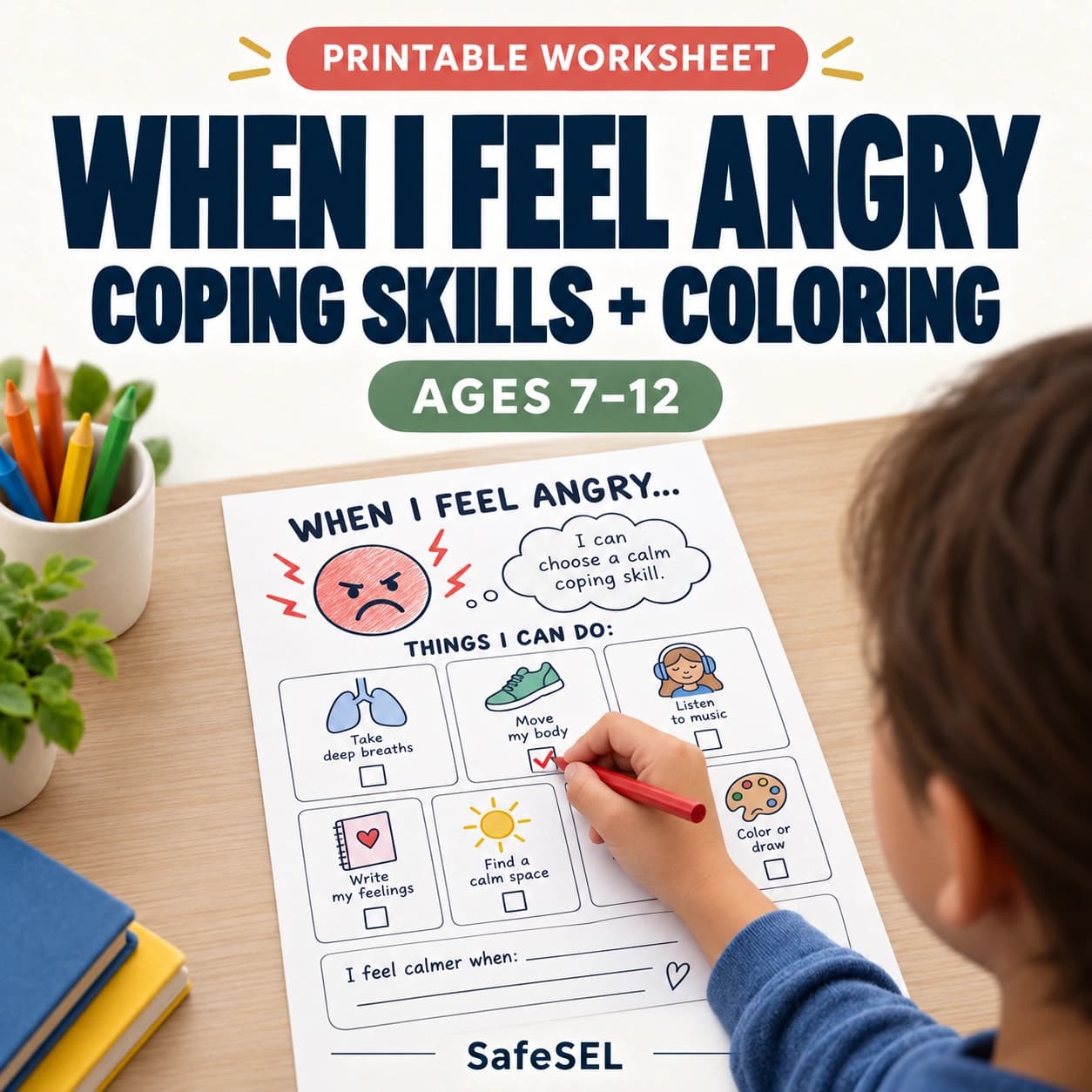
Kids Anger Management Worksheet – Coping Skills Activity (Ages 7-12)
Ages 7–12JPG
Kids Anger Management Worksheet: a print-ready worksheet for ages 7–12 with clear prompts for guided practice.
Printable anger management worksheets and practical anger handouts for recognising triggers, body signals, escalation patterns, calming choices and repair after difficult moments.
Kids Anger Management Worksheet: a print-ready worksheet for ages 7–12 with clear prompts for guided practice.
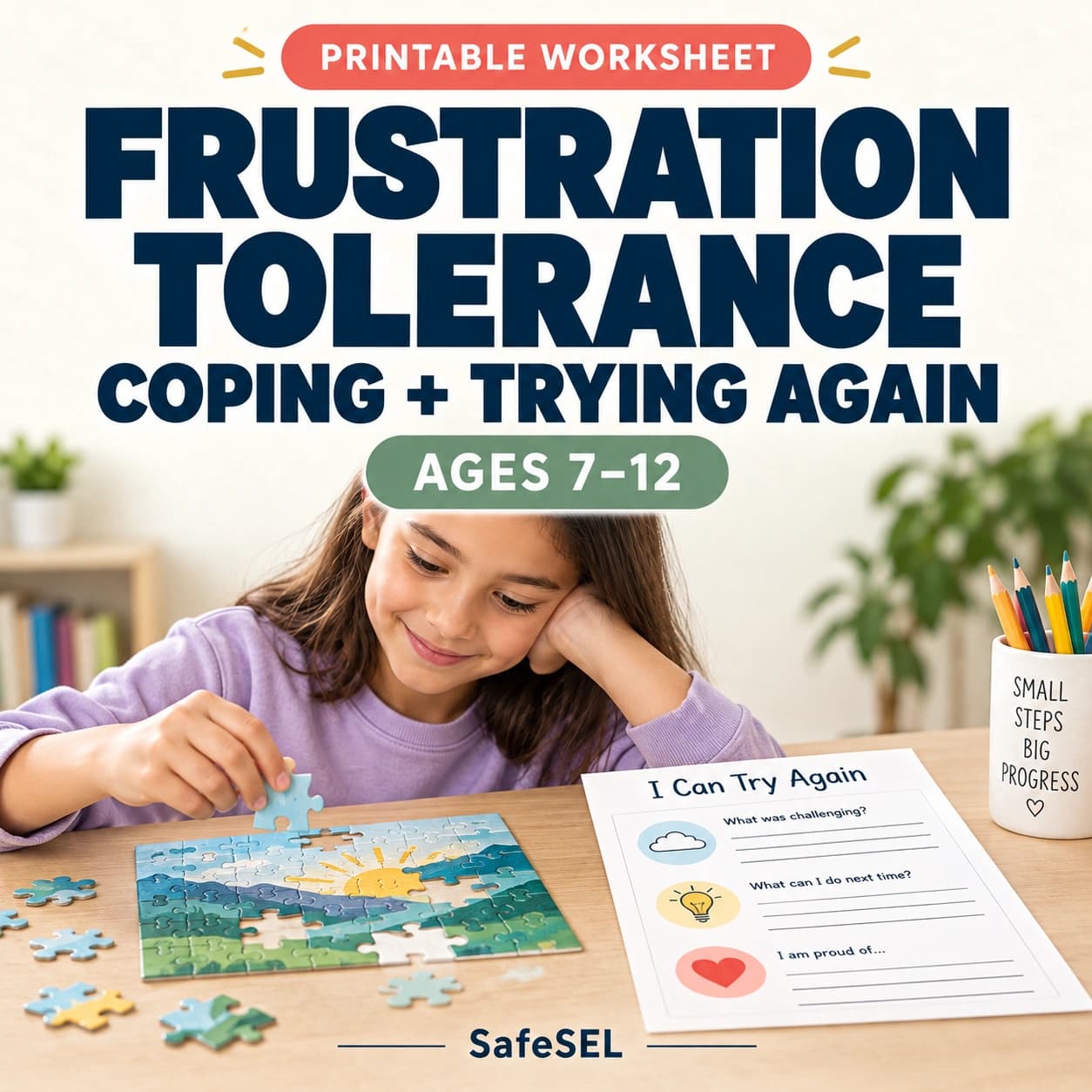
Frustrated Kids SEL Worksheet: a print-ready worksheet for ages 7–12 with clear prompts for guided practice.
Discuss anger signals, coping choices, support and repair through guided play.
Open the free resource →A caregiver plan for safety and reconnection during and after escalation.
Open the free resource →Help children notice the feelings, needs and triggers that may sit underneath anger.
Read the guide →A practical response that protects dignity while keeping the limit clear.
Read the guide →Understand how purpose, adult support and timing change the experience for a child.
Read the guide →Safety, boundaries and repair after an emotionally intense moment.
Read the guide →A worksheet is useful for practice and reflection. It is not a demand to explain feelings during an intense moment. Start with safety and adult support, then choose a small skill to revisit.
Practice noticing an early signal and asking for support. Use a fictional example if talking about a recent conflict feels too exposing.
Reduce language and unnecessary demands. Keep everyone safe and offer support; leave worksheets and detailed questions for later.
Review one event without blame: what happened, what support was missing, and what repair or next step is possible. Do not assume anger always hides a particular feeling.
Understand the anger iceberg without guessing a child’s feelings
Create a free calm corner setup and return plan. Get materials, steps and adaptations without providing an email address.
The product listings on this page are paid resources. The free printable library offers sample activities for guided practice. Educational resources do not replace assessment, safeguarding or individualized support.
Anger management handouts can introduce a topic; a reflection worksheet can organise a response afterwards. Choose anger management activities according to the task: noticing a trigger, naming a feeling or considering a next step. A fictional example gives children a way to participate without describing a personal incident. Read the page directions and age range before using it, and keep the activity separate from punishment or a requirement to disclose.
An activity can acknowledge anger without presenting unsafe behaviour as acceptable. A later repair discussion has a different purpose from a calming prompt used in the moment. Read the directions and choose a suitable time for the activity. These are child-focused educational resources, not adult anger-management classes or court-approved courses.
Choose a focused lesson or worksheet for one skill, or use a larger emotional regulation bundle for repeated practice across sessions.
No. Anger is an emotion. Behaviour is how a child responds to that emotion, and skills can be taught without shaming the feeling itself.
They are suitable for counseling, therapy, classroom support and guided home practice, depending on the specific product.
Filter by resource type and age group to find the most useful printable.