Parent Handouts: How to Choose a Useful Take-Home Resource
A practical framework for choosing parent handouts by purpose, timing, language and what the family is realistically being asked to do next.
Read guideEvidence-informed strategies for parents, teachers, school counselors and therapists—organized around the real situations children face.

Search by need, then narrow the results by topic or who the guide is for.
A practical framework for choosing parent handouts by purpose, timing, language and what the family is realistically being asked to do next.
Read guideA practical guide to deciding whether a parenting worksheet will make the next step clearer or simply add another task to family life.
Read guideA clinical decision guide for matching a worksheet to the purpose of the session instead of choosing by diagnosis label or visual style.
Read guideA practical guide to keeping intake, formulation, session planning and documentation forms distinct so each one supports the right clinical task.
Read guide
See what a practical elementary school SEL resource library should contain, how staff can share it, and where printable materials fit in a schoolwide plan.
Read guide
Build a shared SEL resource library teachers and counselors can actually use, with practical folders, ownership rules, licensing, and a simple rollout plan.
Read guide
Use this school counselor resource library checklist to cover classroom lessons, groups, individual support, caregiver handouts, and safe shared access.
Read guide
Build a practical yearlong SEL materials plan around school rhythms, recurring student needs, staff capacity, family communication, and continuous review.
Read guide
Create a practical school-home SEL resource plan with relevant caregiver handouts, clear context, consistent language, and respectful family choice.
Read guide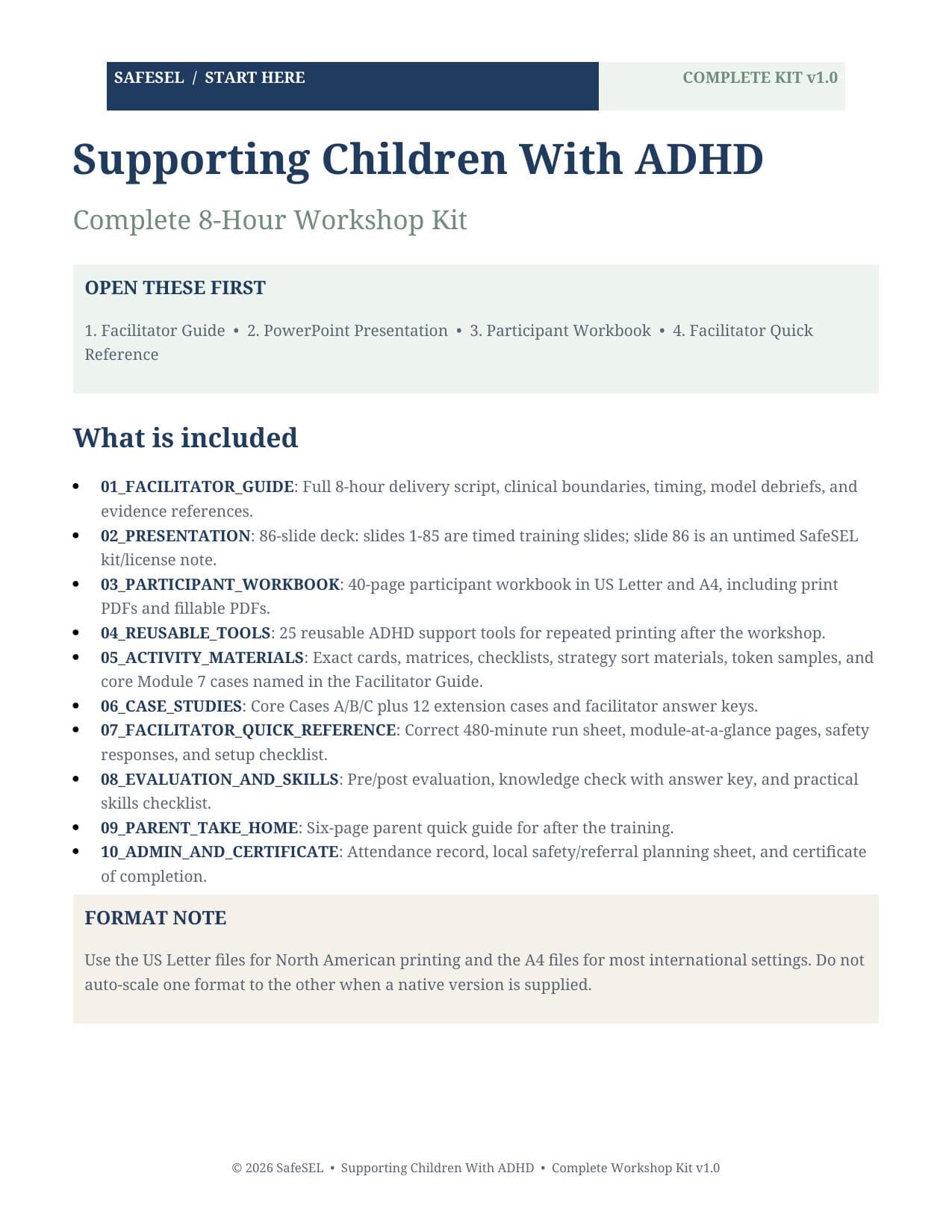
Plan an educational ADHD parent workshop with a clear goal, routine-based practice and boundaries around individualized treatment advice.
Read guide
Teach adult communication and predictable support through fictional examples, optional practice and a clear distinction between feelings, limits and safety.
Read guide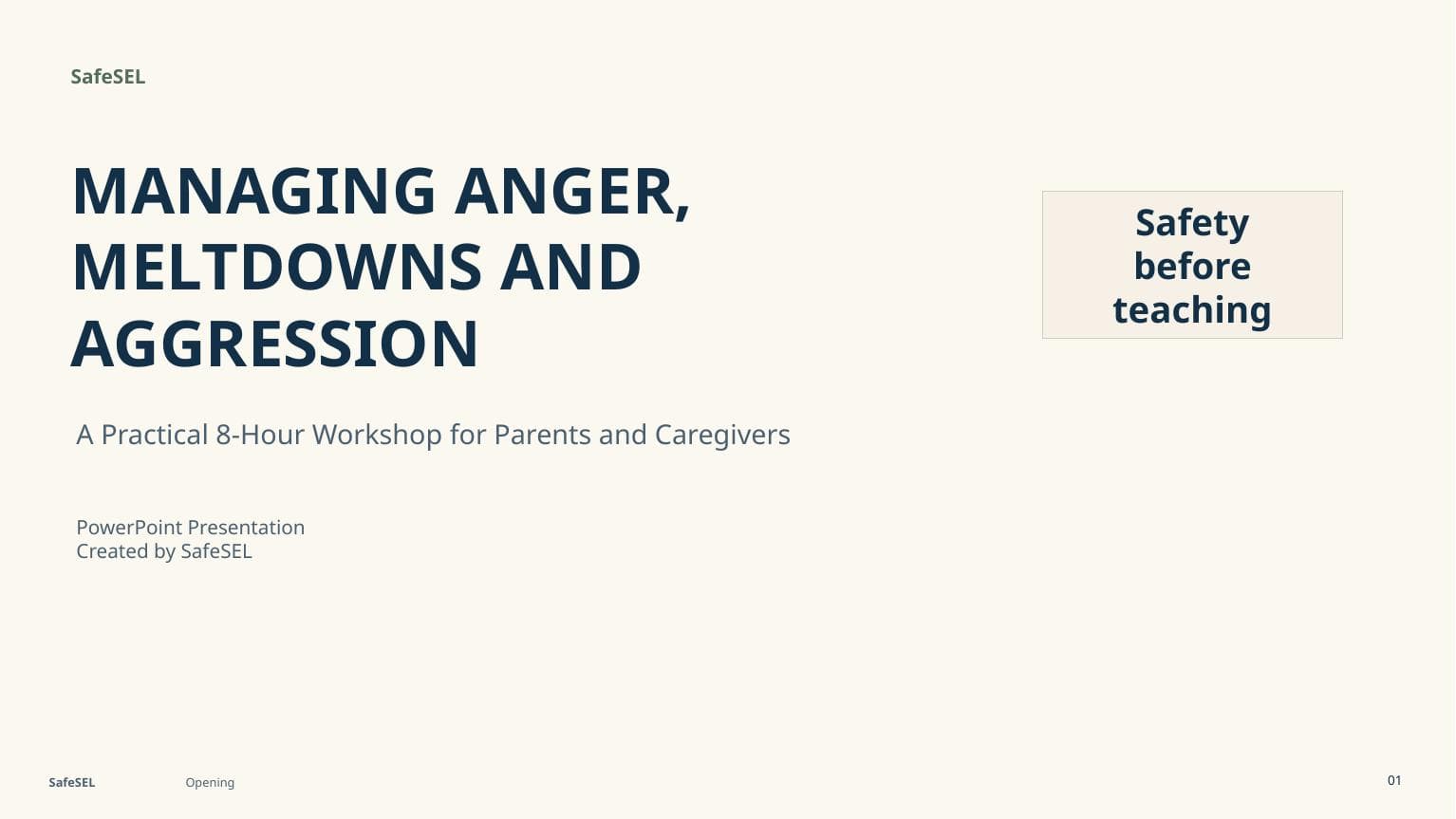
Plan fictional activities that distinguish preparation, immediate safety and later repair, with clear boundaries around personal disclosure and individual advice.
Read guideFour focused guides connect the format to the task: parent handouts, parenting worksheets, child-therapy worksheets and professional forms.
Choose parent handouts by purpose, burden, language and what the family is realistically being asked to do next.
Decide when a worksheet clarifies a pattern or plan and when it simply adds another task to family life.
Match a worksheet to engagement, formulation, psychoeducation, skills practice or review instead of choosing by diagnosis label.
Keep intake, assessment, session planning and progress-note forms distinct so each one supports the right clinical decision.
Six practical starting points covering anxiety, regulation, anger, friendship, classroom SEL and CBT.
Most children worry sometimes. The key questions are how intense the fear is, how long it lasts and whether it changes what the child can do.
A practical, evidence-informed guide to co-regulation before self-regulation, with concrete examples, accessible next steps, and clear limits on what the guidance can establish.
Anger is often the most visible part of a child’s experience. The anger iceberg helps adults explore other feelings and needs without assuming that anger is only a cover.
A practical, evidence-informed guide to friendship skills for kids, with concrete examples, accessible next steps, and clear limits on what the guidance can establish.
A practical, evidence-informed guide to SEL activities for elementary students that teach real skills, with concrete examples, accessible next steps, and clear limits on what the guidance can establish.
A practical guide to the five skills a useful thought detective worksheet should teach, with a worked example and developmentally appropriate prompts.
Browse resources by topic, format and age group.