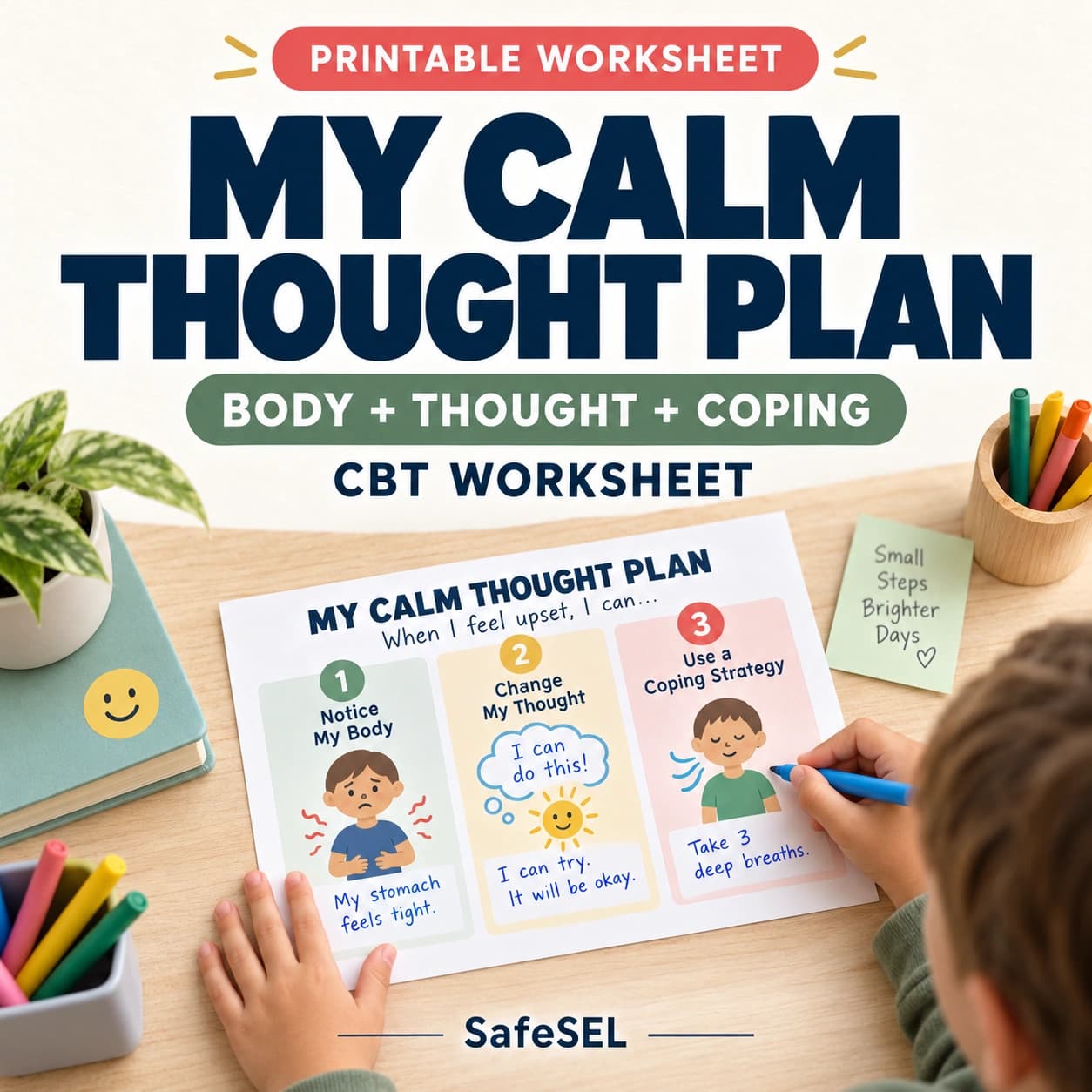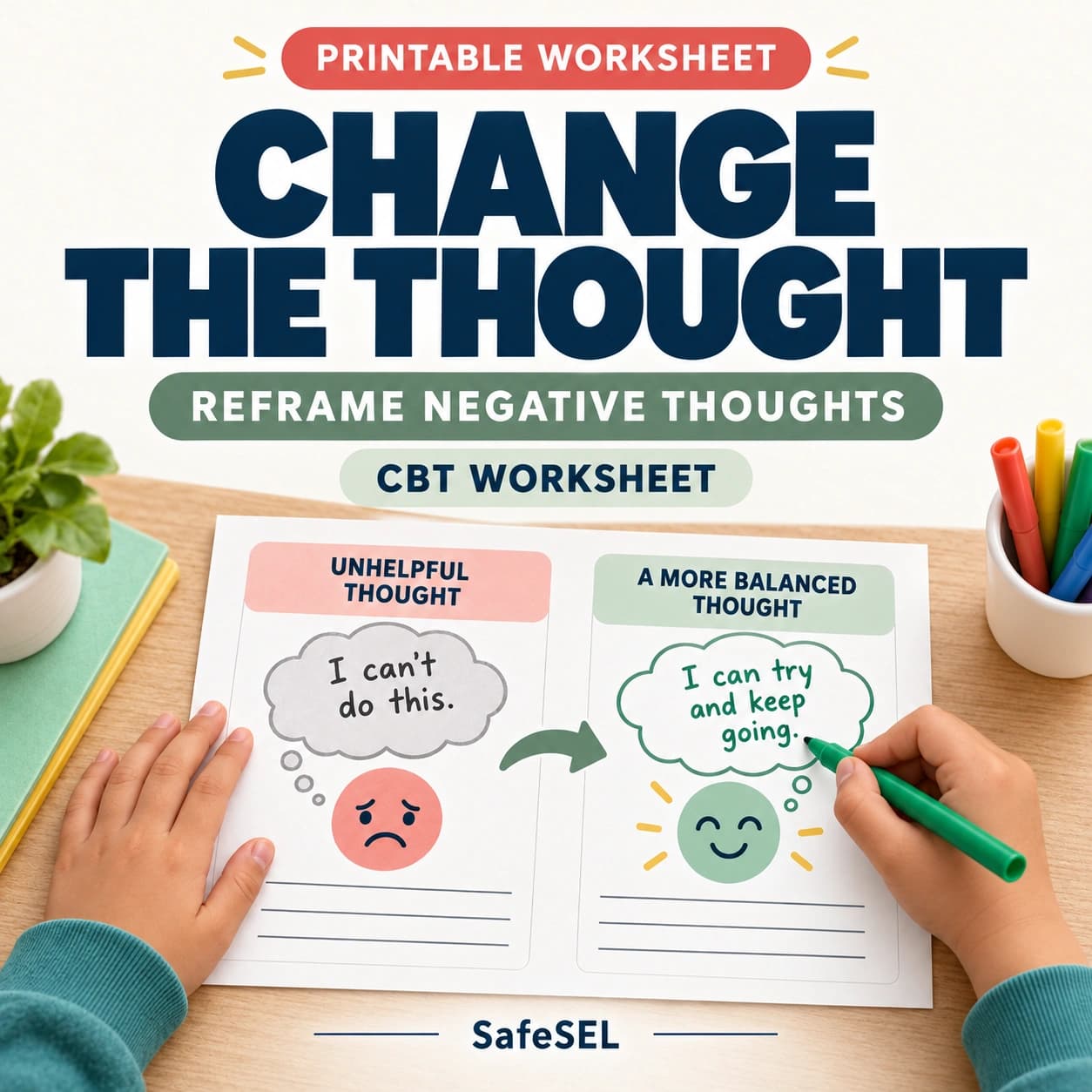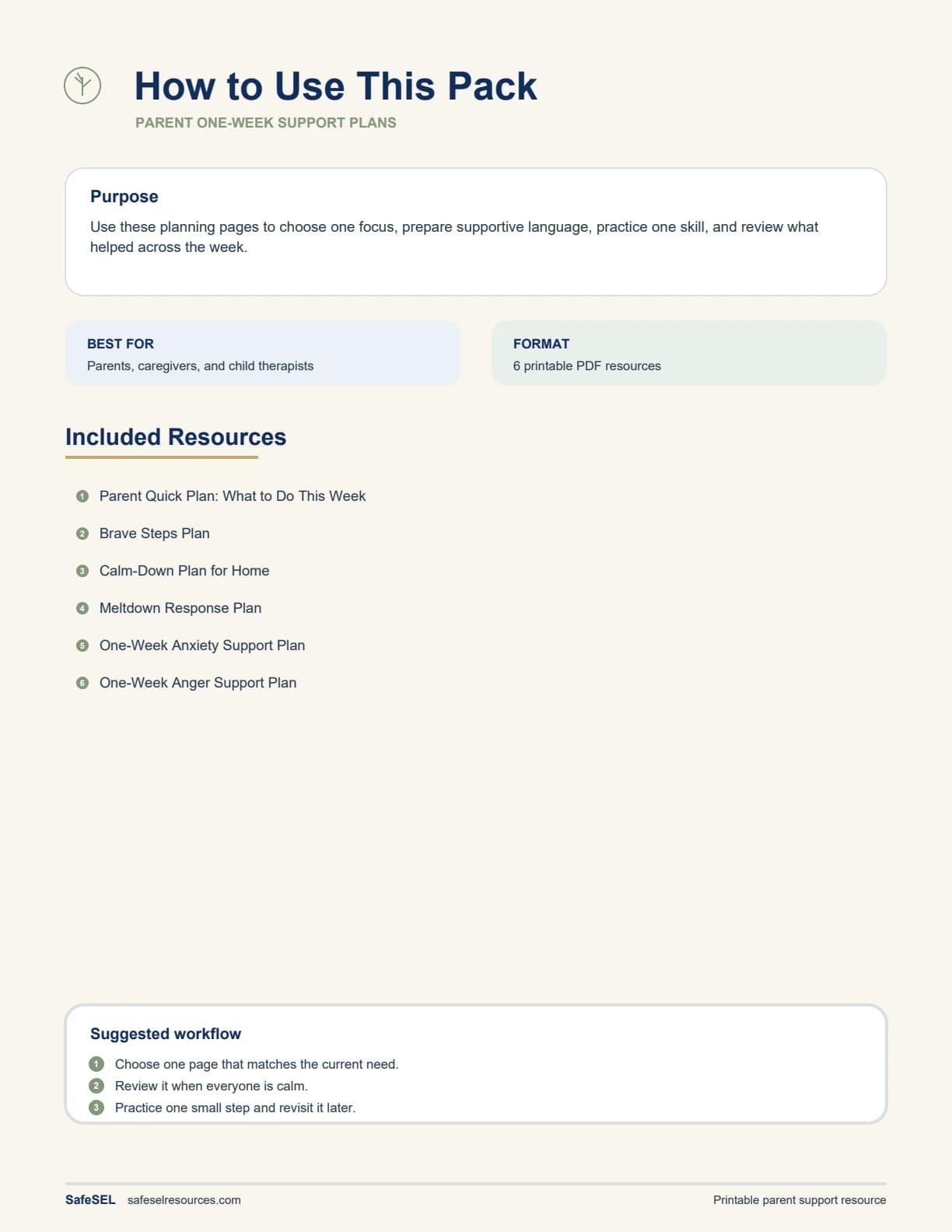
An SEL curriculum organizes learning across time. A worksheet gives learners a particular task within that learning. You may need either, or both, depending on what is already being taught and what the next activity should help students practise. A stack of pages does not become a curriculum simply because it covers many topics.
Begin with the question: “What should learners be better prepared to do after this lesson, and when will they use it?” Answer that before choosing a format or buying a collection. It makes the difference between a useful page and an additional task much easier to see.
When a sequence is useful
Choose a planned sequence when you need to introduce a skill, demonstrate it, revisit it and connect practice to ordinary classroom situations. For example, a group learning to ask for help might first compare clear and unclear requests, then practise a request in a fictional situation, and later review how the agreed classroom help routine worked.
The sequence should make the learning goal visible. New examples can change while the goal stays stable. Decide what adults will model and what support will be available between lessons. Buying a resource library supplies options; the school still needs a delivery plan that fits its students and existing provision.
The CASEL framework describes coordinated skill development and the environments in which learning happens. Use a framework to ask planning questions, without assuming that any printable collection has been evaluated or endorsed by CASEL.
When one worksheet is enough
Use a focused worksheet when it addresses a specific part of an existing lesson. A page can help students compare options, prepare a question or record a reflection. Introduce what the task is for and explain what will happen after it is completed.
For a fictional disagreement over shared materials, a worksheet might help name the problem and consider two available next steps. The follow-up conversation matters: which option fits the situation, what adult help is needed and when should the group review the choice? Avoid using completion as a test of maturity or assuming that writing an answer establishes real-world use.
Browse printable elementary SEL worksheets when you already know the narrow goal. Look at reading demands, writing space and whether the page can support a spoken or assisted response. Choose fewer pages when that keeps attention on the intended skill.
Compare the materials you already have
Before purchasing, make a simple inventory of your current lesson, example, practice opportunity and reflection method. Identify the missing part. If the teaching sequence is already clear, one additional scenario or page may be enough. If several recurring topics need coordinated materials, a broader library may save preparation time while still requiring thoughtful selection.
Read the SEL curriculum resource hub for planning and discovery. The Complete SEL Toolkit for ages 7–12 is the commercial page for its particular downloadable collection, with contents, previews, price and licensing. Those pages answer different questions: how to plan and browse, and what this complete product includes.
A three-meeting planning example
In the first meeting, model how someone can ask to join a shared activity and discuss a fictional response. In the second, use a different example and let students rehearse or observe. In the third, revisit the agreed routine and discuss what information or support made participation easier. This is an illustrative sequence, not a prescribed schedule for every class.
One worksheet may appear in that sequence, but it does not need to carry the whole lesson. Discussion cards, a story or an adult demonstration may fit another part better. Check that each format serves the same goal instead of adding it because it is available.
Keep the review proportionate
Ask what students can explain or practise and whether the setting gives them a realistic opportunity to use it. A quiet group or a completed packet is not enough to establish transfer. Invite feedback about instructions and access, and revise the activity when the format becomes the main barrier.
For a broader school plan, continue with the elementary SEL implementation guide. Choose a sequence for sustained teaching, a worksheet for a focused task, and a collection only when its range matches recurring needs.
Sources and further reading
- Treating Children's Mental Health with Therapy — Centers for Disease Control and Prevention (2026)
- Child and Adolescent Mental Health — National Institute of Mental Health
- What Is the CASEL Framework? — CASEL
- Helping Little People Manage Big Feelings — American Academy of Pediatrics — HealthyChildren.org