An anxiety worksheet is useful when it helps a child do one specific piece of thinking: notice a body signal, name a worry, separate a prediction from a fact, plan a small coping action or reflect on what happened afterward. It is less useful when it is handed to a distressed child as a test, punishment or substitute for an attuned conversation.
The best worksheet is not the one with the most prompts. It is the one that matches the child’s age, current level of regulation and immediate goal. For many elementary-age children, one page completed with a supportive adult is more useful than a large packet completed without discussion.
In brief: Choose a worksheet by the skill the child needs—not by the broad label “anxiety.” Introduce it when the child is calm enough to think, complete only the relevant portion, and end by connecting the page to one action in everyday life.
What an Anxiety Worksheet Can—and Cannot—Do
A worksheet can slow a conversation down and make an invisible process easier to see. It may give a child language for body sensations, help organize a sequence or create a record that the child and adult can revisit. A visual format can also reduce the pressure of answering a stream of spoken questions.
A worksheet cannot determine whether a child has an anxiety disorder. It cannot replace an individualized assessment, and completing it is not treatment by itself. Although cognitive-behavioral approaches have evidence for childhood anxiety, CBT involves a collaborative process and often includes caregiver participation, skills practice and gradual behavioral learning—not simply filling in thought records.
Choose the Worksheet by Its Job
To notice and name
Use a body map, feelings scale or “where I feel worry” page when a child says only “I don’t know” or notices distress after it has become intense. The goal is awareness, not making the sensation disappear.
To describe the worry
A short worry record can separate the situation, prediction and feeling. For example:
- Situation: reading aloud tomorrow.
- Worry prediction: “I will make a mistake and everyone will laugh.”
- Feeling/body response: fear at four out of five; tight stomach.
This is different from asking the child to write a long explanation while distressed.
To check a thought
A thought-checking page fits a child who can already identify a specific prediction and consider evidence with support. It should not force the child to replace every uncomfortable thought with a cheerful one. A more balanced thought must be credible: “I might stumble on a word, and the teacher will help me continue” is more believable than “My reading will be perfect.”
To plan coping or gradual practice
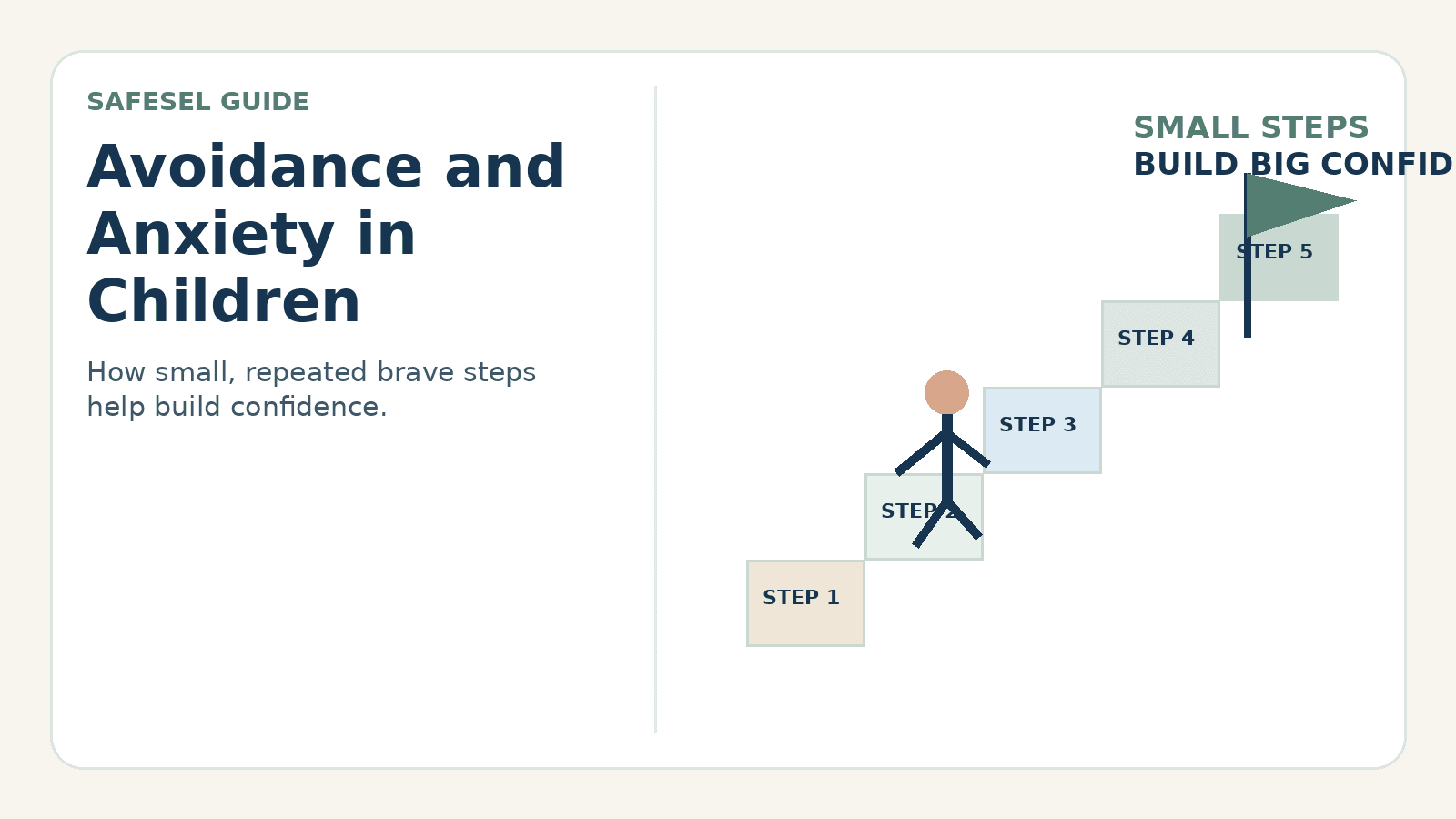
A coping plan or step ladder is appropriate when the child understands the situation and needs a manageable next action. The steps should build participation without overwhelming the child. For school-presentation anxiety, a ladder might begin with reading to a parent, then to a teacher, then to two peers before a full-class presentation.
To reflect afterward
An after-event page can compare the worry prediction with what actually happened. This helps the child collect new information. It should be completed after regulation returns, not immediately after a difficult event as a consequence.
A Developmentally Appropriate Selection Checklist
Before using a page, ask:
- Is the reading level appropriate? A child should not need to decode complex clinical language while also discussing a worry.
- Does the page have one clear purpose? Too many goals create cognitive overload.
- Can the child answer with words, drawing or rating? Flexible response formats improve access.
- Does it leave room for uncertainty? Avoid pages that imply every worry can be disproved.
- Does it lead to action? Insight should connect to a coping step, request for support or real-world practice.
- Is the imagery respectful? Materials for older elementary children should not look designed for preschoolers.
How to Introduce the Worksheet
Ask permission and explain the purpose in one sentence:
- “This page may help us separate what happened from what the worry predicted.”
- “Would drawing or talking be easier today?”
- “We only need the section that helps with tomorrow’s plan.”
Model first when possible. Use a low-stakes example from your own life, while keeping adult problems out of the child’s responsibility: “I predicted I would forget an appointment, so I checked the calendar and set a reminder.”
Avoid: “You need to do this because you are overreacting.” That turns the worksheet into evidence that the child is the problem.
What To Do: A Five-Step Use Sequence
1. Regulate enough to think
If the child is crying intensely, running away or unable to process one short sentence, begin with safety and co-regulation. Save analysis for later.
2. Define one question
Instead of “Let’s work on your anxiety,” choose a narrow target: “What did the worry predict when the teacher announced partner work?”
3. Complete only the useful section
The adult may write while the child speaks. A child can point, circle or draw. Completion is not the goal; useful thinking is.
4. Keep curiosity ahead of correction
Try:
- “What makes that prediction feel convincing?”
- “Is there any information the worry is leaving out?”
- “What would help you handle it even if part of the worry came true?”
Do not interrogate the child until they surrender the “wrong” thought.
5. Transfer one idea into real life
Finish with an observable action: practice one sentence for asking the teacher for help, place a coping card in the backpack or choose the first step of a gradual participation plan.
Two Real-Life Examples
Nine-year-old Lena worries about sleeping away from home. Her father initially gives her a six-page packet at bedtime. She becomes more distressed and believes she must solve the worry before sleeping. A better approach is to use one planning page in the afternoon: identify the prediction, name the available adult, choose one coping action and plan a manageable practice step.
Twelve-year-old Marcus repeatedly checks his homework. His mother first uses a thought sheet every evening, which becomes another checking ritual. They switch to a two-item checklist used once: follow the direction and review one example. Marcus then submits the work even though uncertainty remains.
Common Mistakes
- Using the worksheet during peak distress.
- Correcting spelling, handwriting or grammar while discussing emotions.
- Requiring every box to be filled.
- Treating “I don’t know” as refusal rather than information about readiness.
- Asking leading questions until the child gives the adult’s preferred answer.
- Repeating the worksheet whenever the child seeks certainty.
- Promising that the activity will remove anxiety.
When a Worksheet Is Not the Right Tool
Choose conversation, play, movement, visual supports or simple environmental changes when writing adds pressure. A child may need accurate information, help with a real learning difficulty or protection from an unsafe situation—not cognitive reframing.
Our comparison of a worksheet and a supportive conversation can help with that decision. If you do use a worksheet, review how to avoid turning CBT questions into an interrogation.
When to Seek Additional Support
Speak with a pediatrician or appropriately qualified mental health professional when fear or worry is persistent, causes marked distress, interferes with school, sleep, friendships or normal activities, or leads to substantial avoidance. A professional can assess the broader pattern and determine whether structured treatment is appropriate.
Sources and further reading
- Treating Children's Mental Health with Therapy — Centers for Disease Control and Prevention
- Help Your Child Manage Anxiety: Tips for Home & School — American Academy of Pediatrics — HealthyChildren.org
- Enhancing and Practicing Executive Function Skills with Children from Infancy to Adolescence — Center on the Developing Child at Harvard University