SEL Lessons
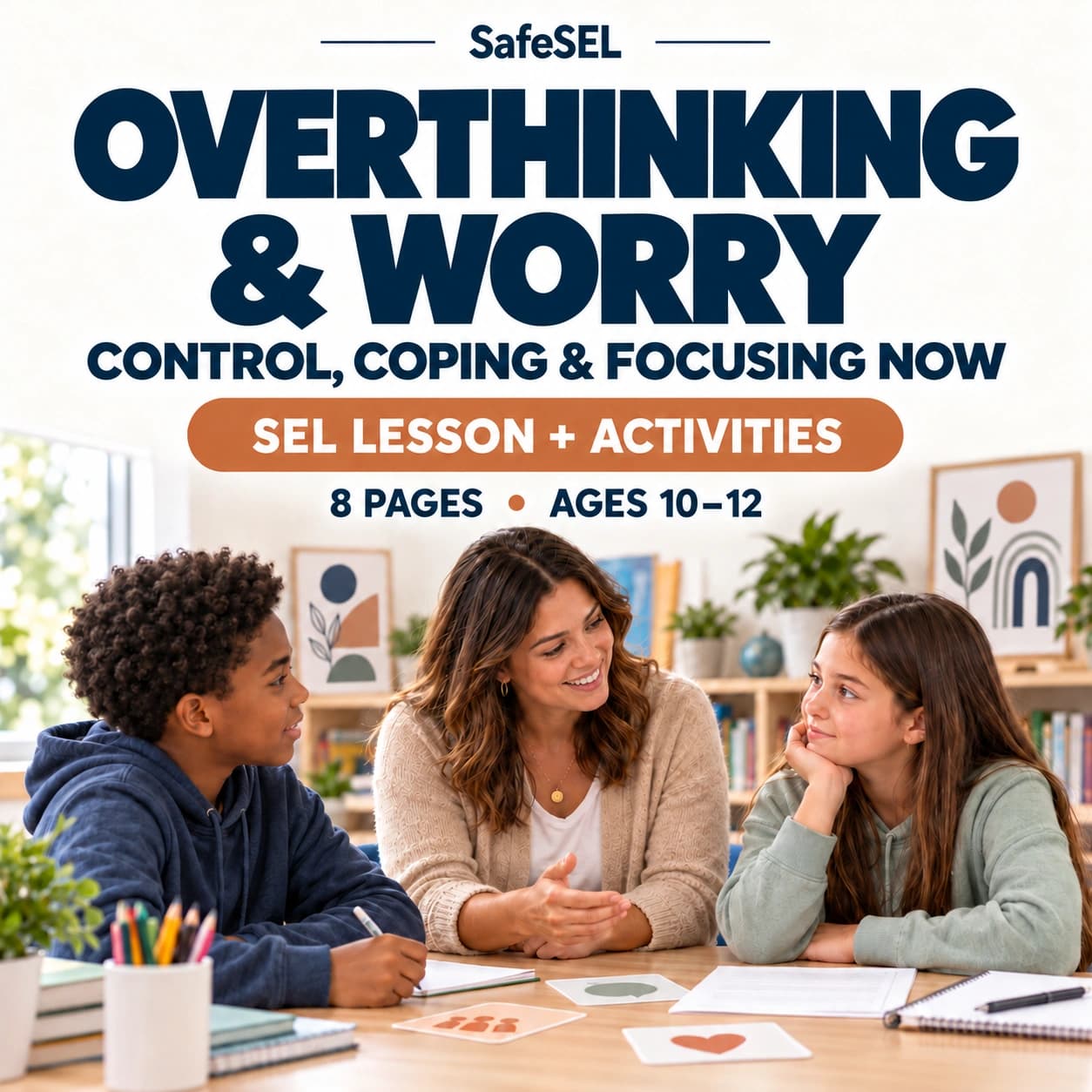
Anxiety Coping Lesson for Kids
Ages 10–12PDF
This printable lesson helps children notice worry and overthinking patterns, separate thoughts from facts and practice realistic coping responses.
Practical resources for worries, avoidance, reassurance-seeking, anxious thoughts, coping skills and gradual confidence-building.
This printable lesson helps children notice worry and overthinking patterns, separate thoughts from facts and practice realistic coping responses.
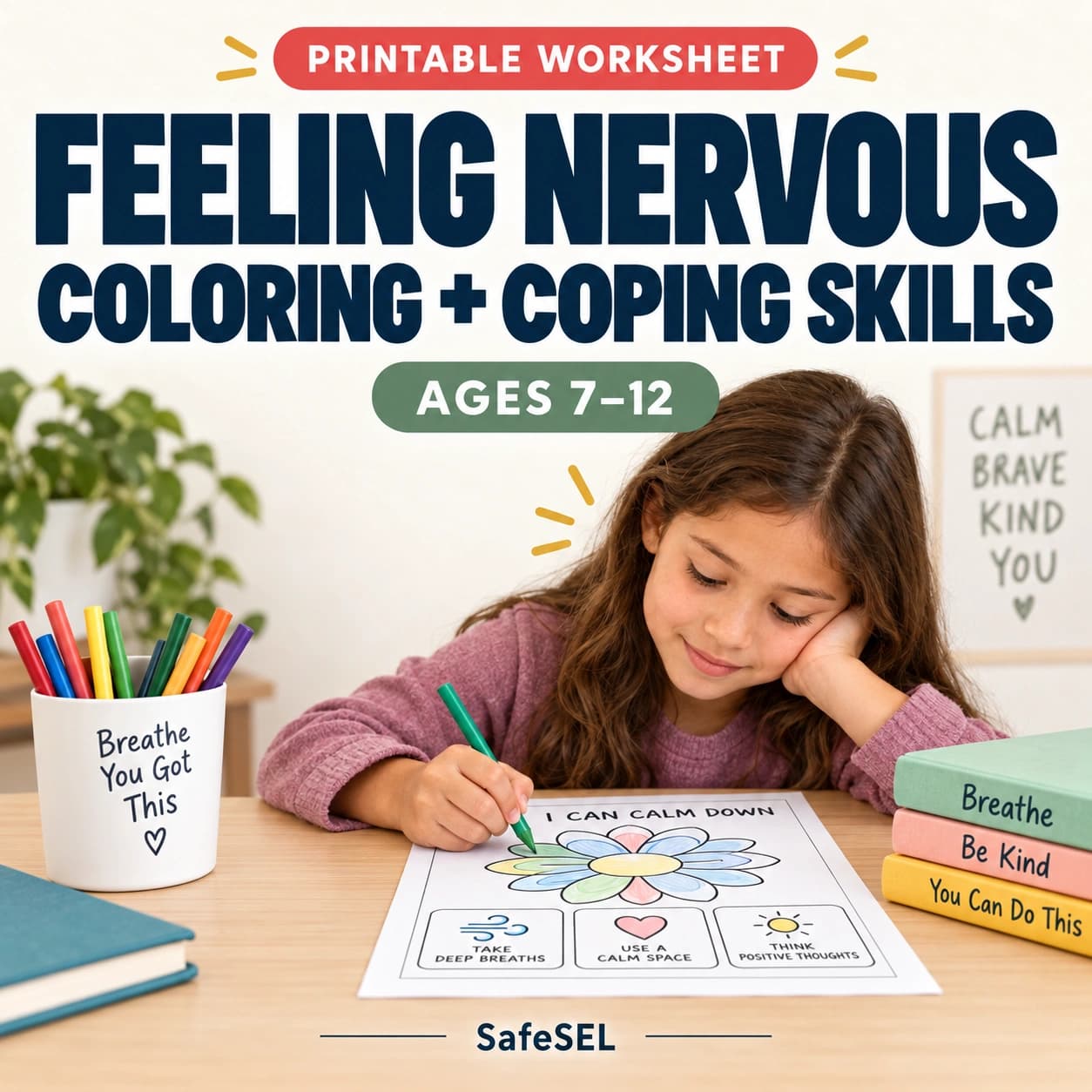
Anxiety Worksheet for Kids: a print-ready worksheet for ages 7–12 with clear prompts for guided practice.
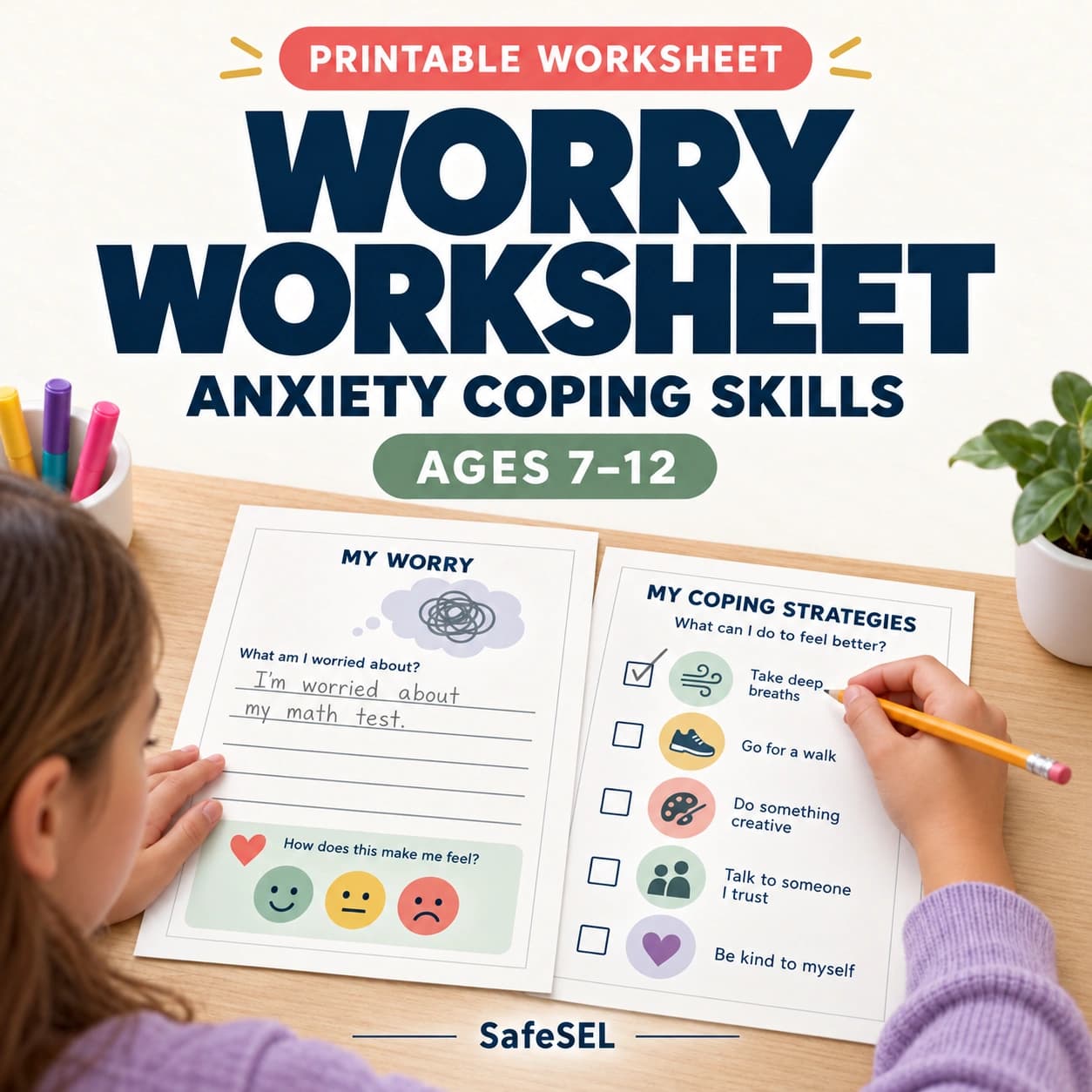
Worried Worksheet for Kids Ages 7-12: a print-ready worksheet for ages 7–12 with clear prompts for guided practice.
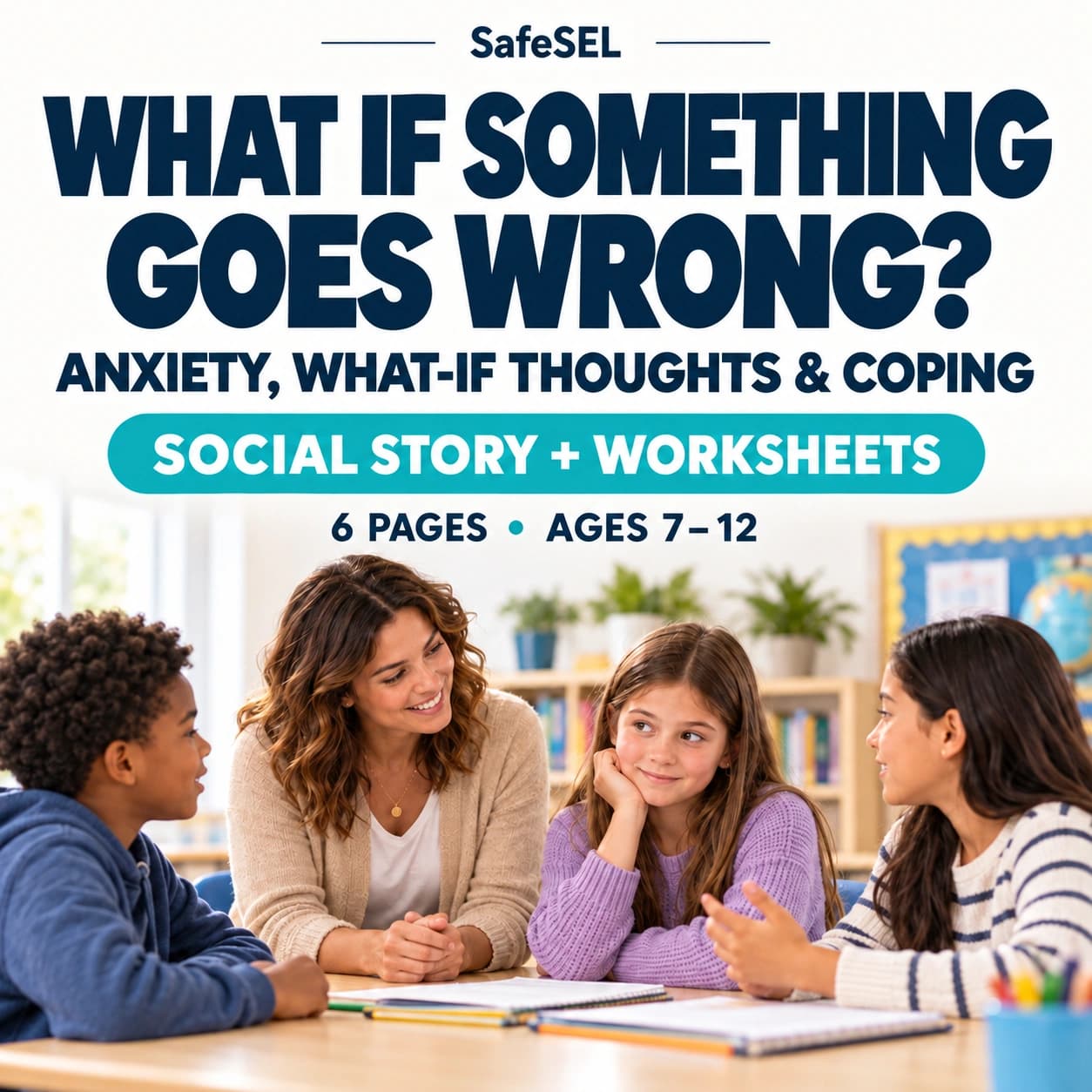
Make anxiety and what-if thoughts easier to discuss with this printable social story resource for ages 7–12.
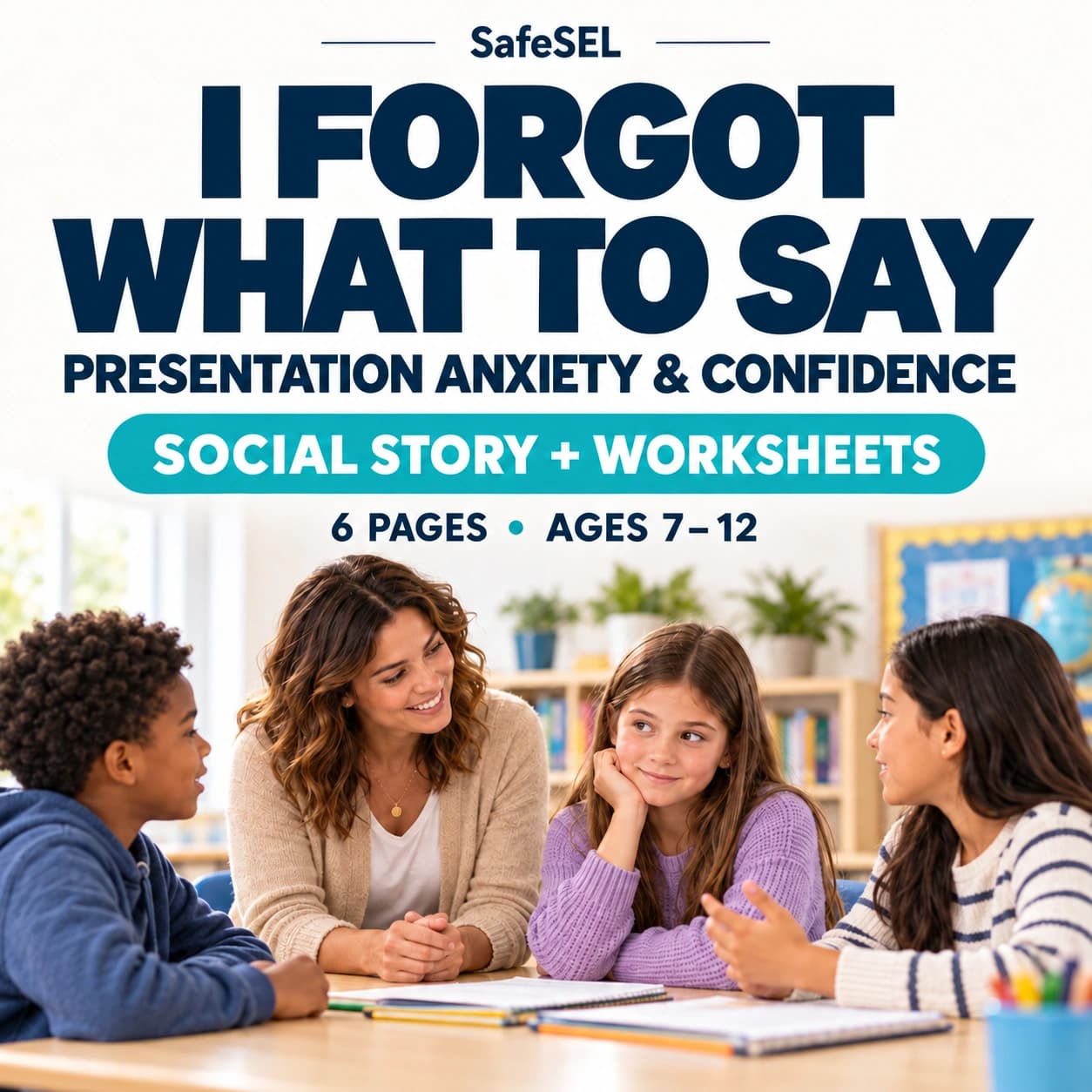
Presentation Anxiety Worksheets for Kids: a print-ready social story for ages 7–12 with clear prompts for guided practice.
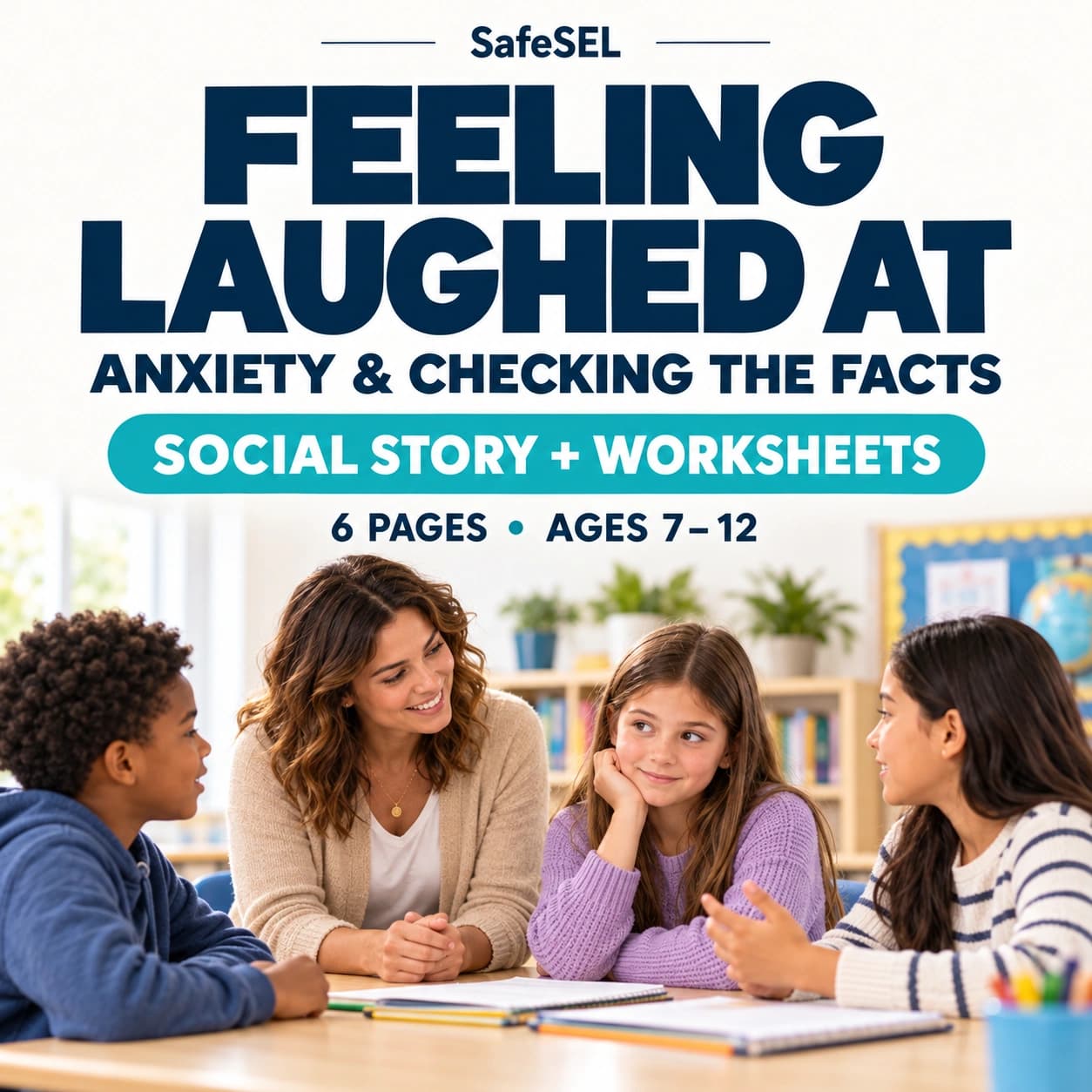
Social Story for Kids, Worry & Embarrassment Worksheets (Ages 7-12): a print-ready social story for ages 7–12 with clear prompts for guided practice.
Separate what a child can control, influence or cannot change.
Open the free resource →Support worry without relying on endless reassurance loops.
Open the free resource →Respond to physical complaints carefully without assuming anxiety or dismissing a health concern.
Read the guide →Plan for predictability, sensory needs and recovery before the next drill.
Read the guide →Recognise shutdown and reduce demands before expecting verbal problem-solving.
Read the guide →Turn broad anxiety advice into a small, realistic plan for caregiver responses, coping and manageable brave steps.
Read the guide →Look at safety, health, learning, peer, sensory and anxiety factors before assuming school refusal has one cause.
Read the guide →Respond to a child who reaches the activity but becomes unable to enter, without turning the moment into a power struggle.
Read the guide →First check whether the concern involves a real safety issue, an unmet access need or a health problem. A coping page should not be used to dismiss a child’s report.
Practice naming one difficulty and asking a trusted adult for a specific kind of help. A short request can be enough; a detailed personal explanation is not required.
Explain what is known and what will happen next. Identify the adult who can help rather than promising that nothing uncomfortable will happen.
Coordinate with the family, school and an appropriate professional. General printables do not provide an individualized exposure or treatment plan.
Try the free Asking for Help Plan in the printable library
Create a free step-by-step SEL practice plan. Get materials, steps and adaptations without providing an email address.
The product listings on this page are paid resources. The free printable library offers sample activities for guided practice. Educational resources do not replace assessment, safeguarding or individualized support.
Anxiety worksheets and worry worksheets support a focused conversation with a child; a caregiver guide explains the adult’s role around it. An anxiety workbook may organise several activities, while a single page lets you examine one question. Compare the previews before choosing these anxiety tools. A printable cannot establish why a child is distressed, and a concern about something unsafe should not be treated as simply an unhelpful thought.
For a lesson about worry and overthinking, inspect the Anxiety Coping Lesson. For a conversation about reassurance and avoidance, compare the caregiver pack. These are different starting points, not a prescribed sequence or a promise that a worksheet will resolve anxiety. If the child needs individual assessment or treatment, involve an appropriate professional.
Understanding anxiety starts with the particular concern, not a generic list of calming activities. Anxiety before bedtime, a difficult goodbye and avoidance of a classroom task may call for different conversations and resources. Compare the parent guides, child-facing pages and professional tools separately. The audience label matters: a clinical planning form is not a replacement for parent-facing guidance, and a worksheet cannot explain the cause of a child’s distress on its own.
The collection includes focused worksheets and broader toolkits that can support psychoeducation, coping practice and step-by-step work with fears.
No. They are educational tools that can supplement professional care, school support or guided practice at home.
Several resources address avoidance and gradual brave steps. Exposure-based work should be paced appropriately and guided by a qualified professional when needed.
Filter by resource type and age group to find the most useful printable.