Birthday parties combine uncertainty, noise, crowds, social entry, food, games, attention, and changing rules. “Go have fun” does not identify which part is difficult.
In brief: Find the friction point, preview the setting, choose a small participation goal, and agree on support and exit conditions before arrival.
Identify the Barrier
Ask whether the hardest part is entering, not knowing people, loud singing, competitive games, food, being watched, separation, or uncertainty about leaving. Check for previous teasing or unsafe experiences.
Build a Manageable Plan
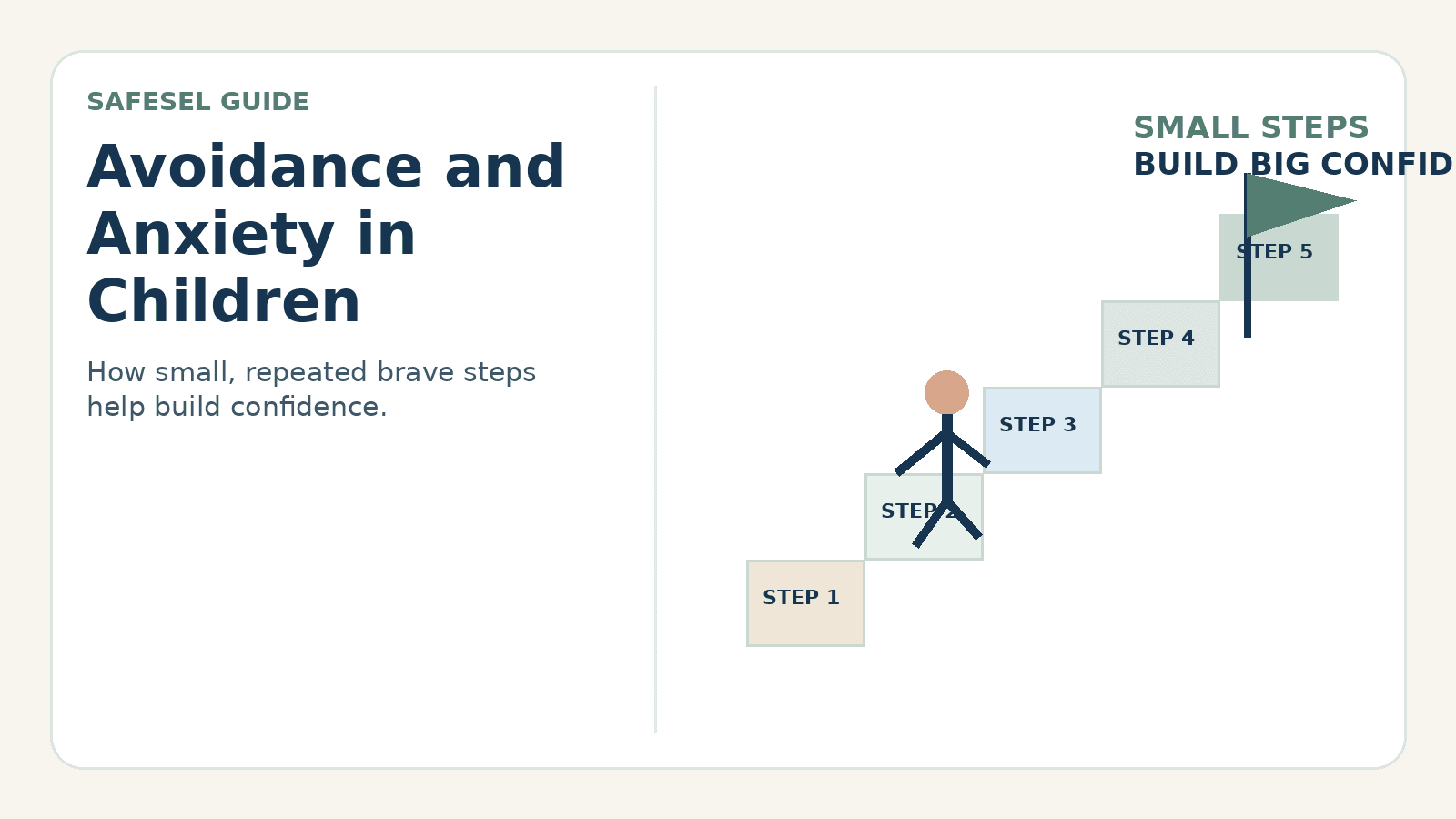
The first step might be delivering the gift and staying through one activity, arriving early before the room fills, or attending with a trusted adult nearby. Define success behaviorally, not emotionally: entering while nervous can count.
Preserve a Real Exit
Agree on a check-in time and a signal. Do not promise the child can leave at the first hint of discomfort if the goal is supported participation, but do not trap them after the agreed step or ignore sensory and safety needs.
Example Language
“You do not have to talk to everyone. We will greet the host, find the activity table, and stay until cake. If you need quiet, we will step outside for five minutes and decide the next step.”
When to Seek Support
Seek professional guidance when avoidance spreads across ordinary social, school, or family activities or causes significant distress. Individualized support should consider anxiety, communication, sensory, developmental, and safety factors.
Use the guidance in a real situation
When responding when a child avoids birthday parties, choose one recent, specific example that fits the pattern; write down the event, the first observable sign of difficulty, the adult response, and what happened next so that a broad label does not replace the details needed for a useful decision.
Use “Identify the Barrier” as the first action from the guide and define who will try it, where it will happen, and how long the first attempt will last; keep other parts of the routine stable so the result is interpretable.
Language and access
- In a conversation about responding when a child avoids birthday parties, an adult might say “We cannot know every detail, but we can plan the first step.”
- In a conversation about responding when a child avoids birthday parties, an adult might say “Which support would help you begin without doing the step for you?”
When applying “Identify the Barrier,” accept an accessible response format unless the format itself is the skill being taught; reduce unnecessary writing, public disclosure, sensory load, and rapid verbal demands.
Review what changed
To review responding when a child avoids birthday parties, track approach, recovery, and independence: starting sooner, staying a little longer, returning after a pause, or using less reassurance; compare several similar opportunities before concluding that the plan worked or failed, and alter only one major variable at a time.
In this guide to responding when a child avoids birthday parties, check first for bullying, pain, trauma reminders, sensory barriers, learning difficulty, or genuine danger; treating every refusal as anxiety can hide a problem that requires a different response.
When to seek additional help
Seek individualized assessment when difficulty remains persistent, worsening, unsafe, or substantially affects learning, sleep, health, relationships, or daily life despite trying “Identify the Barrier”; educational guidance cannot determine a diagnosis or replace appropriate professional care.
Use this guide as a starting point for responding when a child avoids birthday parties, not as a fixed script; a useful plan remains specific enough to repeat, flexible enough to preserve access, and clear about which signs require a different level of support.
Before increasing difficulty in work on responding when a child avoids birthday parties, compare the current attempt with the original example and ask whether “Identify the Barrier” became easier, needed less prompting, or worked in one additional setting; record the support that was present, because a better result with support is useful evidence and does not need to be dismissed as dependence, and note what the child could do before and after that support was added.
Sources and further reading
- Help Your Child Manage Anxiety: Tips for Home & School — American Academy of Pediatrics — HealthyChildren.org
- School Avoidance: Tips for Concerned Parents — American Academy of Pediatrics — HealthyChildren.org
- Treating Children's Mental Health with Therapy — Centers for Disease Control and Prevention