A worry thermometer is a simple visual scale that helps a child describe the intensity of worry. It can make changes easier to notice and help adults match support to the child’s current state. Its purpose is not to diagnose anxiety or persuade a child that the rating is wrong.
The scale becomes more useful when each number has a child-specific anchor. A “3” should mean more than “medium worry”: it might mean “my stomach feels tight, I ask two or three what-if questions, and I can still listen to a short plan.” Once the anchors are clear, the rating can guide one next action.
In brief: Build the scale with the child while calm, connect numbers to observable body signals and actions, and use it briefly before and after a coping or participation step. Do not demand a lower number as proof that a strategy worked.
What a Worry Thermometer Is For
Children often use broad statements such as “I’m scared” or “I can’t do it.” A scale can add useful detail:
- Is the worry present but manageable?
- Is the child able to answer questions and make a plan?
- Is the child too overwhelmed for reflective work?
- Did the intensity change after the child entered the situation?
The number is a communication tool, not an objective measurement. Two children may use the same number for different experiences. Even the same child may rate similar situations differently depending on sleep, stress, uncertainty or who is present.
Choose a Scale the Child Can Use
A 0–5 scale is usually easier than 0–10 for younger elementary children:
- 0: no worry right now;
- 1: small signal; easy to keep going;
- 2: noticeable worry; may need one support;
- 3: strong worry; harder to focus, but still able to use a short plan;
- 4: very strong worry; thinking and speaking become difficult;
- 5: overwhelmed; safety, space and co-regulation come first.
These descriptions are examples. Build personal anchors instead of imposing them.
Build Anchors While the Child Is Calm
Draw three columns: Body, Thoughts/Words and Actions. Ask what each level might look like.
For ten-year-old Jayden:
- At 1, his shoulders rise and he thinks, “I hope this goes okay.”
- At 3, his stomach tightens, he asks to leave and he can follow one short instruction.
- At 5, he cries, cannot take in explanations and tries to escape the room.
For eight-year-old Nia, a 3 looks different: she becomes unusually quiet, checks the teacher’s face and stops writing. Without personal anchors, an adult might miss her distress because it is not loud.
Include examples of recovery as well: “At what number can you choose between two coping options?” and “At what number can we talk about the worry rather than only help your body settle?”
What To Do: Use the Scale in Six Steps
1. Ask rather than assign
Say, “Where would you put the worry right now?” Avoid telling the child, “That is only a two.” Correcting the number turns a communication tool into an argument.
If the child does not know, offer observations without deciding for them: “Your hands are tight and you are still able to talk. Does that feel closer to two, three or something else?”
2. Accept the first rating
You do not need to agree that the situation is dangerous. You are accepting the child’s report of intensity.
Helpful: “A four tells me this feels very strong.”
Unhelpful: “It cannot be a four; nothing has happened.”
3. Match the next step to readiness
At lower or middle levels, the child may be able to examine a prediction, choose a coping statement or make a gradual-practice plan. At higher levels, reduce language and focus on safety, steady presence and one familiar action.
The scale should not rigidly prescribe the same strategy for every child. One child may want movement at a three; another may need a written plan.
4. Use coping to support participation
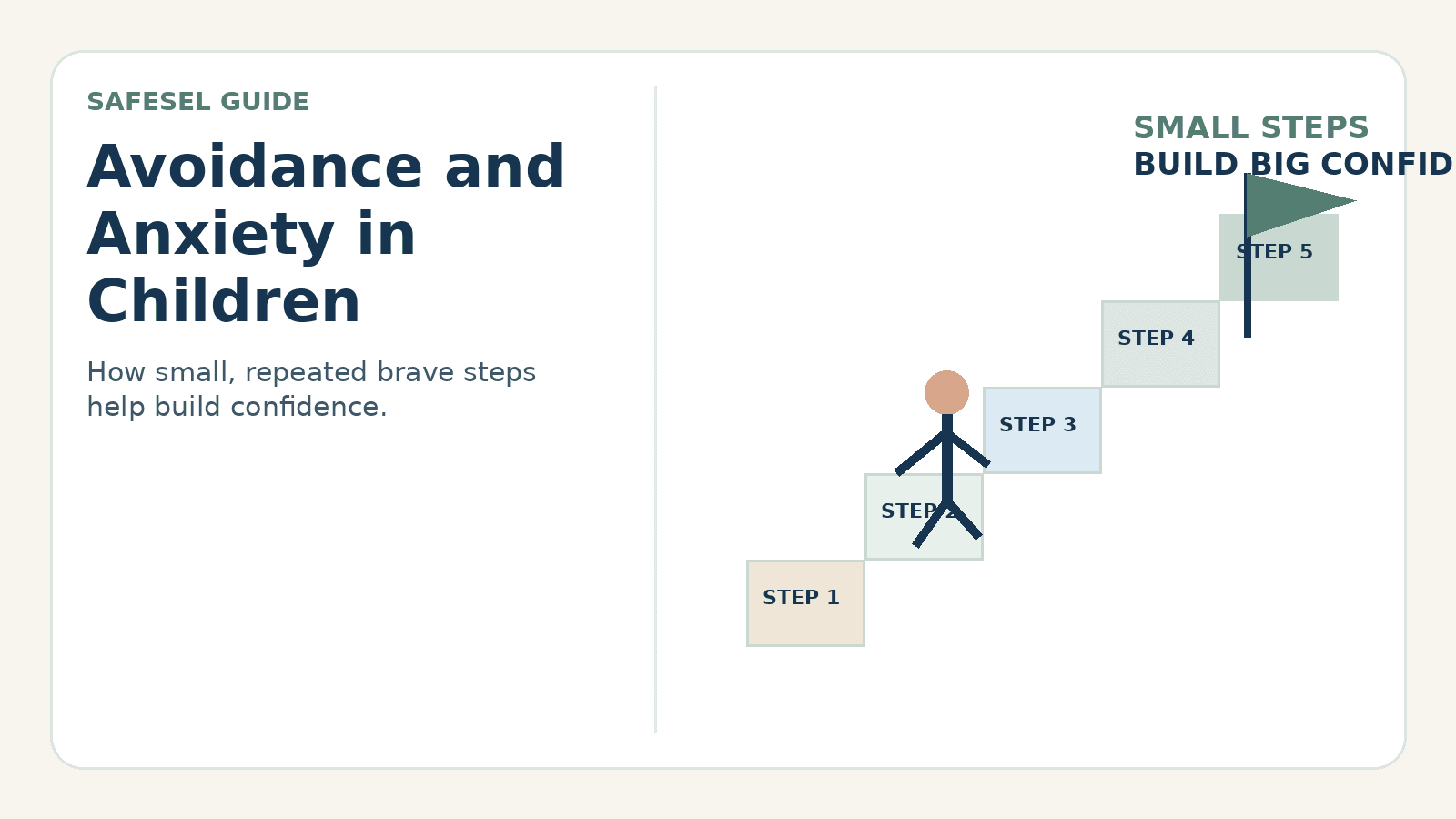
The goal is not always to lower the rating before the child continues. If the situation is safe and developmentally appropriate, the child might take the next small step while worry remains.
For example: “The worry is at three. Let’s use the plan—tell the teacher you want to answer second, then stay for the first question.”
This approach supports learning that discomfort can be managed. It is different from forcing a child into a situation without preparation or consent.
5. Rate again after a meaningful interval
Do not ask every thirty seconds. Re-rate after the coping step, at the end of a planned activity or when the situation changes.
Ask more than “Did it go down?” Try:
- “What number is it now?”
- “What did you notice while it changed—or stayed the same?”
- “What were you able to do even with that number?”
6. Record patterns sparingly
Occasional ratings can reveal useful patterns, such as worry peaking before school and falling after arrival. Constant tracking can increase self-monitoring or become another reassurance ritual. Collect only information that will guide a decision.
Helpful Phrases
- “The number helps me understand the intensity; it does not decide what you must do.”
- “You do not have to make it zero.”
- “At a three, what support helps you take one step?”
- “Your worry stayed at two, and you still finished the conversation.”
- “A five means fewer questions and more help settling first.”
- “Would you rather point to the number or tell me?”
Common Mistakes
Using the scale to minimize
“This is not a big deal, so it should be a one” teaches the child that honest reporting will be corrected.
Rewarding only lower numbers
If children are praised for saying the worry is low, the rating stops being reliable. Reinforce skill use and participation instead.
Treating the number as a diagnosis
A home or classroom thermometer is not a validated clinical measure. It cannot identify an anxiety disorder or determine treatment.
Rating without a plan
Repeated measurement that never changes adult support can feel pointless. Decide in advance how different ranges affect the next step.
Using it during every emotion
Some children prefer words, drawing, body maps or no formal scale. The tool is optional.
Adaptations by Age and Communication Style
For ages 7–9, use five colored spaces, faces or body outlines with a few concrete anchors. Keep questions brief. For ages 10–12, invite the child to name different dimensions: intensity, urge to avoid and ability to use a skill. These may not rise and fall together.
Children who communicate better visually can point or place a marker. Avoid relying only on facial-expression icons, because children may interpret or display emotions differently.
When Not to Use the Thermometer
Do not stop to collect a rating during an immediate safety emergency. Do not use the scale to determine whether a child “deserves” support. Avoid it when tracking itself increases fixation, when the child repeatedly seeks confirmation of the correct number, or when a clinician has recommended another monitoring plan.
Also check whether the worry reflects a real problem. If a child fears peer aggression, academic failure due to an unmet learning need or an unpredictable pickup arrangement, adult action may be more appropriate than a coping exercise.
When to Seek Additional Support
Consider professional guidance when worry is persistent, severe, increasingly avoidant or interferes with sleep, school, friendships or ordinary activities. Share patterns rather than only numbers: situations, behaviors, duration, physical complaints and what support has been tried.
Sources and further reading
- Help Your Child Manage Anxiety: Tips for Home & School — American Academy of Pediatrics — HealthyChildren.org
- School Avoidance: Tips for Concerned Parents — American Academy of Pediatrics — HealthyChildren.org
- Treating Children's Mental Health with Therapy — Centers for Disease Control and Prevention