A problem-solving activity becomes useful when the problem is small enough to describe and the next action is actually available. “Make everything fair” is difficult to act on. “Two children want to use the same classroom material during this activity” gives a group a situation to discuss.
Use fictional examples for initial teaching. Children can compare options without having to disclose a conflict or defend themselves in front of peers. An adult should make any safety boundary clear before inviting choices.
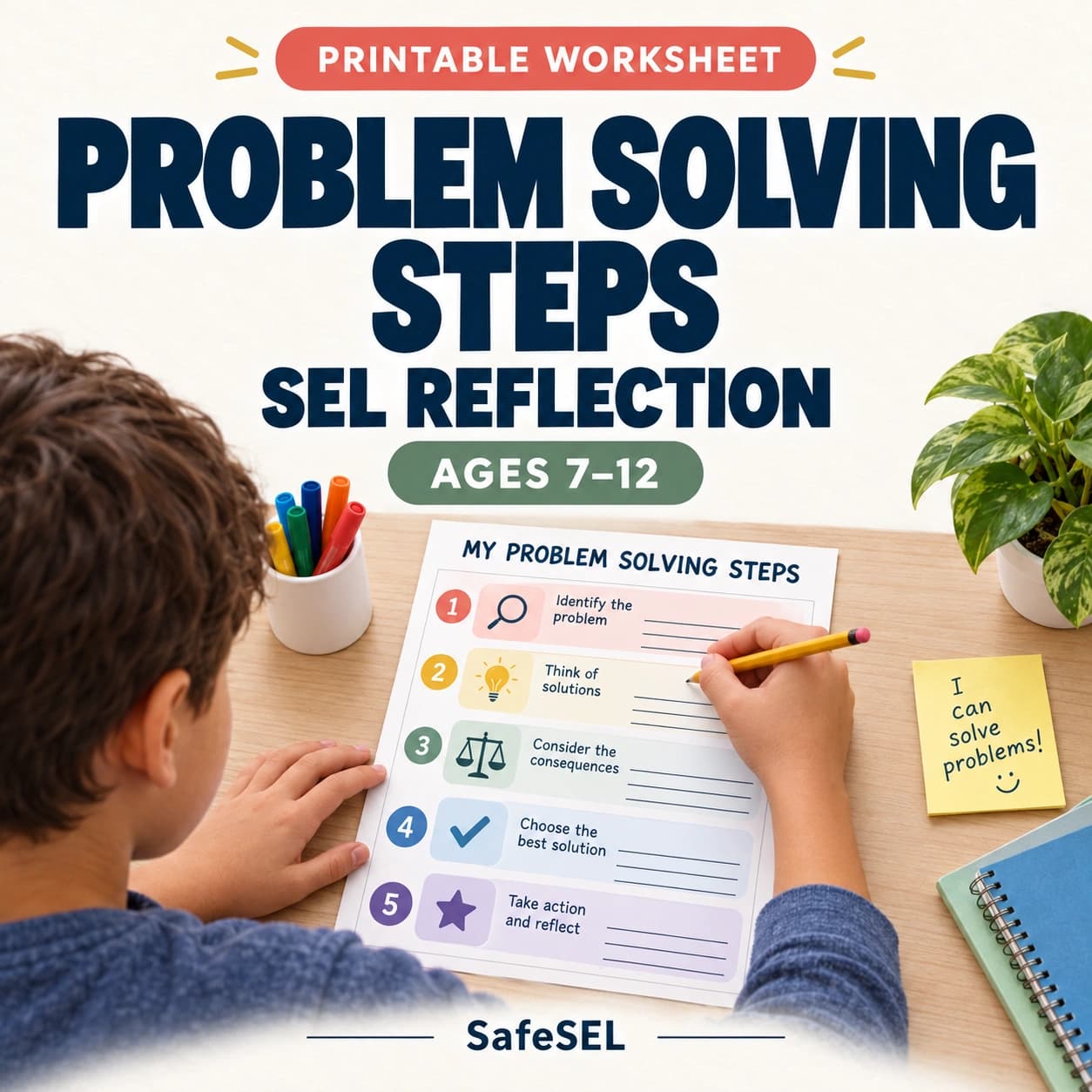
Step one: describe the problem
Ask what is happening, who needs information and what must be decided. Keep the description close to observable events. In the shared-material example, the group knows that there is one item and two people want it. It may not know whether another item is available or how much time remains.
Give students time to distinguish facts from assumptions. They can speak, point, draw or use another accessible response. The activity should teach problem definition rather than test writing speed or require someone to explain a private experience.
Step two: identify what can change
Separate things the group can consider from things it cannot decide. Students might ask about taking turns, another material or a different activity. They cannot assume another child must agree, that an adult can produce a missing item immediately or that every request will be granted.
An adult can name relevant limits: the item must be used safely and the class routine still applies. That gives the discussion a realistic frame. It is more useful than offering choices that are unavailable or pretending a required boundary is optional.
Step three: generate options before choosing
Invite several possible responses to the fictional problem. Keep them practical enough to examine. Asking for the timer, checking whether there is another material and choosing a different role are different possibilities; which is useful depends on the facts of the activity.
Do not require an immediate vote for the “best” answer. Ask what additional information each option needs. A student may reasonably say they need to ask the adult before deciding. Seeking help can be part of the process rather than evidence that the child failed to solve the problem alone.
Step four: compare options using clear questions
Use a few questions the group understands: Is this safe? Is it available? Does it address the problem we described? What might happen next? Ask students to explain one reason, with support as needed, rather than produce an elaborate justification.
Leave room for different preferences within the same boundary. The point is to practise considering information and consequences. An activity does not need to end with everyone choosing the same response to show that the discussion was useful.
Step five: try one action and review
For classroom practice, choose a low-pressure opportunity to try the agreed routine. Afterwards, ask what happened, which support was present and what still needs clarifying. A different outcome is a reason to review information, not to label a child careless or uncooperative.
Keep the review specific. “We found the timer but did not know how turns were allocated” tells adults what to clarify. “The child needs better problem solving” leaves the next lesson unclear. If a real situation involves danger or a concern beyond the classroom activity, use the appropriate adult support and local procedure.
Choose a format for the learning goal
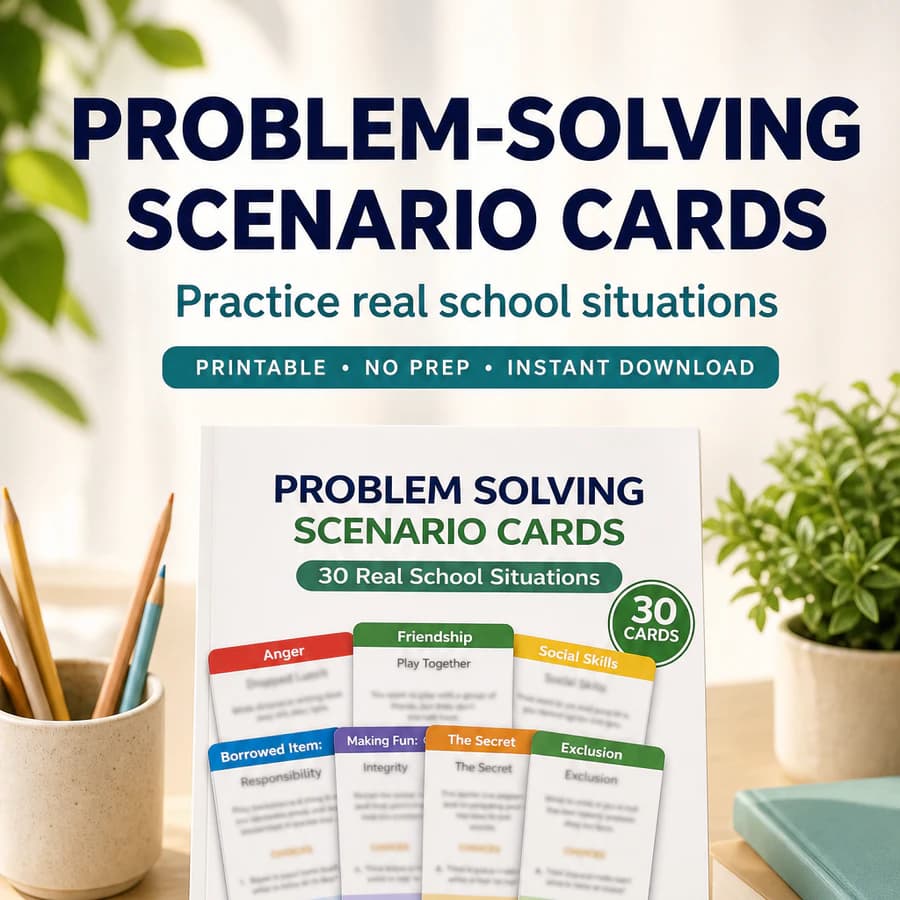
Social skills activities can provide short fictional scenarios for discussion. SEL games can create an opportunity to practise asking, explaining and considering another option. Introduce the purpose and allow observation or supported participation when appropriate.
The Complete SEL resource library for ages 7–12 combines lessons, worksheets, stories and cards for recurring topics. Print only the pages that support the chosen activity. Materials do not replace adult teaching or establish that a skill will transfer automatically to every setting.
For planning across several lessons, read the curriculum or individual worksheets guide and the elementary SEL implementation guide. Start with one describable problem, consider available choices and review one action before making the task more complex.
Sources and further reading
- Treating Children's Mental Health with Therapy — Centers for Disease Control and Prevention (2026)
- Child and Adolescent Mental Health — National Institute of Mental Health
- What Is the CASEL Framework? — CASEL
- Enhancing and Practicing Executive Function Skills with Children from Infancy to Adolescence — Center on the Developing Child at Harvard University
- Communication Skills Start at Home — American Academy of Pediatrics — HealthyChildren.org