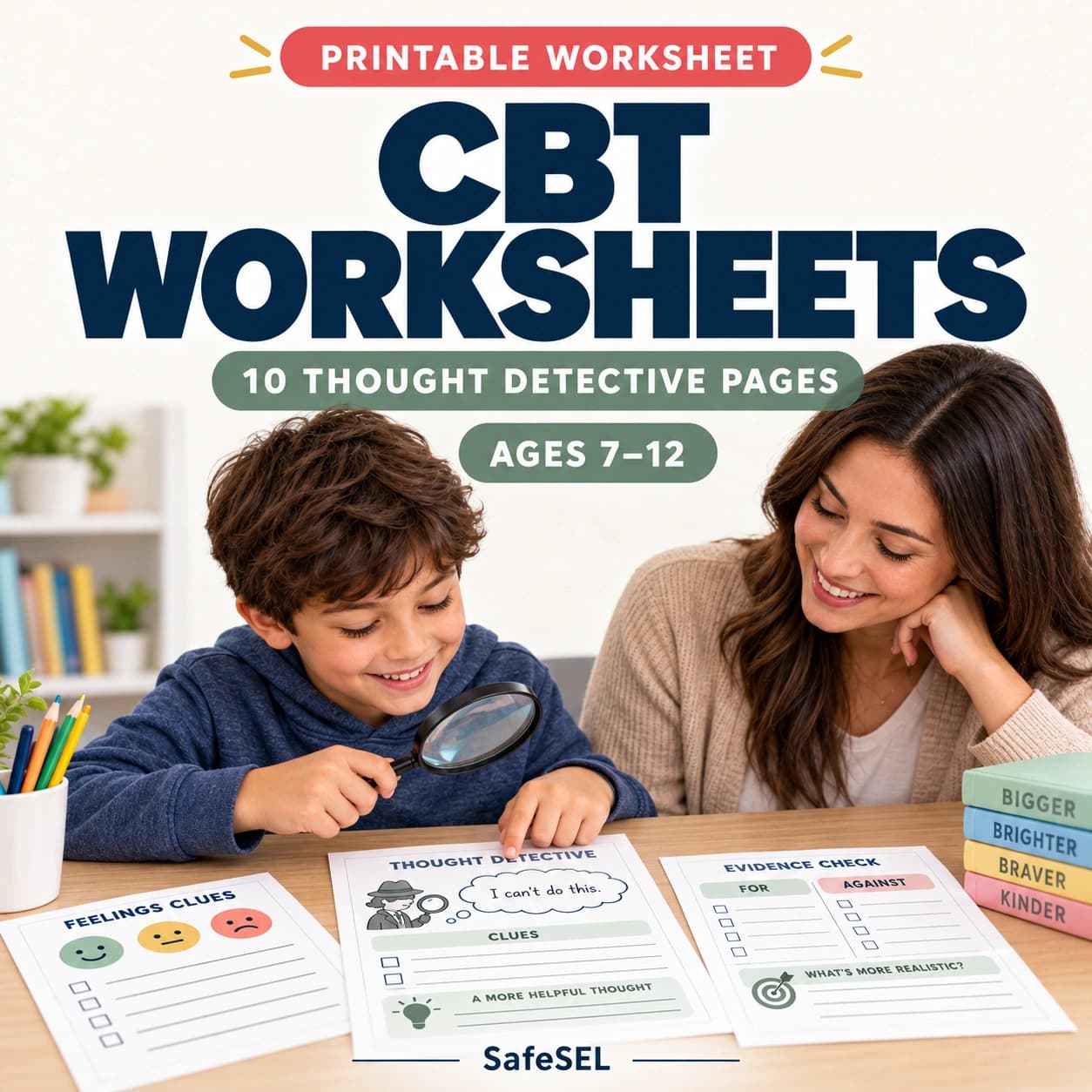
Worksheets
CBT Therapy Worksheets for Kids
Ages 7–12ZIP
A printable bundle for ages 7–12 focused on anxiety and worry support. Includes ZIP files for print-and-use access.
Printable CBT tools and worksheets that help children notice automatic thoughts, check evidence, recognise thinking traps and practise more balanced self-talk.
A printable bundle for ages 7–12 focused on anxiety and worry support. Includes ZIP files for print-and-use access.
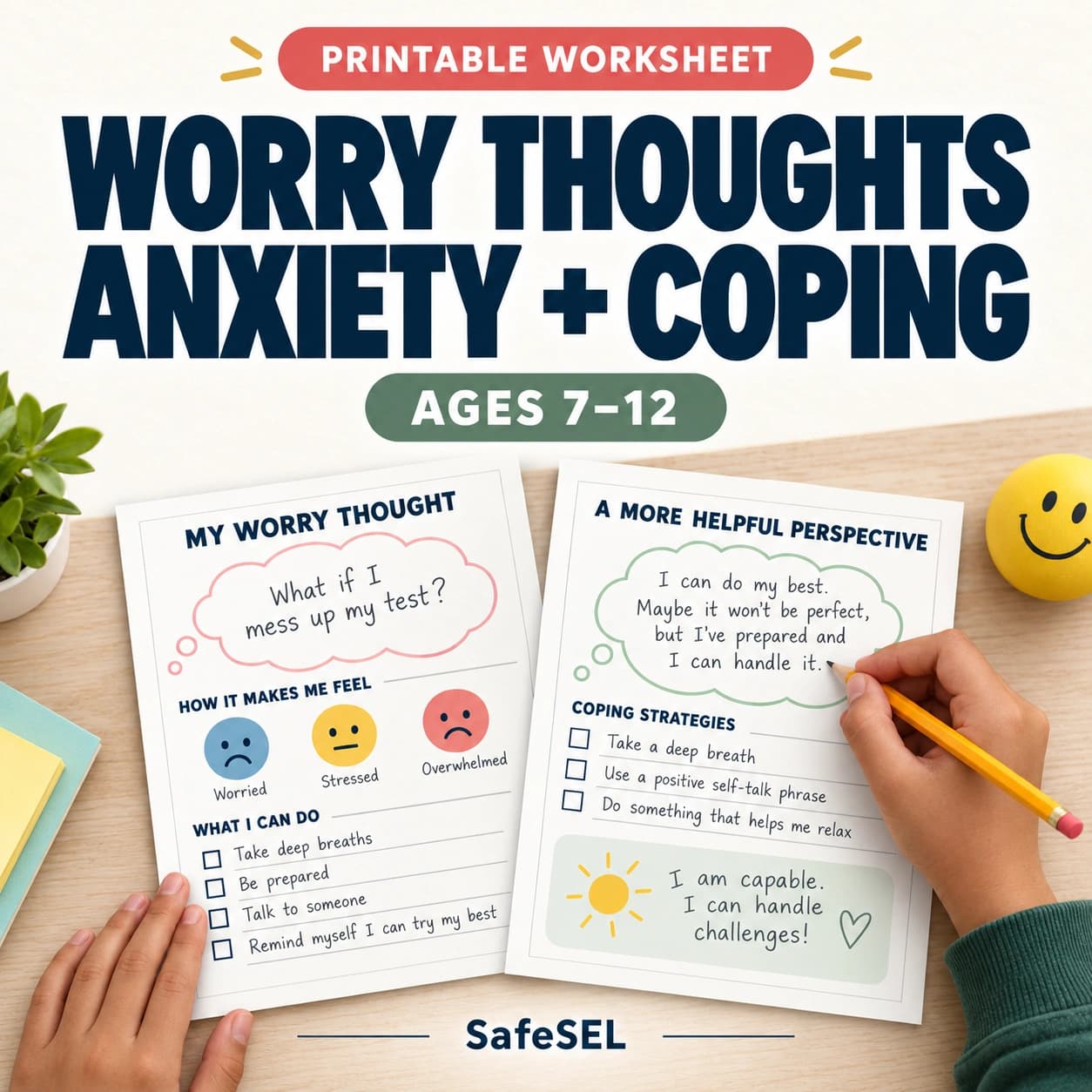
Turn everyday challenges with my worry thoughts and coping skills into manageable skill practice using this printable SEL worksheet for children.
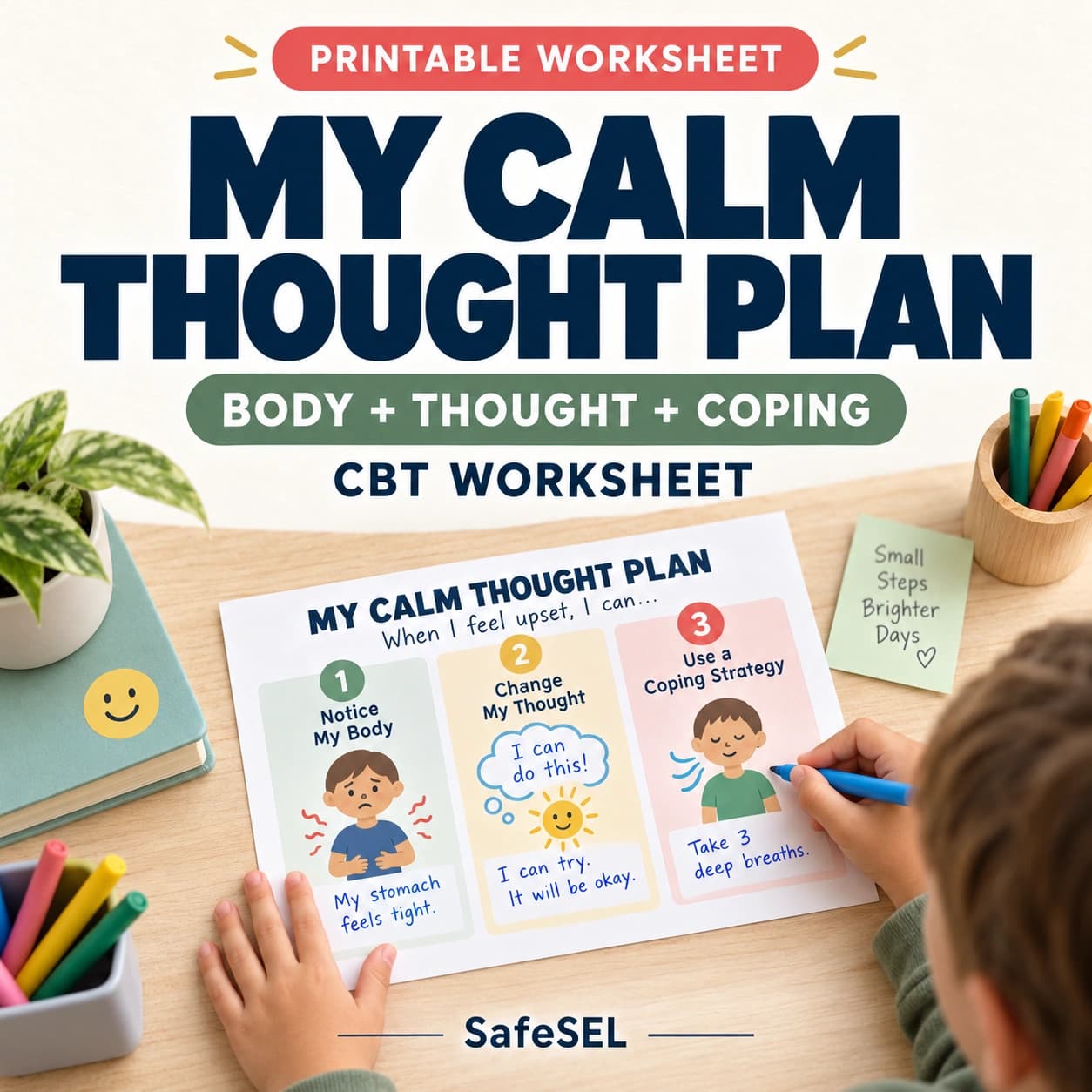
A focused printable CBT worksheet for ages 7–12 that helps children practise calm plan through clear, guided reflection.
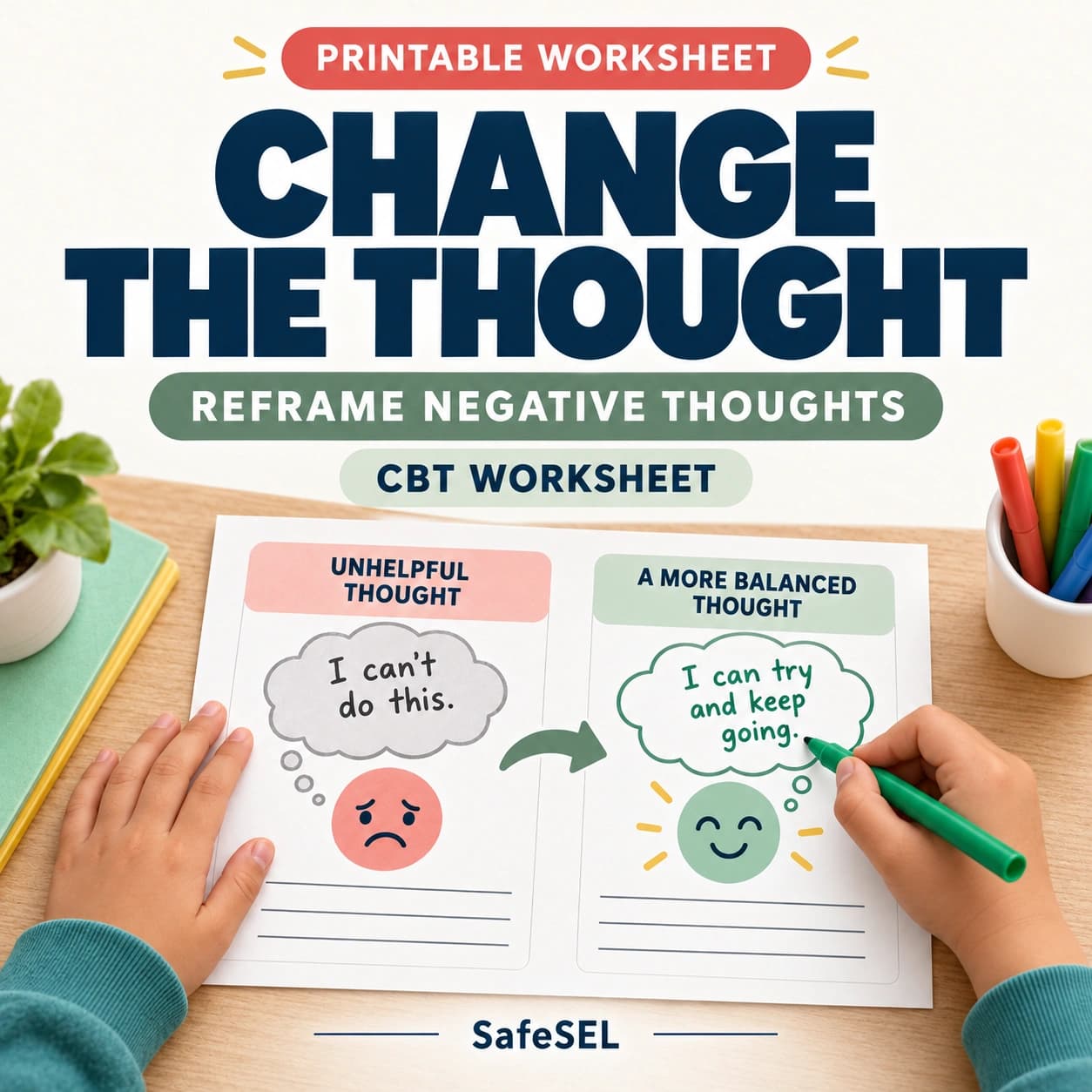
A focused printable CBT worksheet for ages 7–12 that helps children practise change the thought through clear, guided reflection.
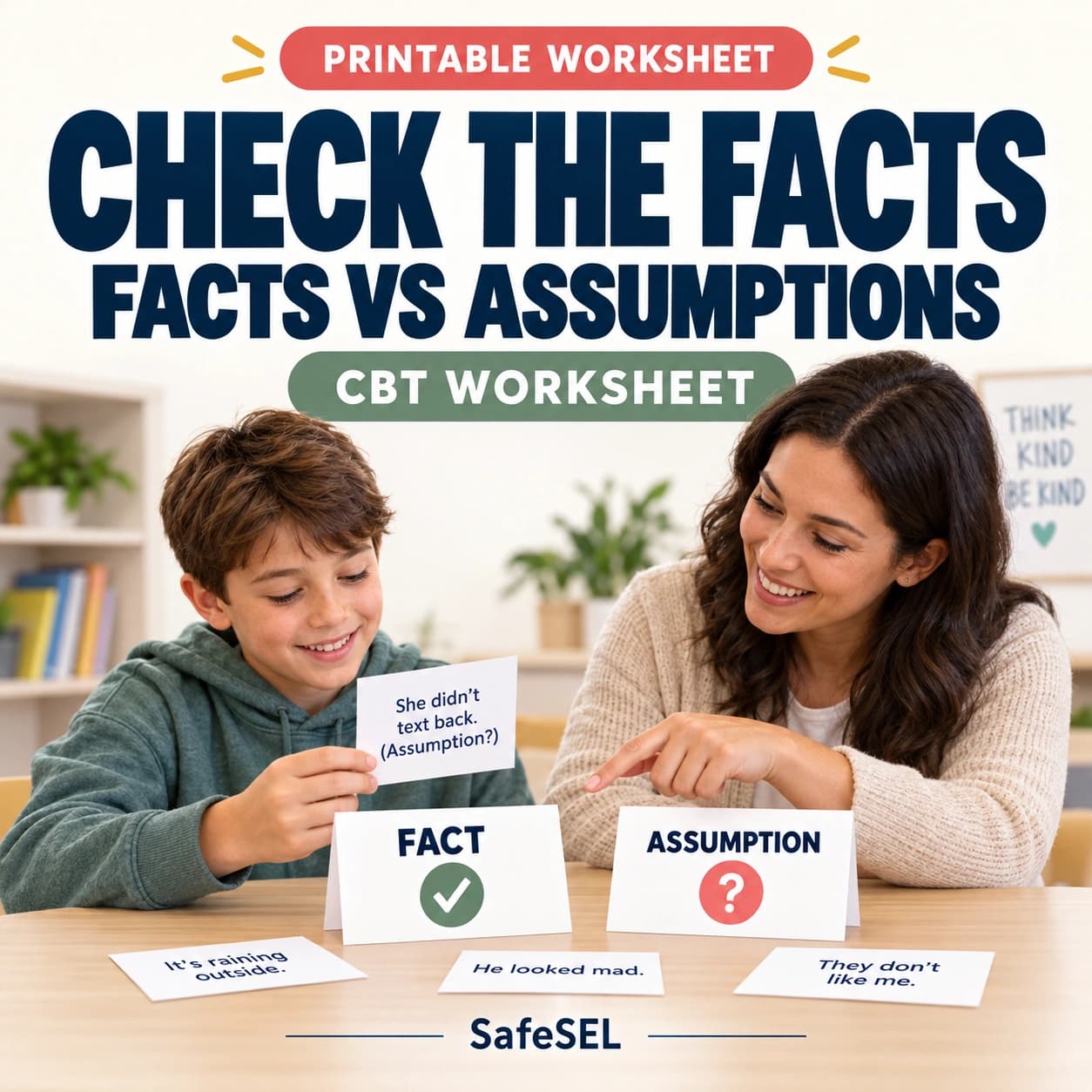
A focused printable CBT worksheet for ages 7–12 that helps children practise check the facts through clear, guided reflection.
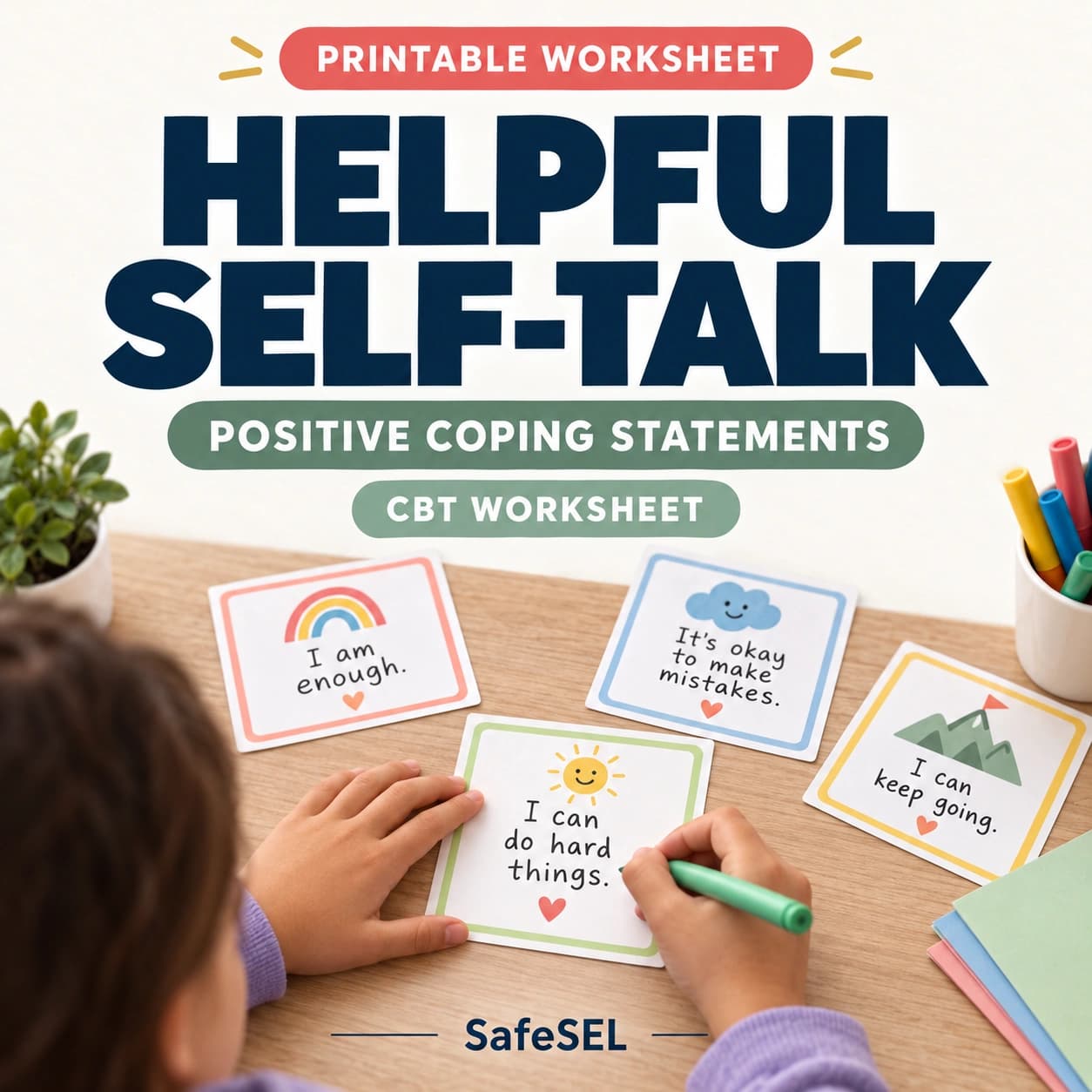
A focused printable CBT worksheet for ages 7–12 that helps children practise helpful self-talk through clear, guided reflection.
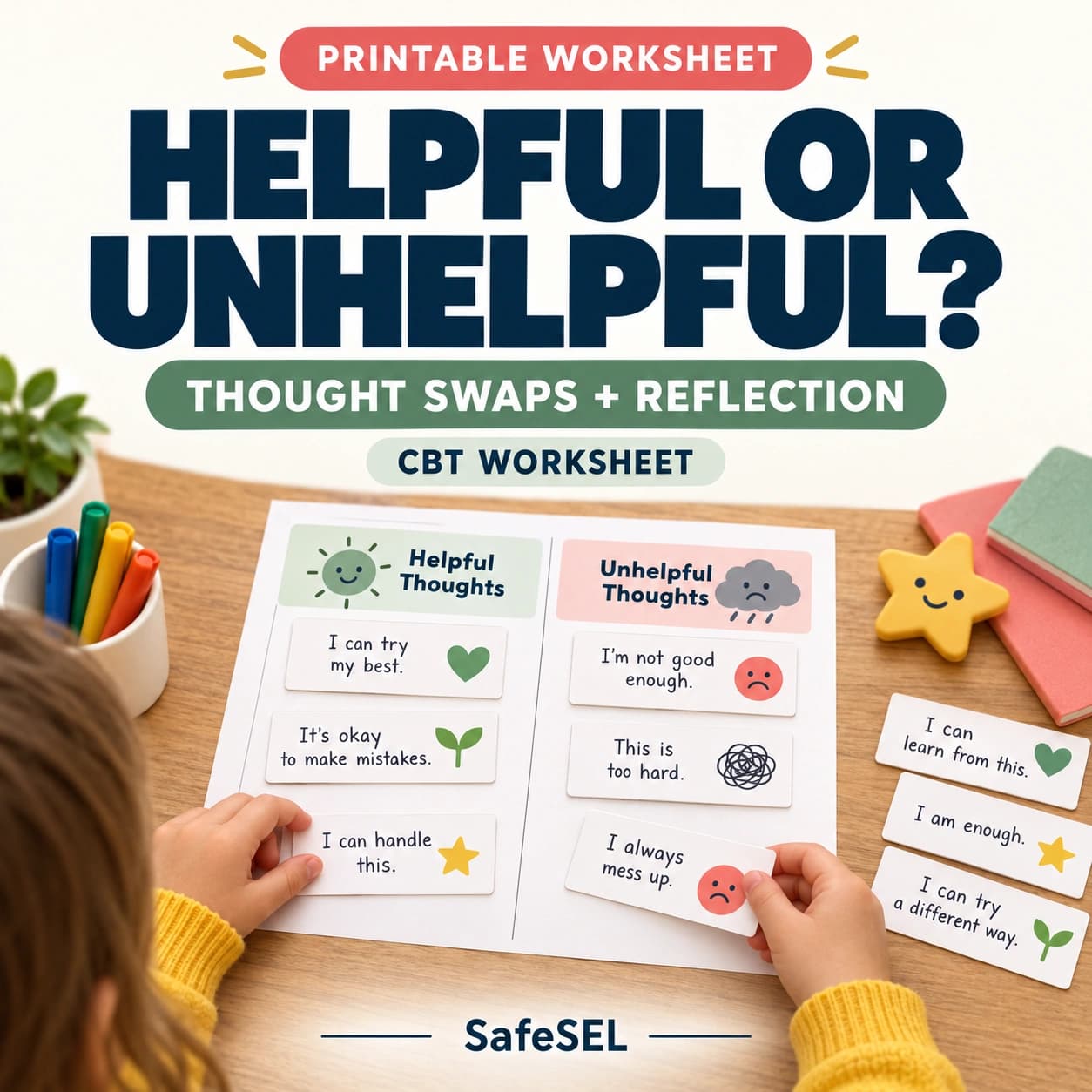
A focused printable CBT worksheet for ages 7–12 that helps children practise helpful or unhelpful thought? through clear, guided reflection.
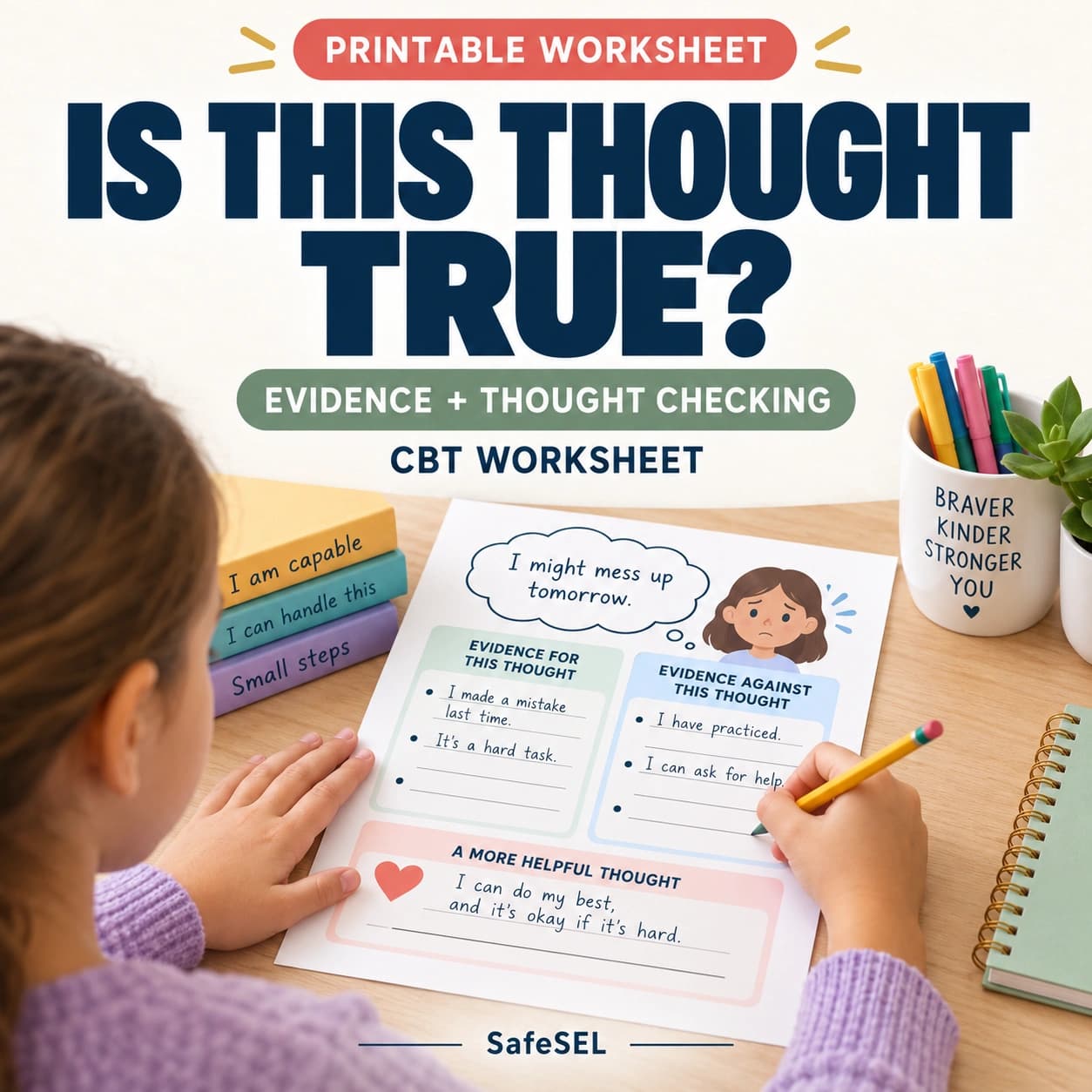
A focused printable CBT worksheet for ages 7–12 that helps children practise is this thought true? through clear, guided reflection.
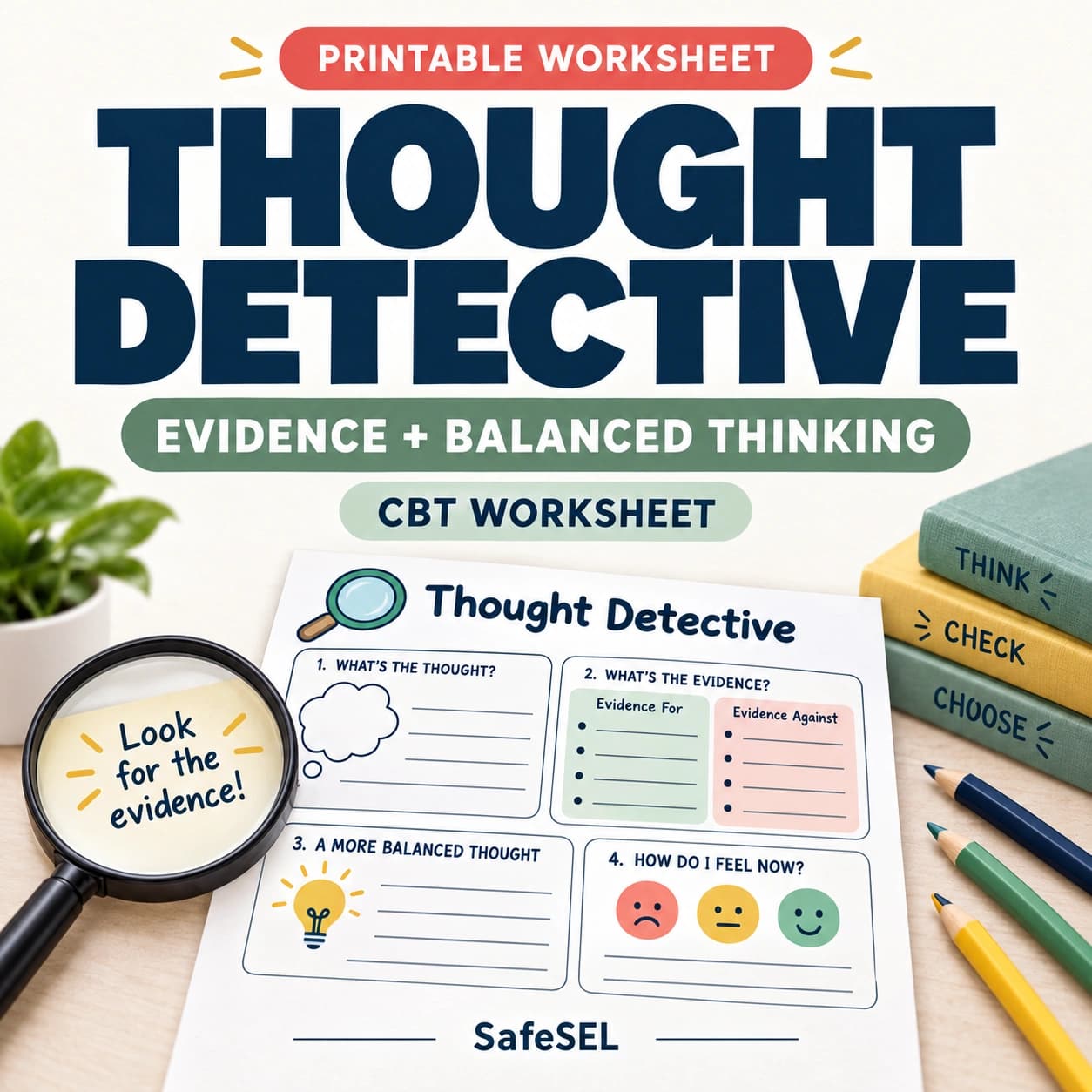
A focused printable CBT worksheet for ages 7–12 that helps children practise thought detective through clear, guided reflection.
A practical guide to evidence checking, thinking traps and balanced thoughts for children.
Read the guide →How to choose the right moment and make reflection useful instead of punitive.
Read the guide →Developmentally appropriate ways to guide CBT-informed practice without turning it into a test.
Read the guide →CBT therapy worksheets can give a child a concrete way to compare an event, an interpretation and a possible response. These CBT printable worksheets are for guided discussion, not self-diagnosis. In Thought Detective, start with an observation such as a classmate not answering a greeting, then consider what remains unknown. Balanced thinking means examining the situation fairly, not replacing every uncomfortable thought with a cheerful slogan.
A worksheet can help organise thoughts, feelings and possible actions without demanding a positive slogan. “This part is difficult; I can ask for help” is different from insisting that everything is easy. Compare the actual prompts and reading demands before choosing a page. Clinical use remains part of the practitioner’s assessment and plan; the PDF is not a complete treatment.
When comparing therapy worksheets, PDF previews let you check whether the page asks for an event, a thought, a feeling, evidence or a possible response. Those are different parts of the task. Choose a small enough step for the child and use adult guidance appropriate to the setting. The printable is a discussion resource, not a self-administered assessment or a complete course of therapy.
These resources are designed for school counseling, therapy sessions and structured practice at home. Choose individual worksheets for focused work or a larger bundle for a complete sequence.
Most SafeSEL CBT resources are designed for children ages 7–12, with some materials particularly suitable for older elementary and tween learners.
Yes. They can support psychoeducation and structured practice, while clinical decisions remain with the treating professional.
Filter by resource type and age group to find the most useful printable.