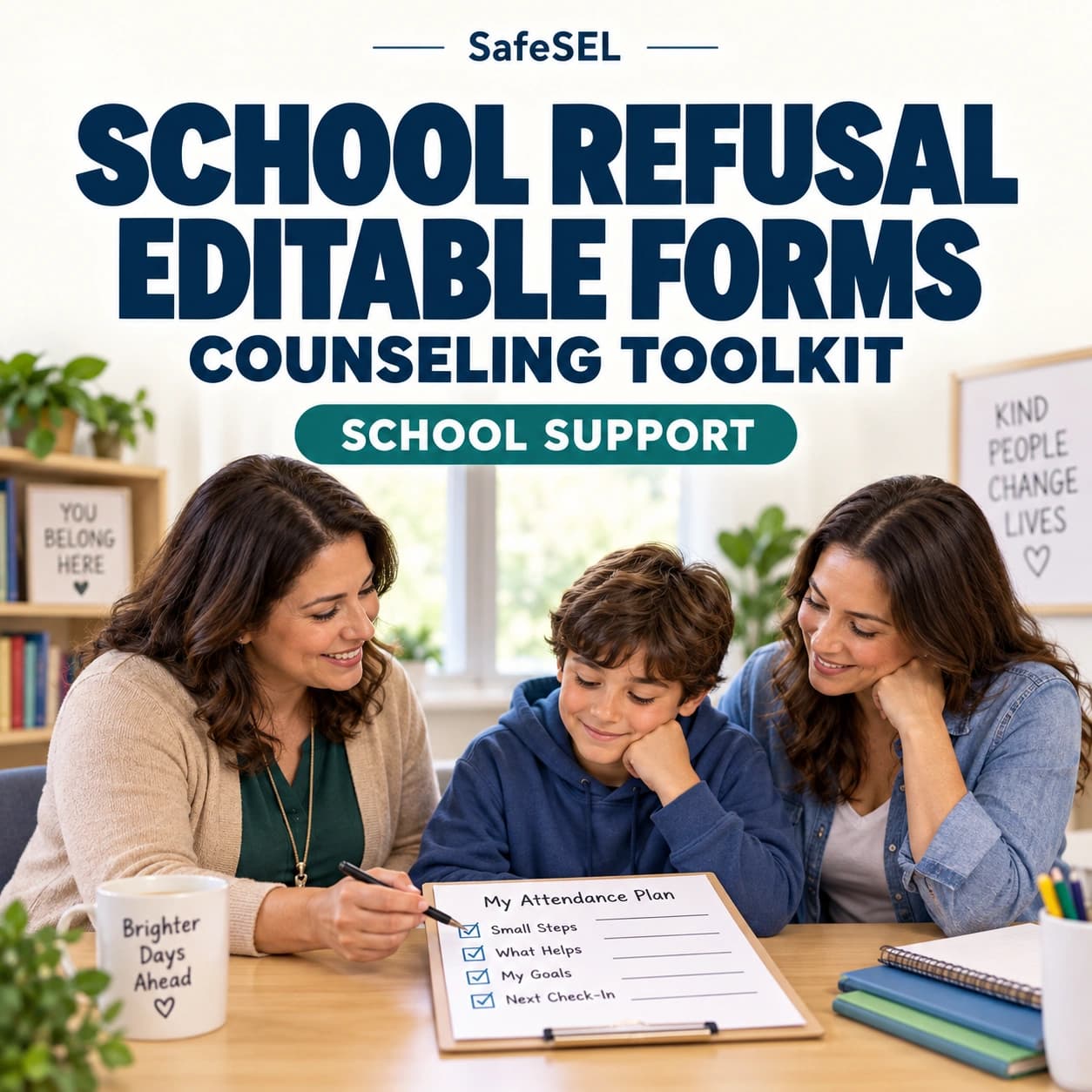
School anxiety often peaks at the exact moment families have the least time to think. A child may report a stomachache, hide under a blanket, cry, become angry or insist that something terrible will happen. The most useful response combines genuine curiosity about the cause with a predictable attendance plan and coordinated support from school.
Why this pattern happens
School distress can be maintained by many factors: separation fear, social anxiety, academic difficulty, perfectionism, sensory overload, bullying, panic symptoms, low mood or a stressful event. The intervention must fit the function.
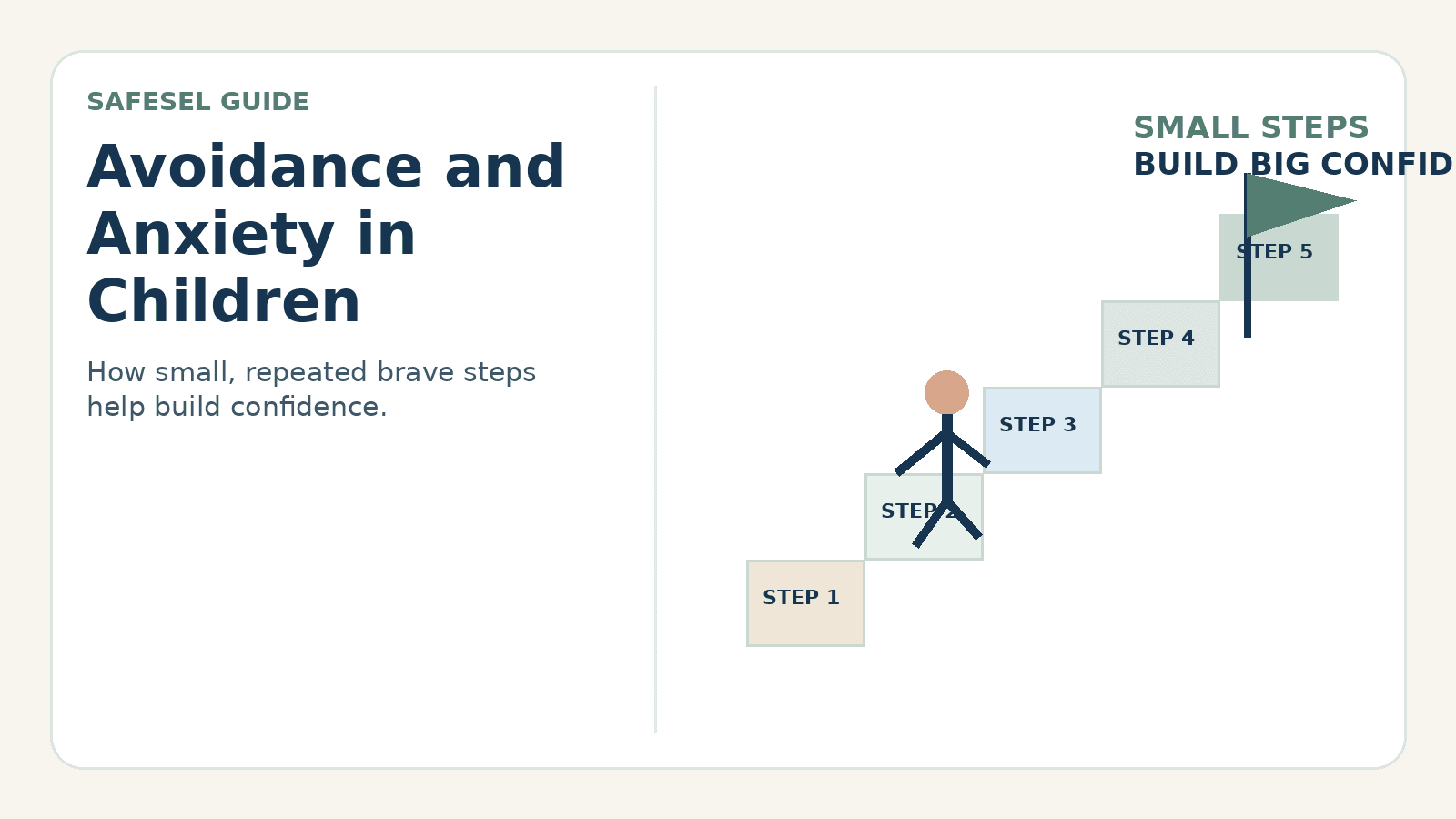
Staying home usually reduces distress immediately. That relief can unintentionally strengthen avoidance, even when the original concern is valid. Supporting attendance does not mean ignoring the cause; it means addressing the cause while preserving connection to school when it is safe to do so.
Signs and patterns to notice
- Symptoms are strongest on school mornings and often improve after permission to stay home.
- Repeated requests to visit the nurse, call home or leave before a feared lesson.
- Sunday-night worry, sleep difficulty or extensive preparation rituals.
- Distress linked to specific classes, peers, transitions, bathrooms, lunch or performance tasks.
- Increasing lateness or partial attendance that gradually narrows the school day.
A practical step-by-step response
Investigate calmly outside the morning rush
Ask what feels hardest, when the problem began and whether there are specific people, places or tasks involved. Contact school to compare observations and rule out bullying, learning barriers, unmet accommodations or safety concerns.
Create a written morning sequence
Use a short routine such as wake, dress, breakfast, coping card, leave. Prepare clothes, bag and lunch the night before. Predictability reduces the number of decisions anxiety can turn into negotiation.
Use one consistent response to symptoms
Acknowledge discomfort and follow an agreed health threshold. For familiar anxiety symptoms, say: “Your stomach hurts when the alarm is high. We can care for your body and still follow the school plan.” New, severe or unusual symptoms require medical judgment.
Arrange a landing point at school
A named adult, quiet arrival task or brief check-in can bridge the transition. The support should help the child enter the day, not become a long ritual that delays participation.
Review progress weekly
Track attendance, time needed to enter, nurse visits and recovery—not just whether the child complained. Adjust one variable at a time with the school team.
Helpful words adults can use
- “I hear that school feels hard today. The plan is still to go, and I will help you follow it.”
- “We can talk about the worry for five minutes, then we move to the next step.”
- “Your job is to arrive. You do not need to solve the whole day right now.”
- “What support helps you participate without escaping the task?”
Common responses that can make the problem harder
- Conducting a long investigation during the peak of morning distress.
- Threatening, shaming or framing the child as manipulative.
- Promising an early pickup before the day begins without a clinical or school plan.
- Ignoring credible reports of bullying, discrimination, unsafe conditions or unmet learning needs.
How to adapt the approach
For younger children, use pictures and a simple handoff ritual. Older children should participate in planning and identify specific barriers. Students with disabilities may need formal accommodations, sensory adjustments, learning support or a gradual return plan developed with qualified professionals.
When to seek additional support
Seek professional support when absences or lateness increase, distress is severe, physical symptoms are frequent, or the child cannot re-enter school with ordinary support. Involve the school, pediatrician and a child mental health professional. Urgent assessment is needed for safety concerns, self-harm, severe depression, abuse or threats at school.
Sources and further reading
- Anxiety and Depression in Children — Centers for Disease Control and Prevention (2026)
- Child and Adolescent Mental Health — National Institute of Mental Health
- Help Your Child Manage Anxiety: Tips for Home & School — American Academy of Pediatrics — HealthyChildren.org
- School Avoidance: Tips for Concerned Parents — American Academy of Pediatrics — HealthyChildren.org
- Treating Children's Mental Health with Therapy — Centers for Disease Control and Prevention