A short school counseling session about worry should not try to solve every fear or make a student calm before returning to class. A realistic goal is to help the student identify one worry pattern, learn one usable response and choose one small action that supports participation at school.
For a 20-minute individual session, keep the structure predictable: connect, define the situation, map what worry does, teach one skill, rehearse it and agree on follow-up. If the student’s distress or impairment suggests a need beyond brief school support, coordinate with caregivers and the appropriate school or health professionals.
In brief: Narrow the session to one school situation and one skill. Use a visual or concrete example, avoid arguing with the student’s prediction, and end with a plan that can be observed in the classroom.
Define the Session Goal Before the Student Arrives
“Talk about anxiety” is too broad. Choose an observable target based on referral information:
- enter math after checking in once;
- ask the teacher one prepared question;
- remain for the first two minutes of a presentation activity;
- use a coping card before visiting the nurse for a familiar worry symptom;
- separate a worry prediction from the known school plan.
The goal should fit the counselor’s role, the student’s support plan and available time. A brief session is not an assessment or a complete course of CBT.
Who This Session May Fit
The format can support an elementary student who experiences a recurring, identifiable school worry and can engage in a short conversation when reasonably regulated. It can also provide information about what happens before avoidance.
Adapt or postpone the format when the student is in acute crisis, reports a credible safety concern, cannot process the language, or needs a comprehensive evaluation. If a student fears bullying, discrimination or an unsafe environment, do not frame the problem only as anxiety. Investigate and address the context.
What to Prepare
- one blank worry map or sheet of paper;
- a 0–5 visual scale if the student finds ratings useful;
- two or three coping options already allowed in the classroom;
- the factual school plan relevant to the situation;
- a simple follow-up measure, such as attempted/not attempted and support used;
- one developmentally matched worksheet or scenario—only if it serves the session goal.
Avoid presenting a large packet. Choice between two formats is usually enough: “Would you rather draw the pattern or use this one-page map?”
A 20-Minute Session Plan
Minutes 0–3: Connect and orient
Begin with purpose and predictability:
“We have about 20 minutes. We are going to look at what worry does before reading group, practice one response and choose what you will try tomorrow.”
Ask one accessible question rather than “Why are you anxious?”
- “What happens right before you want to leave?”
- “What does the worry predict?”
- “Where do you notice the first signal?”
If the student is highly activated, spend the first minutes reducing demands and orienting to safety. Do not force a cognitive exercise because it appears on the plan.
Minutes 3–7: Map one worry cycle
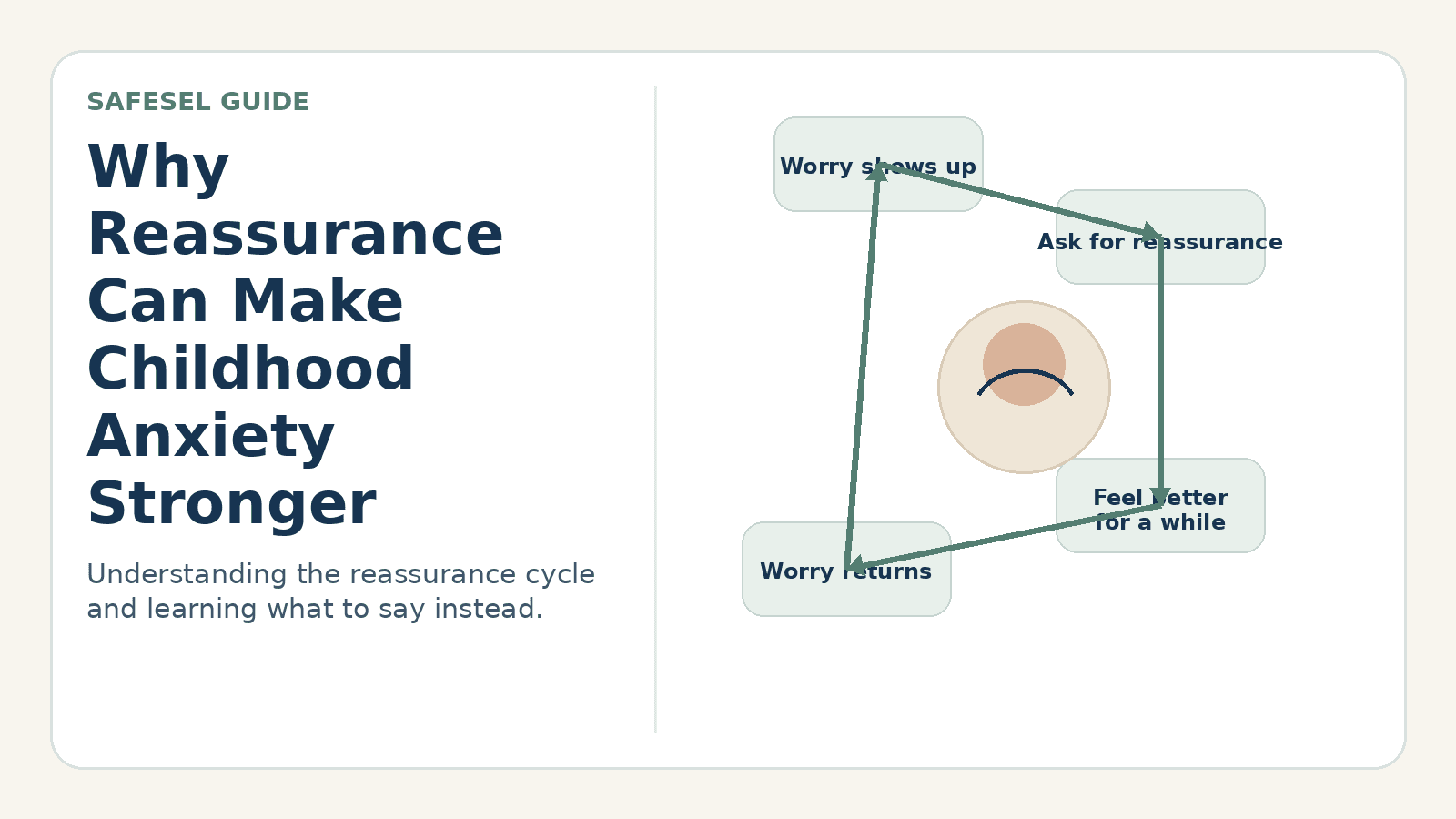
Use four boxes:
- Situation.
- Worry prediction.
- Body/urge.
- What happens next.
Example:
- Situation: teacher announces partner reading.
- Prediction: “I will get stuck and my partner will think I’m dumb.”
- Body/urge: hot face, tight chest, urge to sharpen a pencil or ask to leave.
- Next: student leaves; worry falls briefly; partner reading feels harder the next time.
Keep the explanation neutral. The student is not “choosing anxiety.” The map shows how a protective response can provide short relief while reducing practice.
Minutes 7–11: Teach one skill
Select the skill that matches the barrier.
If the student lacks information: clarify the school plan.
If the student treats a prediction as certain: ask, “What do we know, what are we guessing, and what could you do if part of the guess happened?”
If physical activation takes over: teach one brief, non-disruptive grounding or paced-exhale routine.
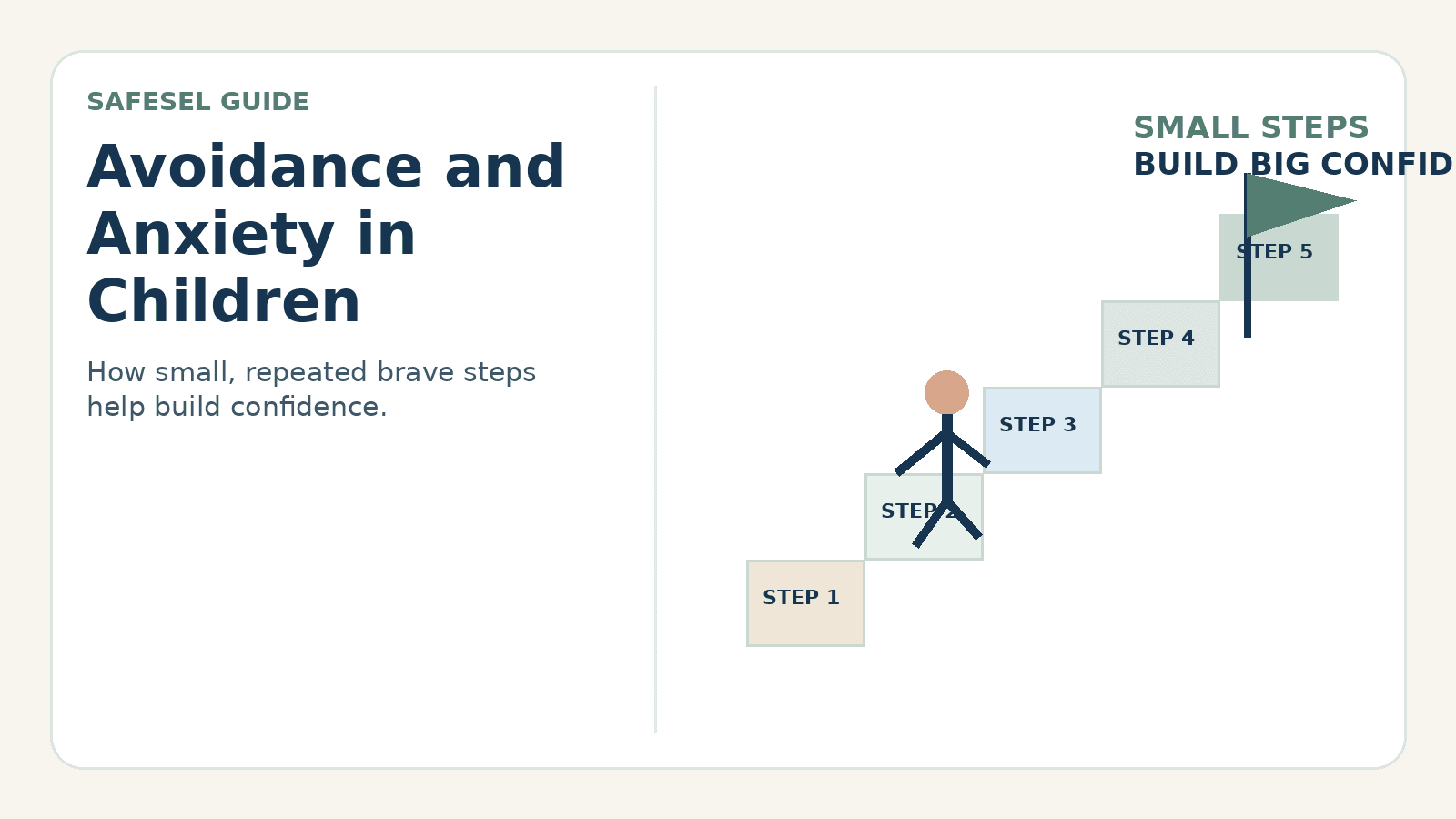
If avoidance is the central pattern: identify a smaller participation step rather than offering complete escape.
Avoid teaching five coping skills. The student needs one response they can remember outside the counseling room.
Minutes 11–15: Rehearse in context
Practice the exact moment. The counselor can play the teacher or peer.
Student: “Can I go to the counselor?”
Teacher: “Use your first step, then check in after the first paragraph.”
Student: checks the card, tells the partner, “I may need a second on a hard word,” and reads one sentence.
Rehearsal may reveal missing support. Perhaps the coping card is too wordy or the classroom check-in is not actually available. Revise the plan now.
Minutes 15–18: Plan transfer
Specify:
- when the student will try the step;
- what the adult will say;
- what support is available;
- what counts as an attempt;
- what happens if distress rises.
With appropriate consent and procedures, communicate the plan to the classroom adult. A private strategy that the teacher does not understand is unlikely to transfer reliably.
Minutes 18–20: Close and collect one baseline
Ask the student to explain the plan in their own words. Record a brief baseline: current worry rating if useful, frequency of leaving, or whether the target action occurred this week.
Close with effort-focused language: “The goal tomorrow is not zero worry. It is to use the card and try the first paragraph.”
Useful Counselor Questions
- “What does worry want you to do immediately?”
- “What helps for five minutes but makes tomorrow harder?”
- “Which part is a fact, and which part is a prediction?”
- “What is the smallest useful step—not the easiest escape?”
- “What should the teacher know so the plan feels predictable?”
- “How will we tell whether the plan is helping?”
Avoid rapid-fire questioning. Silence, drawing and pointing are legitimate responses.
Adaptations by Age
For ages 7–9, use concrete school scenarios, drawings and one short phrase. Rehearse through role-play. For ages 10–12, invite more collaboration about privacy, feared social consequences and which adult response would feel supportive rather than conspicuous.
For students with language, learning or attention differences, reduce writing, preview vocabulary and allow the adult to scribe. Developmental fit matters more than completing a standard form.
Difficult Reactions and How to Respond
“I don’t know.” Offer a recent moment and choices: “Was the first signal more in your stomach, face or thoughts—or somewhere else?”
“It will definitely happen.” Do not debate. Try: “It feels certain. Let’s plan what you can do if the hard part happens.”
The student becomes more distressed. Stop analysis, reduce language and return to present safety. Decide later whether to continue.
The student wants permanent escape. Validate the difficulty and clarify what decisions are within the session. Avoid promising removal from a class or activity you cannot authorize.
Common Facilitator Errors
- trying to reassure away every prediction;
- giving a worksheet before understanding the situation;
- teaching relaxation as a requirement for participation;
- creating a plan without the classroom adult;
- using an anxiety rating as a diagnostic score;
- overlooking academic, sensory, peer or safety factors;
- measuring success only by whether the child looked calm.
Monitor Progress Without Overtracking
Choose one or two indicators for two weeks:
- attempted the planned step;
- duration of participation;
- number of unplanned exits;
- level of adult prompting;
- student’s report of coping confidence.
Review whether support is helping the student participate, not merely conceal distress. If the plan repeatedly fails, reassess the task, environment and level of care rather than assuming noncompliance.
Share only information needed for implementation and follow school privacy procedures. The classroom adult may need the prompt and return step, not every detail the student disclosed. Tell the student in developmentally appropriate language what will be shared and why, except where safeguarding duties require otherwise.
When Additional Support Is Needed
Coordinate further evaluation when worry is severe or persistent, causes marked distress, prevents attendance or ordinary participation, creates frequent physical complaints or substantially affects learning and relationships. Follow school procedures for caregiver communication, referral and urgent safety concerns.
The AAP notes that school staff can provide important observations and collaborate with families and health professionals. School-based support should complement—not replace—individualized clinical care when that is indicated.
Sources and further reading
- Help Your Child Manage Anxiety: Tips for Home & School — American Academy of Pediatrics — HealthyChildren.org
- School Avoidance: Tips for Concerned Parents — American Academy of Pediatrics — HealthyChildren.org
- Treating Children's Mental Health with Therapy — Centers for Disease Control and Prevention