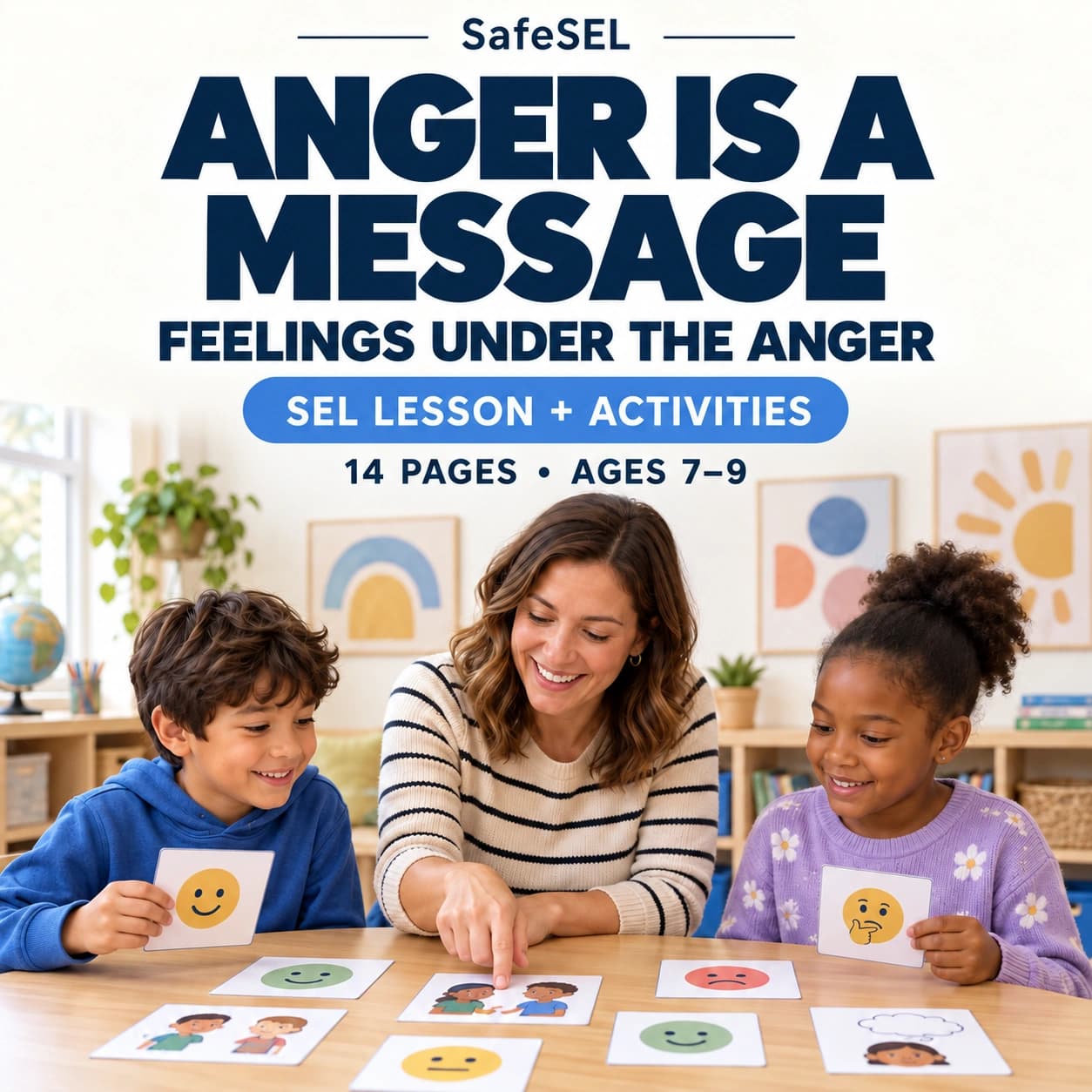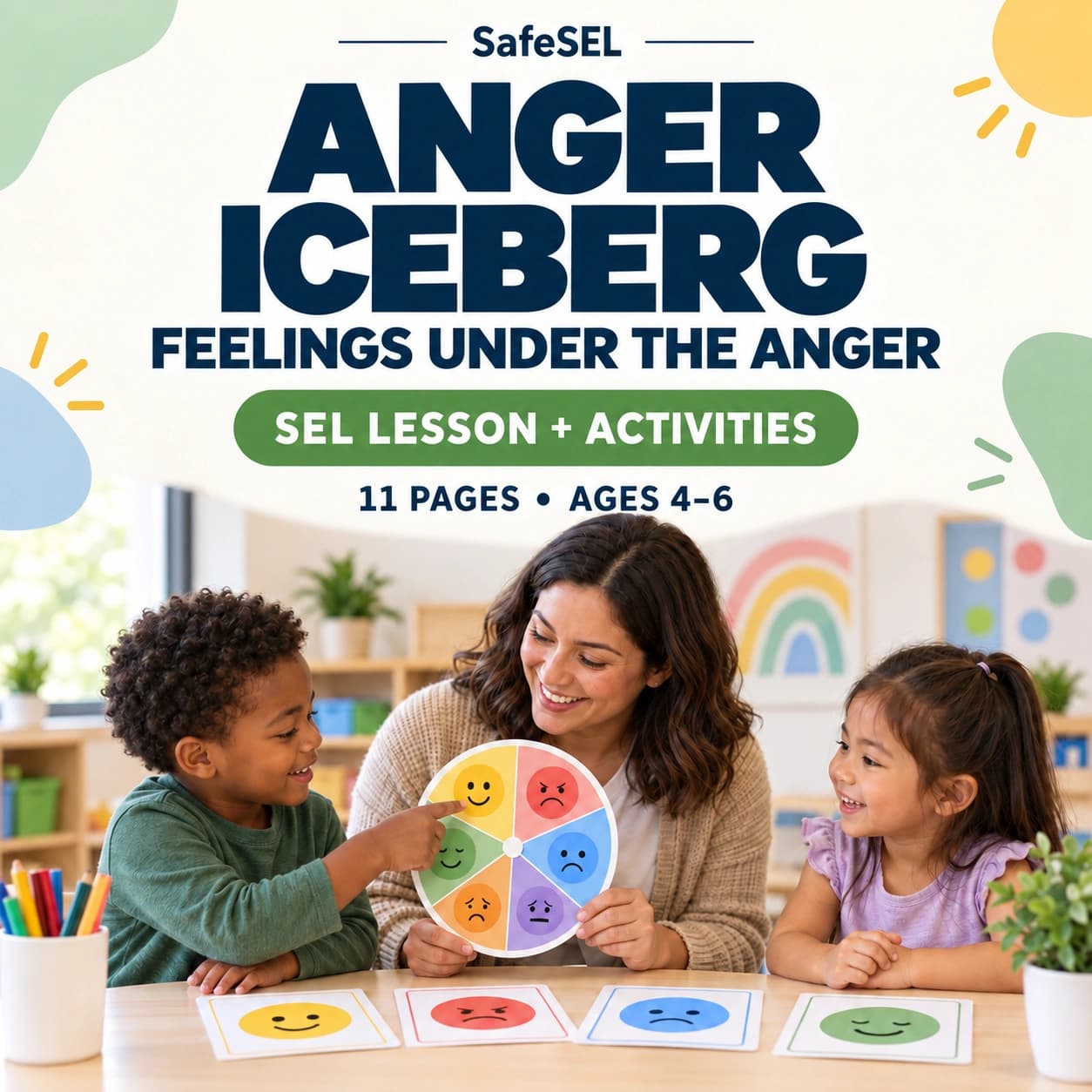
Anger is not misconduct. It is an emotion that can accompany unfairness, frustration, threat, overload, pain, or blocked goals. Good materials separate the feeling from unsafe actions and teach what to do before, during, and after escalation.
Quick answer: Look for body cues, intensity, triggers, safe action choices, communication, recovery, and repair. Avoid pages that frame anger as bad or require written reflection at peak arousal.
A Strong Sequence
Useful bundles move through:
- noticing early body and behavior cues;
- identifying contexts and unmet needs;
- choosing safe alternatives to aggression;
- practising boundary and help-seeking language;
- planning return and repair;
- reviewing what adults can change in the environment.
Repeated coloring pages or lists of generic coping skills do not equal a curriculum.
Check the Adult Guidance
Materials should explain when to teach each page and how to respond without shame. They should not suggest that a worksheet replaces supervision or professional help when a child repeatedly injures people, destroys property, threatens safety, or shows a major change in functioning.
Check Fit and Value
Preview the reading level, representation, writing demand, print quality, and whether examples reflect home and school. Compare genuinely different pages, not total page count inflated by color variants. Confirm personal, classroom, or practice licensing before sharing.
Use the guidance in a real situation
When addressing anger management worksheets for elementary children, choose one recent, specific example that fits the pattern; write down the event, the first observable sign of difficulty, the adult response, and what happened next so that a broad label does not replace the details needed for a useful decision.
Use “A Strong Sequence” as the first action from the guide and define who will try it, where it will happen, and how long the first attempt will last; keep other parts of the routine stable so the result is interpretable.
Language and access
- In a conversation about anger management worksheets for elementary children, an adult might say “Would it be easier to talk, point, draw, or write one part?”
- In a conversation about anger management worksheets for elementary children, an adult might say “We only need the section that helps with today’s goal.”
When applying “A Strong Sequence,” accept an accessible response format unless the format itself is the skill being taught; reduce unnecessary writing, public disclosure, sensory load, and rapid verbal demands.
Review what changed
To review anger management worksheets for elementary children, track whether the tool clarified communication, supported rehearsal, or changed one real-world action without becoming the main source of conflict; compare several similar opportunities before concluding that the plan worked or failed, and alter only one major variable at a time.
In this guide to anger management worksheets for elementary children, requiring every box to be completed can turn a support into a compliance test; select only the pages needed for the current goal and offer a spoken, visual, typed, or assisted response when appropriate.
When to seek additional help
Seek individualized assessment when difficulty remains persistent, worsening, unsafe, or substantially affects learning, sleep, health, relationships, or daily life despite trying “A Strong Sequence”; educational guidance cannot determine a diagnosis or replace appropriate professional care.
Use this guide as a starting point for anger management worksheets for elementary children, not as a fixed script; a useful plan remains specific enough to repeat, flexible enough to preserve access, and clear about which signs require a different level of support.
Before increasing difficulty in work on anger management worksheets for elementary children, compare the current attempt with the original example and ask whether “A Strong Sequence” became easier, needed less prompting, or worked in one additional setting; record the support that was present, because a better result with support is useful evidence and does not need to be dismissed as dependence, and note what the child could do before and after that support was added.
Sources and further reading
- Treating Children's Mental Health with Therapy — Centers for Disease Control and Prevention
- Help Your Child Manage Anxiety: Tips for Home & School — American Academy of Pediatrics — HealthyChildren.org
- Enhancing and Practicing Executive Function Skills with Children from Infancy to Adolescence — Center on the Developing Child at Harvard University