When anxiety leads a child to refuse school, respond promptly and collaboratively rather than treating the morning as a battle of wills. First check for illness, safety concerns, bullying, learning problems, or another reason school feels unsafe. Keep the morning calm and brief, contact the school and the child’s health care provider, and build a specific return plan. Prolonged absence can make returning harder, so do not wait weeks for the pattern to resolve by itself.
Important: School refusal is a description of a pattern, not a diagnosis. A child who cannot enter school needs understanding and a plan, but also a careful assessment of what is driving the distress.
What Anxiety-Related School Refusal May Look Like
A child may cry, hide, lock themselves in a room, refuse to dress, cling to a caregiver, or become physically agitated before school. Others report headaches, nausea, stomach pain, dizziness, or exhaustion that improves after they are allowed to stay home. Some children attend but repeatedly visit the nurse, call home, arrive late, or leave early.
The pattern may be obvious on Monday mornings, after holidays, following illness, or during a transition. It can also emerge around a specific class, peer group, test, presentation, noisy setting, separation, or fear of using the bathroom at school.
For example, nine-year-old Ava complains of stomach pain every Sunday night and begs to remain home on Monday. The pain should not be dismissed as “fake.” Anxiety can involve real physical sensations, and a medical professional should evaluate recurring complaints. At the same time, improvement after the school demand is removed is useful information for the return plan.
Eleven-year-old Theo attends until lunch and then calls his father. Asking only, “How do we make him stay all day?” misses a key question: what changes before lunch? The trigger might involve social conflict, an academically difficult class, sensory overload, medication timing, or fear of an afternoon presentation.
Start by Checking What School Refusal Is Communicating
Do not assume anxiety is the only explanation. Promptly explore:
- fever, pain, sleep problems, medication effects, or another medical concern;
- bullying, harassment, discrimination, threats, or an unsafe route to school;
- learning difficulties, workload, perfectionism, or fear of public mistakes;
- separation fears or worry about a caregiver’s safety;
- social anxiety, friendship conflict, or loneliness;
- sensory overload, communication barriers, or unmet developmental needs;
- trauma reminders or a recent family or school change;
- depression, hopelessness, self-harm, or suicidal thoughts.
Ask concrete, non-accusing questions when the child is relatively calm: “Which part of the day feels hardest?” “When does your body first tell you not to go?” “Is there anyone or anywhere at school that feels unsafe?” “What do you predict will happen if you stay?”
If the child reports harm or danger, prioritize safety and follow the school’s safeguarding procedures. A return plan must not send a child back into an unaddressed threat.
What to Do on a Difficult Morning
Keep language brief and predictable
Avoid a long debate about whether the child “really” feels sick or whether school is objectively safe. Intense anxiety reduces the child’s ability to process explanations.
Try: “I believe that your stomach hurts and that school feels very hard. We are following today’s plan: get dressed, ride to school, meet Ms. Lee at the office, and stay for first period. The adults will help with the next step.”
Validation acknowledges distress; it does not require agreeing that staying home is the only safe response.
Use the plan, not new negotiations
Decide the morning sequence with the school and child before the next crisis whenever possible. Include the arrival point, named adult, first manageable activity, communication rule, and what happens if distress rises.
Repeatedly renegotiating at the doorway can make the child responsible for solving a complex problem while overwhelmed. It can also teach everyone that escalation is the route to changing the plan.
Reduce unnecessary stimulation
Prepare clothing, breakfast, medication, and the school bag the night before. Keep siblings out of the conflict. Turn off television and avoid multiple adults offering different instructions.
Do not use shame or physical force
Statements such as “Everyone else manages school” or “You are ruining my workday” add shame without resolving the barrier. Physical force can create safety risks and should not substitute for professional and school support. If the child becomes aggressive or anyone is unsafe, follow an immediate safety plan and seek appropriate crisis support.
Contact the School Early
Ask for one coordinator—often a counselor, psychologist, social worker, nurse, administrator, or trusted teacher. Share the pattern rather than only the latest absence:
- when distress begins;
- physical symptoms and medical findings;
- days, classes, or transitions associated with refusal;
- what helps the child enter or remain;
- what tends to increase distress;
- current professional support and consent for communication.
Request school observations. The child may appear calm once inside, but that does not mean the morning distress was insignificant. Conversely, home may not know about peer conflict, academic avoidance, frequent nurse visits, or a difficult transition.
The plan should identify a welcoming arrival routine, a safe adult, a short coping strategy, and a route back to instruction. A calm space can help a child regulate, but it should not become an all-day alternative classroom without review.
Build a Return Plan That Is Specific
Some children can return to a full day with targeted arrival support. Others need a professionally guided gradual plan. The right pace depends on severity, duration, safety, health, school resources, and the reason for refusal.
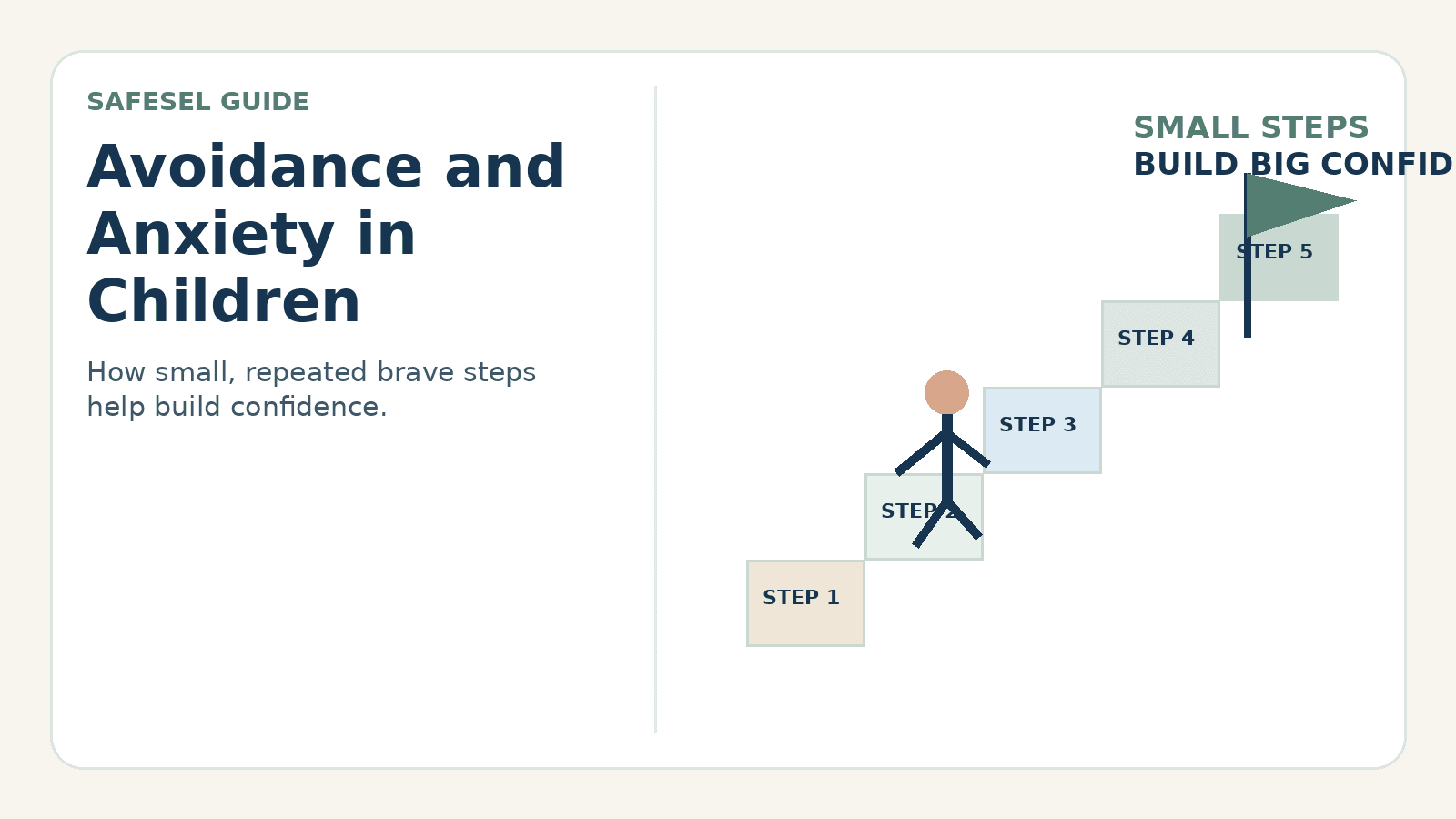
A plan might progress through:
- arrive and meet the counselor at a quiet entrance;
- complete one predictable class or activity;
- add a transition and lunch with support;
- extend attendance while reducing adult prompting;
- review coping and attendance data each week.
Each step needs a clear start, review date, and next criterion. “Go when you feel ready” can leave the child waiting for anxiety to disappear. “You must manage the whole day tomorrow” may be too large. A planned middle step lets the child experience anxiety and successful participation together.
Keep home during school hours safe but ordinary when absence occurs. Staying home should not become a highly rewarding holiday, but neither should it be punitive. Maintain a school-like wake time, meals, limited entertainment, and appropriate academic contact according to the school and treatment plan.
Support Coping Without Making Escape the Only Strategy
Useful supports may include:
- a written arrival sequence;
- one coping statement;
- a brief worry rating before and after entry;
- a scheduled check-in rather than unlimited calls home;
- a predictable adult greeting;
- adjusted work while a learning need is assessed;
- rehearsal of asking for help;
- gradual practice with a feared but safe situation.
Avoid requiring a worksheet during peak distress. Reflection and CBT tools are most useful when the child can engage with them. A printable can help organize a later plan, but it cannot determine why a child refuses school or replace coordinated care.
Mistakes That Can Keep the Pattern Going
Waiting for certainty about the cause
Assessment and supported attendance planning can often proceed together. Families do not always need a perfect explanation before contacting school and health professionals.
Providing unlimited reassurance
Promises such as “Nothing bad will happen” are impossible to guarantee. Use realistic confidence: “We have checked the safety concern, Ms. Lee knows the plan, and you can ask for help if the worry rises.”
Focusing only on attendance numbers
Attendance matters, but a child physically present and spending the day in panic or isolation still needs support. Track entry, time in instruction, use of coping, recovery, and participation.
Allowing the return plan to drift
Temporary adjustments can become permanent avoidance if no one sets review dates. Document who will monitor the plan and when the team will decide whether to advance, adapt, or seek additional assessment.
When to Seek Professional Help
Contact the child’s pediatrician or qualified mental health professional promptly when refusal repeats, absence increases, physical symptoms recur, or anxiety interferes with learning, sleep, relationships, or family functioning. Early support is especially important when the child has stopped attending, cannot separate from a caregiver, experiences panic, or the family cannot implement the return plan safely.
Seek urgent local help if the child expresses suicidal thoughts, self-harms, threatens serious harm, appears unable to remain safe, or reports abuse or danger. In the United States, call or text 988 for crisis support; elsewhere use the appropriate local emergency or crisis service.
AACAP identifies school refusal and physical complaints around separation as possible signs of significant anxiety. AAP school guidance emphasizes collaboration among families, schools, and health professionals. CDC guidance recommends an evaluation when caregivers are concerned and notes that effective care may involve the child, caregivers, and school.
Related SafeSEL guide
For a coordinated plan after difficult mornings become a pattern, use the School Refusal Support Plan for Parents and Schools.
Sources and further reading
- Help Your Child Manage Anxiety: Tips for Home & School — American Academy of Pediatrics — HealthyChildren.org
- School Avoidance: Tips for Concerned Parents — American Academy of Pediatrics — HealthyChildren.org
- Treating Children's Mental Health with Therapy — Centers for Disease Control and Prevention