Support separation worry with a predictable goodbye, a concrete reunion cue, and practice in manageable steps. Avoid disappearing secretly or extending the goodbye until the child feels completely certain.
In brief: Preview who, where, and when; use the same short goodbye; let the receiving adult lead the next action; return when promised.
Make Time Understandable
“Later” is vague. Link reunion to a child-sized event: “I will return after snack and outdoor play.” Show the sequence with two or three pictures if helpful.
Keep Goodbye Warm and Brief
Use one ritual: hug, phrase, handoff. Repeated returns to the doorway can signal that leaving may be unsafe. The child can be distressed and still receive calm support from the other adult.
Practice Gradually
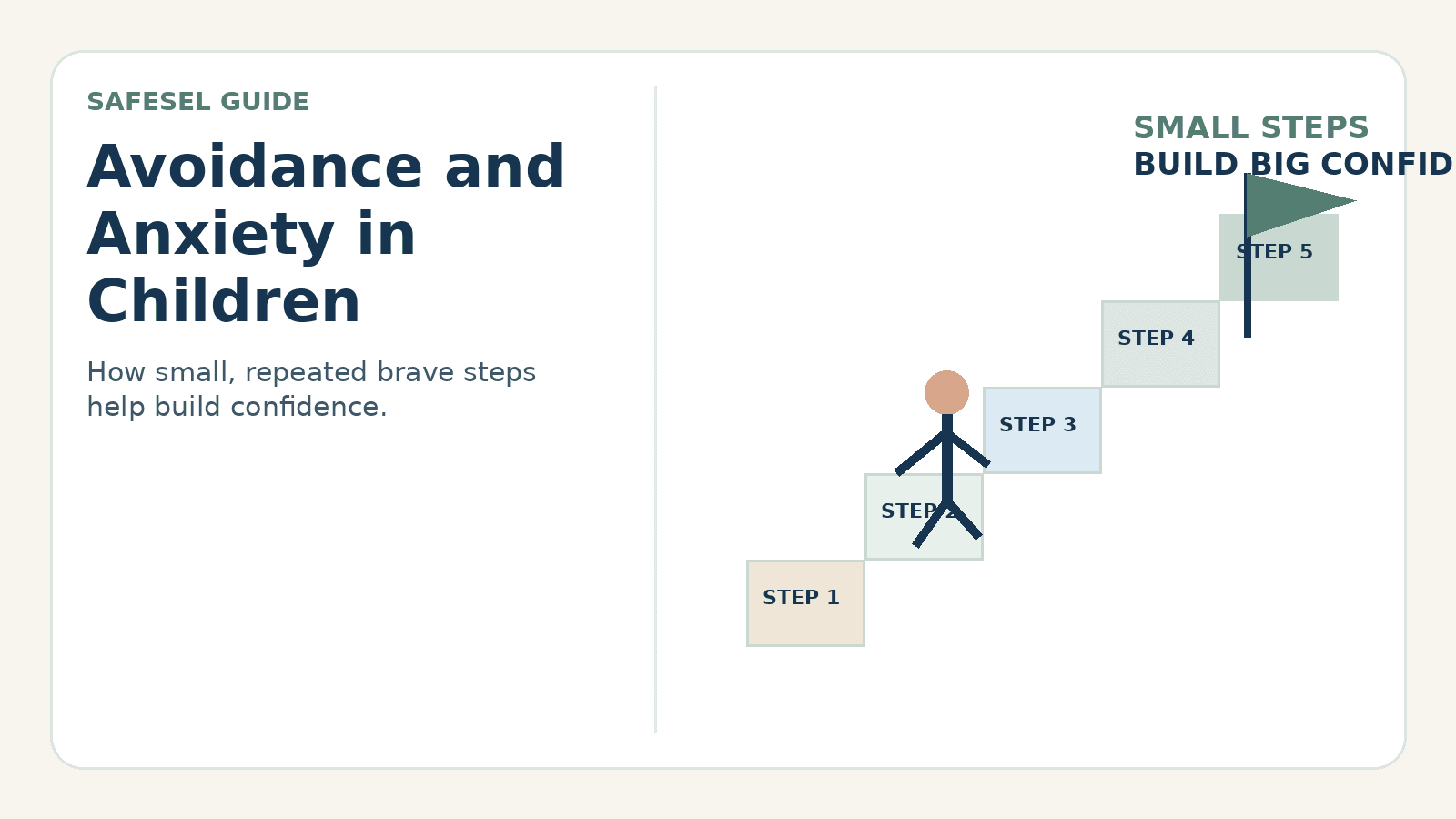
Begin with a familiar caregiver and a short, successful separation, then vary duration or setting one factor at a time. Do not surprise the child with a larger step than agreed.
Avoid Making Contact a Checking Ritual
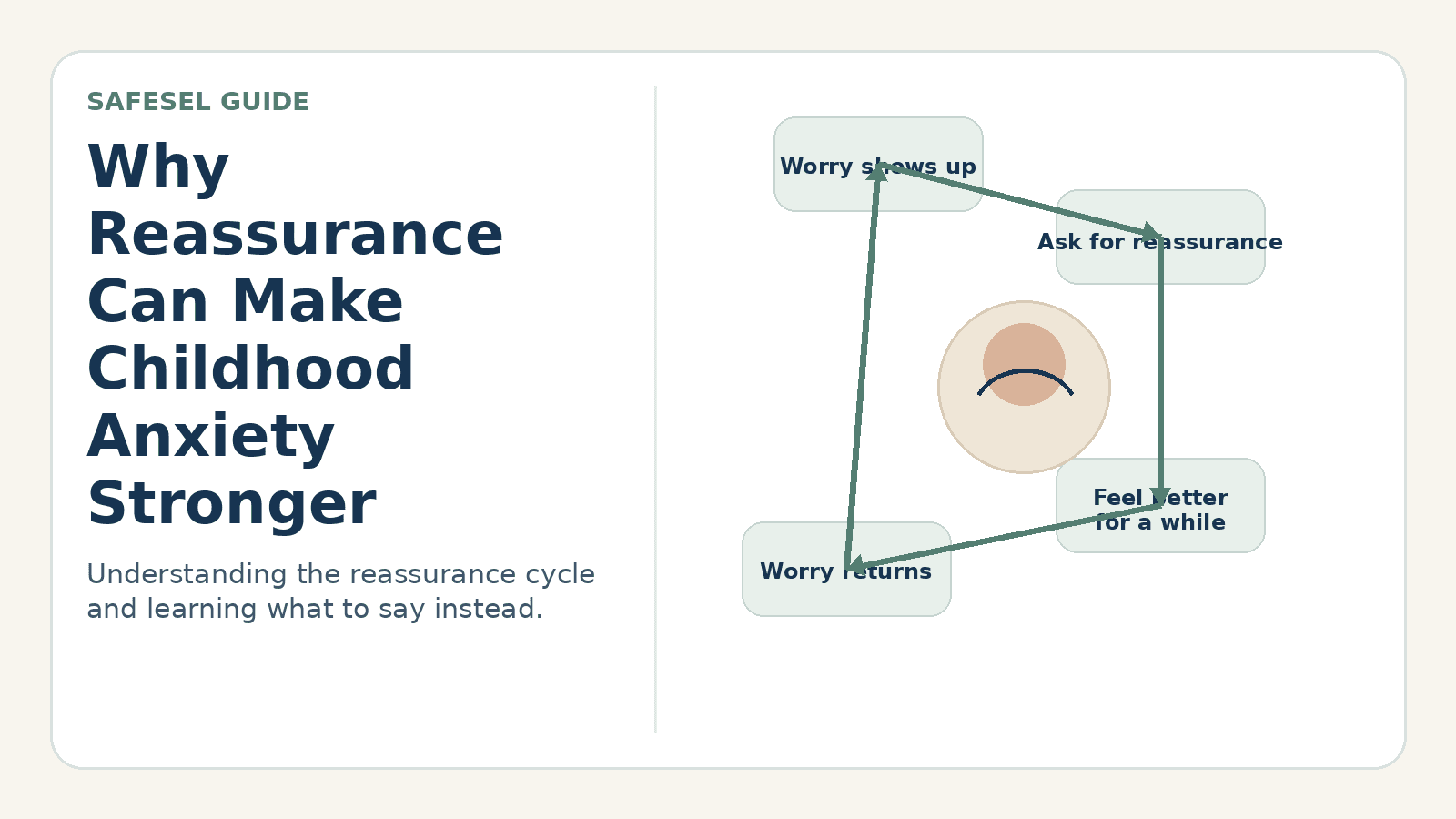
For older children, repeated messages may reduce distress briefly but keep attention on danger. Agree in advance when contact is available and what the child will do between check-ins.
Example: The First After-School Club
Preview the room, leader, pickup point, and exact activity that happens before reunion. The first step might be staying for the opening activity rather than the full session. Say goodbye once and let the leader guide the child to a concrete task.
Afterward, review behavior rather than demanding that it felt easy: “You cried, walked in with the leader, and stayed through the activity.” Decide the next step from that evidence. Do not unexpectedly double the duration because the first attempt went well.
What Commonly Backfires
- leaving without saying goodbye;
- returning repeatedly after each protest;
- asking the child to promise not to cry;
- using shame or comparisons with younger children;
- letting reassurance calls continue without a plan;
- treating distress as proof that the separation was harmful;
- overlooking a real problem with the setting or caregiver.
When to Seek Support
Seek professional guidance when separation distress is persistent, severe, developmentally unexpected, or interferes with school, sleep, family activities, or relationships. Check for bullying, unsafe care, illness, and major life changes rather than assuming all refusal is anxiety.
Use the guidance in a real situation
When helping a child with worry about being away from a parent, choose one recent, specific example that fits the pattern; write down the event, the first observable sign of difficulty, the adult response, and what happened next so that a broad label does not replace the details needed for a useful decision.
Use “Make Time Understandable” as the first action from the guide and define who will try it, where it will happen, and how long the first attempt will last; keep other parts of the routine stable so the result is interpretable.
Language and access
- In a conversation about helping a child with worry about being away from a parent, an adult might say “We cannot know every detail, but we can plan the first step.”
- In a conversation about helping a child with worry about being away from a parent, an adult might say “Which support would help you begin without doing the step for you?”
When applying “Make Time Understandable,” accept an accessible response format unless the format itself is the skill being taught; reduce unnecessary writing, public disclosure, sensory load, and rapid verbal demands.
Review what changed
To review helping a child with worry about being away from a parent, track approach, recovery, and independence: starting sooner, staying a little longer, returning after a pause, or using less reassurance; compare several similar opportunities before concluding that the plan worked or failed, and alter only one major variable at a time.
In this guide to helping a child with worry about being away from a parent, check first for bullying, pain, trauma reminders, sensory barriers, learning difficulty, or genuine danger; treating every refusal as anxiety can hide a problem that requires a different response.
When to seek additional help
Seek individualized assessment when difficulty remains persistent, worsening, unsafe, or substantially affects learning, sleep, health, relationships, or daily life despite trying “Make Time Understandable”; educational guidance cannot determine a diagnosis or replace appropriate professional care.
Use this guide as a starting point for helping a child with worry about being away from a parent, not as a fixed script; a useful plan remains specific enough to repeat, flexible enough to preserve access, and clear about which signs require a different level of support.
Before increasing difficulty in work on helping a child with worry about being away from a parent, compare the current attempt with the original example and ask whether “Make Time Understandable” became easier, needed less prompting, or worked in one additional setting; record the support that was present, because a better result with support is useful evidence and does not need to be dismissed as dependence, and note what the child could do before and after that support was added.
Sources and further reading
- Help Your Child Manage Anxiety: Tips for Home & School — American Academy of Pediatrics — HealthyChildren.org
- School Avoidance: Tips for Concerned Parents — American Academy of Pediatrics — HealthyChildren.org
- Treating Children's Mental Health with Therapy — Centers for Disease Control and Prevention