← All guides
Parent Handouts

Choosing a Home Calm-Down Plan for Different Ages and Needs

Choose a home calm-down plan based on age, communication, sensory needs, safety, and the child’s path back to

Written bySafeSEL Editorial TeamEducational content team

A home calm-down plan should not require every child to breathe, talk, sit in one place, or use the same strategy. The useful question is not “What calms children?” but “What helps this child stay safe, reduce overload, communicate, and return when ready?”

In brief

Every plan needs a clear purpose, a small set of options, adult guidance, safety boundaries, and a return path. Adapt the amount of language, choice, independence, and visual support to the child’s age and communication needs.

Core elements every plan needs

A recognizable early signal

The family may notice pacing, louder speech, hiding, repeated arguing, clenched hands, tears, or sudden silence. These are observations, not diagnoses.

A small menu of options

Offer two to five strategies, not a wall of choices. Options may include movement, reduced input, water, a sensory tool, a request for space, brief connection, or a familiar activity.

An adult role

The plan should state what the adult does:

  • use less language;
  • hold a safety limit;
  • reduce demands temporarily;
  • remain nearby or give space;
  • help the child access a tool;
  • return later for problem-solving.

A return path

Calm-down time should not become indefinite avoidance. The return might be:

  • rejoining dinner;
  • completing one small part of the task;
  • having a two-minute repair conversation;
  • choosing a new plan;
  • moving to the next routine.

Ages 4–6

Young children usually need more adult co-regulation and fewer verbal instructions.

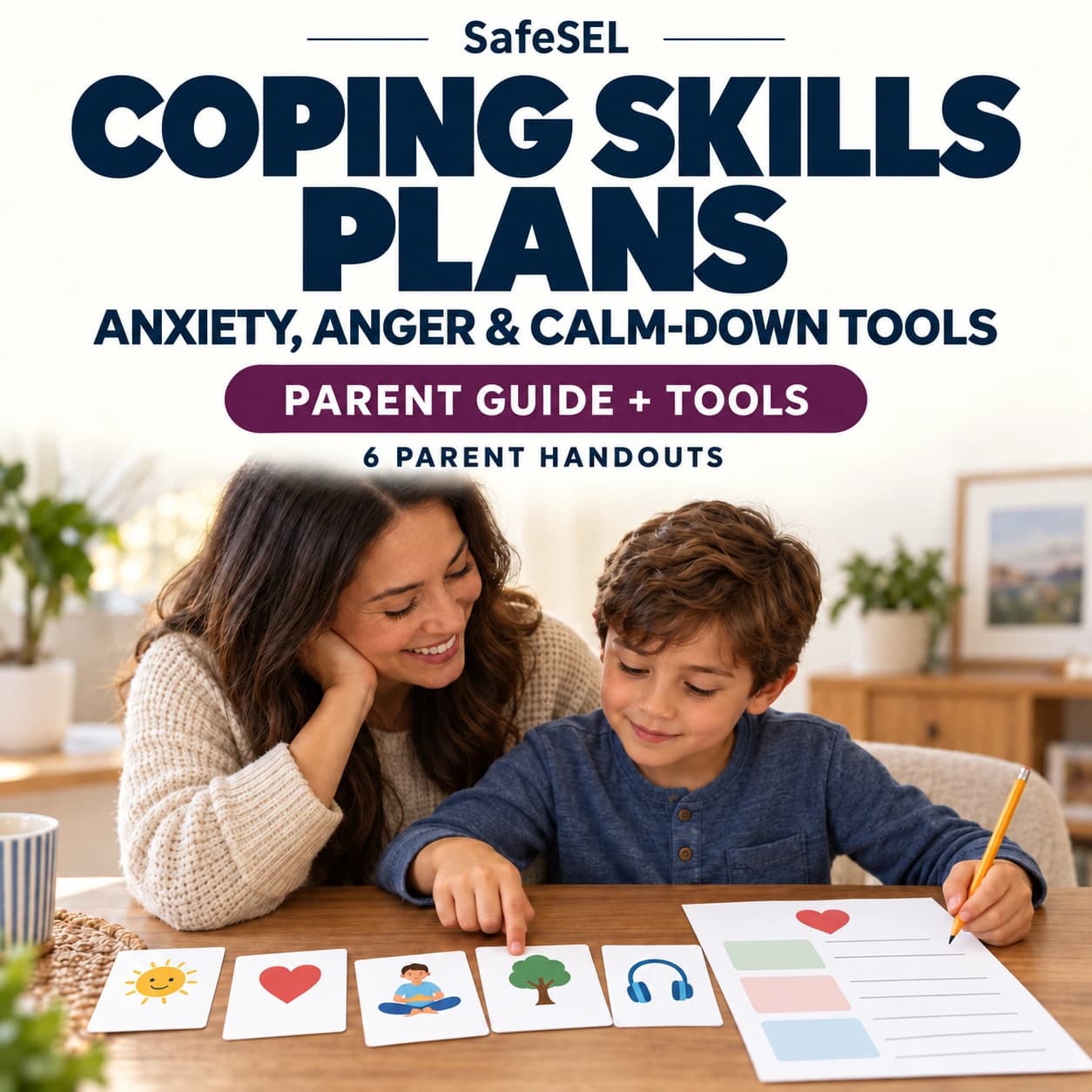
A plan might show three pictures:

  1. safe body with adult help;
  2. choose squeeze, movement, or quiet;
  3. return for one small next step.

Adult language:

“You are safe. I am here. We will talk later.”

Do not expect a preschooler to independently read a list and choose a complex cognitive strategy during high arousal.

Ages 7–9

Children can often identify early signs and choose from a short menu with prompts.

A plan may include:

  • “My early signs”;
  • three helpful options;
  • a help or space request;
  • a timer or adult check-in;
  • the next task after the break.

Adult language:

“Your voice is getting louder and your hands are tight. Do you want movement or quiet?”

Ages 10–12

Older children may need privacy and age-respectful design. Collaborate rather than posting a childish chart publicly.

The plan can include:

  • preferred signs the child wants adults to notice;
  • discreet communication methods;
  • strategies that can be used without drawing attention;
  • boundaries for devices and online communication during anger;
  • a clear agreement about when adults must intervene for safety;
  • a later review chosen with the child.

Adult language:

“I can give you space. I will check in after ten minutes because we still need a plan for the broken item.”

Sensory and communication adaptations

Some children need options that reduce verbal and sensory demand.

Consider:

  • pointing instead of speaking;
  • a break card;
  • headphones or lower lighting when safe;
  • heavy-work movement;
  • a predictable location;
  • larger visuals;
  • first–then information;
  • one option shown at a time;
  • communication devices remaining available.

A sensory strategy should be chosen by function and child response, not because it appears on a generic list.

Ordinary regulation plan vs safety plan

A calm-down plan is not enough when behavior creates immediate danger.

A safety plan may require individualized professional guidance and should address:

  • dangerous aggression;
  • running away;
  • access to unsafe objects;
  • severe property destruction;
  • threats of harm;
  • emergency contacts and procedures.

Do not place responsibility for safety on a child’s worksheet.

Age-and-need comparison

Feature — Ages 4–6 — Ages 7–9 — Ages 10–12

--- — --- — --- — ---

Adult support — high — shared — collaborative and discreet

Number of options — 2–3 — 3–5 — personalized menu

Visuals — pictures/objects — pictures and short text — concise, age-respectful text

Review — brief adult-led — simple reflection — collaborative problem-solving

Return — one tiny step — agreed next task — negotiated responsibility and repair

How to teach the plan

Teach it when the child is regulated.

  1. Explain the purpose.
  2. Demonstrate each option.
  3. Let the child remove unhelpful strategies.
  4. Rehearse a low-intensity example.
  5. Decide how adults will prompt.
  6. Review after several uses.

Buyer checklist

Choose a plan that:

  • separates early signs from crisis behavior;
  • provides a small, editable menu;
  • includes adult actions;
  • offers communication alternatives;
  • is adaptable by age;
  • includes a return path;
  • avoids promising instant calm;
  • distinguishes ordinary support from safety planning;
  • uses respectful language and design.

When to seek additional support

Seek individualized help when dysregulation causes danger, persistent family disruption, major school impairment, or increasing distress. A generic home plan should not replace assessment or crisis guidance.

Related SafeSEL resources

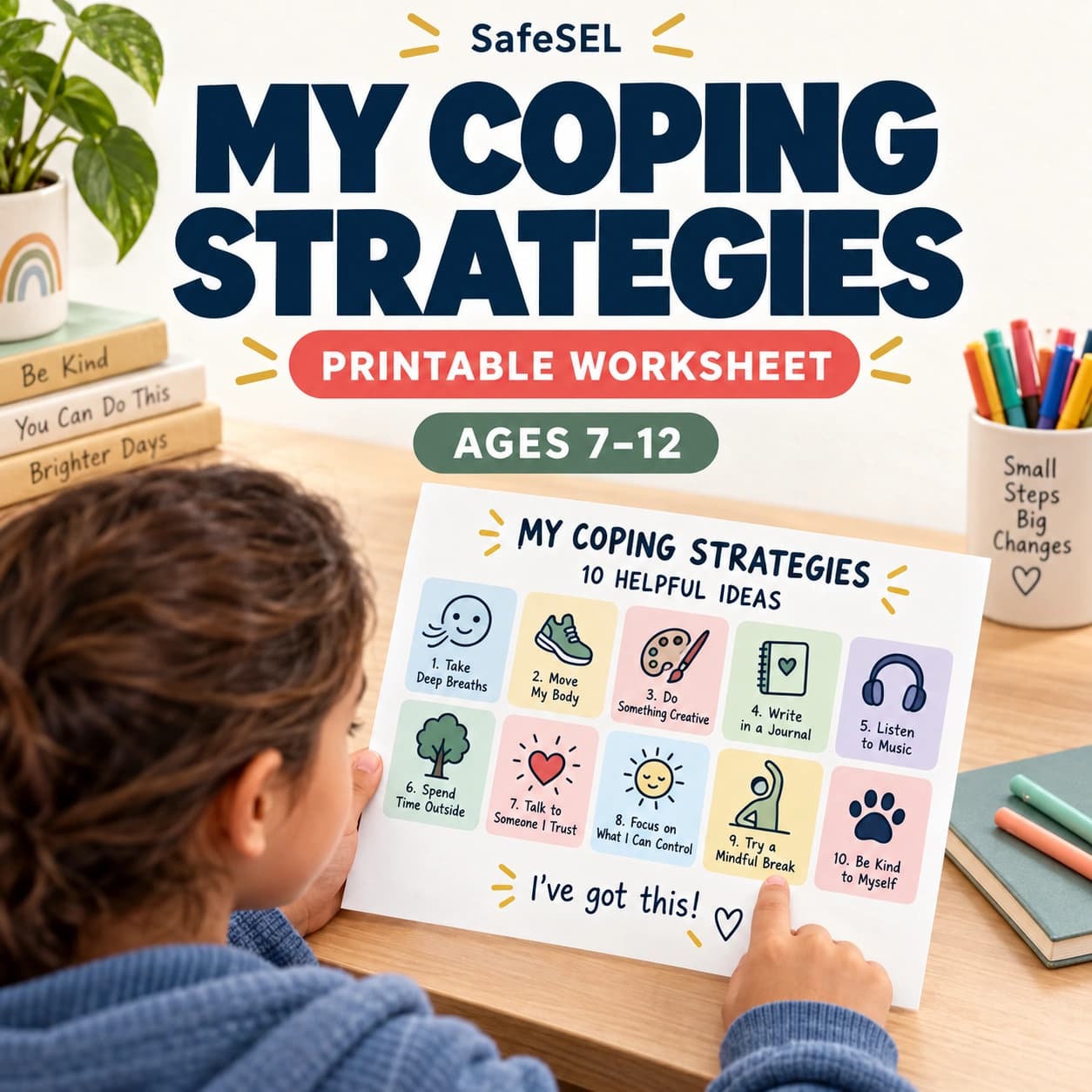
A home plan can be paired with coping cards, an anger body-signs map, a meltdown response handout, or a repair conversation guide.

Common mistakes when building the plan

A plan can become too complicated when it contains every coping strategy the family has ever heard of. It may also fail when adults change the rules during each episode, discuss consequences at peak distress, or expect the child to explain the trigger before receiving support.

Another mistake is creating the plan entirely without the child. Even young children can indicate which tools feel uncomfortable, which location feels safe, and whether an adult should stay close.

How to review whether the plan helps

After several uses, review participation and recovery rather than appearance. Ask whether the child accessed support earlier, stayed safer, communicated more clearly, or returned with less adult prompting. If a strategy reliably increases agitation, remove it. A calm-looking child is not necessarily regulated, and a child who still shows emotion may still be using the plan effectively.

Sources and further reading

  1. Emotional Dysregulation — American Academy of Child and Adolescent Psychiatry
  2. Child Development — Centers for Disease Control and Prevention
  3. CASEL Framework — Collaborative for Academic, Social, and Emotional Learning
  4. UDL Guidelines — CAST
  5. Vary and Honor Methods for Response, Navigation, and Movement — CAST
SafeSEL printables

Related resources

View all Parent Handouts products →
Continue reading

Related articles

Calm-Down Cards for Sensory and Communication Needs: What to Look For

Choose calm-down cards with sensory, movement, communication, and space options that can be individualized and used without relying on spoken

Read guide →

How to Choose a Visual Schedule for Home or School

Match visual schedule format to reading, communication, planning, and transition needs at home or school without creating unnecessary

Read guide →
Calm-Down Cards: How Many Choices Should a Child Have?

Calm-Down Cards: How Many Choices Should a Child Have?

A large deck of coping cards becomes another decision the child cannot make under stress. Learn what may be happening and use a concrete, developmentally respectful plan.

Read guide →