Teachers can support an anxious student by reducing unnecessary uncertainty, offering a manageable first step, and creating a predictable route back to learning. The goal is not to remove every uncomfortable task or require the student to calm down before participating. Effective support improves access while helping the student gradually do more with less adult assistance.
In brief: Use a support–shrink–return plan. Support the student’s regulation and understanding, shrink the immediate demand without erasing its purpose, and define how the student will return to the task.
Access Support and Avoidance Are Not the Same
An accommodation can make a task accessible: advance notice of a presentation, a written direction, a quieter starting place, or permission to answer the first question privately. Avoidance removes contact with the feared but safe situation indefinitely. The same action can function differently depending on the plan.
Allowing a student to present to the teacher first can be a useful step if the team has agreed that the next step will be presenting to two peers. If the private presentation becomes a permanent replacement with no review, it may keep the student from learning that supported public participation is possible.
This distinction is not a reason to withdraw accommodations abruptly. Some supports address disability, communication, sensory, learning, trauma-related, or medical needs and may remain necessary. Decisions should follow the student’s individualized plan and qualified school team—not a generic rule that all distress must be challenged.
First, Identify the Point of Friction
“Anxious at school” is too broad for a useful plan. Observe when the pattern begins:
- arrival or separation;
- unstructured peer time;
- being called on without warning;
- independent work with unclear expectations;
- correction or feedback;
- tests, timed work, or presentations;
- transitions, noise, or unfamiliar adults;
- asking for help publicly.
Ask concrete questions after the student is regulated: “Which part felt uncertain?” “What did you think might happen?” “What would help you begin without doing the work for you?” Also check academic fit, bullying, safety, communication needs, and health concerns. Anxiety may be present alongside a real barrier.
Use the Support–Shrink–Return Sequence
1. Support
Orient the student with few words. Name the next step, available help, and what remains predictable.
Try: “The directions are on this card. I will check after question one. You can begin at your desk or the side table.”
Validation can be brief: “I can see this feels hard.” Avoid promising, “Nothing will go wrong,” or debating the likelihood of embarrassment during peak distress.
2. Shrink
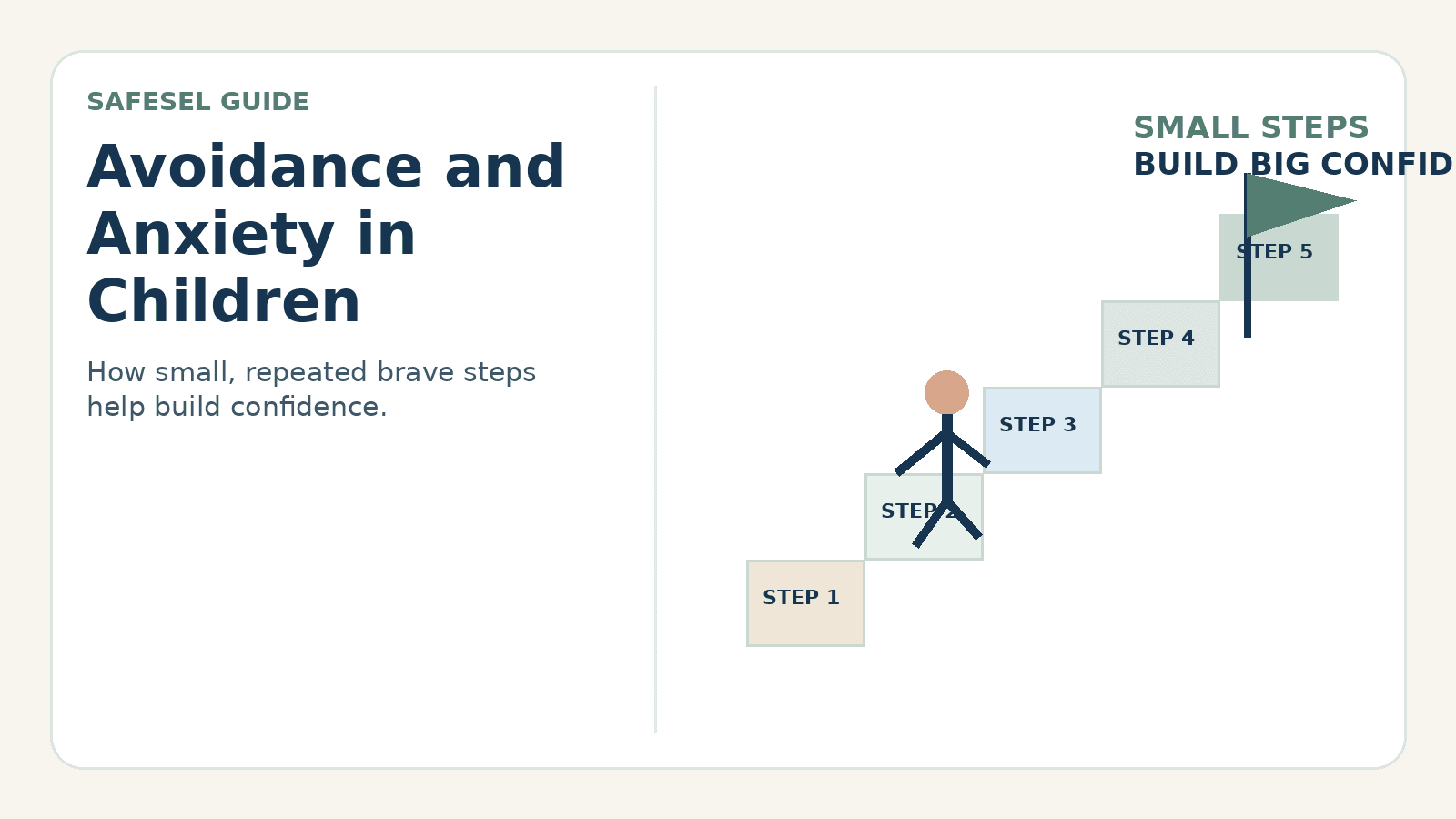
Reduce the immediate unit of work while preserving its purpose. A student who cannot start ten problems might complete the first two and check in. A student frozen before a presentation might read the opening line to one trusted adult, then add two peers.
Shrinking is not automatically lowering expectations. It is sequencing access. Record what the student completed so that the next step is based on evidence rather than the intensity of the latest moment.
3. Return
Every temporary break needs a clear route back: when, where, with whom, and what first action. “Take a break” is incomplete. “Use the quiet space for five minutes, then meet me at the side table and highlight the first direction” is actionable.
If the student cannot return as planned, do not shame them. Review whether the step was too large, the break became open-ended, or another barrier needs assessment.
Examples in Common Classroom Situations
Presentations
Provide the rubric and sequence early. Let the student choose among two equivalent first steps, such as presenting first or third. Consider a graded audience plan when appropriate. Do not surprise the student with a larger audience after they complete the agreed step.
Asking for help
Teach a discreet signal, help card, or digital request, then practice a path toward spoken help when that is an appropriate goal. A private signal can create access; it should not prevent the student from developing broader communication skills when they are able.
Independent work
Check whether perfectionism, unclear directions, or skill gaps are driving delay. Use a “first acceptable draft” expectation, mark the starting item, and schedule one check rather than providing continuous reassurance.
Transitions
Give a brief warning and a visual sequence. Identify the destination and first action there. For a student distressed by hallway noise, a slightly earlier transition may improve access without eliminating movement between settings.
Language That Helps
- “You do not have to feel completely calm to take the first step.”
- “Would you like the written direction or one spoken reminder?”
- “The break ends at 10:15. Your return step is opening the document.”
- “I will help you begin; I will not do it for you.”
- “What support made the task possible today?”
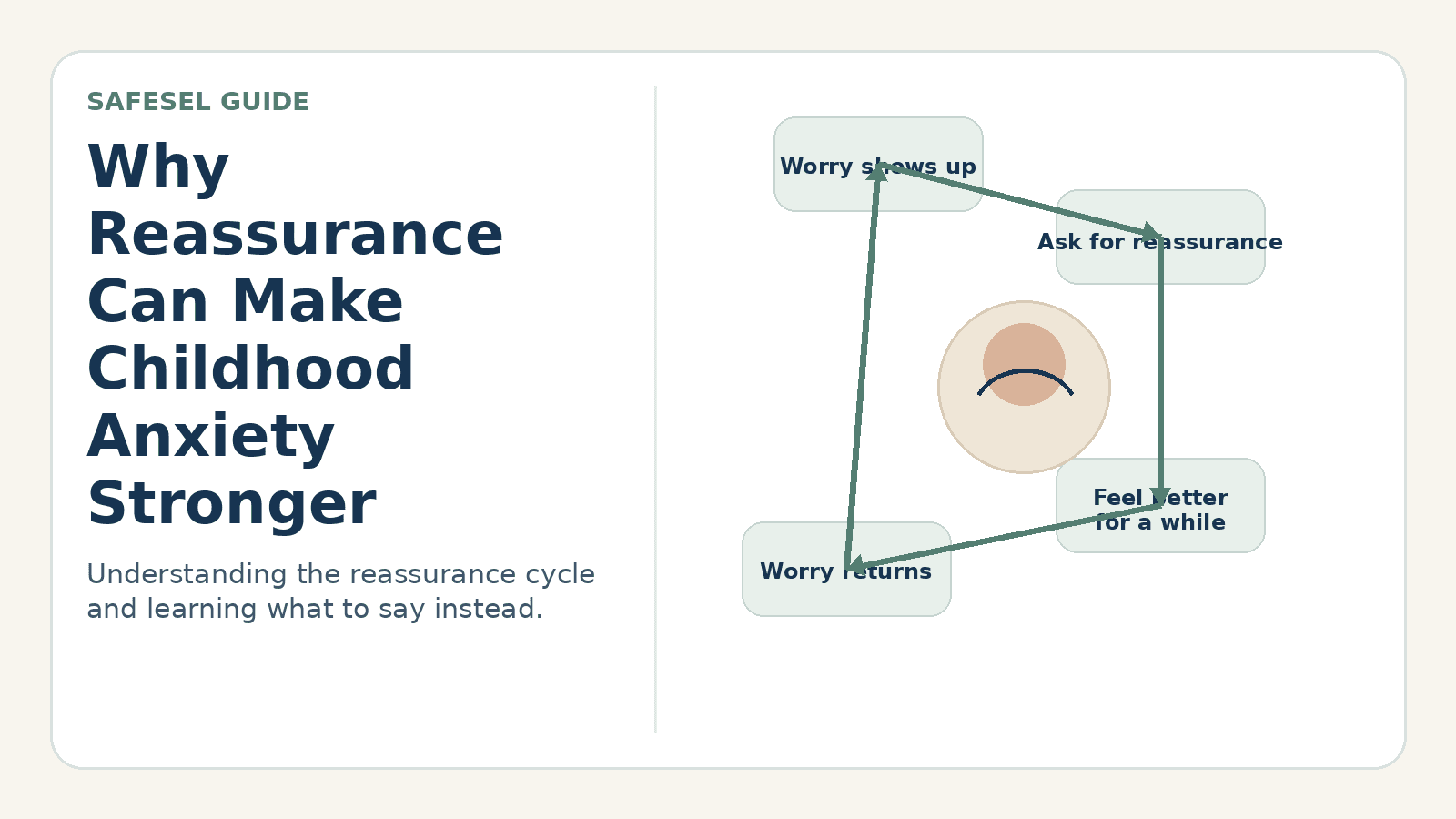
Avoid “There is nothing to worry about,” “You did it yesterday,” and “If you leave, you win.” These statements minimize distress or turn support into a contest.
Coordinate Instead of Improvising
Teachers should not carry the plan alone. Share objective observations with the family and relevant school professionals: trigger, student response, support offered, time to return, and task completion. Avoid labels such as manipulative or attention-seeking.
If the student has a formal support plan, follow it. If anxiety is frequent, expanding, or significantly interfering, request team review. A pediatrician or qualified mental health professional may need to assess the student. School staff can contribute essential information without diagnosing.
Review supports on a set date. Ask whether the student is gaining access, recovering more efficiently, participating in more settings, and relying on less prompting. A calm-looking student is not the only measure; quiet anxious students can be overlooked.
When Not to Push Approach
Do not frame exposure to bullying, discrimination, humiliation, unsafe conditions, overwhelming sensory input, or work far beyond the student’s skill level as anxiety practice. Address the real barrier. Pause and seek specialist guidance when the student is in crisis, reports self-harm or danger, or the plan conflicts with disability accommodations or clinical care.
Sources and further reading
- Help Your Child Manage Anxiety: Tips for Home & School — American Academy of Pediatrics — HealthyChildren.org
- School Avoidance: Tips for Concerned Parents — American Academy of Pediatrics — HealthyChildren.org
- Treating Children's Mental Health with Therapy — Centers for Disease Control and Prevention