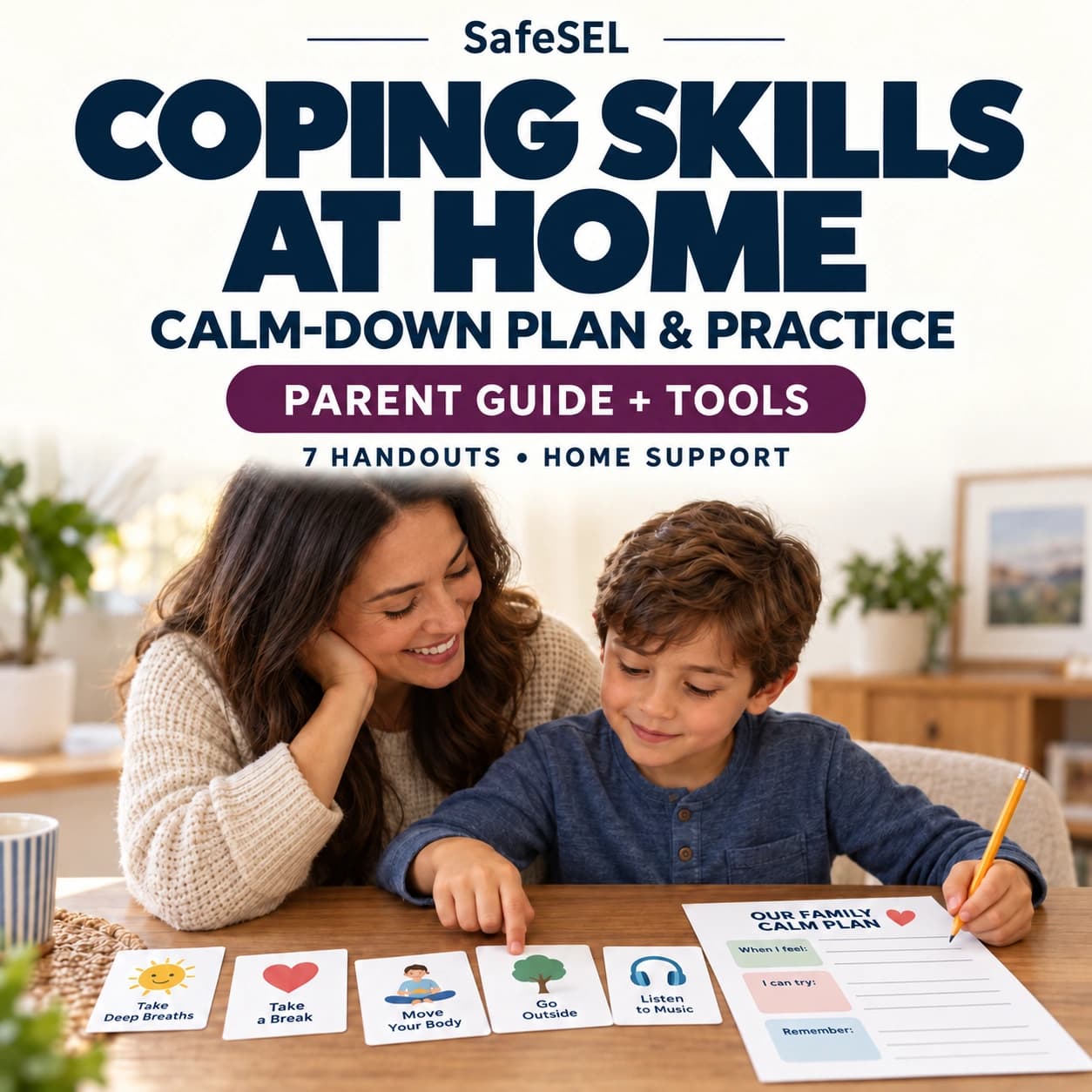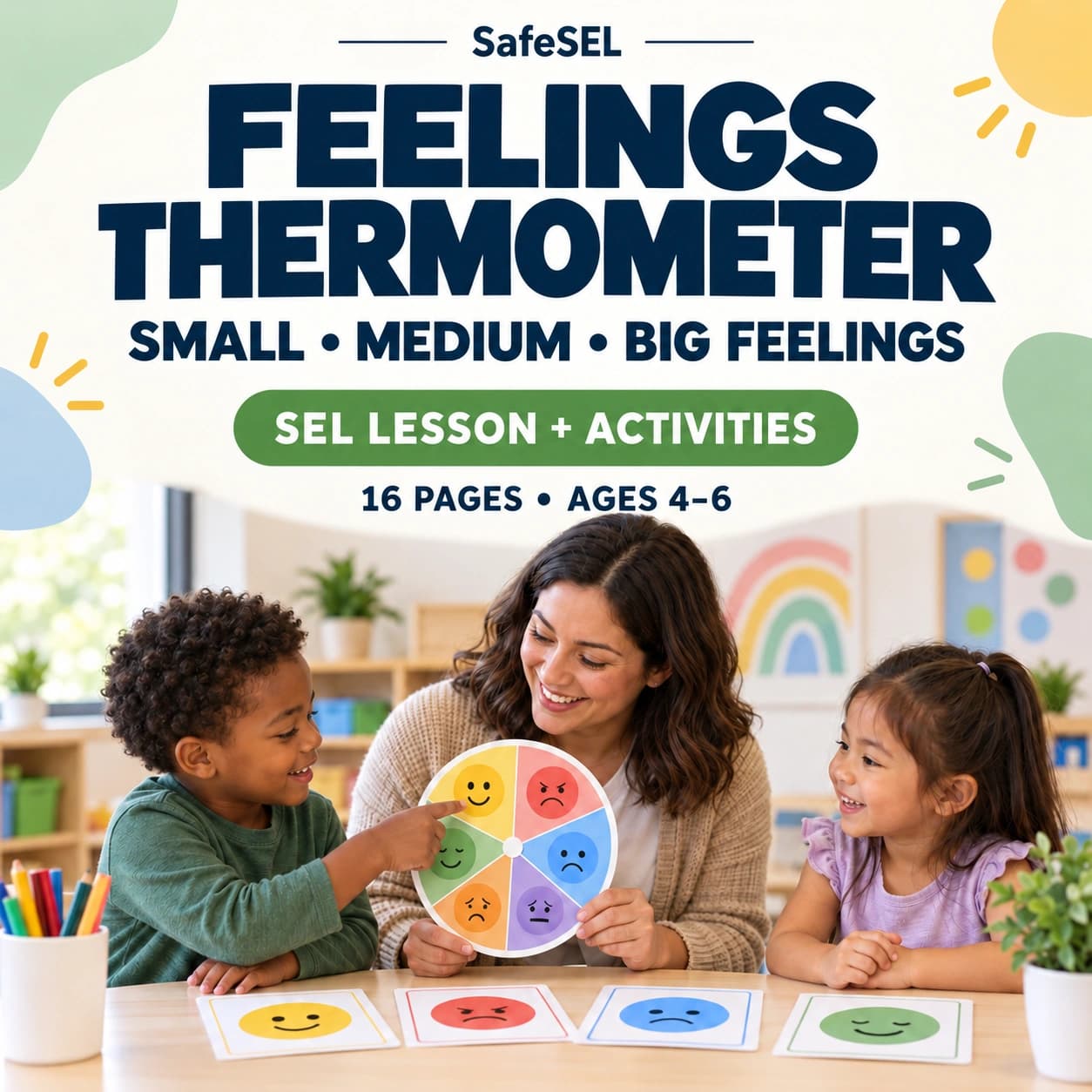
A useful coping-skills card set is small enough to remember, varied enough to fit different states and practised before a child is expected to use it under pressure.
A useful coping-skills card set is small enough to find a familiar action quickly. It does not need dozens of techniques. Begin with a few strategies the child has tried, can access in the relevant setting and is willing to use. A card reminds; it does not teach an unfamiliar skill by itself.
Think about four jobs: body regulation, attention and orientation, communication, and problem-solving and return. These are practical organizing categories, not a validated treatment model. A child may need one card from two categories rather than a complete set from all four.
What to put on the first four coping cards
Start with four functions rather than four versions of breathing: one comfortable body-based option, one way to orient to the surroundings, one request for help and one return-to-task step. Coping skills cards might say 'Sit beside a trusted adult,' 'Notice three things in the room,' 'Please show me the first step,' and 'Try one part with help.' These are examples to adapt, not a prescribed set for every child.
Printable coping skills cards need to be available where the difficulty happens. Check that the child can recognize the picture, read or understand the words, and carry out the action in that setting. A card recommending a quiet room is not usable if no such room is available. Keep an agreed fallback for moments when even choosing a card is too much.
When choosing a coping strategy is itself too demanding
Function 1: body regulation
Choose an action the child has found manageable, such as a brief stretch or moving to an agreed quieter place. State what to do and where it is available. ‘Stretch your hands beside your desk’ is clearer than ‘Regulate yourself.’ Breathing exercises are an option, not a requirement; stop or adapt a strategy that makes the child feel worse.
Function 2: attention and orientation
A card can cue a simple way to reconnect with the immediate task: look at the first picture in the plan, notice where the needed materials are or identify the next visible step. Keep the cue concrete. Do not turn it into a lengthy checklist the child must finish before receiving help.
For example, a child overwhelmed by a busy worksheet may use ‘Cover the rest; find one question.’ This changes the task presentation as well as giving a coping cue. If the work itself is inaccessible, the adult still needs to adjust it.
Function 3: communication
Include a way to ask for support: ‘Less talking, please,’ ‘Show me the first step’ or ‘I need the planned break.’ Agree how adults will respond before relying on the card. A help card is not useful if the child shows it and nobody knows what it means.
Multiple communication modes matter. The child may point, speak, write or use an established communication device. The card should support that method, not replace it with a demand to speak while distressed. Keep access to ordinary communication and necessary support available even if the child forgets the card.
Function 4: problem-solving and return
Include one card for what happens after a pause. ‘Ask which part to start together’ or ‘Return to the first marked step’ is more useful than ‘Be ready.’ Make the next step and available adult support explicit, following any individualized plan. The card is not a deadline for looking calm.
Build a first set together
Illustrative example: Leo gets stuck when written instructions are long. His first set has three cards: ‘Show one step,’ ‘Use my agreed quiet pause’ and ‘Start the marked question with help.’ The adult models each during an ordinary task. They keep the cards beside the work rather than storing them in a cupboard across the room.
At the next difficult task, the adult offers one familiar cue. Later they ask Leo which card helped and which was hard to use. If he always needs the instructions shortened, that is information about the work—not evidence that he needs a larger coping deck.
Design for quick use
Put one action on each card. Use readable text, an understandable image and enough space to distinguish the cards. A child can choose the wording and which cards to carry. Check whether the set is easy to handle, whether it can be used privately and whether each option is allowed in that setting.
Teach before the hardest moment
Try a strategy when the child can participate, then practise it in a manageable version of the real situation. Co-regulation may still be needed. Do not quiz the child on card names during escalation or require a card choice before addressing safety. A smaller set of familiar options can be easier to use than many unpractised suggestions.
Review usefulness, not compliance
Notice whether the child could communicate, start a task or return with appropriate support. Remove an option that is unavailable or repeatedly unhelpful, while retaining access to support. This is not a test of character or willingness. Persistent or worsening distress and loss of everyday functioning require assessment by an appropriate health or mental health professional; printable cards cannot establish the cause or replace care.
Browse coping-skills worksheets for kids
Sources and further reading
- What Is the CASEL Framework? — Collaborative for Academic, Social, and Emotional Learning
- The UDL Guidelines — CAST
- Use Multiple Media for Communication — CAST
- Emotion Dysregulation Resource Center — American Academy of Child and Adolescent Psychiatry
- Child Development — Centers for Disease Control and Prevention