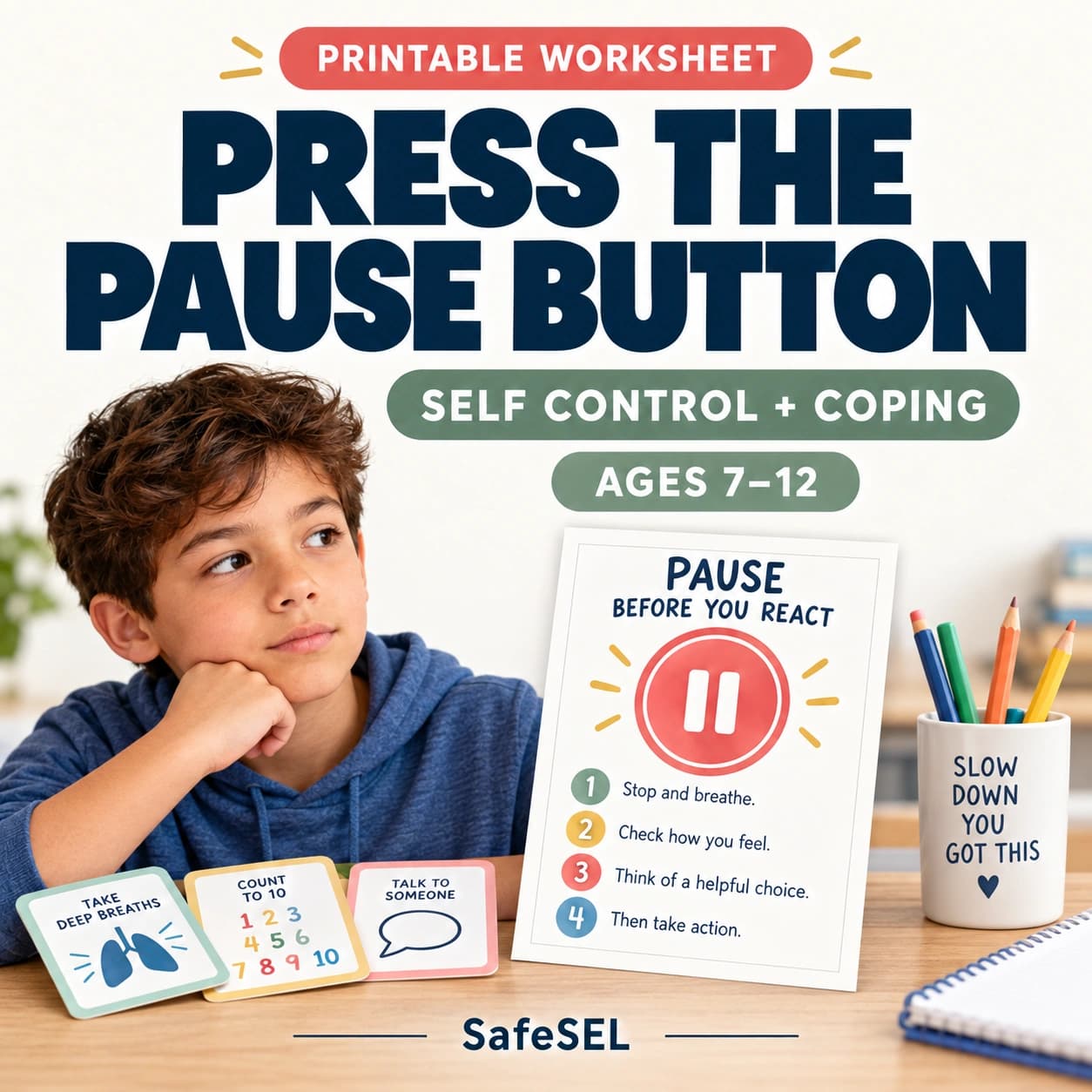
Worksheets
Self Control Worksheet for Kids
Ages 7–12PNG
Self Control Worksheet for Kids: a print-ready worksheet for ages 7–12 with clear prompts for guided practice.
Printable SEL lessons, worksheets, games, cards and visual supports for emotional awareness, coping, decision-making and healthy relationships.
Self Control Worksheet for Kids: a print-ready worksheet for ages 7–12 with clear prompts for guided practice.
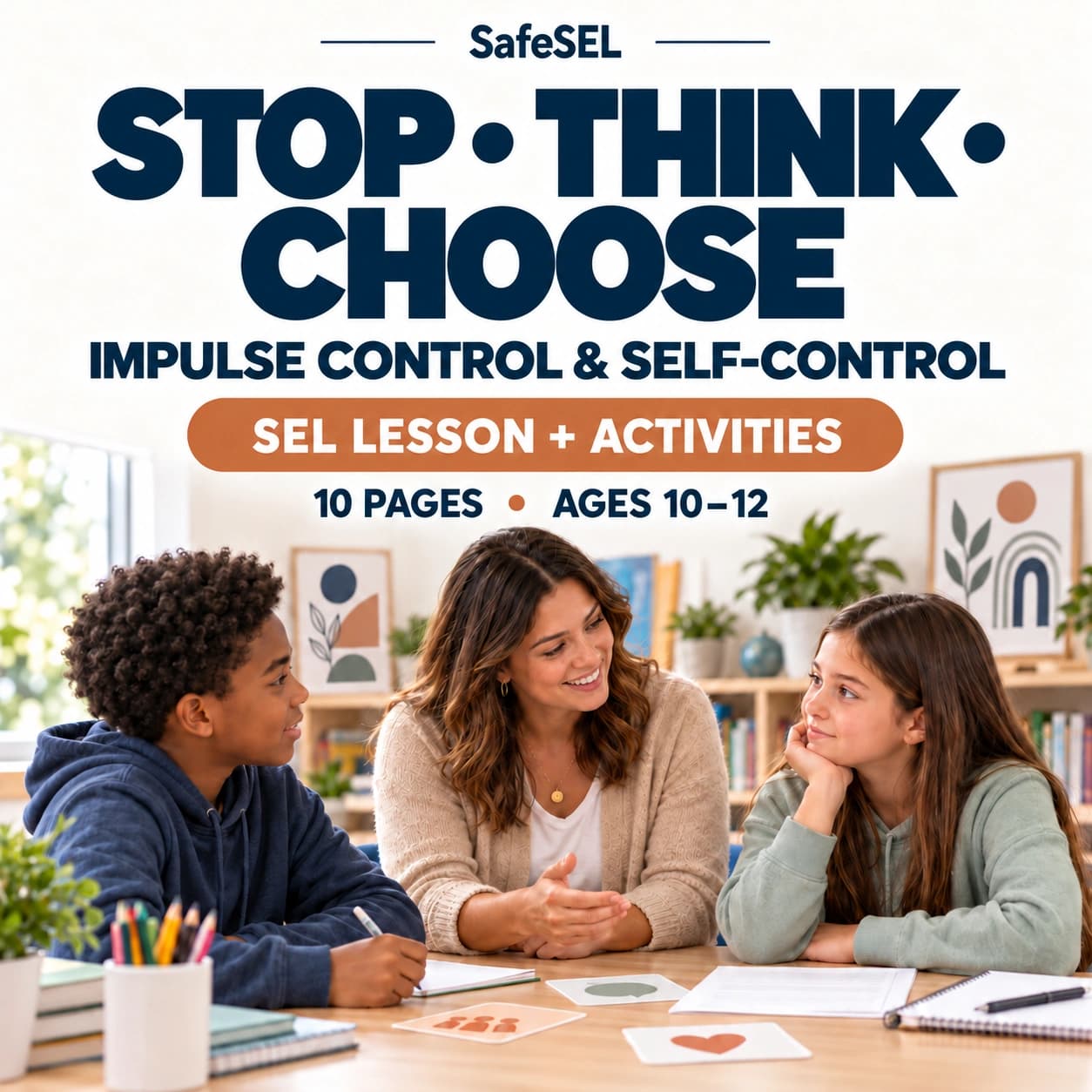
This ready-to-use SEL lesson for ages 10–12 focuses on stop think choose through concrete prompts and realistic practice.
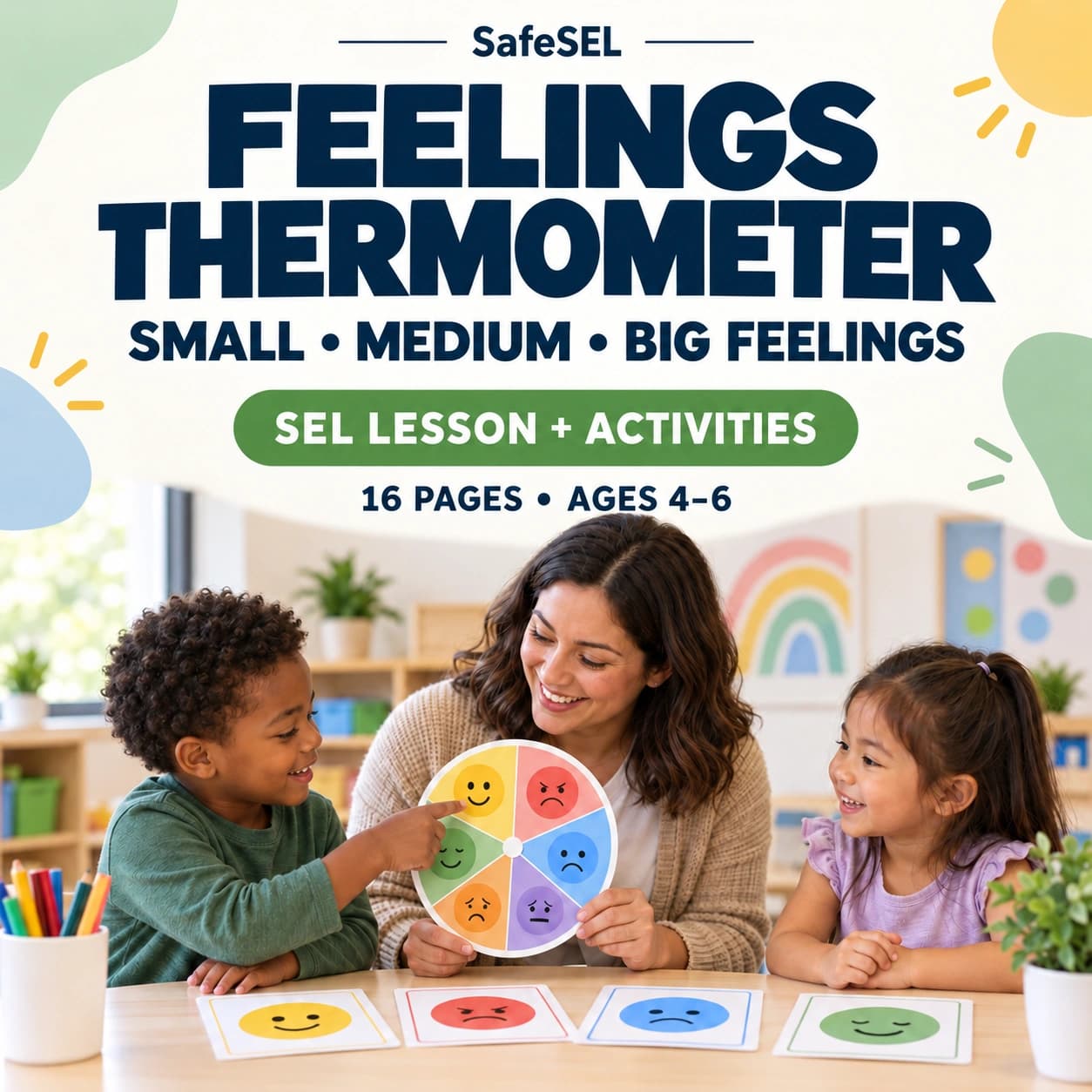
A structured, no-prep SEL lesson for ages 4–6 about big & small feelings, with guided teaching and printable student activities.
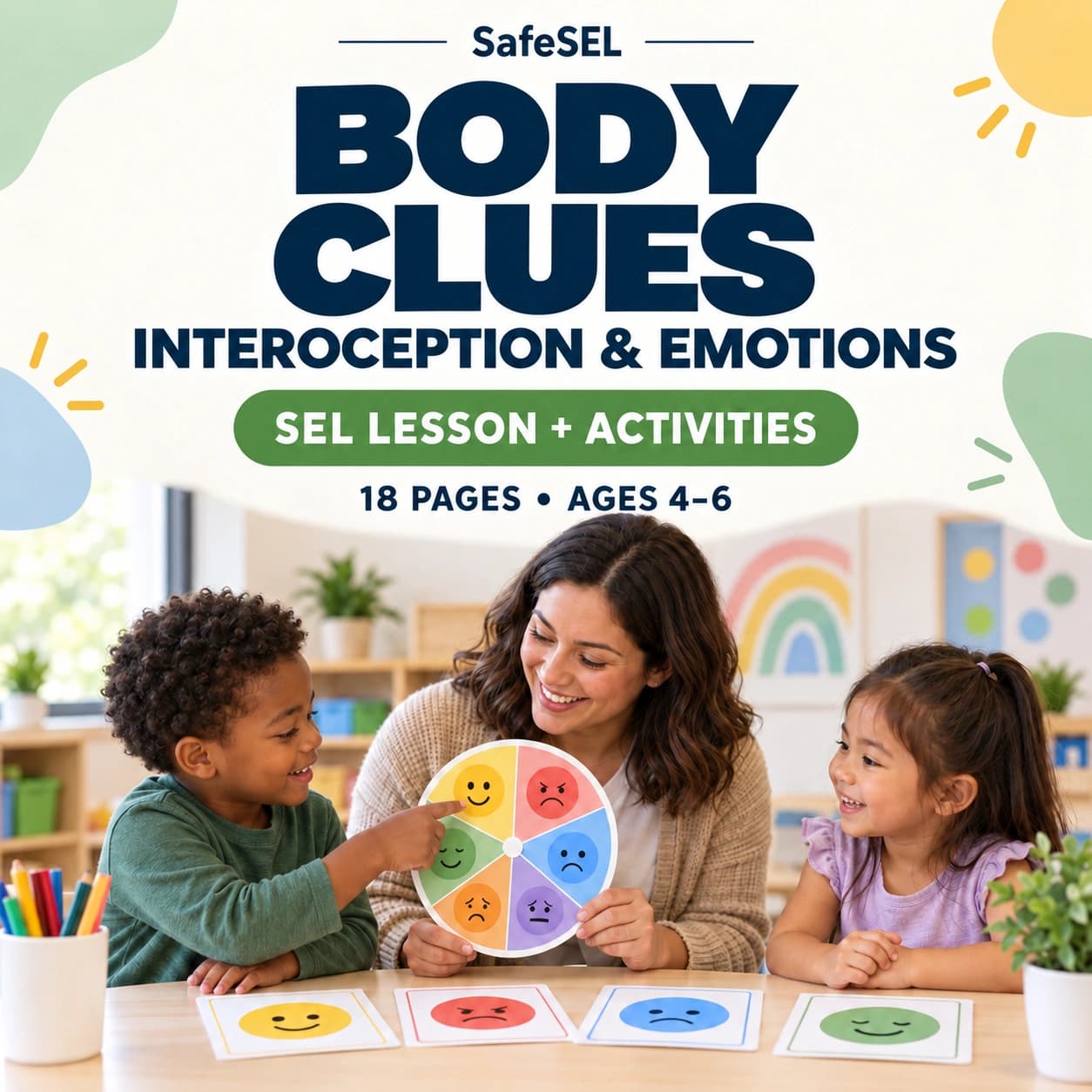
A structured, no-prep SEL lesson for ages 4–6 about body clues, with guided teaching and printable student activities.
A structured, no-prep SEL lesson for ages 4–6 about my calming toolbox, with guided teaching and printable student activities.
A structured, no-prep SEL lesson for ages 4–6 about what is anxiety?, with guided teaching and printable student activities.
A structured, no-prep SEL lesson for ages 4–6 about calm breathing & grounding, with guided teaching and printable student activities.
A structured, no-prep SEL lesson for ages 4–6 about meet my worry monster, with guided teaching and printable student activities.
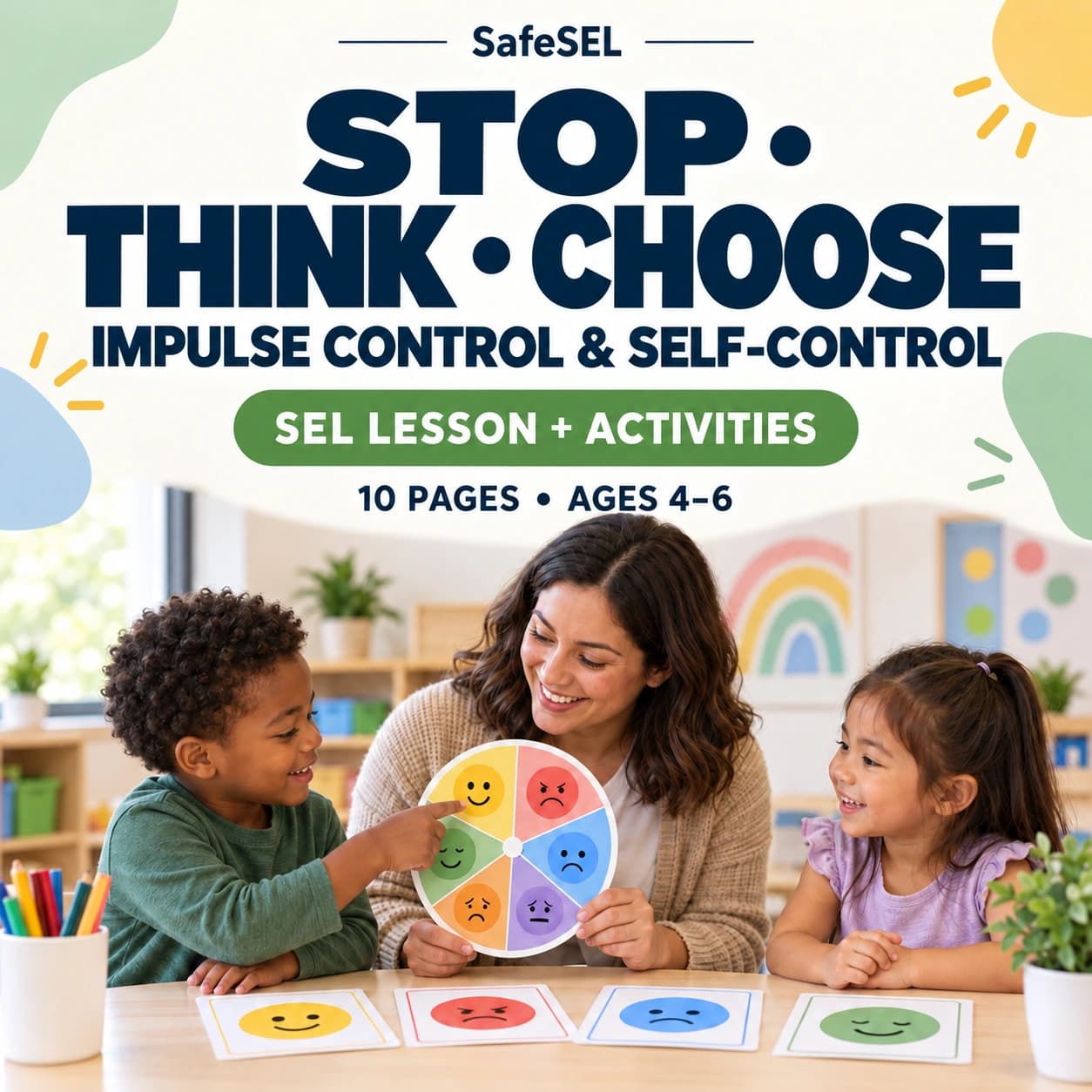
A structured, no-prep SEL lesson for ages 4–6 about stop–think–choose, with guided teaching and printable student activities.
Help students separate what they can control, influence or cannot change before choosing one manageable action.
Open the free resource →Practice listening, inclusion, kindness and repair through a short classroom-friendly reflection.
Open the free resource →Use a brief, non-punitive reflection on one specific moment, one strength and one next step.
Open the free resource →Choose the skill before choosing the format. A short lesson, rehearsal and return to the idea can be more usable than handing out several unrelated pages.
Model one concrete skill with a fictional situation. For example, show how to ask for an explanation when an instruction is unclear.
Let learners try words, drawing or another accessible response. Offer a pass and avoid requiring public disclosures, eye contact or a single correct feeling.
Look for an ordinary opportunity to use the skill, then ask what made it easier or harder. Adjust adult support and the environment as well as the activity.
Plan a connected elementary SEL sequence
Create a free step-by-step SEL practice plan. Get materials, steps and adaptations without providing an email address.
The product listings on this page are paid resources. The free printable library offers sample activities for guided practice. Educational resources do not replace assessment, safeguarding or individualized support.
An SEL check-in gives students a way to describe the present moment; a lesson introduces something to practise. SEL questions such as “What else might be happening?” invite discussion, while written SEL prompts provide a place to organise a response. SEL posters can keep familiar language visible after the activity. Choose the format by what you want learners to do, not just by a matching topic word.
Use a discussion prompt when you want several possible answers: “What else might be happening here?” or “How could someone ask for more space?” Choose a worksheet when the child needs somewhere to organise a response. A game provides another setting for practice, while a poster or other visual support can keep familiar language available afterwards. Match the reading level and activity instructions to your learners.
When comparing educational resources, look beyond the cover topic. Does the activity ask children to recognise a feeling, consider another perspective or choose a response? Those are different tasks. A short discussion card may be enough for a familiar idea; a new skill may need a lesson and an example before independent work. Use the resource previews to match the task to your classroom rather than downloading everything at once.
Use the collection to build a full SEL sequence or select one focused activity for a classroom lesson, counseling group or individual session.
SEL commonly includes emotional awareness, self-management, relationship skills, social awareness and responsible decision-making.
Yes. SafeSEL products are digital printables purchased directly through the SafeSEL shop and supplied in the formats listed on each product page.
Filter by resource type and age group to find the most useful printable.