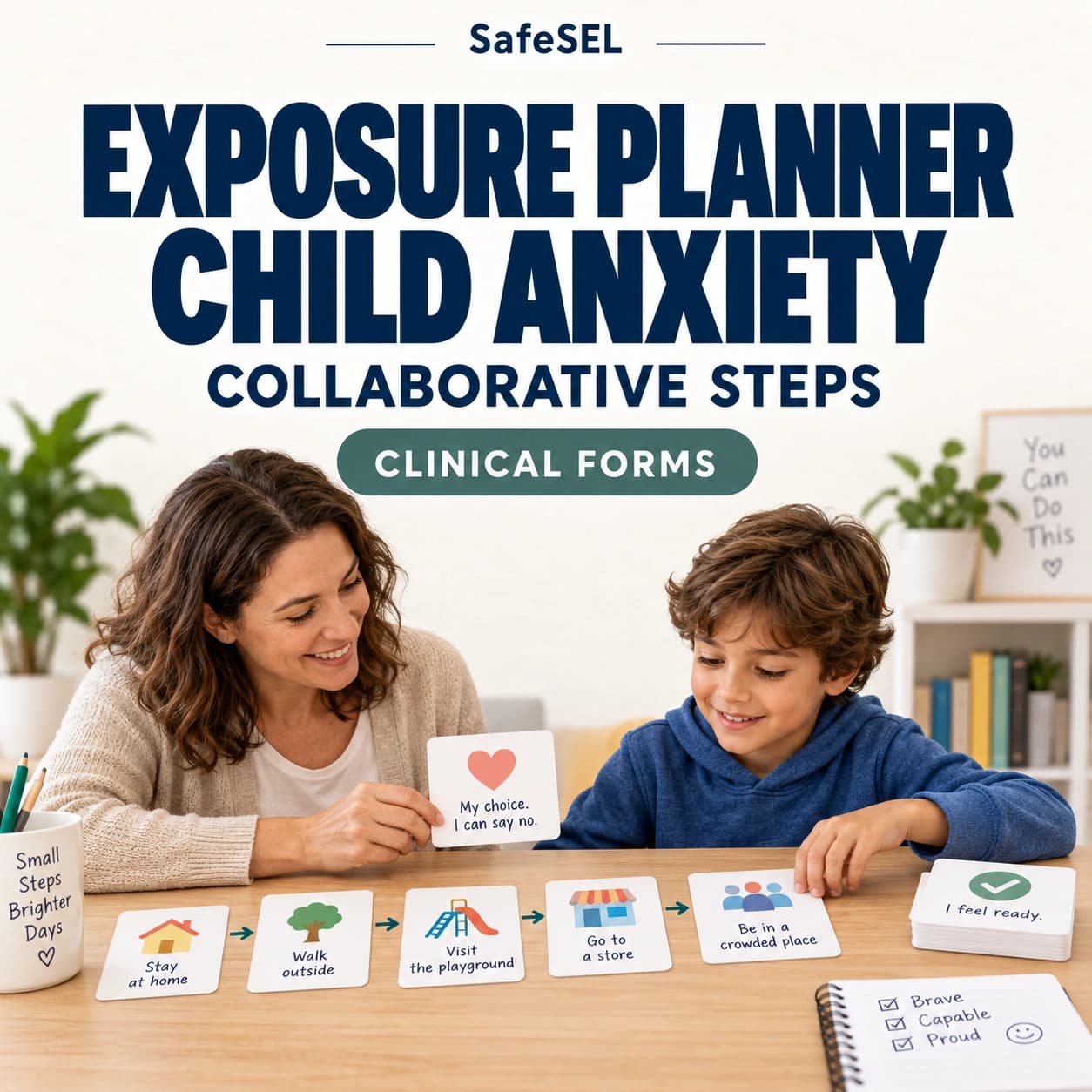
Exposure planning begins with a functional map of fear, avoidance, reassurance, accommodation and short-term relief. The practitioner then selects a meaningful approach step, agrees what will and will not be done during practice, measures learning rather than perfect calm and adjusts from the child’s response. A hierarchy alone is not a formulation.
Describe the anxiety cycle in observable terms
Start with a recent situation. What did the child predict? What body sensations, images or urges appeared? What did the child, caregiver or school do next? What relief followed, and what became harder later? This sequence is more actionable than a broad label such as “anxious.”
Include reassurance, checking, escape, delay, perfectionistic restarting and adult accommodation. These responses are often understandable attempts to help. Mapping them is not a search for blame; it is a way to see where learning is being interrupted.
Distinguish anxiety, OCD and other reasons for avoidance
Similar-looking avoidance can have different functions. A child may avoid because of feared harm, disgust, uncertainty, intrusive thoughts, sensory overload, communication demands, pain, bullying, learning difficulty or a realistic safety concern. Exposure should not be used to override medical needs, safeguarding concerns or inaccessible environments.
When OCD is possible, assess obsessions, compulsions, mental rituals and family accommodation carefully. Seek specialist consultation when the presentation, risk or treatment boundary is unclear.
Build a step around one specific learning target
A useful step names the situation, the approach behavior and the response that will be reduced or delayed. “Be less anxious at school” is not a step. Entering the classroom for five minutes while using the agreed support and without one repeated reassurance exchange is observable and reviewable.
The child should understand the purpose and have meaningful input into pace and design. Collaboration does not mean promising zero discomfort. It means avoiding surprise, coercion and goals that matter only to adults.
Measure more than a fear rating
A distress rating can be useful, but it should not become the sole test of success. Ask what the child learned, whether the feared outcome occurred, how long recovery took, what support was required and whether participation became more available. Sometimes distress remains high while approach behavior and confidence improve.
Record conditions that made the task too easy, too hard or irrelevant. That information is not failure; it is the basis for the next adjustment.
Keep exposure inside a broader treatment plan
Exposure work sits within assessment, formulation, consent, caregiver coordination, risk management and progress review. Regulation skills may support willingness and recovery, but they should not become compulsory rituals that must eliminate anxiety before approach is allowed.
If the child is deteriorating, the formulation changes, safety concerns emerge or treatment repeatedly stalls, pause and review. A printable planner can make the reasoning visible; qualified clinical judgment remains responsible for the decision.
Link the avoidance anxiety cycle to the specific treatment model
Exposure therapy planning should identify the relevant learning target and the supports appropriate to the case. When exposure and response prevention is indicated for OCD, identify the compulsions or rituals the plan addresses rather than treating all avoidance as the same behavior. Family accommodation may be relevant, but its role needs assessment rather than assumption.
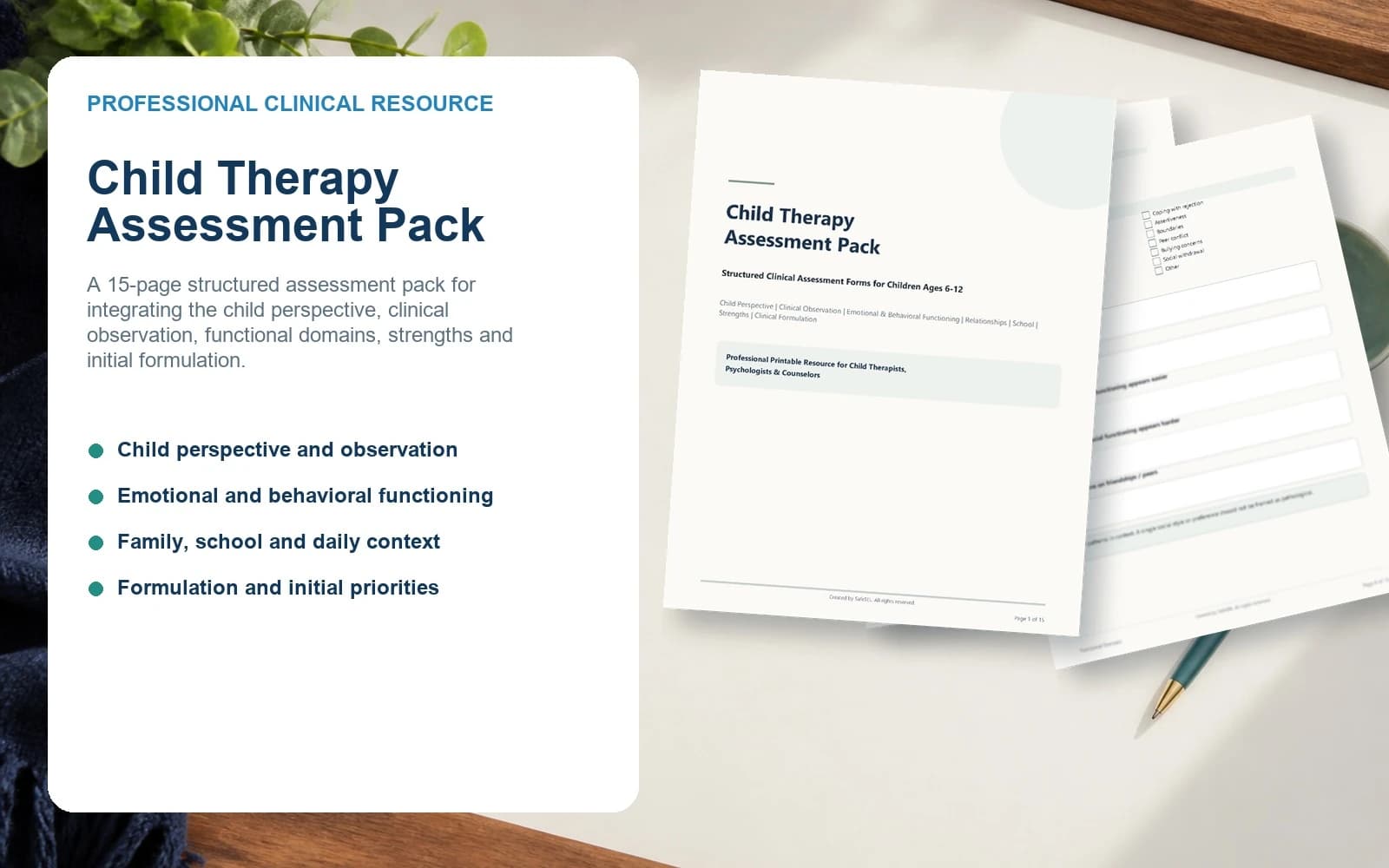
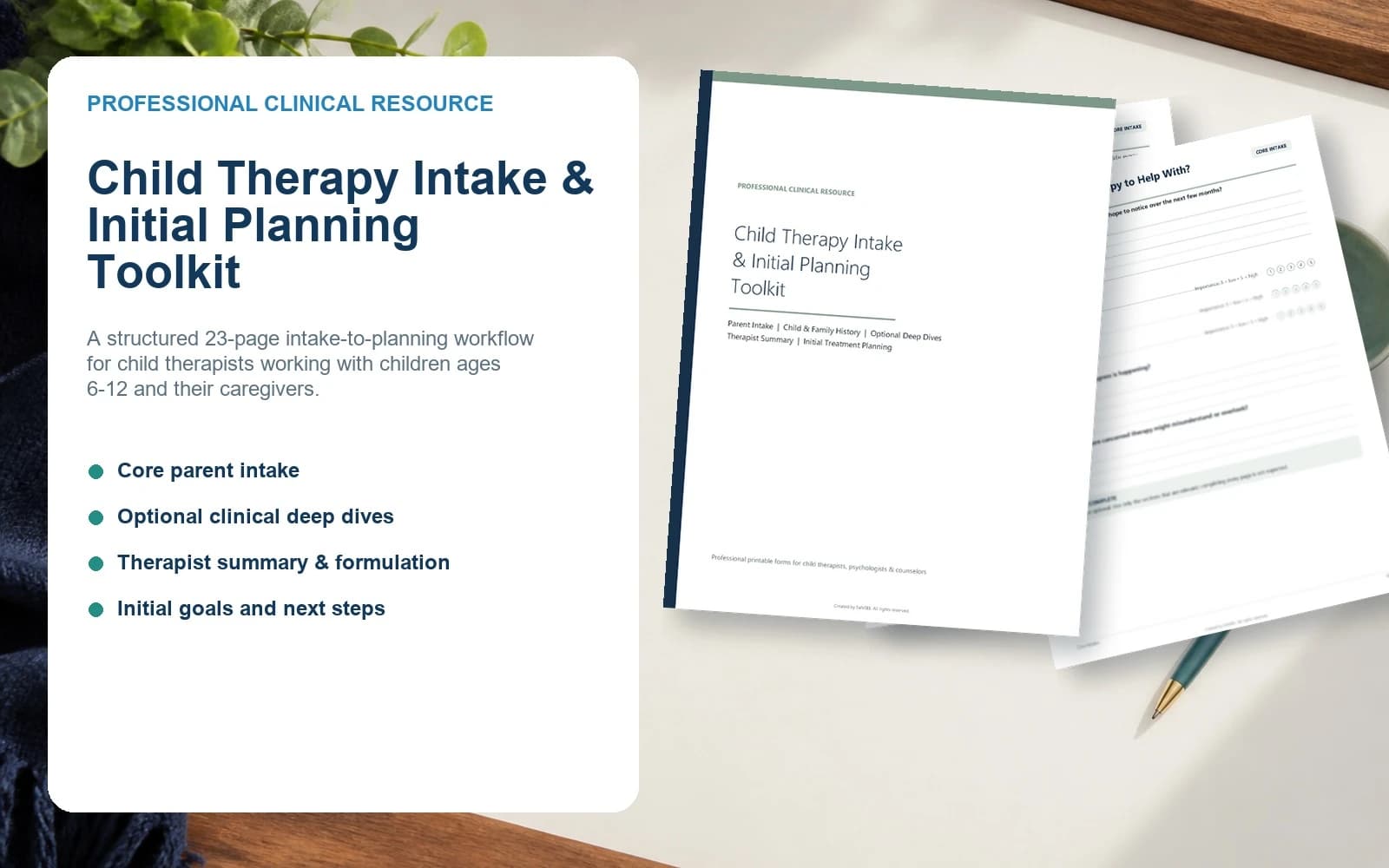
Record the purpose of the step, the child’s understanding and the review criteria before selecting a printable planner. A hierarchy that lists situations without those decisions can look complete while leaving the clinical reasoning unclear. Use specialist consultation when the model or presentation is outside your competence.
A practical next step
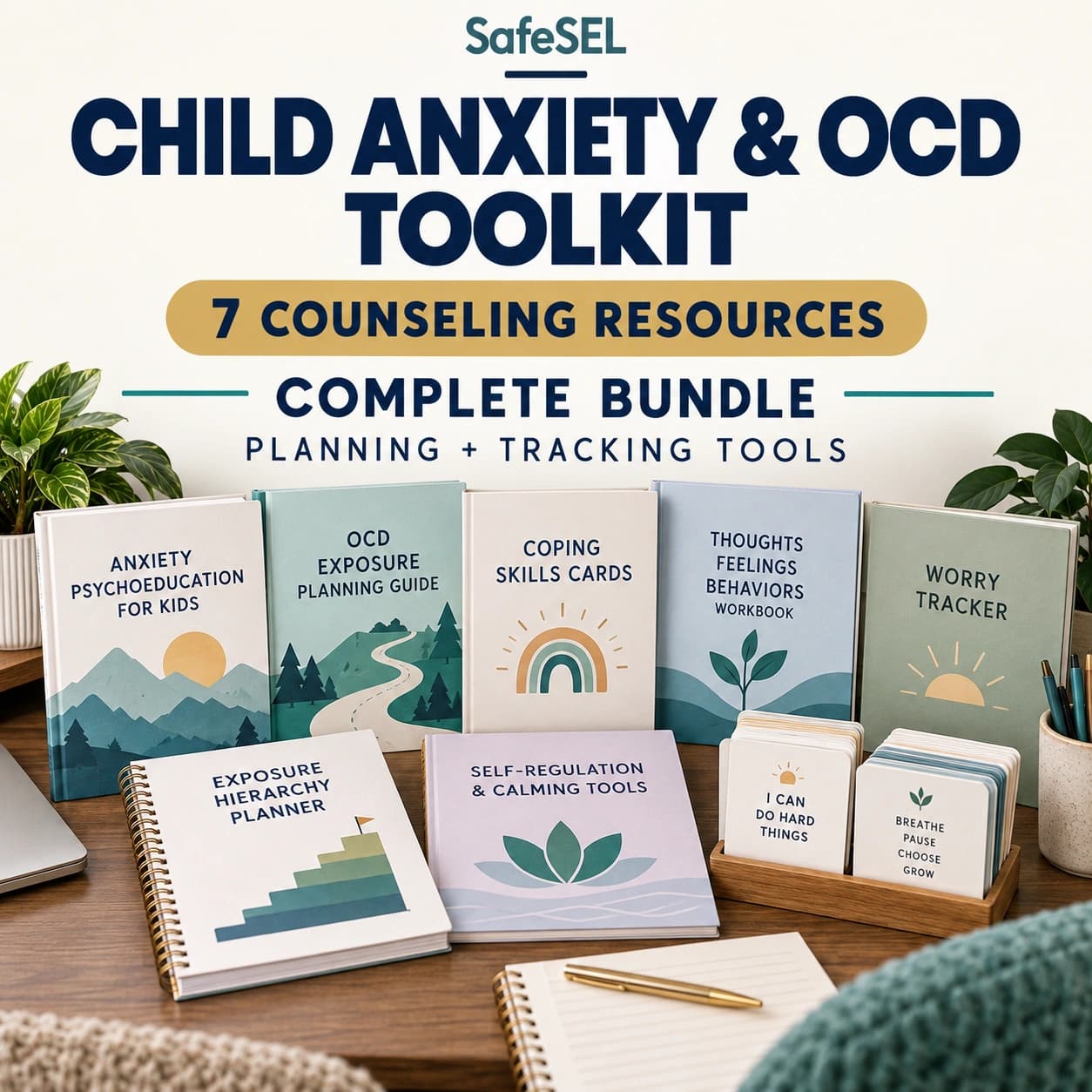
For a structured set of materials, see the Child Anxiety, OCD & Avoidance Clinical Bundle.
You can also browse professional therapist resources or continue with our
family accommodation in childhood OCD.
Sources and further reading
- Anxiety Disorders Resource Center — American Academy of Child and Adolescent Psychiatry (2026)
- Obsessive-Compulsive Disorder — National Institute of Mental Health (2025)