A child therapy intake process is a sequence of decisions, not a packet to complete. It begins with service fit, consent and immediate safety; continues through caregiver and child perspectives, developmental and contextual information; and ends with a provisional formulation, agreed priorities and a clear plan for what happens next. The information remains open to revision as the therapeutic relationship develops.
What belongs in a child therapy intake process?
A useful intake answers five practical questions: Is this service appropriate? Who can consent and participate? What is happening and in which contexts? What strengths and supports are already present? What should the first phase of work focus on? A form can organize these questions, but the practitioner must interpret answers within the child’s developmental, cultural, family and service context.
Stage 1: clarify fit, role and immediate needs
Before requesting a detailed history, confirm that the referral fits the practitioner’s competence and service remit. Identify urgent medical, safeguarding or safety needs and explain what the service can and cannot provide. Where another service, emergency pathway or multidisciplinary assessment may be needed, intake should make that decision visible rather than simply collecting more paperwork.
- Reason for referral and why support is being sought now
- Current functional impact at home, school and with peers
- Immediate safety, safeguarding or crisis considerations
- Accessibility, language, communication and participation needs
- Practical fit: location, format, fees, availability and expected involvement
Stage 2: establish consent, assent and communication expectations
Clarify who has legal authority to consent, who is considered the client in the service, how the child will be involved and how information may be shared. Explain privacy in language the child and caregivers can understand, including its limits. These arrangements vary by jurisdiction, setting and the child’s circumstances, so a generic template must be adapted rather than treated as legal guidance.
For a focused discussion of parent updates and child privacy, read what a child therapist can share with parents.
Stage 3: gather a balanced caregiver account
A caregiver questionnaire can efficiently capture concerns, onset, patterns, daily functioning, family and school context, developmental history, previous support and strengths. The answers are a starting point, not verified facts or a diagnosis. Follow up on unclear wording, apparent contradictions and differences across settings with curiosity.
Use a layered intake instead of asking everything at once
Keep essential questions in the core intake and reserve detailed clinical domains for selective follow-up. This reduces burden and makes it more likely that the information collected will actually be reviewed. It also gives the practitioner room to explain why sensitive questions matter before asking them.
Use the companion guide for a domain-by-domain question bank: Parent Intake Questions for Child Therapy.
Stage 4: include the child’s perspective
Children may communicate through conversation, play, drawing, activity choices, rating scales, observation or brief structured prompts. Choose methods that match development and communication style. Do not require the child to confirm the caregiver’s account, and do not assume that different reports mean one person is unreliable. A child may genuinely function differently across relationships and settings.
- What does the child think adults are worried about?
- What would the child like to be easier or different?
- When does the problem feel smaller, and what helps then?
- Who feels safe or useful to involve?
- What would make therapy feel understandable and manageable?
Stage 5: add developmental and contextual information
Collect only the developmental, medical, educational, family and cultural information needed to understand the referral and plan next steps. Separate reported history from direct observation. Record uncertainty when dates or details are approximate, and obtain information from other sources only with appropriate authority and a clear clinical purpose.
For a structured developmental workflow, see How to Take a Child’s Developmental History.
Stage 6: organize the information into a working formulation
A formulation is a testable explanation that links the current concern with relevant predisposing, precipitating, maintaining and protective factors. It should distinguish evidence from hypothesis and note what remains unknown. The aim is not to produce a perfect narrative at intake; it is to guide safe, proportionate next steps.
- Presenting needs and functional impact
- Relevant developmental and contextual factors
- Patterns that may trigger or maintain difficulty
- Strengths, protective relationships and successful supports
- Uncertainty, alternative explanations and information still needed
Stage 7: agree on an initial plan
End intake with a small number of meaningful priorities, not a long list of deficits. State what the practitioner will do, what support may be requested from caregivers or school, how progress will be noticed, when the plan will be reviewed and what would trigger consultation or referral.
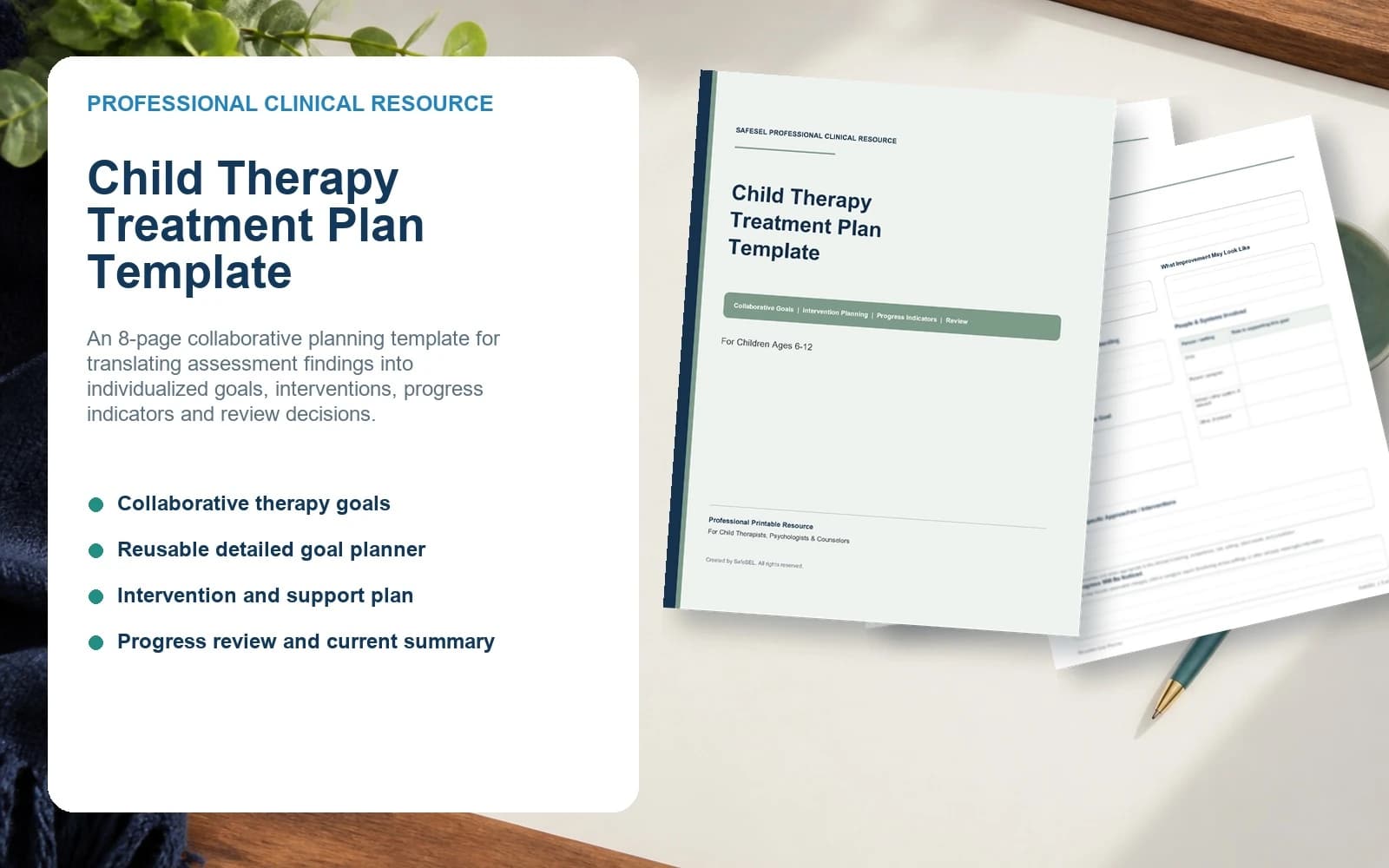
Continue from formulation to planning with How to Write a Child Therapy Treatment Plan.
Common intake mistakes
- Collecting more information than can be reviewed or used
- Focusing on problems while omitting strengths and successful contexts
- Treating a checklist as a diagnostic instrument
- Using adult-only language that excludes the child from understanding the process
- Leaving the family unclear about the first goal or next appointment
- Failing to document why a referral, consultation or safety action was chosen
Review a therapy intake form template before sending it
Check whether each question has a clear purpose, whether families can leave uncertain details for discussion and how communication or accessibility needs will be accommodated. Explain who will review the answers. Therapy intake paperwork should support a conversation, not imply that completing a form alone establishes service fit or a diagnosis.
After reading it, identify the few points that need clarification and the first decision to make with the family. Keep reported information distinct from your observations. If an answer raises an immediate concern, follow the service’s appropriate response rather than waiting for the remaining packet to be completed.
Frequently asked questions
How long should child therapy intake take?
There is no universal number of sessions. Scope should reflect the referral question, complexity, risk, available information and service setting. Intake can remain iterative after therapy begins.
Should every family receive the same intake packet?
A consistent core improves reliability, but optional sections should be selected according to need. Accessibility, language, family structure and professional context may require adaptation.
Can an intake form diagnose a child?
No. General intake forms organize information. Diagnosis requires appropriate competence, methods, evidence and jurisdiction-specific standards.
A practical intake-to-planning resource
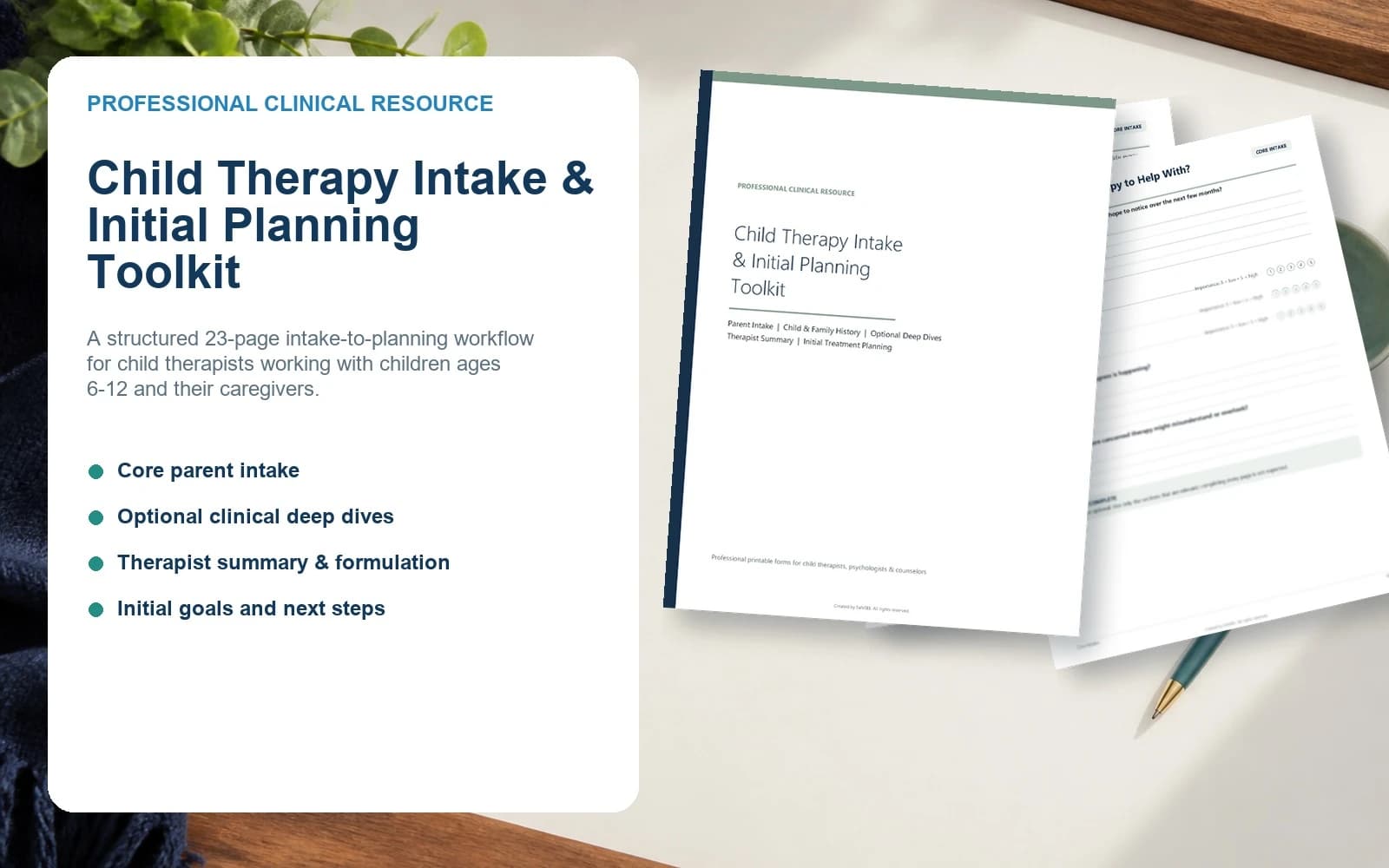
Use an editable 23-page workflow for caregiver intake, optional clinical deep dives, formulation and initial goals with the Child Therapy Intake & Initial Planning Toolkit.
Compare all practice-facing materials in the SafeSEL professional resource line for child therapists.
Sources and further reading
- Record Keeping Guidelines — American Psychological Association (2024)
- Clinical Practice Guidelines, Updates and Parameters — American Academy of Child and Adolescent Psychiatry (2026)
- Information Related to Mental and Behavioral Health — U.S. Department of Health and Human Services (2026)