Gifted and twice-exceptional children may show marked differences across reasoning, academic performance, executive functioning, communication, sensory needs and emotional development. Therapy should not assume that advanced ability protects against disability or that every difficulty is caused by giftedness; assessment must examine the full, uneven profile.
Avoid the two common shortcuts
One shortcut attributes every struggle to gifted intensity. The other assumes a highly capable child should manage without support. Both can delay accurate understanding and create shame.
Map discrepancy and context
- Tasks that are easy versus unexpectedly costly
- Difference between knowledge and output
- Executive, sensory and communication demands
- Masking, compensation and recovery time
- School fit, boredom, perfectionism and peer context
Use language that preserves complexity
A child can be highly capable and genuinely disabled. Strength-based work should make assets visible without turning them into evidence that the difficulty is not real.
Set collaborative goals
Prioritize self-understanding, access, flexible support, emotional safety and meaningful participation. Avoid goals based solely on maximizing performance or making the child appear consistently mature.
Know when broader assessment is needed
Large discrepancies, persistent functional impairment or unclear learning and neurodevelopmental questions may require multidisciplinary assessment. Document uncertainty rather than stretching a therapy worksheet into a diagnostic tool.
High ability can hide impairment—and impairment can hide high ability
A child may reason several years above age expectations while struggling with written output, executive functioning, sensory demands or social communication. Strong vocabulary can lead adults to overestimate emotional regulation and independence. Conversely, inconsistent performance can cause strengths to be missed. Therapy needs a profile, not a single label or global developmental age.
Look for the cost of compensation
- How long does apparently successful work take?
- What support is used privately but hidden at school?
- Does the child collapse, withdraw or become irritable after sustained performance?
- Are perfectionism and fear of exposure limiting attempts?
- Do adults interpret disability-related inconsistency as laziness because other tasks are easy?
A case vignette
A verbally advanced eleven-year-old produces sophisticated ideas in conversation but rarely submits assignments. A motivation-only formulation overlooks slow handwriting, planning difficulty and intense fear that the final work will not match the idea. Treatment may address perfectionism and emotional regulation while school assessment and accommodations address output barriers. Neither part explains the whole child.
Keep therapy out of the achievement race
Goals should support wellbeing, access, identity and sustainable participation—not simply increase output from an already pressured child. Explore interests and relationships that are not organized around being exceptional. When diagnostic or learning questions remain, coordinate with professionals qualified to assess them rather than using therapy observations as a substitute.
Related SafeSEL guides
Neurodiversity-Affirming Goals in Child Therapy — write functional, access-centered goals
Child Therapist Resources & Clinical Tools — browse the clinician resource hub
Do not confuse insight with the ability to use a skill under load
A child may explain cognitive restructuring, executive functioning or social dynamics with unusual sophistication and still be unable to apply that understanding during overload. Therapy should not turn verbal insight into evidence that support is unnecessary. Practice needs to occur at a tolerable level, with environmental accommodations and realistic expectations for state-dependent access.
Similarly, asynchronous development does not mean a child has one “younger emotional age.” Skills can vary across regulation, communication, daily living and contexts. Describe the specific discrepancy and support need. Global age comparisons may feel intuitive, but they flatten the profile and can invite adults either to infantilize the child or demand adult-level coping everywhere.
Therapy Printables for Kids — browse the clinician resource hub
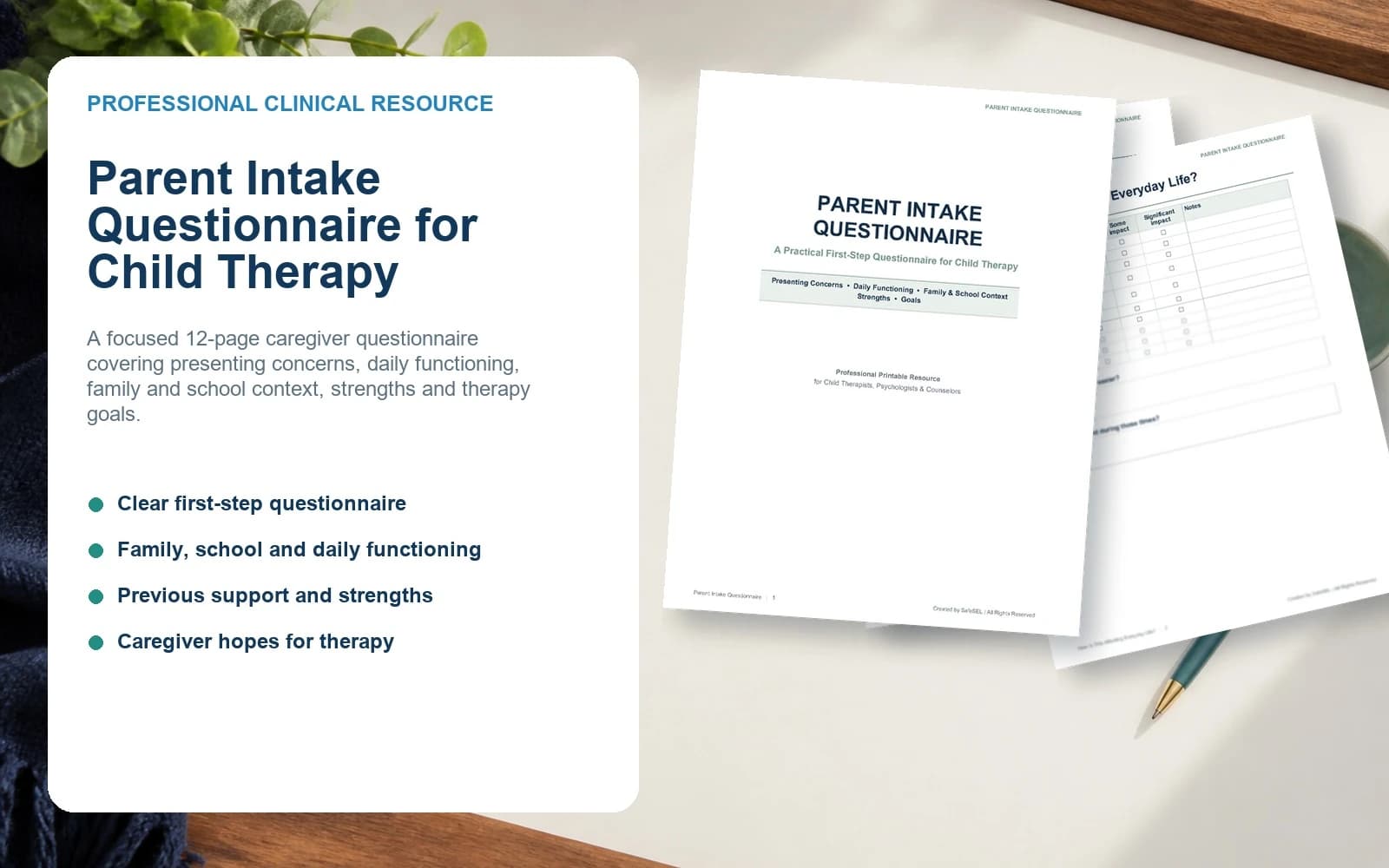
Therapy intake questions should explore the hidden cost of a strength
Ask for one recent task the child completed successfully, then trace the preparation, adult help and recovery it required. Compare that with a task that remained unfinished. This is more informative than assuming that strong reasoning means every daily task should be easy, or that a missing assignment proves low motivation.
Use therapy tools to organize observations across settings, not to assign giftedness or a disability from a worksheet. Keep the child’s interests visible alongside difficulties. When the school and family describe different levels of functioning, investigate the demands and supports in each setting before deciding that one account must be wrong.
A practical next step
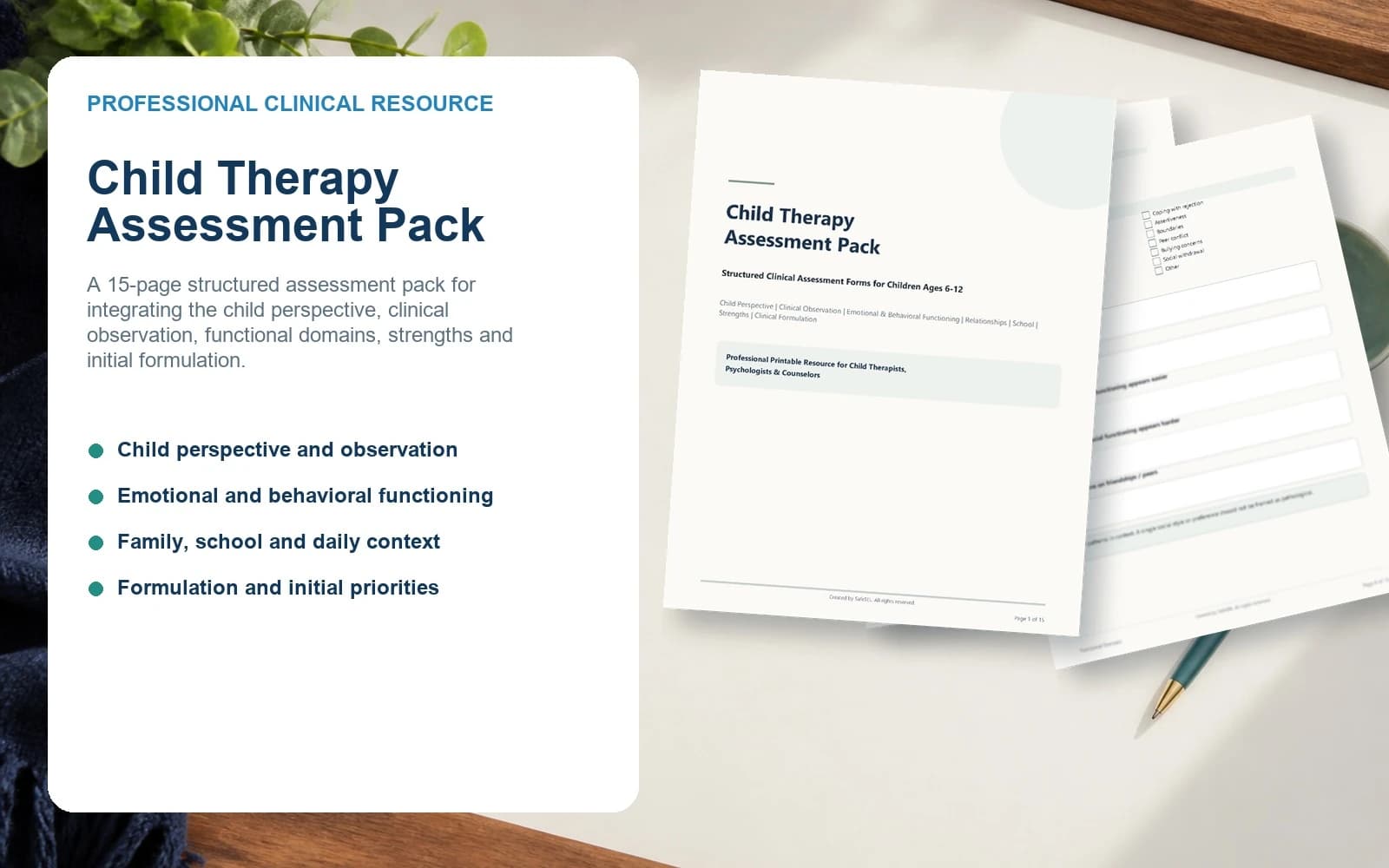
Map strengths, discrepancies, access needs and therapy priorities with the Gifted & Twice-Exceptional Child Therapy Toolkit.
Browse the complete child therapist resource library.
Sources and further reading
- From Gifted to High Potential and Twice Exceptional: A State-of-the-Art Meta-Review — Applied Neuropsychology: Child (PubMed record) (2024)
- Health Care for Youth With Neurodevelopmental Disabilities: A Consensus Statement — American Academy of Pediatrics (2024)
- Behavioral and Socio-Emotional Disorders in Intellectual Giftedness: A Systematic Review — Child Psychiatry & Human Development (PubMed) (2024)