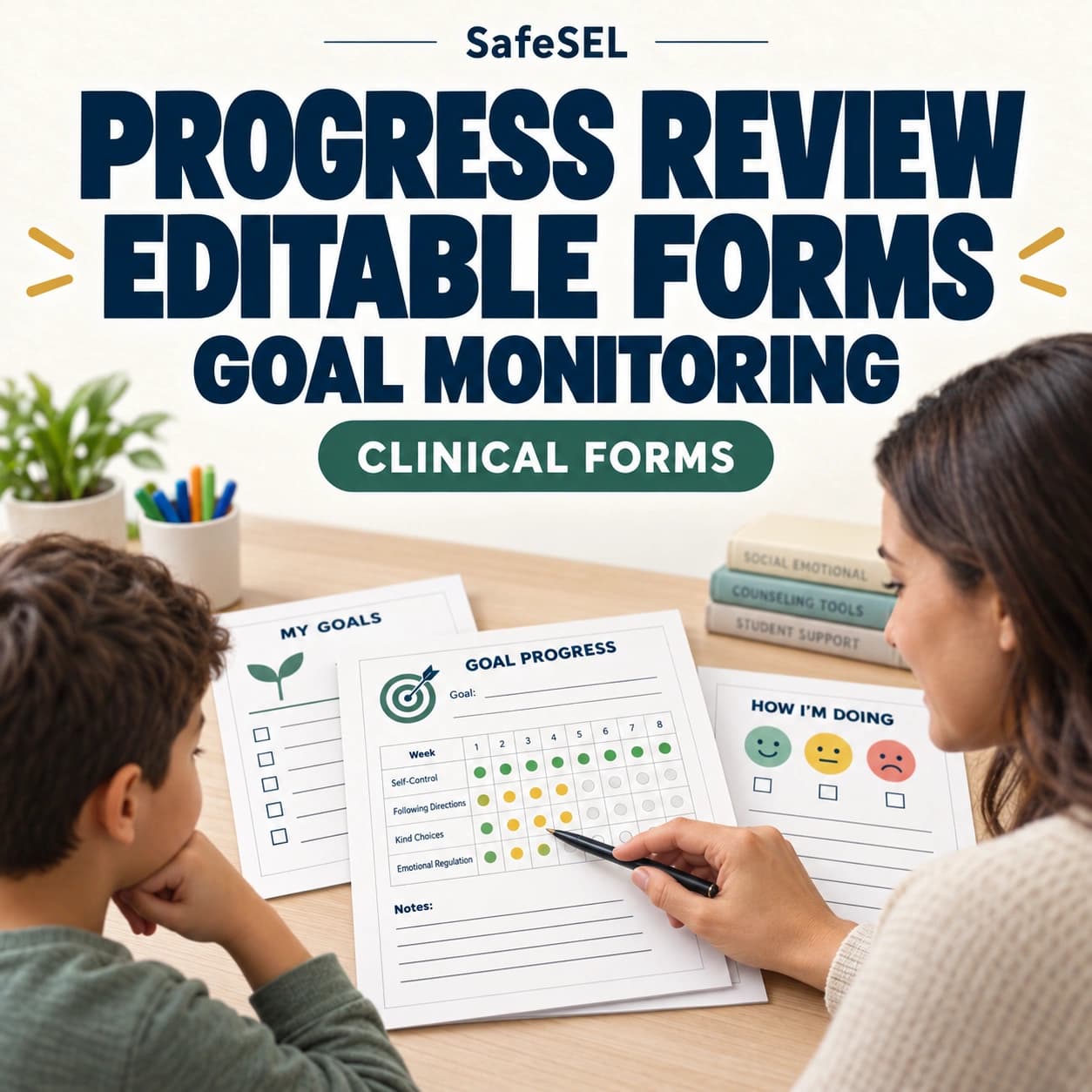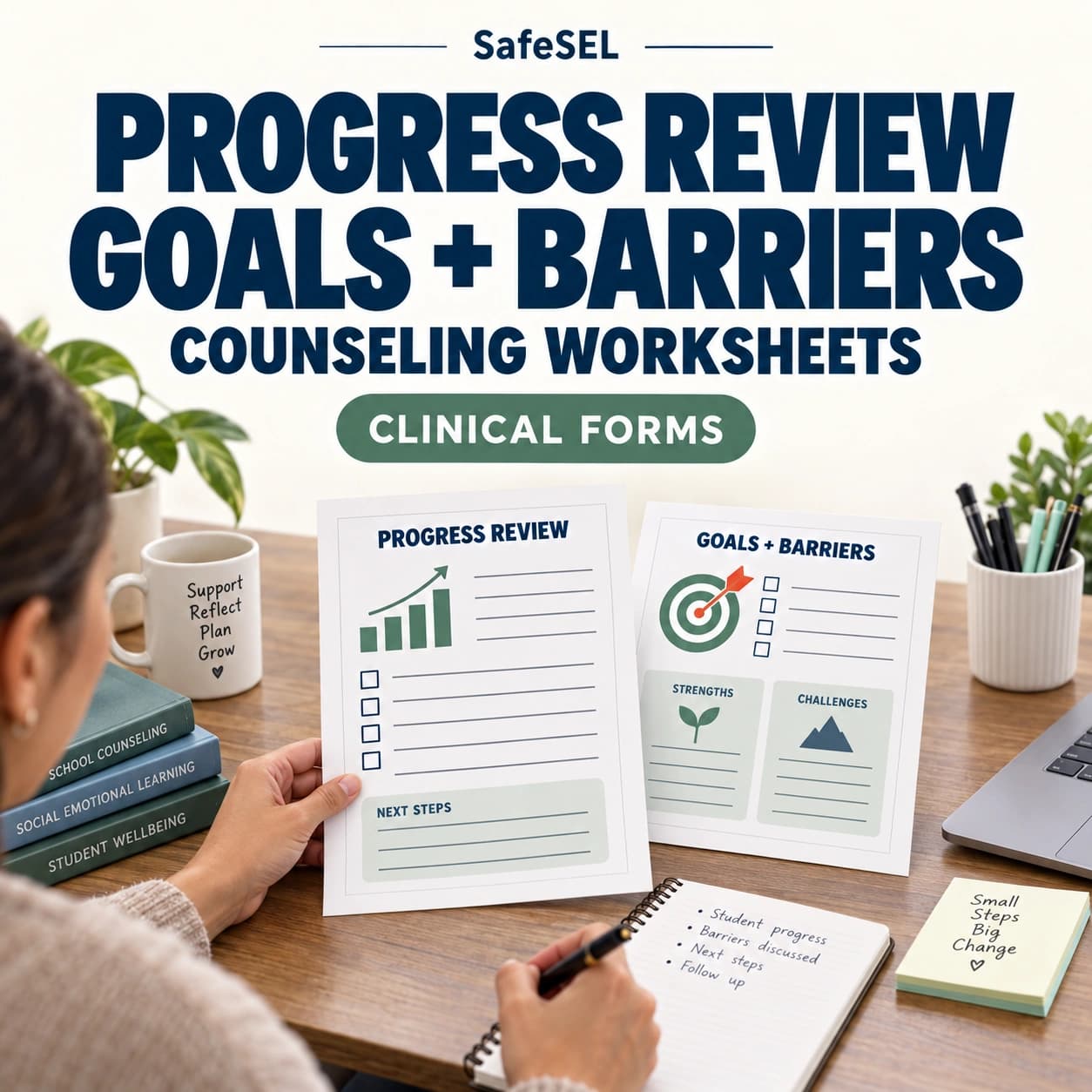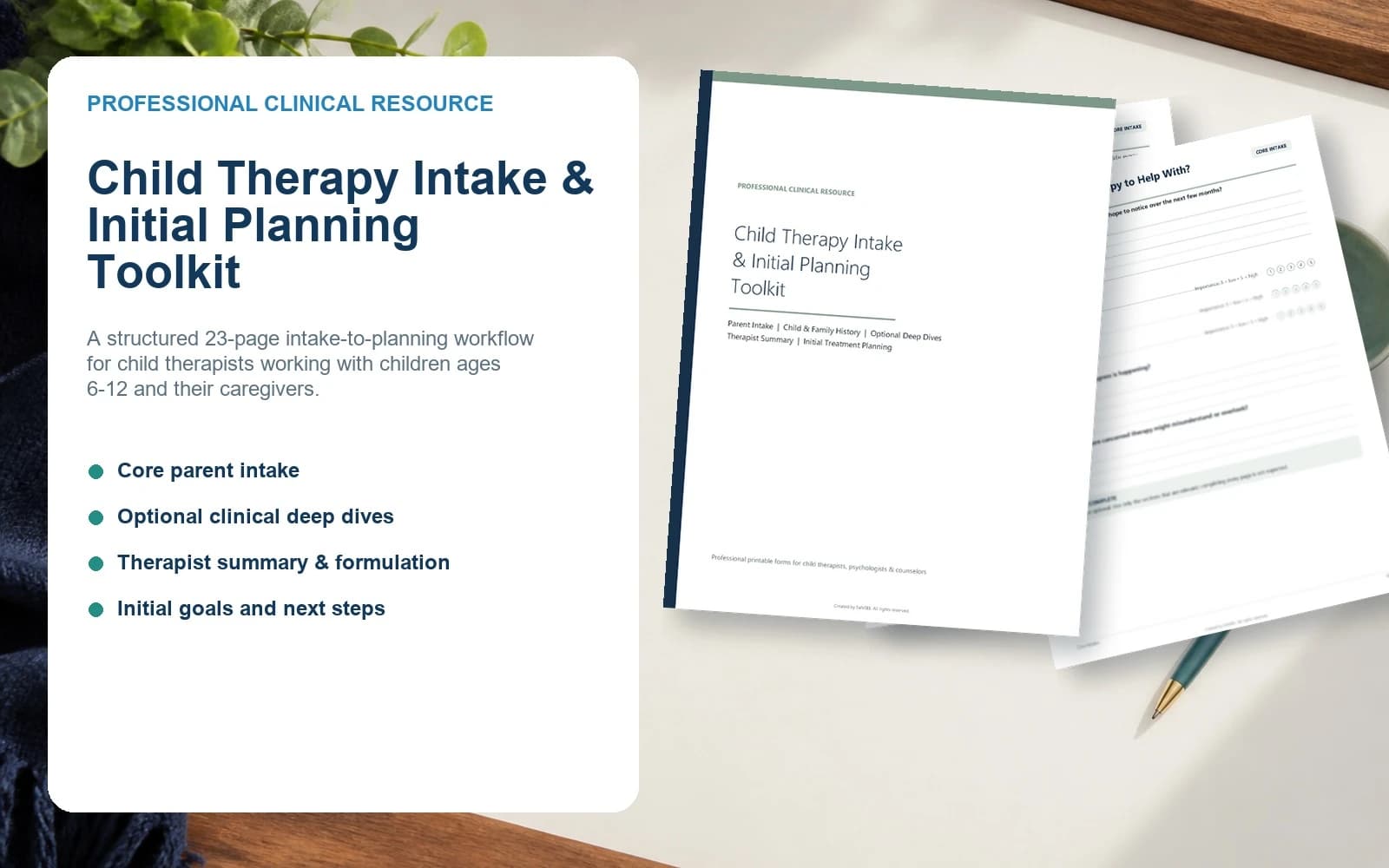
A child therapy treatment plan should connect assessment findings with a small number of meaningful goals, describe interventions and environmental supports, define how progress will be reviewed and state what decisions may follow. It is a collaborative working document—not a generic list of symptoms, a promise of outcomes or evidence that one template meets every legal, payer or professional requirement.
Start with the working formulation
The plan should answer the needs identified during assessment. Summarize the presenting difficulty, functional impact, relevant context, strengths, maintaining factors and uncertainty. If the formulation changes, the plan should be reviewed rather than forcing new information into the original goals.
Build the foundation with A Practical Framework for Child Therapy Assessment.
Choose a small number of priorities
Prioritize needs that matter to the child’s safety, participation, relationships and quality of life. Separate the child’s goals from adult convenience. A goal such as “use words instead of behavior” may be unrealistic if the child needs communication support, environmental change or adult co-regulation first.
Build the plan with the child and caregivers
Collaboration does not mean that every participant must want the same outcome. Record where priorities overlap, where they differ and how the plan will respect the child’s voice, developmental capacity and safety. Translate technical language into an explanation the family can use. A plan is more actionable when each person understands the purpose of a goal and what support—not just performance—is expected.
- What matters to the child and caregiver now?
- Which difficulty has the greatest functional or safety impact?
- What is realistically changeable during this review period?
- Which strengths can support the work?
- What support is required from adults or the environment?
Write goals that are meaningful and reviewable
A reviewable goal identifies the skill or experience, relevant context and the change that would matter. It does not have to reduce every outcome to a single number. Combine observable indicators with the child’s report, caregiver perspective and functional change.
Weak goal: “Child will improve emotional regulation.”
Stronger direction: “With an agreed visual prompt and adult co-regulation, the child will identify one early body signal and choose or request one of two practiced support options during manageable frustration, with progress reviewed across therapy and home examples.”
This example still needs adaptation. The goal should match development, communication, culture, baseline skill, context and the child’s priorities.
Describe interventions, responsibilities and supports
State what the practitioner plans to do, what the child will be invited to practise, and what caregiver, school or environmental support is relevant. Distinguish treatment from accommodation, consultation, referral and safeguarding action.
- Therapeutic approach or skill-building method
- Frequency or phase of contact where appropriate
- Caregiver collaboration and between-session support
- School or environmental adjustments when authorized and relevant
- Communication, sensory or accessibility accommodations
- Referral, consultation or multidisciplinary coordination
Choose progress indicators that fit the goal
Possible indicators include frequency, intensity, duration, recovery time, participation, communication, avoidance, use of support, functional impact and the child’s own report. Record the level of prompting and environmental support. Apparent improvement caused by increased avoidance or suppression should not be assumed to represent progress.
Use more than one source when possible
Therapy observations may be combined with child, caregiver or school information when appropriate and authorized. Differences should be documented rather than averaged into one score. A skill may be present in therapy but not yet accessible in a busy classroom or conflict at home.
Plan the review before treatment begins
- Set a realistic review date or clinical review point.
- State which indicators and perspectives will be considered.
- Identify what would support continuing, adapting or stepping down.
- Specify what may require consultation, referral or a new assessment question.
- Record the child’s and caregiver’s view of progress and burden.
A review is a decision-making process, not confirmation that the original plan was correct. If a goal is not progressing, reconsider fit, context, support, formulation and measurement before assuming lack of motivation.
Keep documentation proportionate
The plan should be detailed enough to guide care, continuity and review, but not filled with generic language that obscures the actual rationale. Requirements differ across professions, organizations, payers and jurisdictions; practitioners must adapt any template to their own obligations.
A practical treatment-plan structure
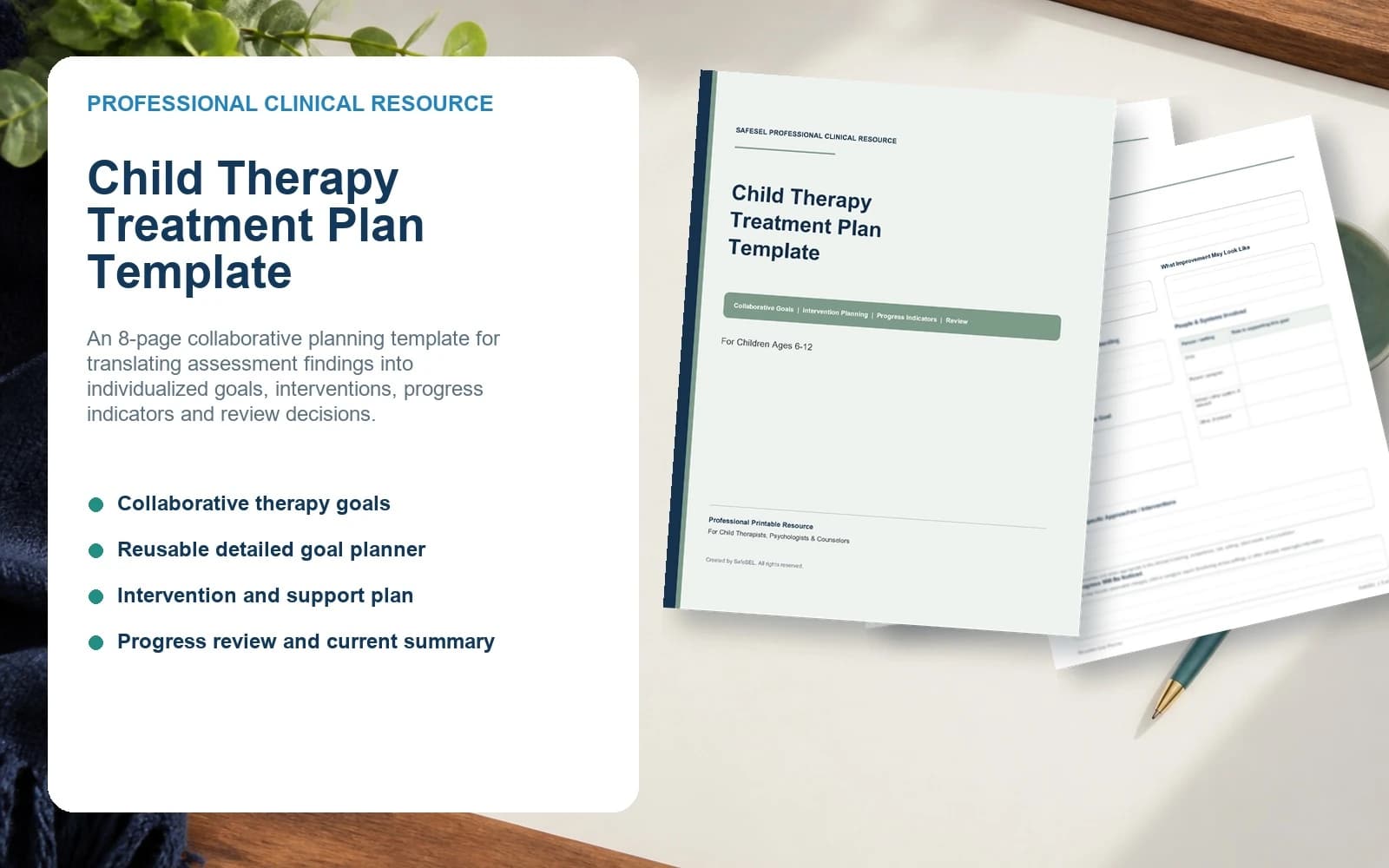
- Working formulation and priority needs
- Child and caregiver priorities
- Goal with context and baseline
- Planned interventions and responsible people
- Environmental and accessibility supports
- Progress indicators and information sources
- Review date and possible next decisions
Use treatment plan examples as a structure, not a copied conclusion
Before transferring wording into a therapy plan template, identify what is known about this child’s starting point. A polished goal without a baseline or relevant context may be impossible to review. Explain what support makes the activity accessible and which person is responsible for providing it.
Check treatment plan goals against a recent ordinary situation: could another practitioner understand what is being attempted, why it matters and what would lead you to revise it? If not, replace vague wording with the actual context and review question. An example can show how to organize reasoning, but it cannot supply the reasoning for a different child.
Frequently asked questions
How many goals should a child therapy treatment plan include?
Use the smallest number that can meaningfully guide the current phase of work. A few well-connected goals are more useful than a long list that cannot be reviewed.
Do all goals need to be measurable?
They should be reviewable. Some change can be counted, while other meaningful outcomes require qualitative evidence, functional examples and the child’s perspective.
Can a template guarantee compliance?
No. Adapt the document to professional, organizational, payer and jurisdiction-specific requirements and obtain appropriate supervision or legal guidance where needed.
An editable treatment-planning resource
Translate assessment findings into goals, interventions, progress indicators and review decisions with the Child Therapy Treatment Plan Template.
Compare all professional tools for child therapists.
Sources and further reading
- Record Keeping Guidelines — American Psychological Association (2024)
- Clinical Practice Guidelines, Updates and Parameters — American Academy of Child and Adolescent Psychiatry (2026)