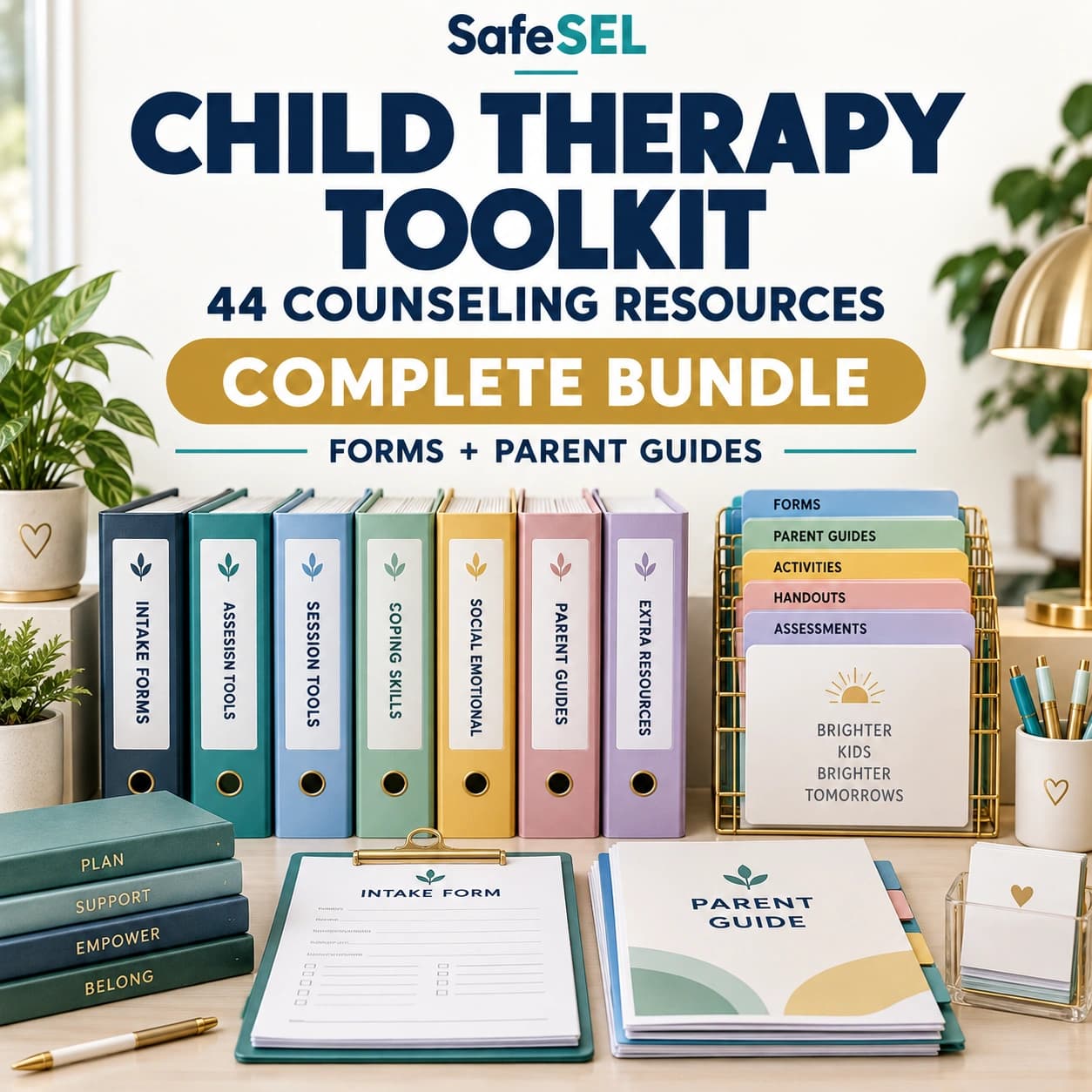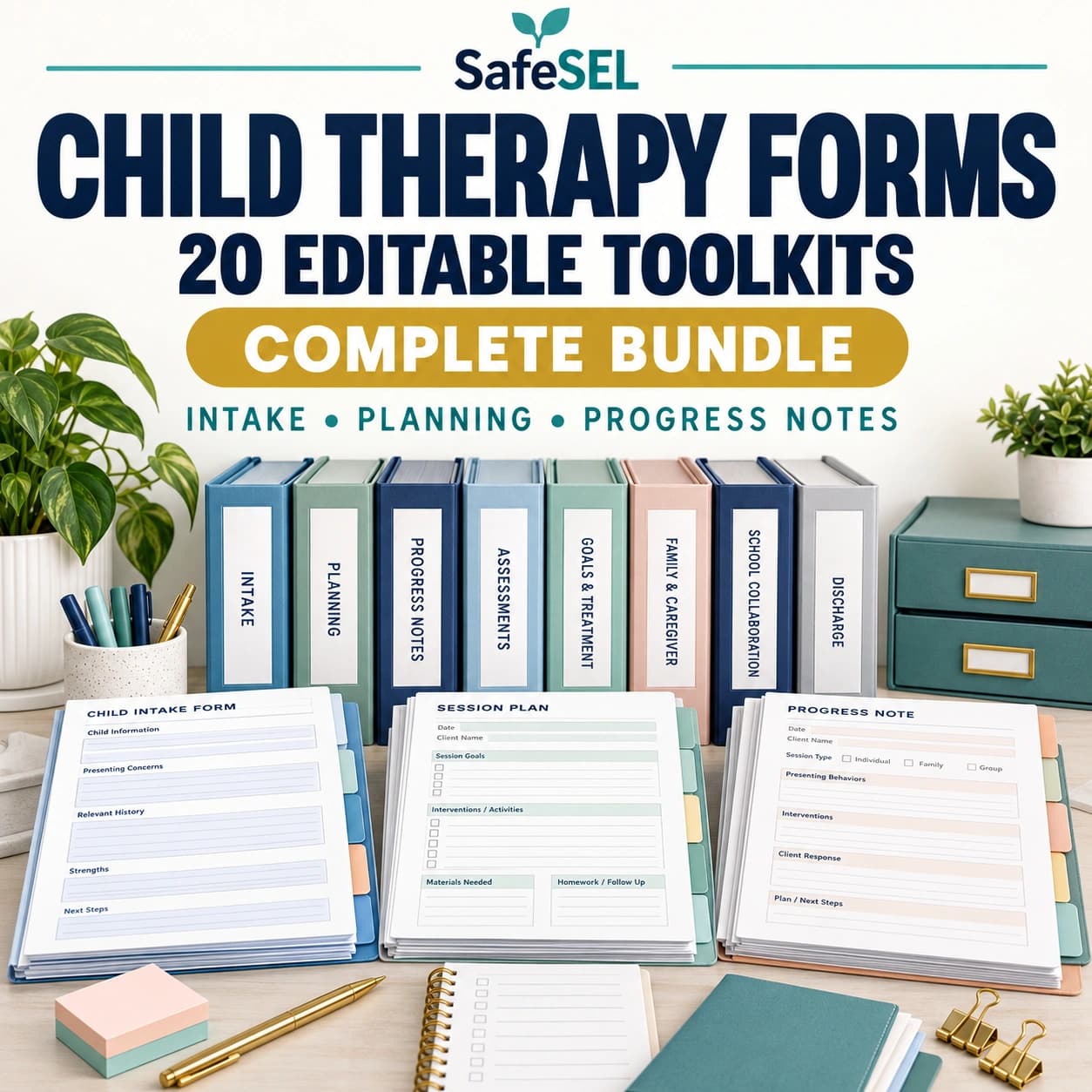
A useful child therapy resource library is organized around clinical decisions, not file quantity. Start with a small pathway—intake, formulation, goals, session planning, progress review and transition—then add specialist tools only when the case calls for them. Every form should have a clear purpose, owner, storage location and review point.
Begin with the decisions the record must support
A folder named “worksheets” tells a practitioner very little at the moment a decision has to be made. A stronger structure answers practical questions: What do I need before the first meeting? What information belongs in the formulation? How will goals be translated into session choices? What will count as progress? What must be documented at ending or transfer?
This decision-first structure also exposes unnecessary duplication. If three forms collect the same history but none improves formulation, the problem is not a shortage of forms. It is an unclear workflow.
Create one visible pathway from intake to review
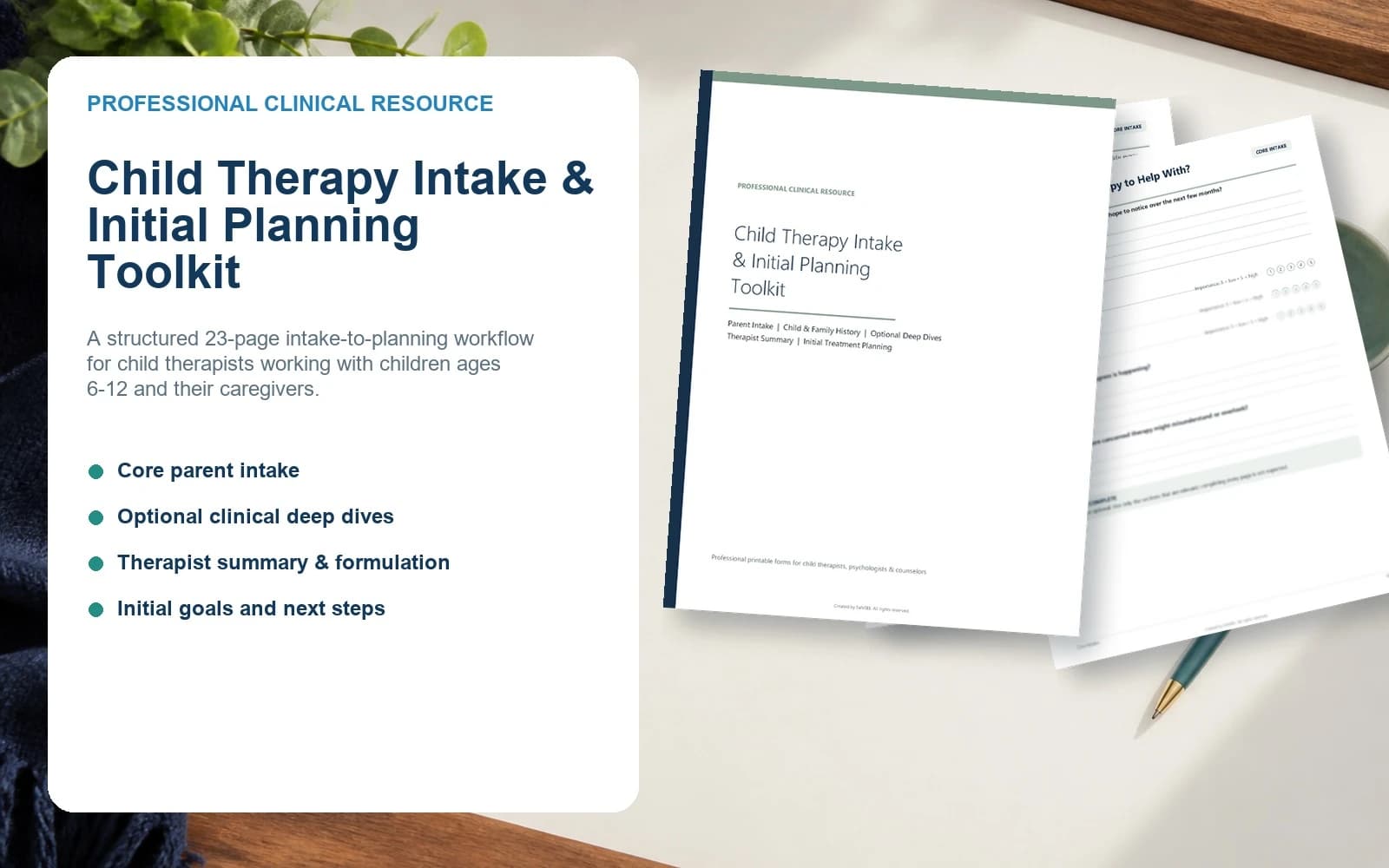
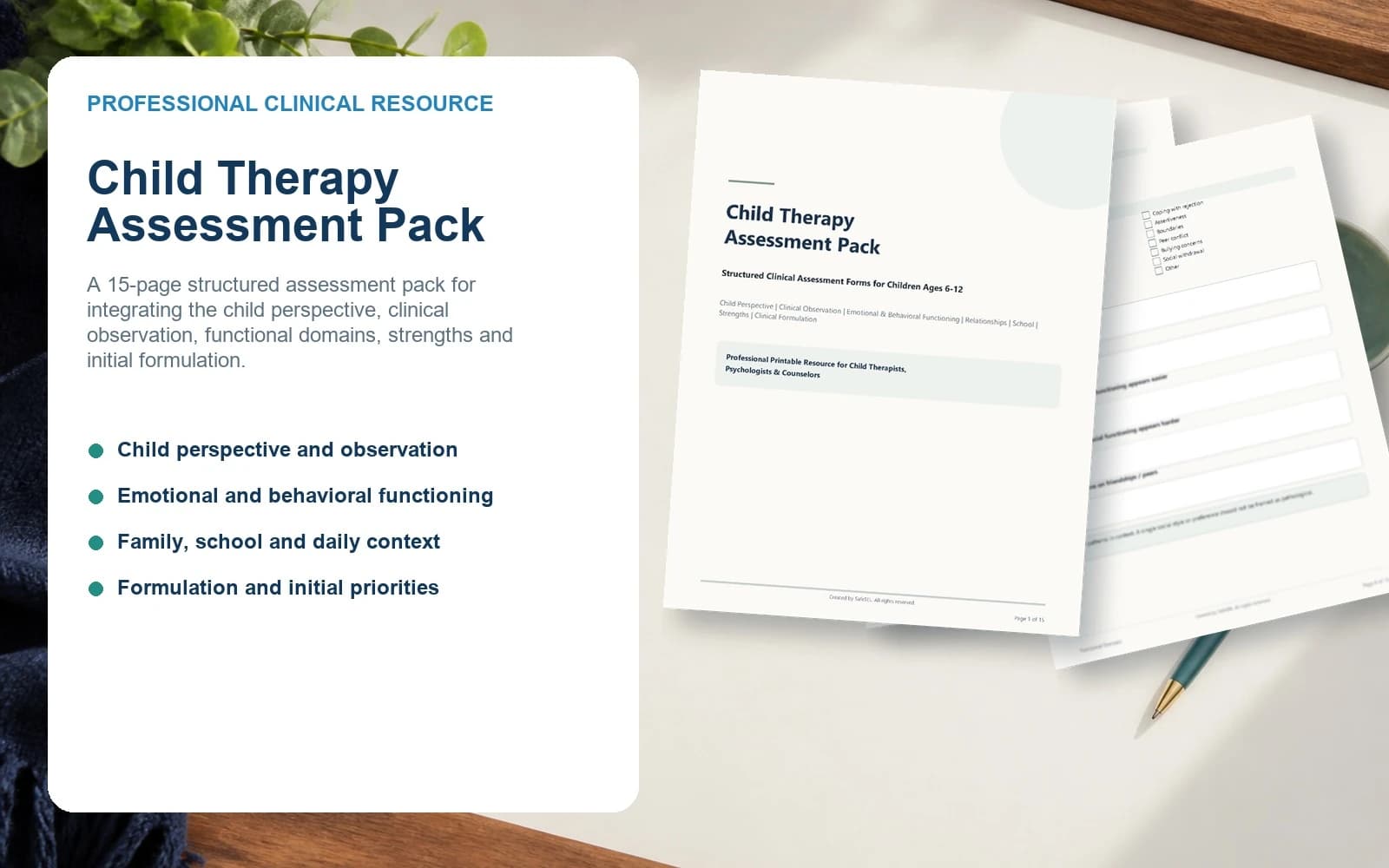
Keep the pathway short enough to remember. Intake gathers the referral question, developmental and family context, current functioning, strengths, safety information and missing data. Formulation turns those observations into provisional hypotheses. Goals identify meaningful change. Session plans select the next useful task. Progress review tests whether the plan is helping.
The pathway should remain flexible. A child may need additional assessment, a school conversation, medical input, supervision or referral before the next intervention. A printable can support that thinking, but it cannot make the decision for the practitioner.
Separate core workflow tools from specialist resources
Core tools are used across many cases: intake, developmental history, goal planning, progress notes and review. Specialist resources belong in a second layer organized by need, such as anxiety and avoidance, grief and family change, school refusal, neurodiversity, medical stress or peer victimization.
This separation reduces the temptation to use a specialist worksheet merely because it is easy to find. It also helps practitioners explain why a particular resource was selected and how it relates to the current formulation.
Set rules for versions, storage and confidentiality
Choose a naming convention, archive superseded versions and identify which files may contain client information. Blank templates, completed records and general educational handouts should not share the same storage rules. Local law, professional standards, contracts and workplace policies determine what must be retained and how it must be protected.
A tidy download is not a record system. Before introducing any template, decide where completed material will live, who can access it, how corrections are handled and what happens during transfer, closure or practitioner absence.
Audit the library by asking what changed
Once a quarter, sample a few resources and ask: Did this page change assessment, planning, communication or follow-up? Was it understandable to the child or caregiver? Did it create information nobody used? Did it duplicate the progress note? Would a shorter prompt have worked better?
Keep the resources that improve continuity and judgment. Revise or remove those that generate paperwork without a clinical function. The aim is not the largest library; it is a coherent set that helps a qualified practitioner think, communicate and document more clearly.
Give each piece of therapy paperwork a distinct job
A therapy intake form gathers information; a treatment plan records the agreed clinical direction; a therapy progress notes template supports documenting relevant session work and decisions. Before adding all three to a library, check where information would be repeated and which record your workplace actually requires.
Keep blank templates separate from completed client records. Test the workflow with a fictional case: can another authorized practitioner find the current goal, recent decision and next review point without searching through several competing versions? Choose resources that clarify those tasks.
A practical next step
For a structured set of materials, see the Complete Child Therapist Library — 44 Products.
You can also browse therapist forms and clinical tools or continue with our
when child therapy feels stuck.
Sources and further reading
- Comprehensive Psychiatric Evaluation — American Academy of Child and Adolescent Psychiatry (2026)
- Record Keeping Guidelines — American Psychological Association (2024)