When child therapy feels stuck, the next step is not automatically a new worksheet or more effort from the child. Review the referral question, formulation, therapeutic alliance, developmental fit, family and school context, progress indicators, risk, access barriers and whether consultation, referral or a change in approach is needed.
Operationalize the concern
Clarify whether goals have not changed, attendance is inconsistent, sessions feel repetitive, skills do not generalize, the child disengages or stakeholders disagree about progress. These are different problems and require different responses.
Revisit the working formulation
- What has changed since intake?
- Which maintaining factors were missed or overemphasized?
- Are sensory, communication, developmental or medical needs affecting participation?
- Are family, school or practical barriers sustaining the difficulty?
- Does current risk require a different level of care?
Review alliance and treatment fit
Ask the child and caregiver what feels useful, confusing, unsafe or irrelevant. Consider whether the pace, language, modality and demands fit the child. Consultation can help distinguish normal slow progress from a genuine mismatch or competence boundary.
Examine progress from more than one angle
Look beyond symptom disappearance. Recovery time, willingness to approach a task, communication, help-seeking, participation and reduced support needs may change first. Also be willing to record that meaningful benefit is not occurring.
Make the next decision explicit
Agree whether to continue with a revised plan, pause, obtain additional assessment, coordinate with another setting, seek supervision, refer or prepare a careful ending. Document the rationale and the date for the next review.
“Stuck” is a signal for review, not a description of the child
The label often combines several different problems: the target has not changed, attendance is unstable, the child participates but gains do not generalize, caregivers and clinicians disagree about priorities, or risk and complexity now exceed the original plan. Naming the observable problem prevents a vague sense of frustration from becoming a judgment about motivation.
Run the review in a fixed order
- Restate the referral question and current target in observable language.
- Check risk, safeguarding, medical needs and level-of-care fit first.
- Update the formulation using new developmental, family, school and cultural information.
- Ask the child and caregiver separately what feels useful, confusing or burdensome.
- Review dose, attendance, between-session opportunities and environmental barriers.
- Choose one decision: continue unchanged, revise, seek consultation, assess further, refer or plan an ending.
Case example: apparent resistance that was actually poor fit
A nine-year-old repeatedly refuses written CBT worksheets and is described as “not ready to engage.” Review shows that the child discusses worries during movement, understands concepts through drawing and becomes overwhelmed by dense text. The formulation has not failed; the delivery method has. A time-limited trial using visual mapping, shorter tasks and caregiver-supported practice gives the team a testable revision rather than another month of the same session.
Document the decision and its falsification point
A useful review note states what evidence changed the plan, what will be different, who will do what and when the decision will be revisited. It also identifies what outcome would show that the revision is not enough. This protects against both premature switching and indefinite continuation without benefit.
Related SafeSEL guides
When a Child Says “I Don’t Know” in Therapy — review engagement without blaming the child
Between-Session Practice in Child Therapy — check whether skills have a realistic route into daily life
Ending Child Therapy Thoughtfully — plan a transition when continuing is no longer indicated
Questions for supervision or consultation
- What am I assuming about the child or caregiver that the data do not show?
- Which part of the formulation has actually been tested?
- Is the intervention being delivered with sufficient fidelity, dose and developmental adaptation?
- Whose goal is this, and does the child understand why it matters?
- What competence, culture, language or level-of-care issue requires another professional?
Consultation is most useful when it receives a clear question and enough context to challenge the current plan. Bring the timeline, goals, attendance, outcome indicators, child and caregiver feedback, adaptations already tried and relevant risk information. “What worksheet should I use next?” is usually too narrow; “Which explanation best fits the failure to generalize, and what evidence would distinguish them?” produces a better review.
Decide whether new therapy tools would change the formulation
Before the next therapy session, ask what a new resource would let you observe or do differently. If the answer is only that the page is new, review the treatment plan first. A different worksheet cannot resolve missed risk information, an inaccessible format or disagreement about the goal.
If a therapy referral or consultation is needed, state the question and the evidence supporting it. Include relevant adaptations already tried and the response, with appropriate authorization and privacy safeguards. This makes the next professional’s task clearer than a general statement that therapy has not worked.
A practical next step
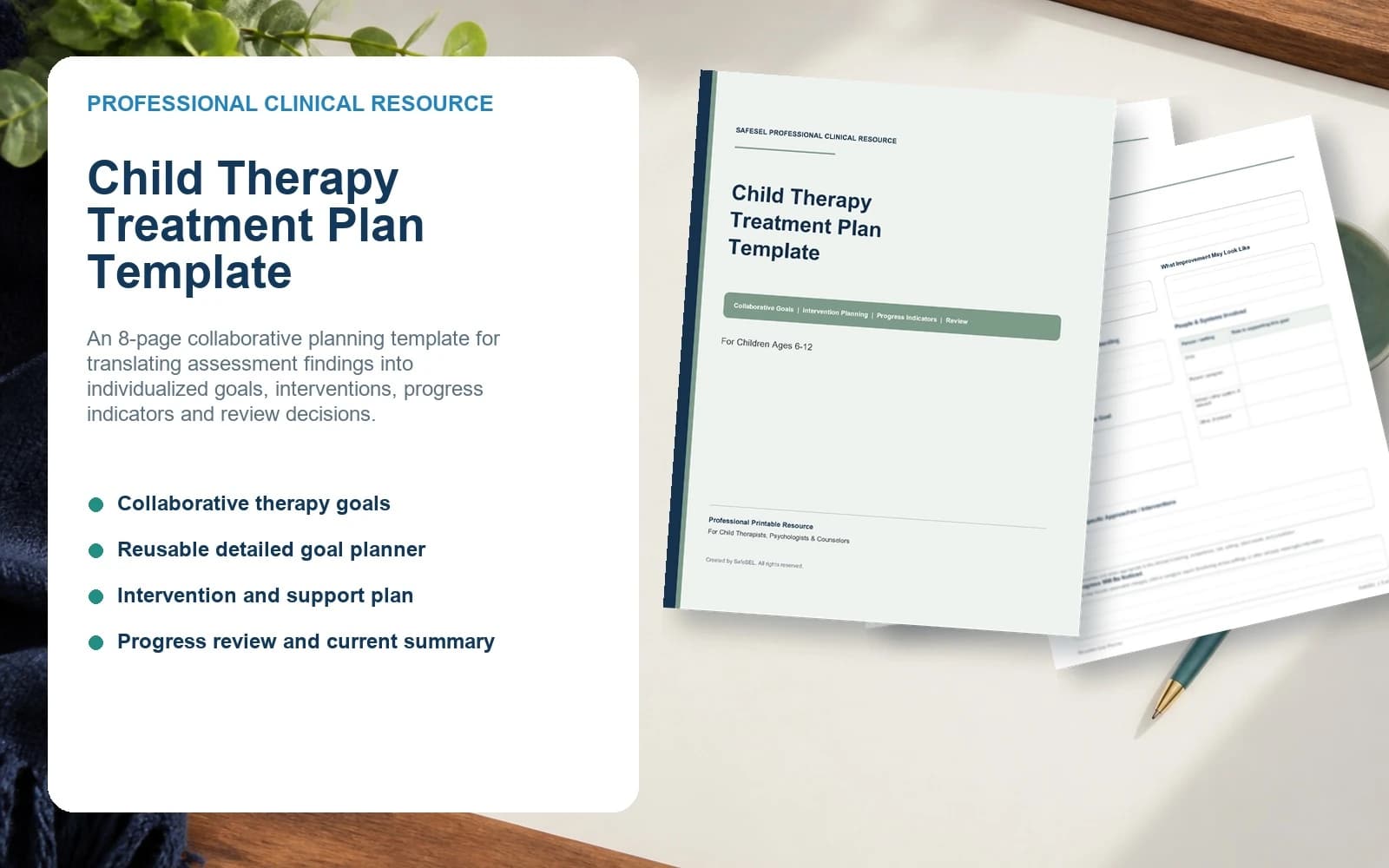
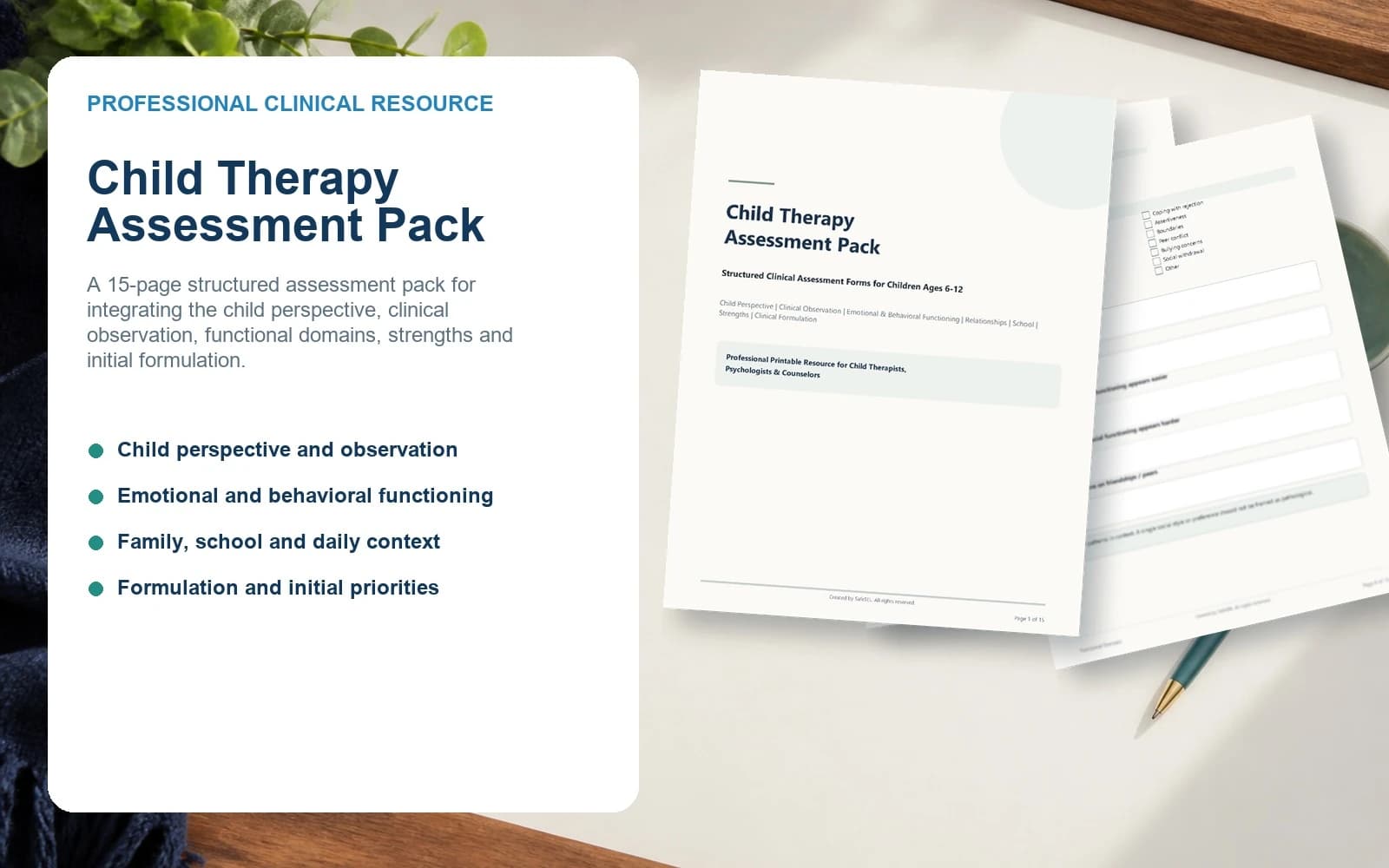
Structure formulation review and next-step decisions with When Child Therapy Feels Stuck — Practitioner Toolkit.
Browse the complete child therapist resource library.
Sources and further reading
- Recognizing When Therapy Has Run Its Course — American Psychological Association (2026)
- When Therapy Comes to an End — American Psychological Association (2022)
- Therapist factors and their impact on therapeutic alliance and outcomes in child and adolescent mental health: a systematic review — Journal of Child Psychology and Psychiatry (PubMed) (2022)