Use the page for one concrete family task.
- Planning for safety before escalation happens
- Reducing verbal demands during the peak
- Separating crisis management from later teaching
- Creating a predictable repair and reconnection step
This free meltdown response plan helps parents think through what to do before, during and after a child becomes highly dysregulated. The emphasis is on safety, reducing unnecessary demands, avoiding power struggles at the peak, and returning later to reconnection and repair when the child is able to participate.
General parent-support information. It does not replace individualized medical, mental-health, safeguarding or emergency support.
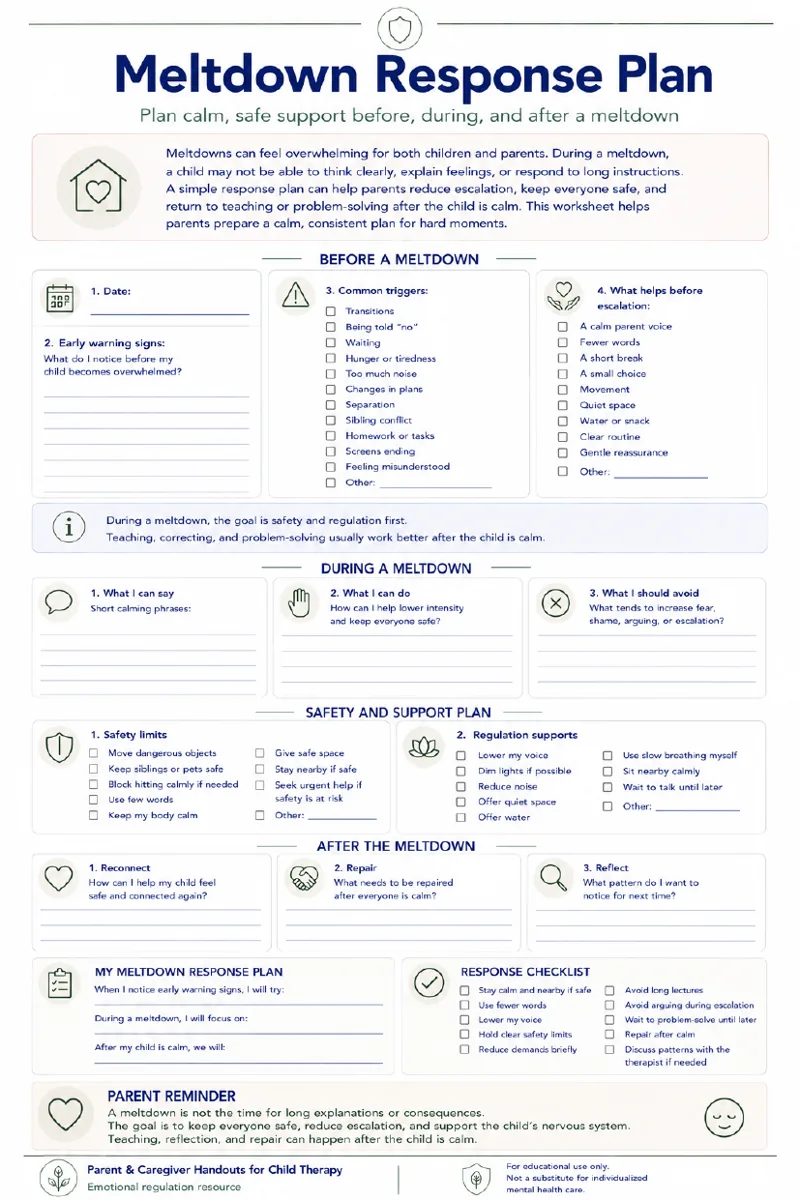
What makes the situation safer right now?
Which adult responses usually make escalation bigger?
What can be discussed later instead of at the peak?
Not necessarily. Highly dysregulated behavior can have many causes. Focus first on safety, context and what the child is able to do in that state.
Usually the peak is a poor time for complex teaching or negotiation. Safety comes first; later reflection can happen when the child can participate.
Seek appropriate professional or emergency support when meltdowns involve significant safety risk, severe impairment, self-harm, harm to others or concerns you cannot safely manage at home.
 CommunicationFree Validation Phrases for Parents
Simple language for acknowledging feelings without giving up boundaries.
 AnxietyFree Parent Handout: What to Say When My Child Is Anxious
Practical language for responding to worry while avoiding endless reassurance loops.
 Emotional RegulationFree Calm-Down Plan for Kids at Home
A practical plan for deciding what helps before big feelings take over.
Browse SafeSEL parent resources for anxiety, emotional regulation, communication, meltdowns, friendship and family support.