Cards & Prompts
Social Skills Conversation Cards for Kids
Ages 7–12ZIP
Children explore social cues, communication choices and practical steps for resolving or repairing peer difficulties.
Conversation cards, scenarios, social stories and structured activities for friendship, communication, perspective-taking and conflict repair.
Children explore social cues, communication choices and practical steps for resolving or repairing peer difficulties.
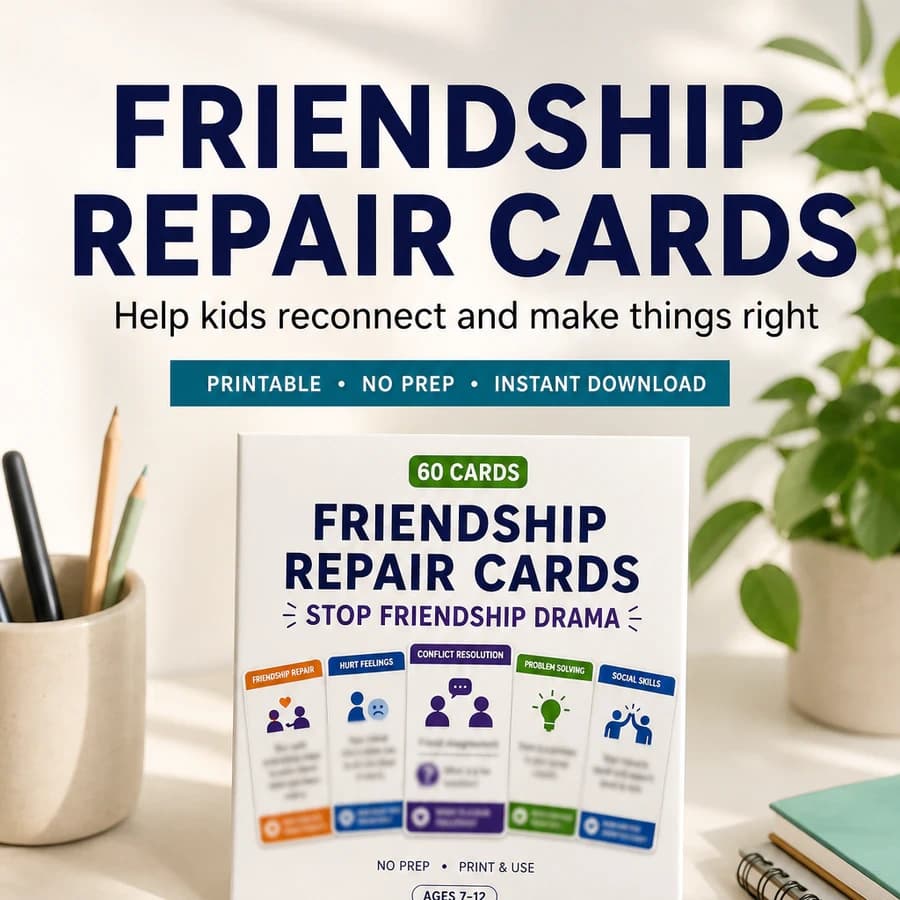
60 printable friendship repair scenario cards for ages 7–12. Practise apologies, listening and problem solving through guided discussion of peer situations.
This printable conversation game helps children practice listening, communication, problem solving and respectful responses through guided discussion prompts.
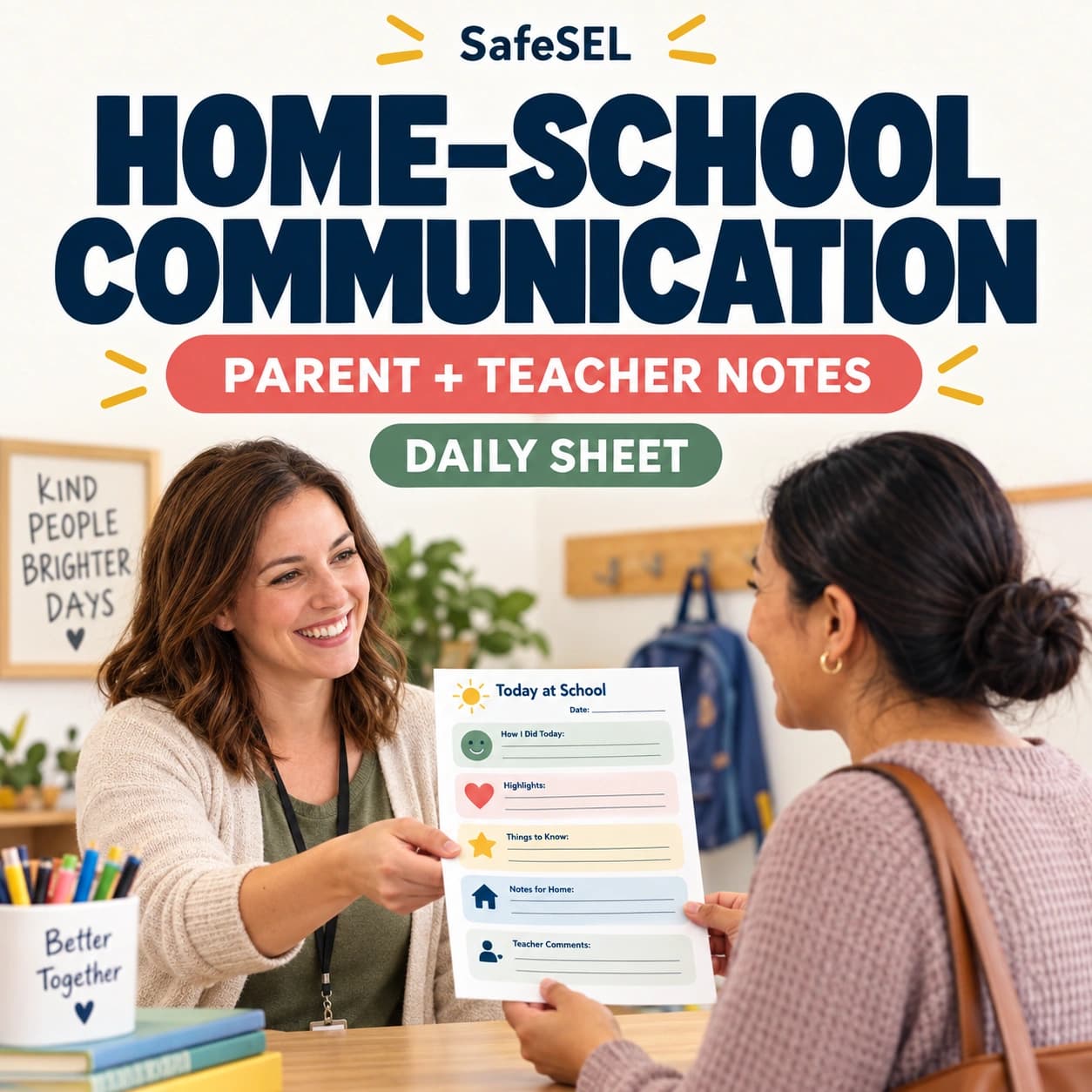
Home-School Communication Sheet for Ages 7-12 (Printable PNG): a print-ready worksheet for ages 7–12 with clear prompts for guided practice.
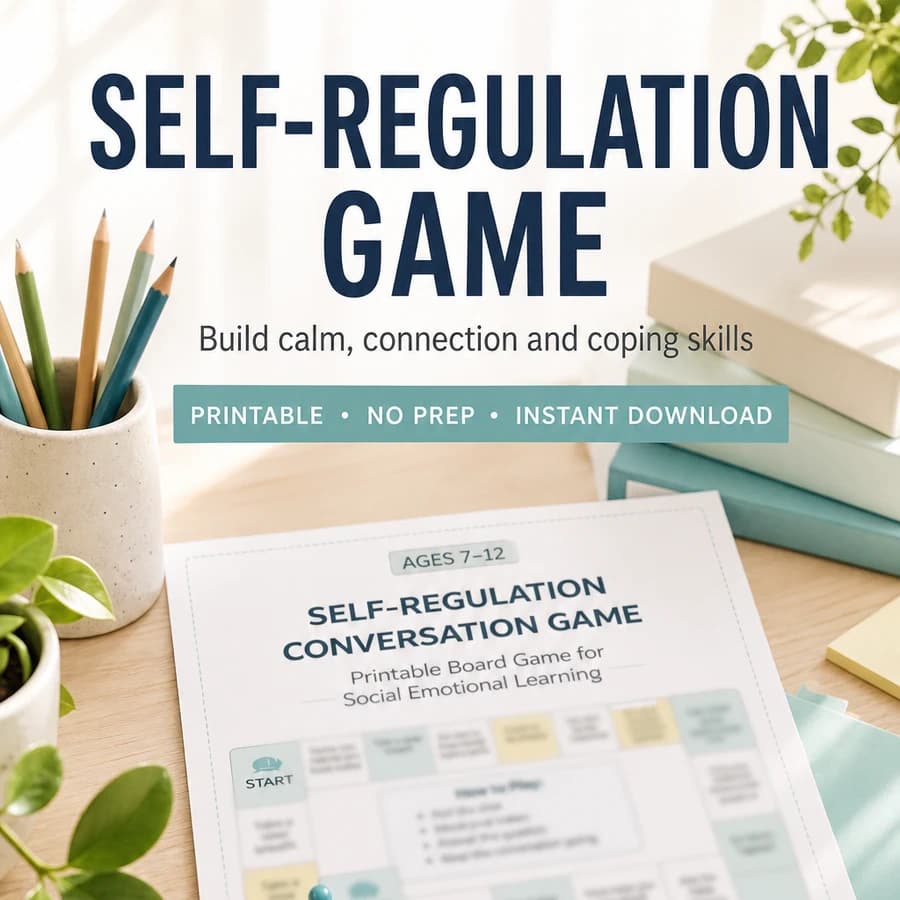
Self-Regulation Conversation Game for Kids Ages 7–12: a print-ready activity for ages 7–12 with clear prompts for guided practice.
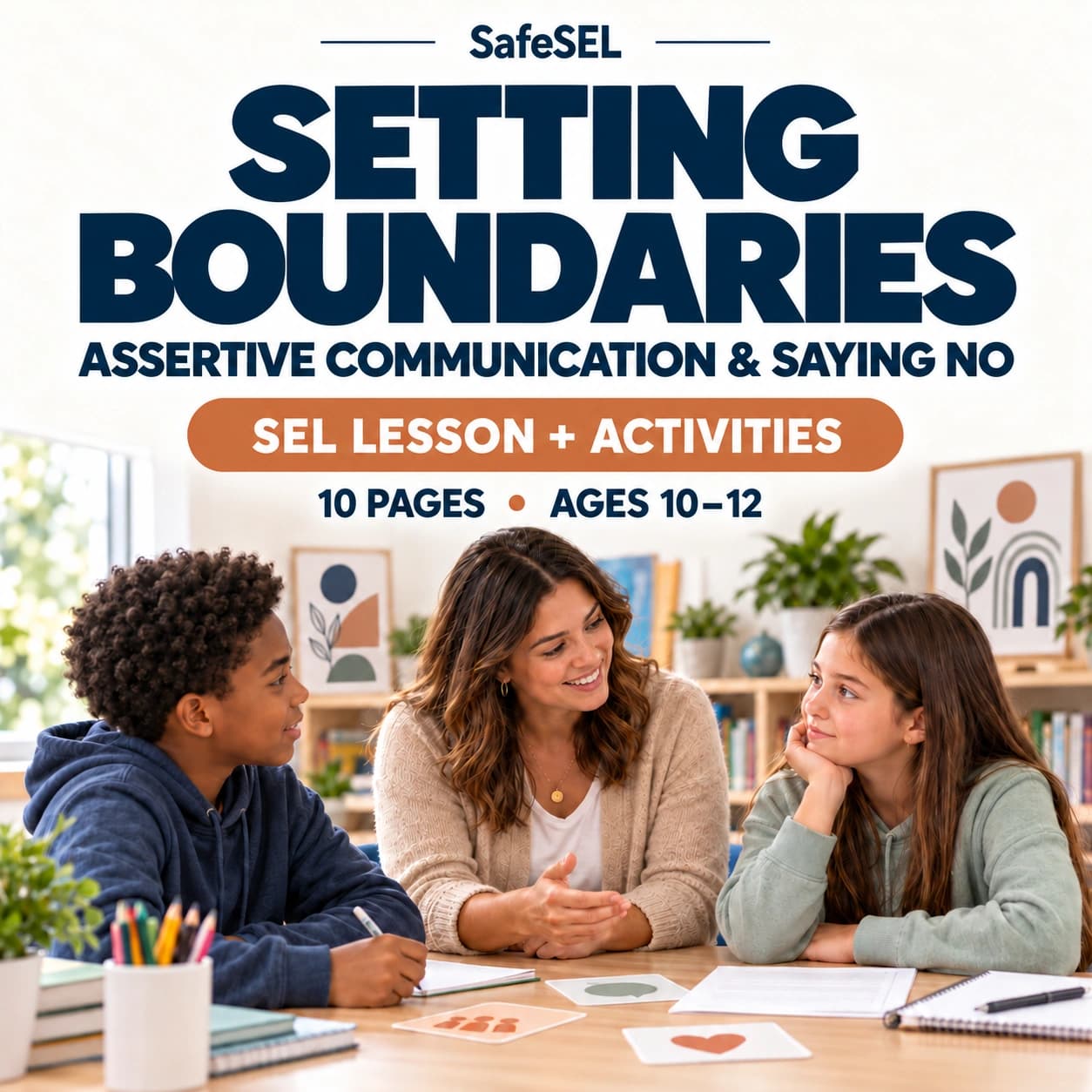
This SEL lesson helps children ages 10–12 understand personal boundaries, recognize respectful behavior and practice clear, safe communication.
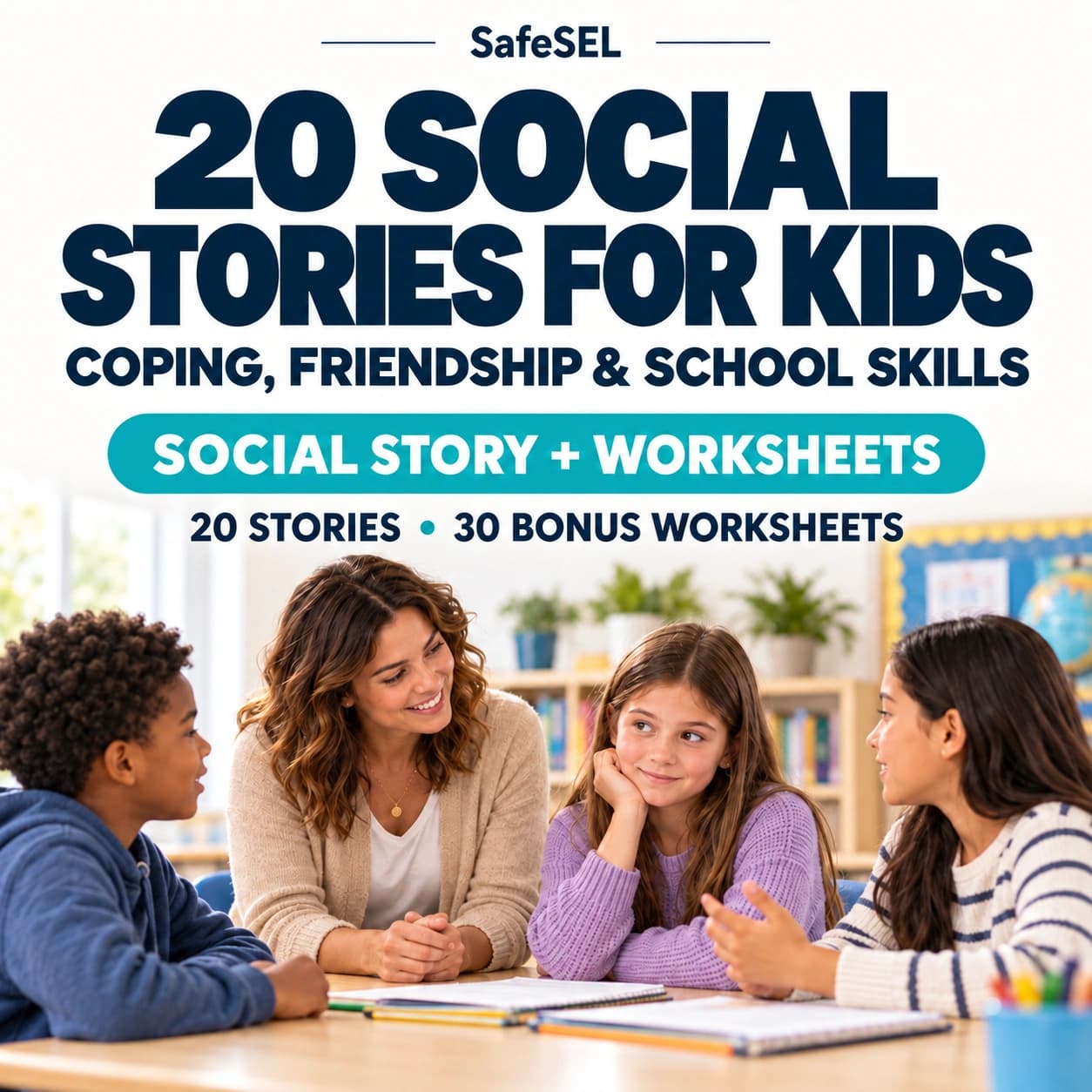
This collection includes 20 printable social stories about everyday school, friendship, coping and problem-solving situations for children ages 7–12.
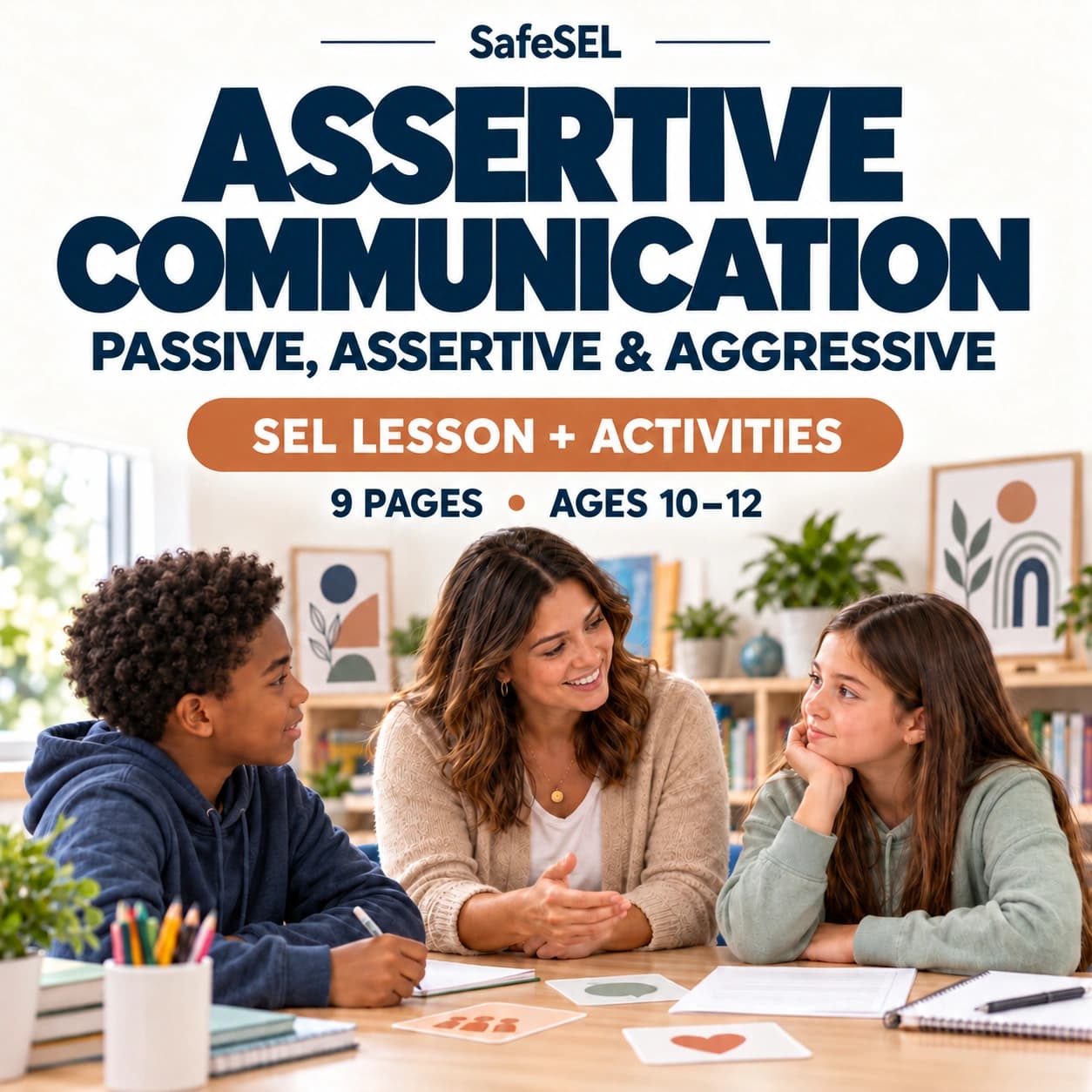
A ready-to-use printable lesson for ages 10–12 focused on friendship, communication and conflict repair. Includes PDF files for print-and-use access.
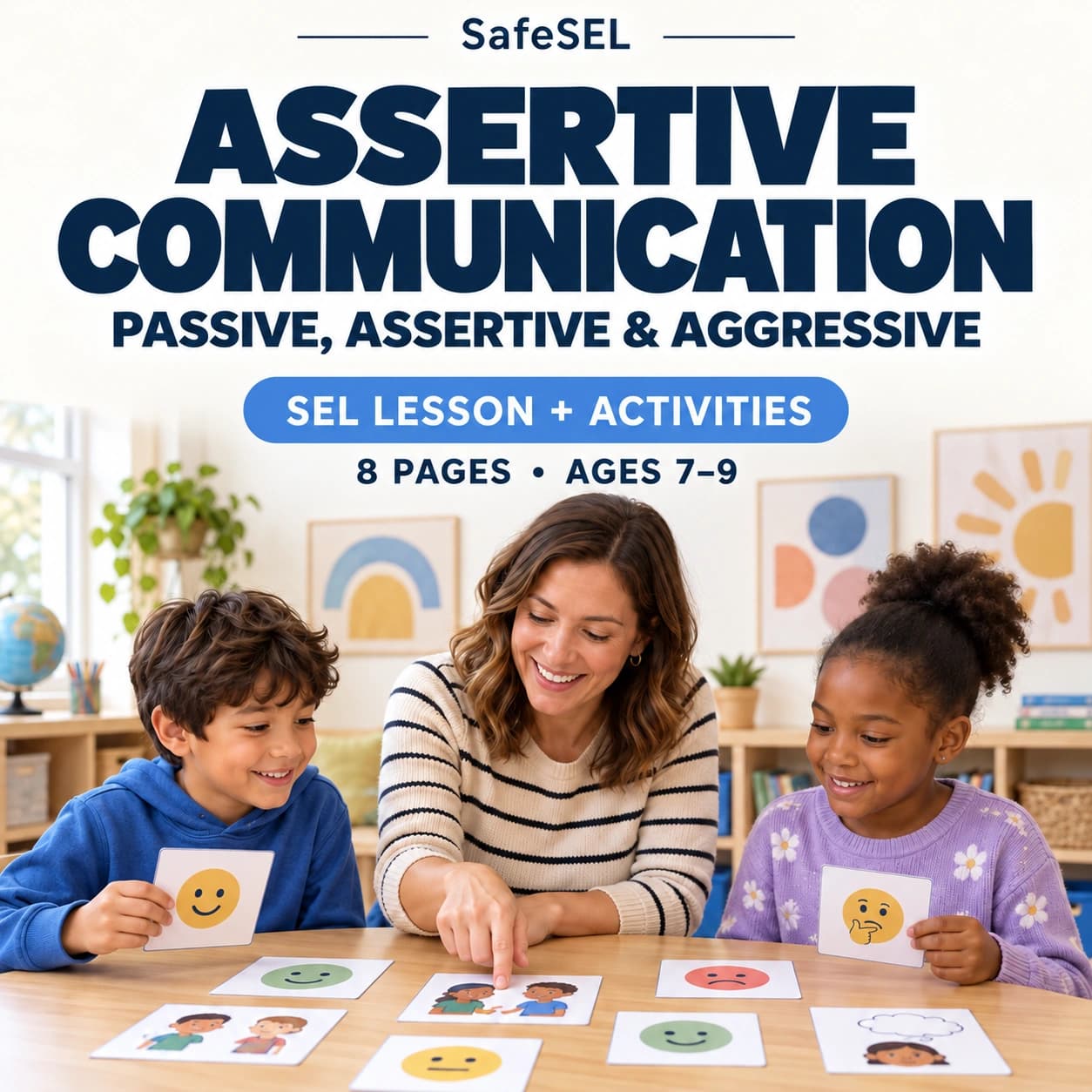
Assertive Communication Lesson for Kids: a print-ready lesson for ages 7–9 with clear prompts for guided practice.
Reflect on listening, kindness, inclusion and repair in real friendships.
Open the free resource →Compare what two people may know, want or notice in the same situation.
Open the free resource →Decide when to listen, coach a skill or involve school support.
Open the free resource →Teach observable social cues while avoiding shame and mind-reading expectations.
Read the guide →Concrete, respectful ways to practise consent, distance and flexible social responses.
Read the guide →Identify the demands behind group participation and choose a supportive next step.
Read the guide →Respond to revenge language with safety, emotion coaching and repair without escalating the peer conflict.
Read the guide →Help a child rebuild communication confidence after difficult friendship or peer experiences.
Read the guide →How to understand a repeated exclusion pattern without forcing reconciliation or reducing the issue to one child’s social skills.
Read the guide →Support communication, confidence and repair without reinforcing constant self-blame.
Read the guide →Joining a game, asking for space and repairing a disagreement are different tasks. Social skills worksheets give room to organise an individual response; social skills group activities let learners compare ideas. Perspective-taking activities ask what each person may know, while social problem-solving scenarios explore possible next steps. Keep uncertainty visible: noticing a cue is not the same as knowing another person’s thoughts.
Try a fictional example: two classmates want different rules for the same game. Ask what each person wants, what they could say, and what a fair next step might be. Students can point, draw, discuss or pass. Conversation cards offer further situations, while a friendship worksheet gives room to organise an individual response. Success is not measured by eye contact or agreeing with the group.
Social skills worksheets can support guided practice around joining in, listening, disagreements or repair. Personal boundaries worksheets address a different question: what someone is comfortable with and how they can communicate it. Choose a specific situation and make room for several acceptable responses. The purpose is not to reward agreement with an adult, but to practise noticing choices and communicating respectfully.
These resources help adults turn common peer situations into guided discussion and skills practice rather than relying only on abstract advice.
Topics include friendship, boundaries, communication, problem-solving, perspective-taking, conflict and repair.
Yes. The collection contains both individual social stories and larger social-story bundles, alongside cards and other activities.
Filter by resource type and age group to find the most useful printable.