Use the page for one concrete family task.
- Acknowledging worry without promising certainty
- Reducing repetitive reassurance conversations
- Helping the child identify the next manageable step
- Keeping anxiety support calm and specific
This free parent anxiety handout offers practical language for responding when a child is worried without turning every anxious thought into a long reassurance cycle. It is designed to help caregivers acknowledge distress, stay curious about what the child needs, and support a manageable next step while avoiding promises that no uncomfortable outcome can ever happen.
General parent-support information. It does not replace individualized medical, mental-health, safeguarding or emergency support.
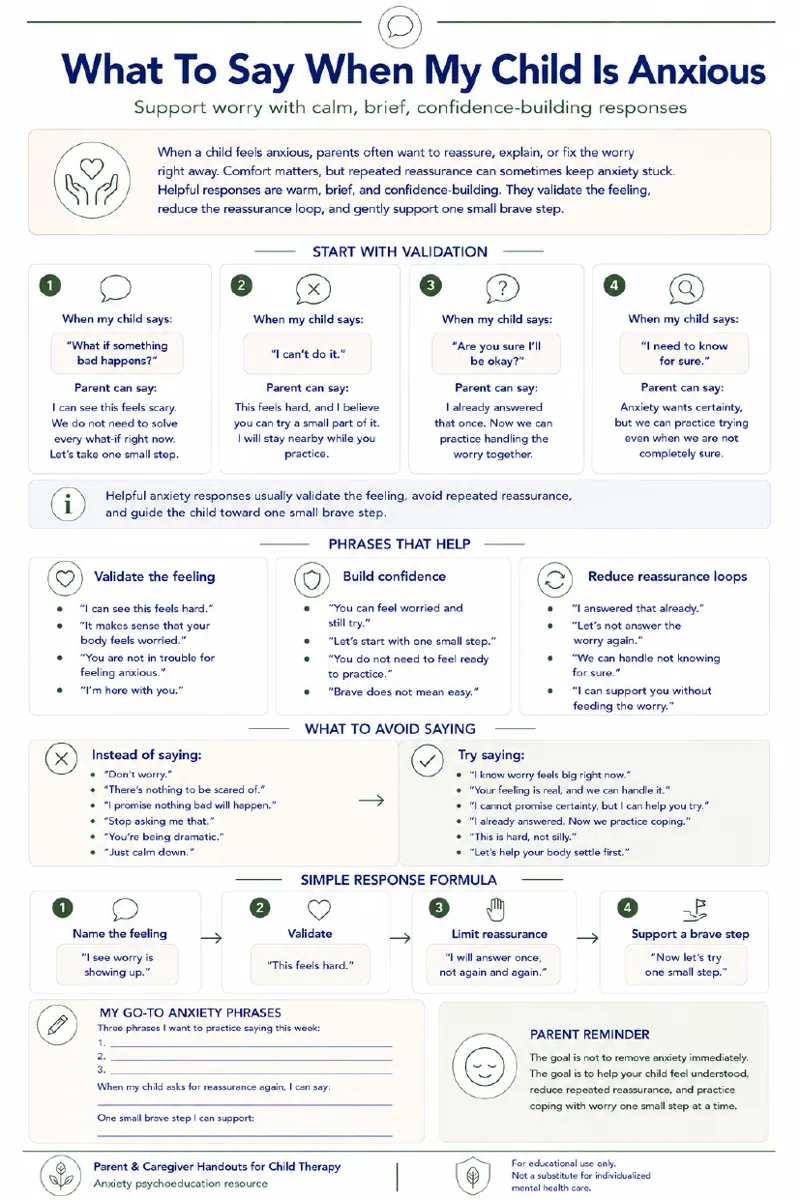
Is my answer helping the child act, or only giving a few seconds of relief?
What is one small step the child can take with support?
Does this worry point to a real safety issue that needs action rather than anxiety coaching?
Not necessarily. Warmth and support matter. The concern is repetitive reassurance that temporarily reduces anxiety but becomes something the child feels unable to cope without.
No. It is a practical caregiver resource. Persistent or severe anxiety may require individualized professional assessment and support.
Do not treat a realistic safety concern as merely anxiety. Address the actual risk first and seek appropriate help when needed.
 CommunicationFree Validation Phrases for Parents
Simple language for acknowledging feelings without giving up boundaries.
 Emotional RegulationFree Calm-Down Plan for Kids at Home
A practical plan for deciding what helps before big feelings take over.
 MeltdownsFree Meltdown Response Plan for Parents
A simple plan for responding during escalation and reconnecting afterward.
Browse SafeSEL parent resources for anxiety, emotional regulation, communication, meltdowns, friendship and family support.