What a child therapist can share with parents depends on who consented to care, the child’s age and capacity, the practitioner’s role and setting, applicable law, safety concerns and the communication agreement established at intake. A sound approach is to explain the framework before sensitive material arises, provide information needed for care and safety, and avoid promising either total secrecy or unrestricted access.
There is no single rule for every child, family or jurisdiction
In the United States, HIPAA often treats a parent as a minor child’s personal representative, but state law, the way treatment was consented to and concerns about abuse, neglect or endangerment can change the analysis. Other countries and professional settings use different frameworks. This article therefore offers a decision process, not legal advice.
Set expectations during informed consent
- Who is the client or service recipient?
- Who can consent and access records?
- What kind of routine updates will caregivers receive?
- How will the child be involved in communication decisions?
- What are the limits of privacy and confidentiality?
- How will urgent safety or safeguarding concerns be handled?
Use language that both the child and caregivers can understand. Revisit the agreement when the child’s capacity, family arrangements, legal authority, risk or treatment setting changes.
Build this conversation into a broader workflow with Child Therapy Intake Process: From First Contact to Initial Plan.
Distinguish themes from verbatim session content
Caregivers may need information about goals, attendance, broad progress, practical supports, safety planning and what they can do between sessions. That does not automatically require a detailed account of everything the child said. A theme-level update can often support care while preserving a workable therapeutic space.
Examples of potentially useful theme-level updates
- The skill or topic currently being practised
- General progress and barriers without unnecessary private detail
- A support strategy to use consistently at home
- A change in risk or safety planning that must be communicated
- A request for relevant contextual information from the caregiver
A six-question disclosure check
- What is the care, safety, legal or administrative purpose of sharing?
- Is the recipient entitled or appropriately authorized to receive it?
- What did the child and caregiver understand at intake?
- Could a less detailed update meet the same purpose?
- Could sharing or withholding create a safety or safeguarding concern?
- Is consultation, supervision or legal guidance needed first?
Involve the child when appropriate
When developmentally appropriate and safe, discuss what the caregiver needs to know, what wording is accurate and whether the child wants to participate in the update. This can support trust and communication. It does not make the child solely responsible for legal, ethical or safety decisions.
Responding to caregiver questions after a session
A therapist can acknowledge the caregiver’s concern, restate the agreed communication framework and offer information that is relevant to support. If a request requires record access or a legal determination, follow the appropriate process instead of deciding casually at the end of a session.
Prepare useful updates before they are needed
A predictable update structure can reduce pressure on the child, caregiver and therapist. It might cover the current focus, one broad observation about progress or barriers, one practical support for home and any decision that requires caregiver participation. Agree on the timing and channel for these updates. Avoid using a rushed handover, text message or informal email to disclose sensitive material that requires a more deliberate conversation or documented process.
When caregivers and children want different levels of detail
Acknowledge both interests without promising an outcome before checking the applicable framework. Clarify the caregiver’s underlying need—such as safety, progress or how to help—and consider whether that need can be met with a theme-level update. Explain to the child what must be shared, what may remain private and how they can be involved in wording the communication when appropriate.
When safety changes the communication decision
Concerns involving harm, abuse, neglect, exploitation, coercion or endangerment require jurisdiction-specific safeguarding, reporting and risk procedures. Explain privacy limits early, share only with those who need the information under the applicable framework, document the reasoning and seek consultation when indicated.
Document the reasoning, not only the outcome
- Relevant consent and confidentiality discussions
- The request for information and who made it
- The purpose and professional basis for sharing or not sharing
- Consultation, supervision or legal guidance obtained
- What was communicated, to whom and when
- Any follow-up or safety action
Documentation should remain proportionate and follow local rules. Do not copy unnecessary sensitive detail merely to show that a decision was considered.
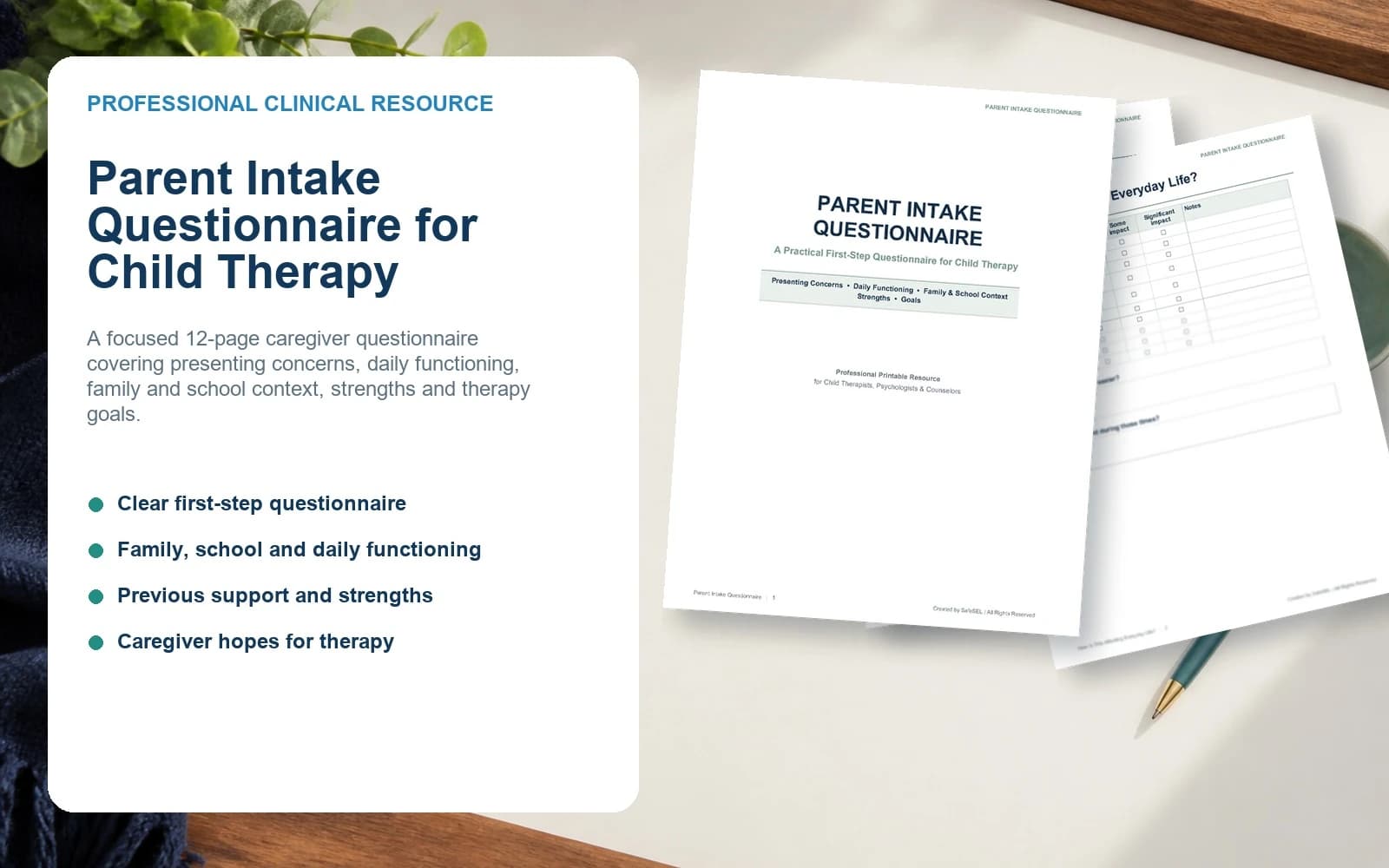
Add communication arrangements to therapy intake questions
Ask the mental health therapist how routine updates, requests for records and urgent concerns are handled. These are different communication tasks. Clarify the expected contact method and who has authority to receive information instead of relying on an informal assumption after the first appointment.
Therapy forms can record the arrangement, but their wording does not override applicable law or professional obligations. Revisit the discussion when consent, family authority, safety or the treatment setting changes. This planning does not promise either unrestricted disclosure or complete secrecy.
Frequently asked questions
Can parents receive progress updates?
Often yes, but the content and level of detail depend on consent, legal authority, the setting, safety and professional judgment.
Should a therapist promise a child complete confidentiality?
No. Explain privacy in age-appropriate language together with its legal, ethical and safety limits.
Are psychotherapy notes the same as the clinical record?
Not necessarily. In the United States, HIPAA distinguishes separately maintained psychotherapy notes from information in the designated record set. Other jurisdictions and settings may use different definitions.
Can a therapist send an update by email?
Only through a communication method consistent with consent, privacy, security, organizational policy and jurisdictional requirements. Convenience alone does not determine appropriateness.
A structured starting point for parent collaboration
Gather concerns, context, strengths and goals while establishing expectations with the Parent Intake Questionnaire for Child Therapy.
Browse the complete professional resource line for child therapists.
Related SafeSEL guide
For a balanced parent-facing progress review, see Signs Child Therapy Is Making Progress.
Related guidance for the next step
Sources and further reading
- Information Related to Mental and Behavioral Health — U.S. Department of Health and Human Services (2026)
- Record Keeping Guidelines — American Psychological Association (2024)