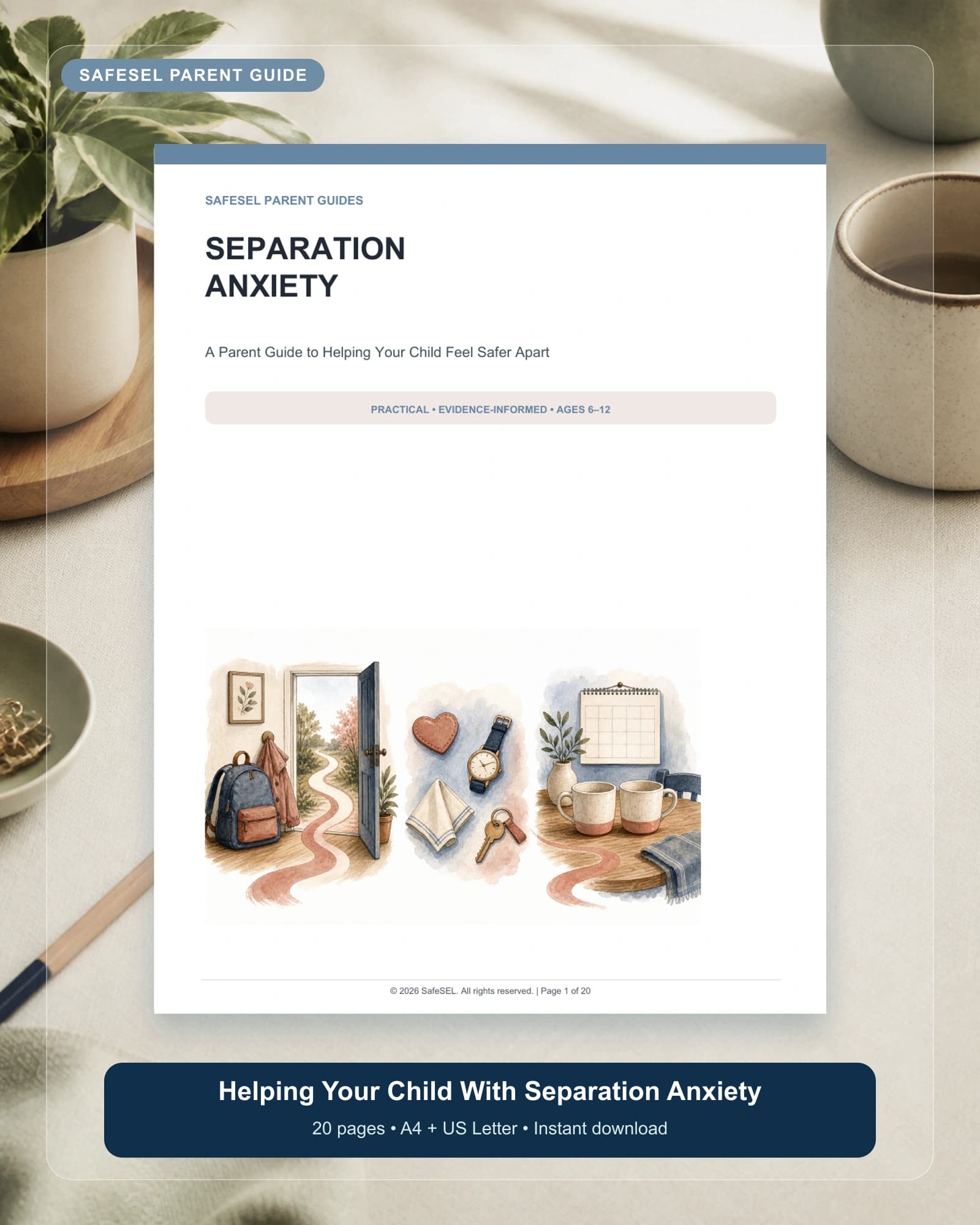
Helping Your Child With Separation Anxiety
A warm 20-page home-use guide to separation anxiety, safer goodbyes, manageable practice and reducing reassurance loops while staying connected.
Explore parent anxiety handouts for understanding worry patterns, reassurance and avoidance, supporting coping and planning manageable brave steps at home.

A warm 20-page home-use guide to separation anxiety, safer goodbyes, manageable practice and reducing reassurance loops while staying connected.

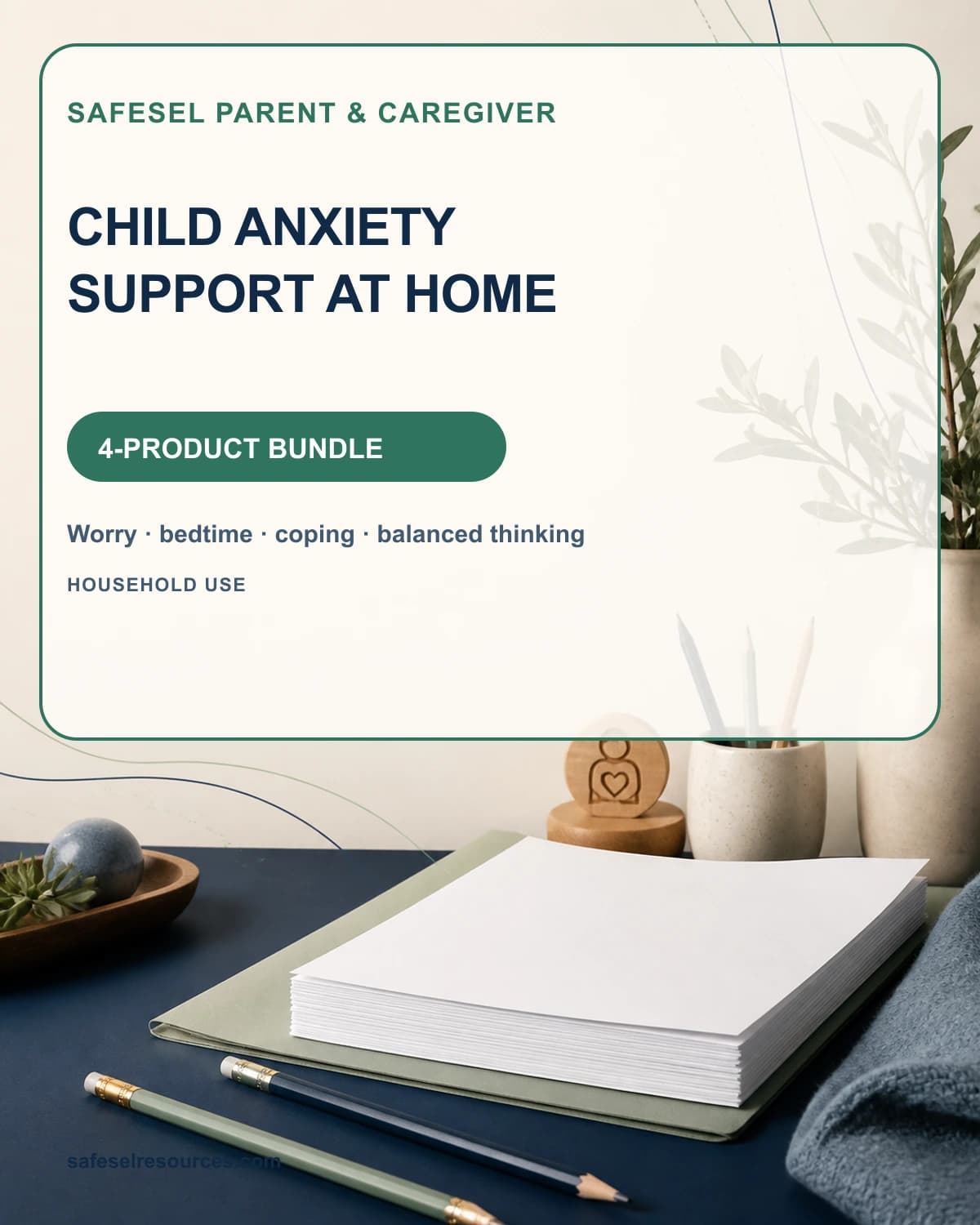
A practical 20-page parent guide to understanding school avoidance, checking what may be driving distress and building a safer, coordinated return plan.

Four parent-friendly resources for understanding worry, easing bedtime anxiety, practising coping skills and supporting more balanced thinking at home.

A practical parent guide to morning bottlenecks, preparation and visible routines, with tools for calmer departures and school coordination.

A warm parent guide to sleep resistance, reassurance loops and calmer evenings, with a bedtime tracker and nighttime response plan.

A parent guide to homework stress, avoidance and executive-function demands, with a breakdown finder and manageable home support plan.

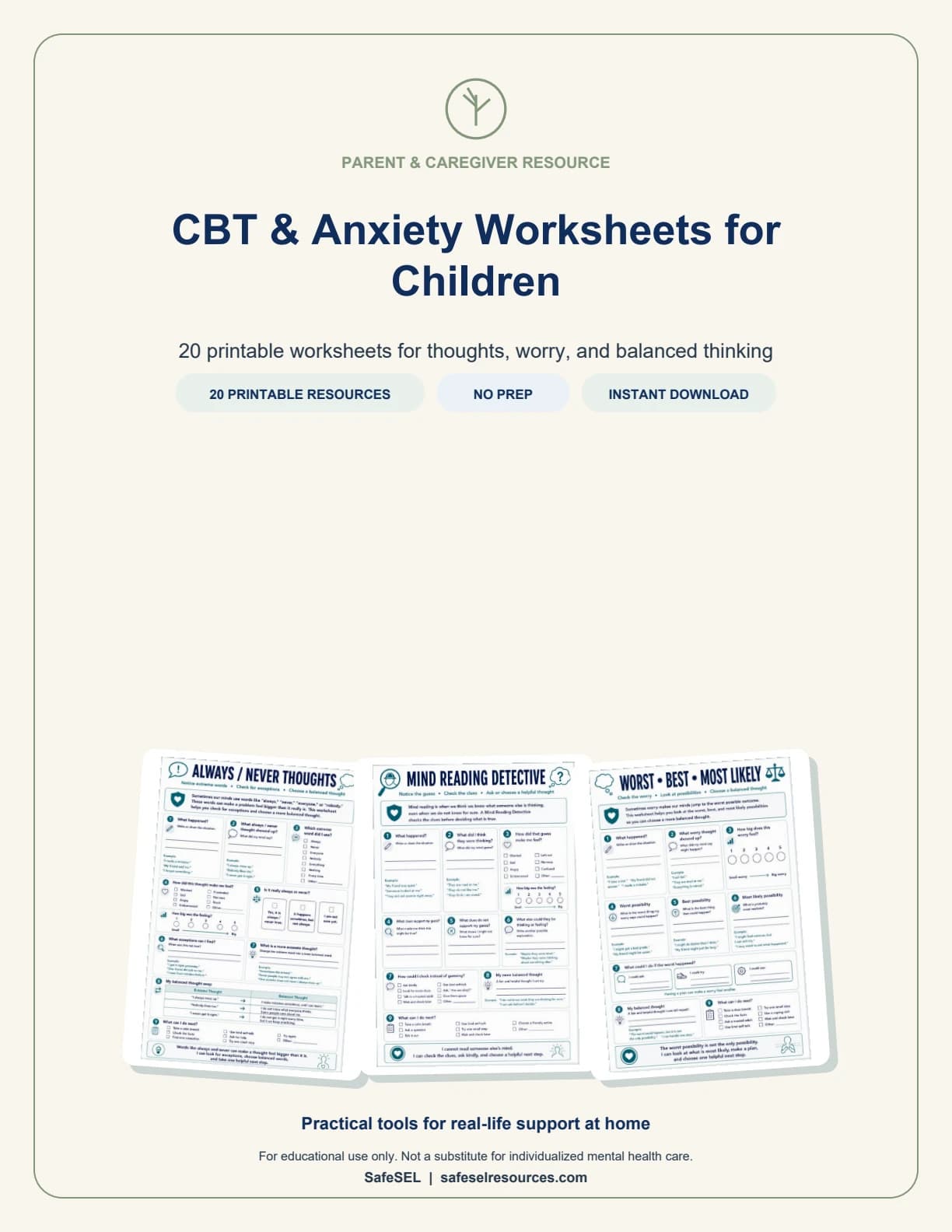
Twenty printable CBT-informed worksheets for ages 7–12 covering worry, thinking traps, checking facts, helpful self-talk and balanced thinking.

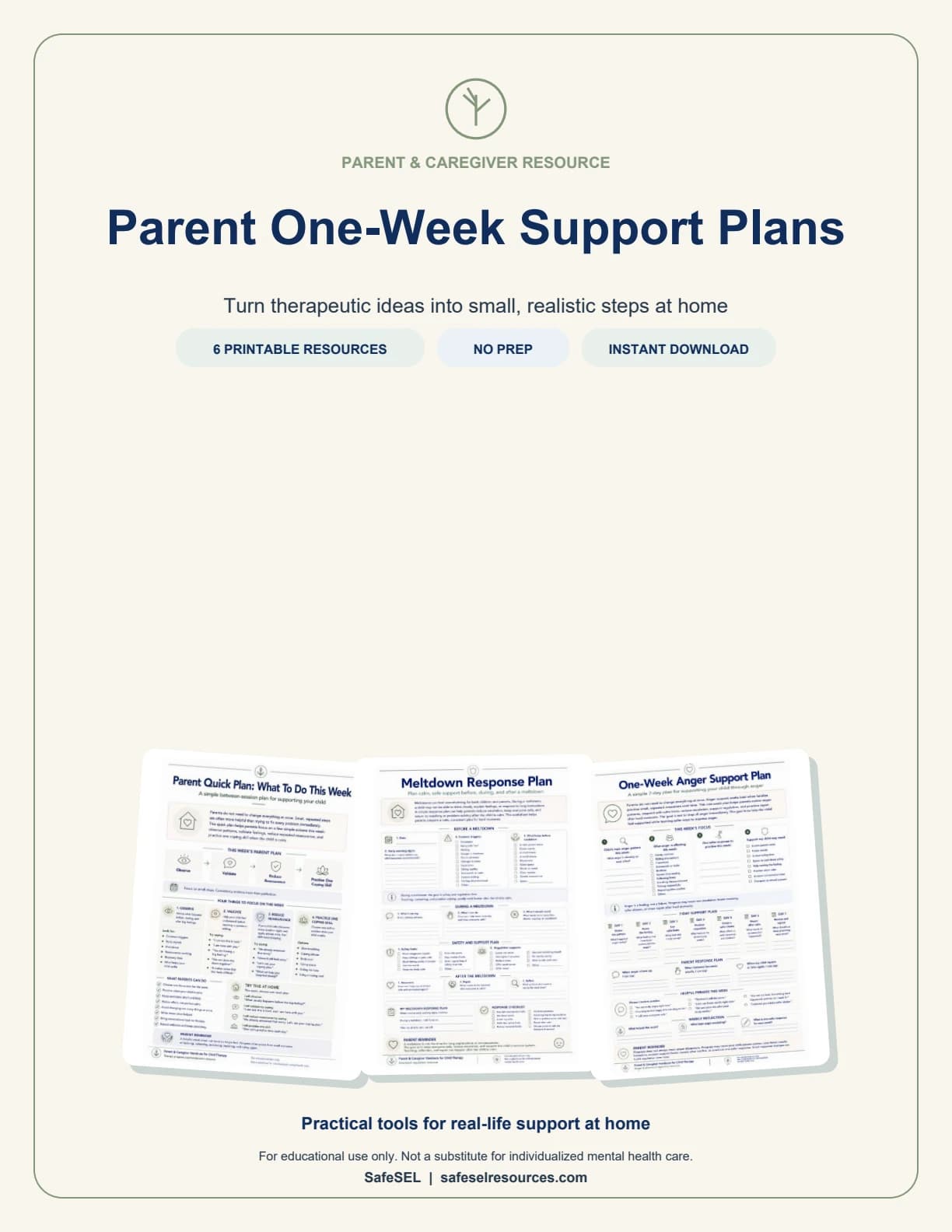
Six printable one-week parent support plans that turn therapeutic ideas into small, realistic home steps for anxiety, anger and regulation.
Seven printable parent trackers for anxiety, anger, avoidance, reassurance, body signs and therapy progress across everyday situations.
Choose one current pattern and one adult response rather than sending home a large packet. Parent guidance should support understanding and consistency without turning caregivers into diagnosticians or therapists.
Browse all parent handouts →Choose one current pattern and one adult response rather than sending home a large packet. Parent guidance should support understanding and consistency without turning caregivers into diagnosticians or therapists.
These resources are written for parents and caregivers and may also be selected by a professional for between-session support or psychoeducation.
No. They provide general education and practical support ideas and do not replace assessment, diagnosis, safeguarding or individualized treatment.
Filter by resource type and age group to find the most useful printable.