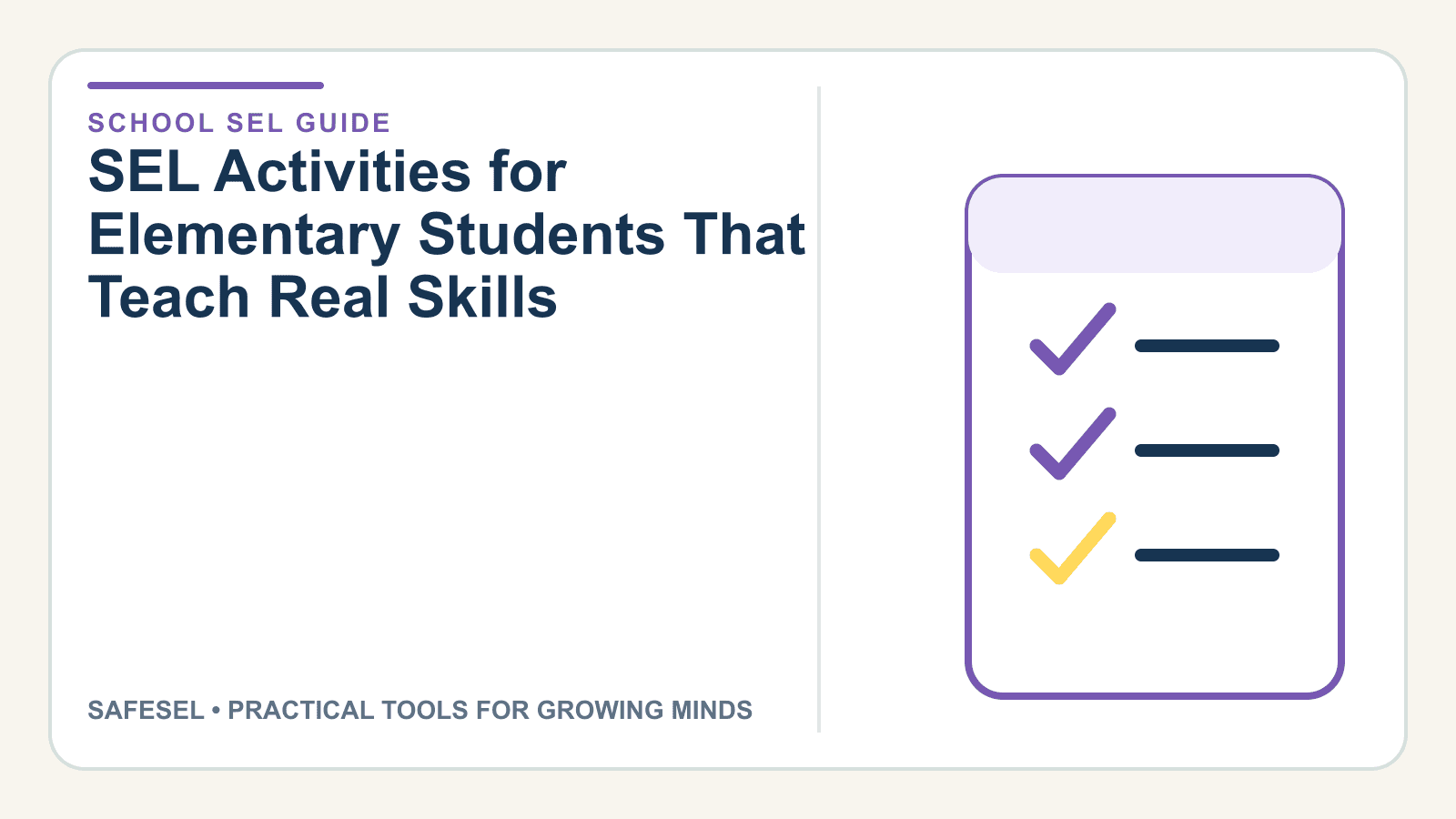
A packing checklist should show objects and locations
Replace 'Get ready to go' with a visible sequence the child can check: folder into the bag, lunch box into the bag, coat from the hook, wait at the agreed place. Use the actual classroom routine and photographs or symbols if useful. Prepare non-urgent messages earlier so the final minutes do not contain several competing instructions.
Observe the step that breaks down. A child who cannot find a folder needs a consistent location; a child worried about pickup needs a clear handover plan. Prompt the missing step rather than restarting every instruction. Keep support available while gradually reducing reminders for steps the student can manage. Co-regulation may mean a calm adult helping with the first action while reducing the surrounding rush.
Make the parent pickup procedure predictable
Start with what actually happens
When packing up at the end of the day becomes overwhelming, watch the exact point it stalls: finding a folder, deciding what comes home, fastening the bag or hearing the next instruction. Noise and tiredness can magnify a small practical barrier.
A practical sequence
1. Observe the exact breakdown point
Observe one ordinary pack-up without adding repeated instructions. Note the step, materials and environmental conditions where help becomes necessary.
2. Reduce the routine to a visible sequence
Use a short picture or written sequence, such as folder, bottle, coat, bag. Show one step at a time if a full list is difficult to scan.
3. Prepare materials before the final minutes
Have papers and belongings ready before the final rush where possible. Avoid adding a new sorting task at the same moment the class is lining up.
4. Use fixed locations and a completion check
Give essential items consistent places and use a quick completion check. The aim is finding what is needed, not repeatedly repacking the bag to adult perfection.
5. Separate urgent messages from routine packing
Send new explanations or messages through an appropriate separate channel. A child struggling to pack may not also retain several verbal instructions for home.
6. Fade prompts based on the step mastered
Reduce prompts only for steps the child can reliably access. Keep supports for the remaining barrier, such as a visual list or help with a difficult fastening.
What this can sound like
'Check the first picture. The folder goes in this pocket. Then look at the next picture.'
What can make the plan backfire
Repeating 'Hurry up' gives no information about the missing step. Public comparisons with faster classmates can add pressure without improving organization.
How to review progress
Track which steps become easier and whether essential items reach home. A checklist can remain useful even after the child no longer needs an adult beside them.
Developmental and accessibility adjustments
Consider motor access, bag design, reading and sensory load. Allow an earlier or quieter start when compatible with classroom routines.
When additional support is appropriate
Ask the school support team for help when organization difficulties persist across routines or substantially interfere with participation despite practical adjustments.
Sources and further reading
- Action & Expression — CAST
- Classroom PBIS — Center on PBIS
- A Supportive Classroom Environment — CASEL Schoolguide
- Children and Mental Health: Is This Just a Stage? — NIMH
- What to Do If Your Child Is Falling Behind in School — HealthyChildren.org