Screen-free does not automatically mean beneficial
Coloring is portable, inexpensive and usable without a device, which makes it a practical option for travel, waiting or a family quiet period. But replacing a screen with a disliked worksheet does not create meaningful balance. The activity still needs to fit the child, timing and purpose.
Current American Academy of Pediatrics guidance emphasizes the digital ecosystem: content, design, context, displacement and the needs of the individual child. A paper activity may be useful when it protects sleep, conversation or varied play. It is not inherently superior to every digital activity, and one replacement cannot solve conflict created by inconsistent routines or persuasive platform design.
When coloring fits well
- The child wants a seated, low-noise activity.
- The family needs something portable with a clear stopping point.
- A predictable page helps during ordinary waiting.
- Coloring can accompany an audiobook or quiet shared time without reducing comprehension.
- The child has had movement, food, connection and rest rather than being asked to sit all day.
When another activity is better
After hours of school sitting, many children need movement, outdoor time or active sensory input. International recommendations for school-related sedentary behavior advise breaking up extended sitting and incorporating movement. Coloring is sedentary even though it is screen-free.
A child may also need free play, conversation, sleep preparation or help with the actual problem. If screen use is serving social connection, creative production or accessibility, a blanket swap may remove a benefit. Ask what the screen is doing before choosing an alternative.
Avoid turning coloring into a punishment
“You lost the tablet, so you have to color” teaches that coloring is the inferior activity adults impose. Instead, create a visible menu of acceptable choices before conflict: drawing, comics, building, crafts, puzzles, reading, music, movement or rest. Keep device boundaries separate and predictable.
Do not require a finished page to earn access or calm down. Completion pressure can create another struggle. Can Coloring Help Kids Calm Down? explains why optional distraction differs from forced regulation.
Build a workable quiet-time routine
- Name the purpose and approximate duration.
- Offer two or three genuinely acceptable activities.
- Provide materials that are ready and accessible.
- Let the child combine quiet activities when safe.
- Use a predictable transition cue.
- Include movement before or after longer seated periods.
- Review whether the routine helped the family rather than grading the product.
Protect sleep and family connection
A quiet paper activity can support a bedtime wind-down when it is calming for that child, lighting is adequate and it does not delay sleep. AAP guidance encourages families to protect sleep, device-free times and places, and routines that reflect age and context. Coloring is one possible bridge, not a sleep treatment.
Shared coloring can also make a small space for connection, but adults should not use it to extract a conversation. How to Use Coloring to Talk About Feelings keeps that interaction low-pressure.
If the child refuses
Accept the refusal and offer another option. A child who dislikes coloring is not missing a required developmental experience. The screen boundary can remain while the replacement changes. Autonomy within a clear limit is more sustainable than choosing the only approved hobby for the child.
Keep coloring book activities on a varied quiet-time menu
Activity coloring books may include reading, puzzles or prompts as well as pictures. Check which of those demands suits the purpose of your quiet period. A child tired after school may prefer one simple scene to several instructions, while another may welcome a short connected story.
Calm coloring books are one possible choice, not the only acceptable replacement for a device. Set out another workable option, such as reading or building, and keep the screen boundary separate from the choice of hobby. Notice whether the routine actually fits the family rather than judging it by completed pages.
Bottom line
Coloring is a useful member of a screen-free activity menu, not a moral antidote to technology. Use it when it protects something important and the child finds it workable. Balance it with movement, sleep, relationships, open-ended play and digital experiences selected for real value.
Frequently asked questions
How long should quiet time last?
There is no universal coloring duration. Set a routine that fits age, sleep, movement and family needs, and allow the child to switch among acceptable quiet activities. Quiet time should not become prolonged enforced sitting.
Can coloring replace a bedtime screen?
It can be a workable transition for a child who enjoys it, especially when devices have a predictable stopping time. Keep lighting comfortable and avoid letting the activity delay sleep. Persistent sleep problems need their own assessment.
What about travel and restaurants?
Coloring is convenient, but pack alternatives and keep expectations realistic. Waiting can be hard because children are hungry, tired or confined. The activity supports the situation; it does not create an obligation to remain silent for an adult-length period.
Is a screen always the worse choice?
No. A video call, creative program, accessible book or shared game can have real value. Consider content, design, context and what the activity displaces. Balance is not produced by labeling one medium good and another bad.
A printable option for the quiet-time menu
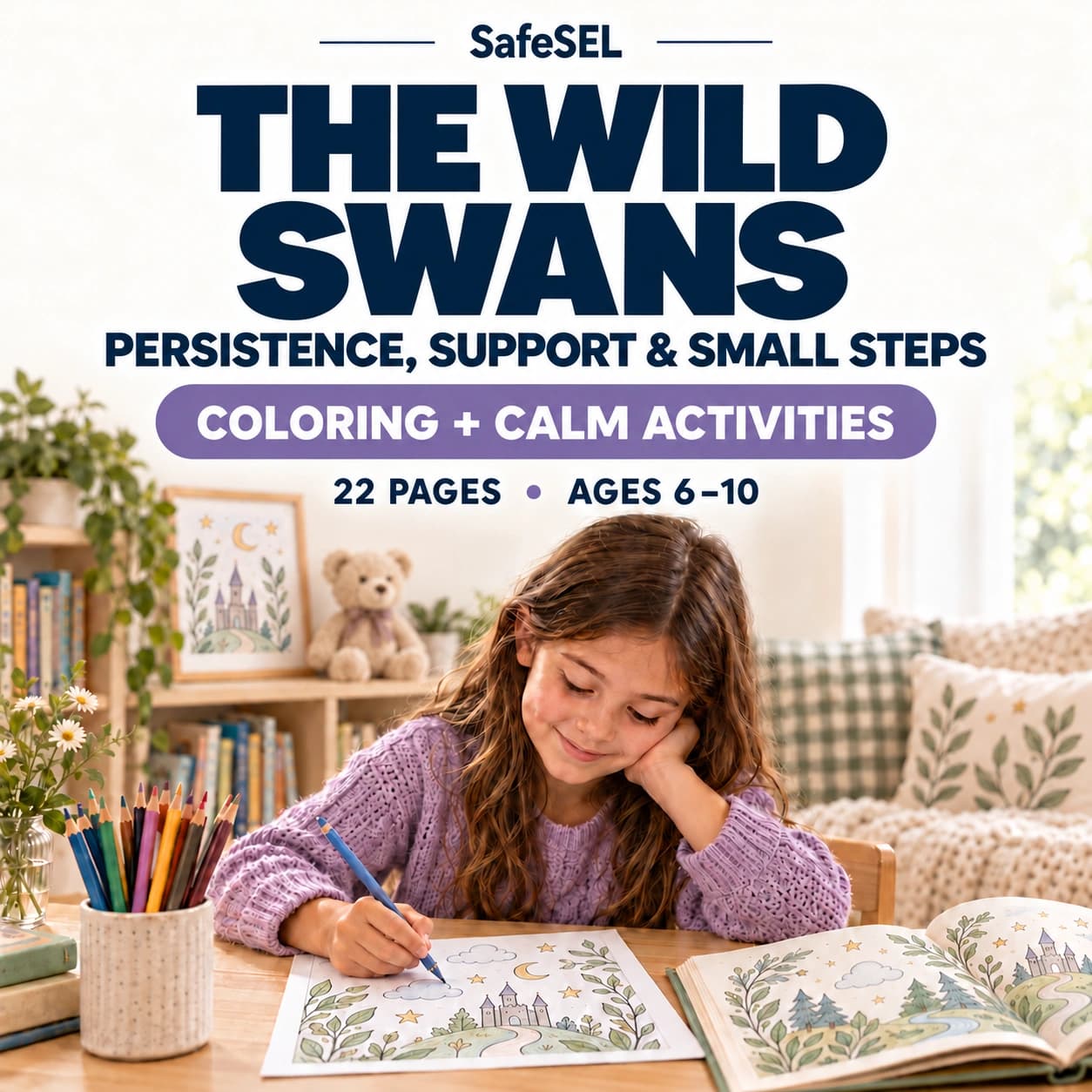
The Fir Tree Coloring Story is a 22-page screen-free story activity about comparison, patience, gratitude and noticing today. Keep it alongside reading, drawing, building and rest so the child can choose rather than treating coloring as the required replacement for a screen.
Sources and further reading
- Digital Ecosystems, Children, and Adolescents: Policy Statement — American Academy of Pediatrics; Pediatrics (2026)
- International school-related sedentary behaviour recommendations for children and youth — Saunders et al.; International Journal of Behavioral Nutrition and Physical Activity (2022)
- Quantifying Coloring Skills Among Preschoolers — Lee et al.; American Journal of Occupational Therapy (2024)
- Effectiveness of art-based distraction on reducing pediatric patients' pain and anxiety during venipuncture: A randomized controlled trial — Suleman, Atrushi & Enskär; Complementary Therapies in Clinical Practice (2022)
- Overlooked advantages of interactive book reading in early childhood? A systematic review and research agenda — Noble et al.; Acta Psychologica (2023)
- Parallel developmental changes in children's production and recognition of line drawings of visual concepts — Long et al.; Child Development (2024)