Let the activity be an activity first
A conversation often becomes easier when adult and child are doing something side by side. Coloring can reduce eye-contact pressure and create natural pauses. That does not mean every page needs a feelings objective. If the child senses a hidden lesson or assessment, the activity may become less safe and less enjoyable.
Begin by joining rather than questioning. Comment on what is visible—“You chose a lot of green”—or ask about the shared task—“Would you like me to color this part?” The child can answer, change the subject or remain quiet. Connection is not measured by disclosure.
Use invitations, not interpretations
Questions can stay close to the image: “What is happening here?” “What might the character need?” or “Should we add anything to the scene?” A child may talk about the fictional character, a real event or neither. Follow the level the child chooses.
Do not assign emotional meaning to colors, pressure, blank areas or crossed lines. Critical reviews find children’s drawings too ambiguous to serve as sole indicators of internal state. A black sky may be night, a favorite marker or the only color nearby. Ask rather than decode—and accept “I don’t know.”
What indirect research suggests
Research on interactive reading and wordless picture books suggests parent emotion talk, open questions, following the child and expanding what the child says can support conversation. A randomized PICU study found benefits from a trained drawing-and-mutual-storytelling intervention, but that was a clinical communication procedure, not ordinary coloring at home.
These studies support a conversational approach, not a promise that coloring unlocks feelings. The relationship, timing and adult response likely matter more than the paper. A child may share during a car ride, while building, at bedtime or days later.
A low-pressure sequence
- Offer the activity and let the child choose whether you join.
- Wait before asking questions.
- Reflect what the child actually says without adding a diagnosis.
- Use one open invitation, then allow silence.
- Validate the feeling without forcing agreement about every interpretation.
- Ask whether the child wants listening, help, a plan or a break.
- Return to ordinary coloring instead of extracting a complete story.
Respond to important disclosures
If a child mentions bullying, abuse, exploitation, self-harm, suicide or immediate danger, shift from casual conversation to calm safety support. Do not promise secrecy you cannot keep. Listen, clarify only what is necessary and follow appropriate emergency, safeguarding, medical or professional procedures.
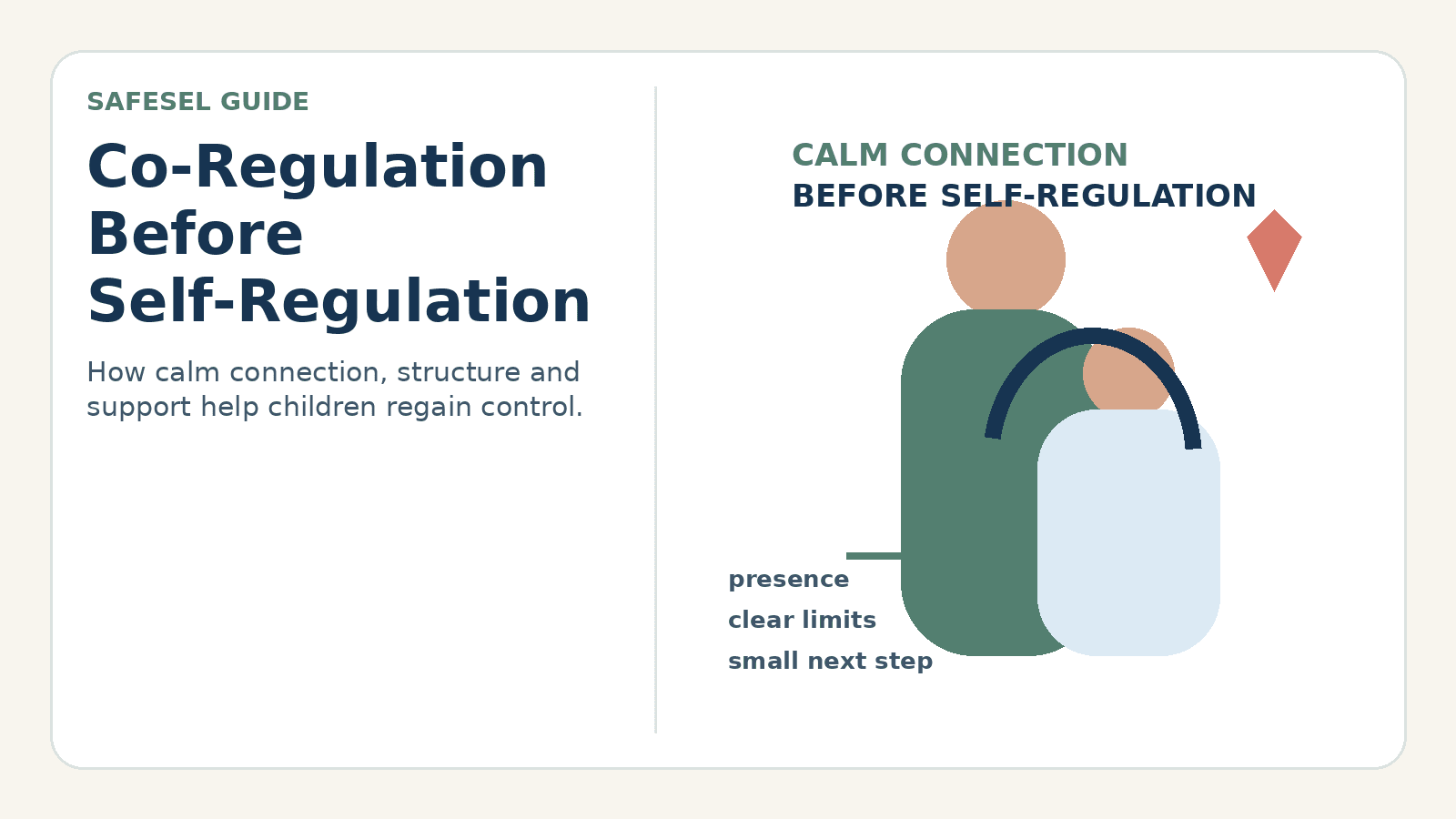
For everyday emotion coaching, this parent guide offers a broader framework. When the child is already overwhelmed, co-regulation should come before questions.
Know when to stop
Stop when the child says no, changes the subject, becomes tense or asks to be alone. Do not use the completed page as evidence against the child later. If coloring repeatedly becomes a route to monitoring feelings, keep it as private leisure and choose a clearer scheduled check-in instead.
A child’s right not to discuss a topic does not remove an adult’s responsibility to act on observed safety concerns. It means the adult should use transparent, proportionate support rather than covert interpretation.
A parent guide for a screen free conversation
Set out the materials and make your invitation transparent: ‘Would you like some company while you color?’ If the child agrees, begin with the shared picture rather than a question about their day. You can offer one comment and leave space for an answer.
For example, ‘The character has stopped by the door’ describes the scene without assigning a feeling. If the child says the character looks nervous, ask whether they want to tell you more about the story. Do not turn a fictional answer into a claim about the child’s own experience.
Bottom line
Coloring can create a comfortable side-by-side moment, but it is not a truth detector. Offer companionship, use optional questions, take words literally enough to clarify them and protect the child’s ability to color without being analyzed.
Frequently asked questions
Should I use feelings-themed pages?
Only if the child likes them. A neutral animal, map or pattern may support conversation just as well because the value comes from shared time and reduced pressure. Feelings labels can help some children and make others feel observed.
What if the child says nothing?
Continue the activity or stop normally. Silence is not a failed session. You can state availability—“I’m here if you want company or help later”—without repeating questions or withholding warmth.
Can I save the page to discuss with a therapist?
Ask the child and the therapist about relevance and consent. Do not present colors or marks as clinical evidence. Share the child’s actual words, context and any safety concern rather than your symbolic interpretation.
What if I react badly to a disclosure?
Pause, repair and return: acknowledge that your reaction may have felt overwhelming, thank the child for telling you and clarify what happens next. Seek professional or emergency support when required; repair does not mean keeping dangerous information secret.
Let the character carry the conversation
The Little Mermaid Coloring Story offers fictional distance for conversations about identity, curiosity, voice and self-expression. Ask about the character or scene first, and let the child decide whether the discussion stays in the story or connects to personal experience.
Sources and further reading
- Overlooked advantages of interactive book reading in early childhood? A systematic review and research agenda — Noble et al.; Acta Psychologica (2023)
- “Oh no! What happened?” an investigation of parent-child conversations about self-conscious emotions — Drummond et al.; Developmental Psychology (2023)
- Drawing and mutual storytelling to alleviate anxiety and improve emotional well-being in children in PICU: a randomized controlled trial — Köksal, Kilicarslan & Emeksiz; European Journal of Pediatrics (2025)
- Drawing conclusions: a re-examination of empirical and conceptual bases for psychological evaluation of children from their drawings — Thomas & Jolley; British Journal of Clinical Psychology (1998)
- Quantifying Coloring Skills Among Preschoolers — Lee et al.; American Journal of Occupational Therapy (2024)
- Effectiveness of art-based distraction on reducing pediatric patients' pain and anxiety during venipuncture: A randomized controlled trial — Suleman, Atrushi & Enskär; Complementary Therapies in Clinical Practice (2022)