Article archive: page 16
More practical, evidence-informed guidance for the real emotional and social situations children face.
Classroom SEL for Ages 7–9: Scenarios, Rehearsal, and Concrete Reflection
A practical, evidence-informed guide to classroom SEL for ages 7–9, with concrete examples, accessible next steps, and clear limits on what the guidance can establish.
How to Practice Coping Skills So They Are Available Under Stress
Help children rehearse coping skills with familiar cues, short practice and realistic support. Learn what to change when a strategy is unavailable under stress.
Classroom SEL for Ages 4–6: Movement, Modeling, and Short Practice
A practical, evidence-informed guide to classroom SEL for ages 4–6, with concrete examples, accessible next steps, and clear limits on what the guidance can establish.
How to Help a Child Recover After the Peak of a Meltdown
A practical guide to helping a child recover after the peak of a meltdown, with realistic steps, language adults can use, and ways to judge whether the plan is helping.
Helping Children Navigate Changing Friendships Without Blame
A practical, evidence-informed guide to helping children navigate changing friendships without blame, with concrete examples, accessible next steps, and clear limits on what the guidance can establish.
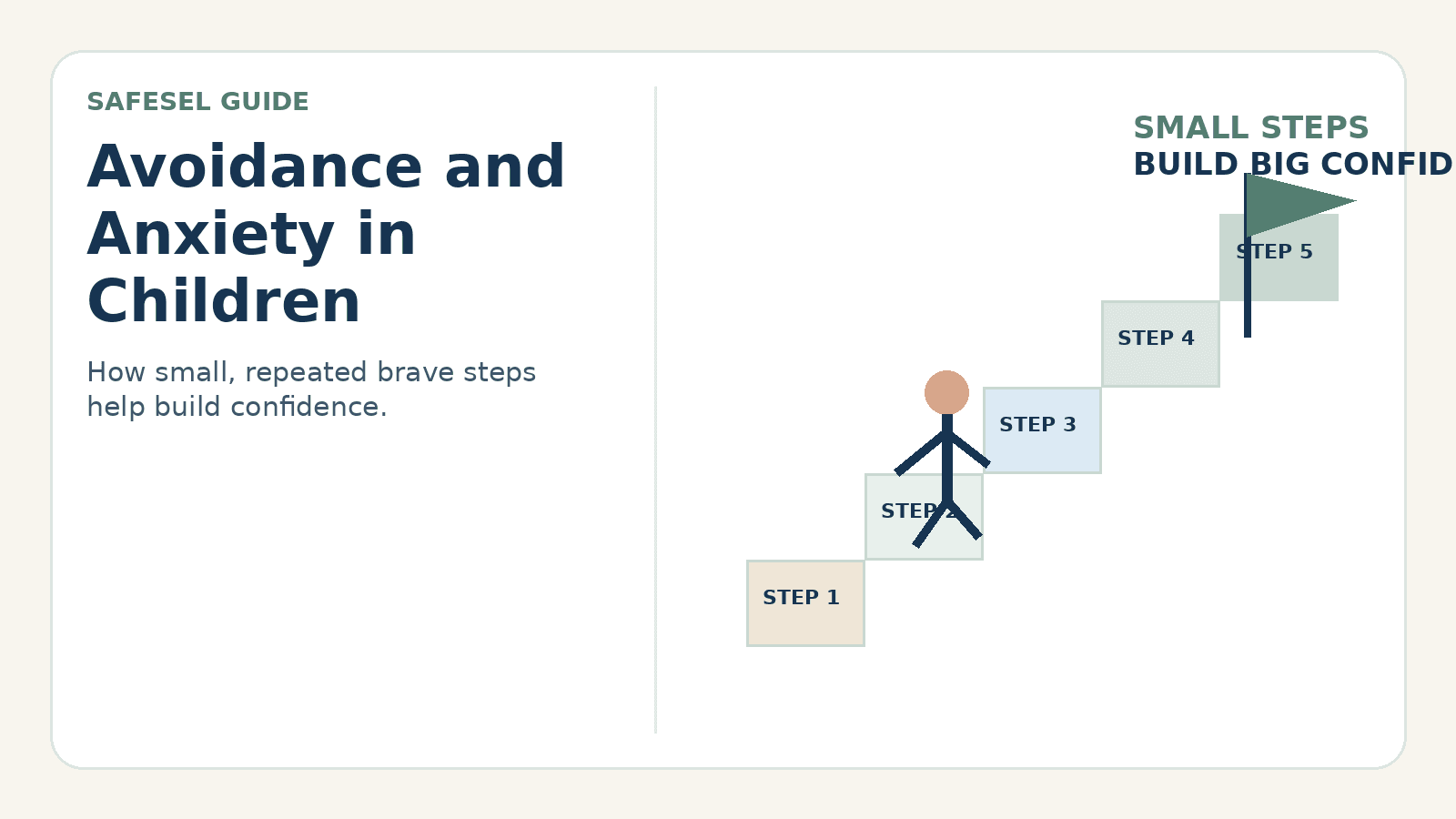
When a Child Worries That a Parent Will Be Late for Pickup
Practical guidance for responding when a child worries that a parent will be late for pickup, with a clear first step, realistic adult language, and functional measures of progress.
Consent and Personal Space in Childhood Friendships
A practical, evidence-informed guide to consent and personal space in childhood friendships, with concrete examples, accessible next steps, and clear limits on what the guidance can establish.
When a Child Worries About Being Late: A Plan That Builds Flexibility
Practical guidance for responding when a child worries about being late, with a clear first step, realistic adult language, and functional measures of progress.
Digital Friendship Boundaries for Ages 9–12: Messaging, Group Chats, and Privacy
A practical, evidence-informed guide to digital friendship boundaries for ages 9–12, with concrete examples, accessible next steps, and clear limits on what the guidance can establish.
When a Child Arrives at an Activity but Cannot Walk In
Practical guidance for responding when a child arrives at an activity but cannot walk in, with a clear first step, realistic adult language, and functional measures of progress.
Catastrophizing After a School Mistake: A Step-by-Step Response
A practical, evidence-informed guide to catastrophizing after a school mistake, with concrete examples, accessible next steps, and clear limits on what the guidance can establish.
When Fire Drills and Alarms Trigger Intense Anxiety at School
Practical guidance for responding when fire drills and alarms trigger intense anxiety at school, with a clear first step, realistic adult language, and functional measures of progress.