Article archive: page 7
More practical, evidence-informed guidance for the real emotional and social situations children face.
Supporting Communication in SEL Activities When Speech Is Not the Only Response Mode
A practical, evidence-informed guide to supporting communication in SEL activities when speech is not the only response mode, with concrete examples, accessible next steps, and clear limits on what the guidance can establish.
How to Make SEL Worksheets Accessible for Emerging Readers
Adapt SEL worksheets for emerging readers with shorter prompts, read-aloud directions, clear pictures and response options that preserve the learning goal.
How to Reduce Writing Demands in SEL Activities Without Reducing the Learning Goal
Adapt SEL writing prompts with speaking, pointing or supported responses while preserving the learning goal. Separate SEL understanding from handwriting.
How to Review a CBT Worksheet Without Grading the Child’s Answer
A practical guide to reviewing a CBT worksheet without grading the child’s answer, with realistic steps, language adults can use, and ways to judge whether the plan is helping.

How Therapists Can Adapt Thought Work for Limited Reading or Writing Skills
Adapt child CBT thought work with pictures, sorting, spoken responses or AAC. Preserve the thinking task while reducing reading, writing and motor demands.
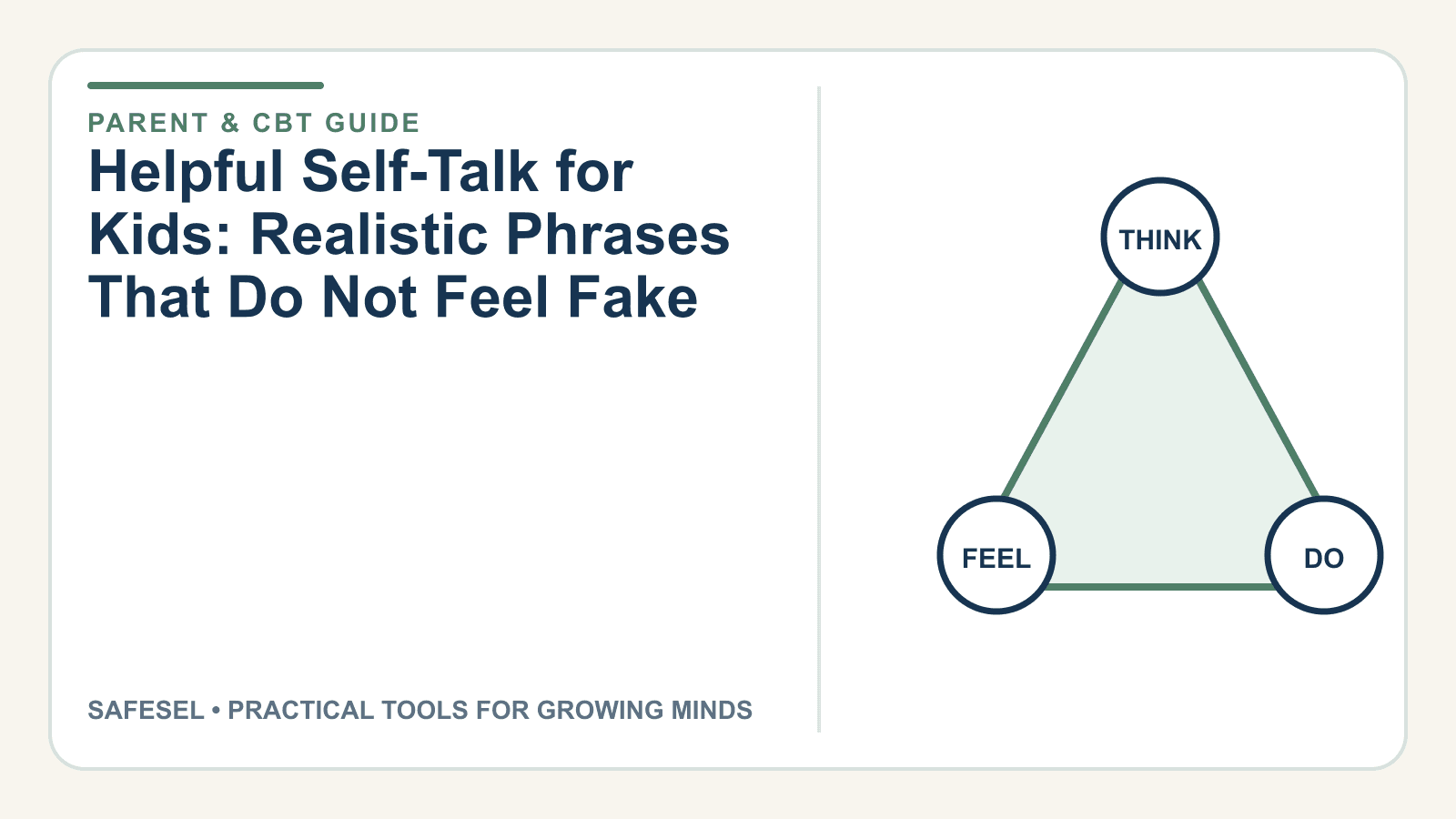
How Teachers Can Use CBT-Informed Language Without Providing Therapy
Use classroom language that separates situations, thoughts, feelings and actions without providing therapy or inviting private disclosures in front of peers.
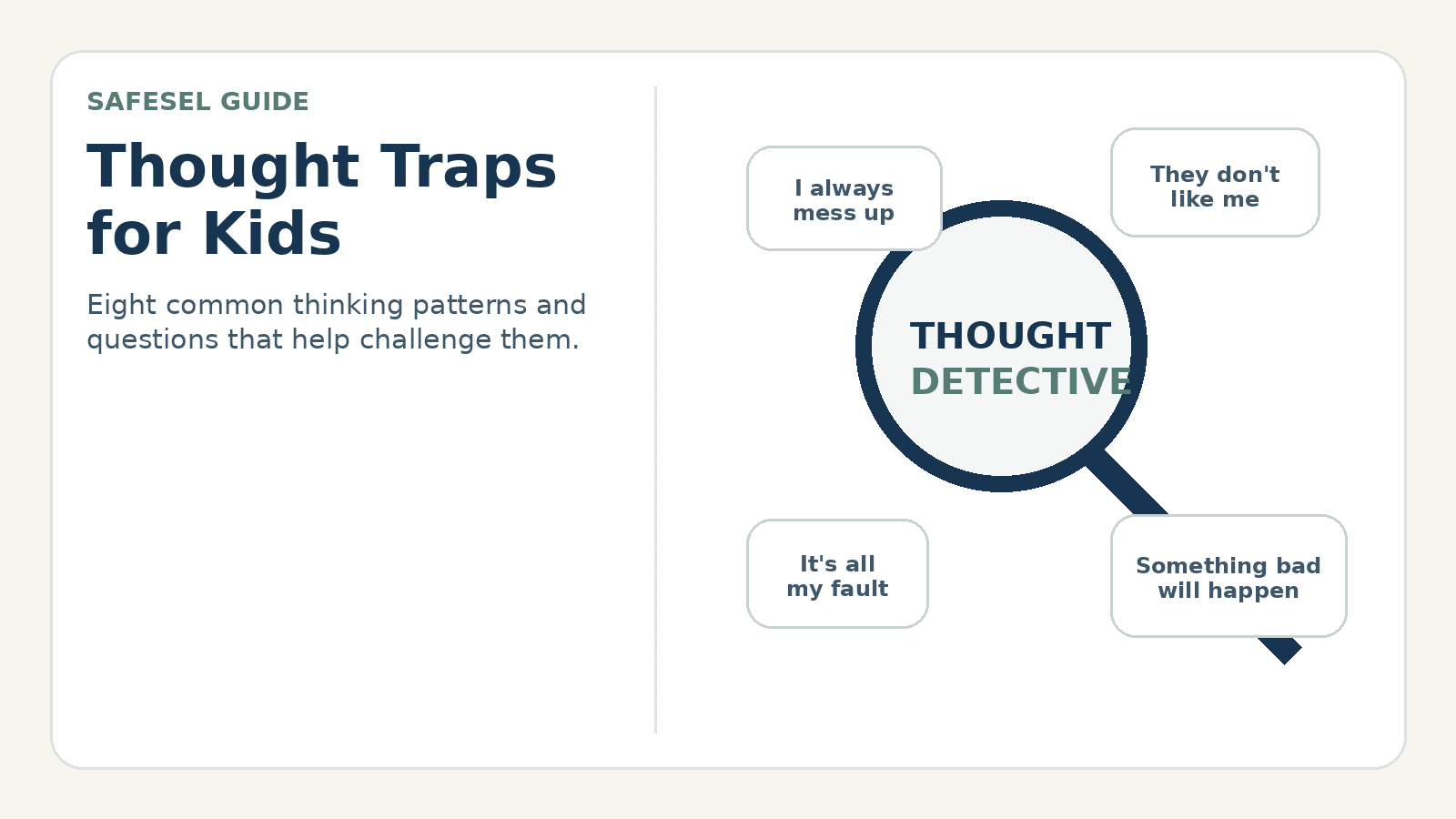
Collaborative Curiosity in Child CBT: Asking Questions Without Cross-Examining
Ask child CBT questions that allow uncertainty and disagreement. Explore what happened before suggesting a different interpretation or response.
Behavioral Experiments With Children: How to Keep Them Collaborative and Safe
A professional guide to planning child CBT behavioral experiments with clear predictions, safe tasks, consent and a review that does not shame the child.
How to Build a Home Support Plan With Separated or Blended Caregivers
Build a child-focused home support plan with clear handovers, practical routines and safe communication between separated or blended caregivers.

What Parents Can Ask After a Child Therapy Session While Respecting Privacy
Use low-pressure questions after a child therapy session. Clarify home practice with the therapist while respecting privacy and agreed safety boundaries.
Preparing a Child for a First Therapy Appointment Without Promising What Will Happen
A first therapy appointment contains real uncertainty: different clinicians use different rooms, questions and activities. Preparation should make known details predictable without inventing guarantees. The child needs an honest account of why adults arranged the visit, what is confirmed and what the family can ask on arrival.
How to Review Parent Tracking Without Turning Family Life Into Surveillance
A professional guide to reviewing parent tracking with a focused question, minimal data and a practical decision. Avoid turning family life into constant observation.