Review a basic CBT worksheet through one concrete example
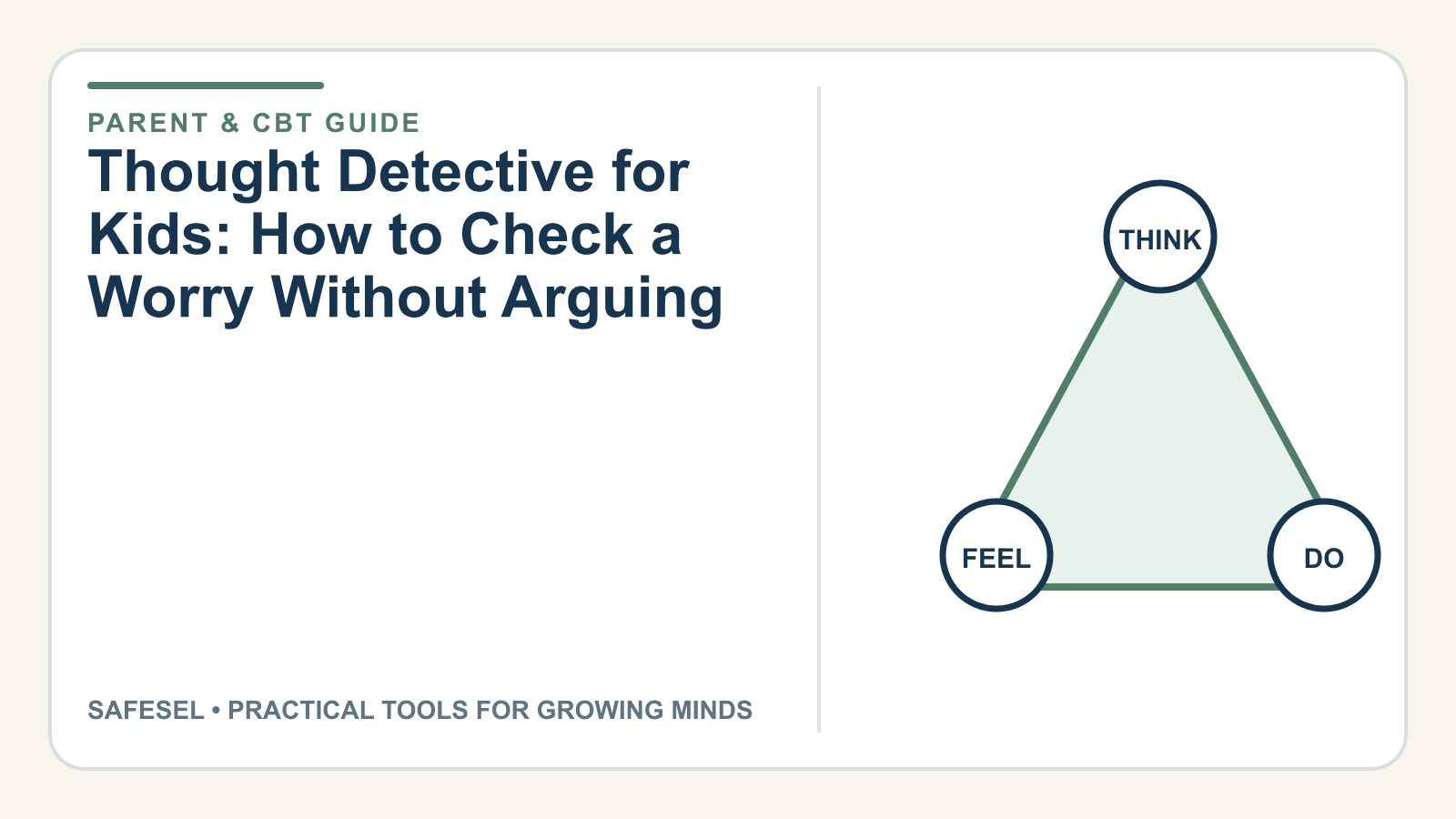
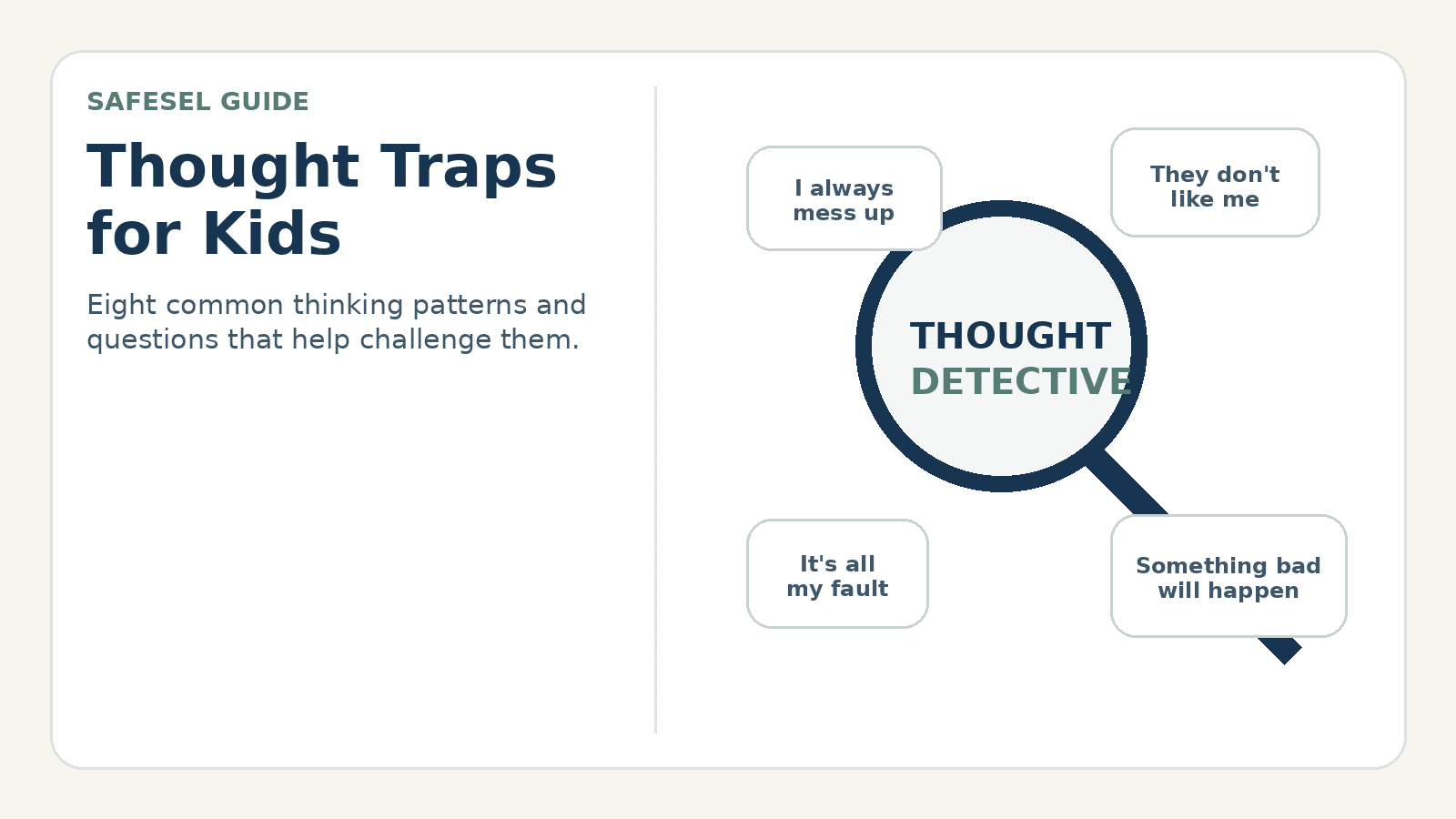
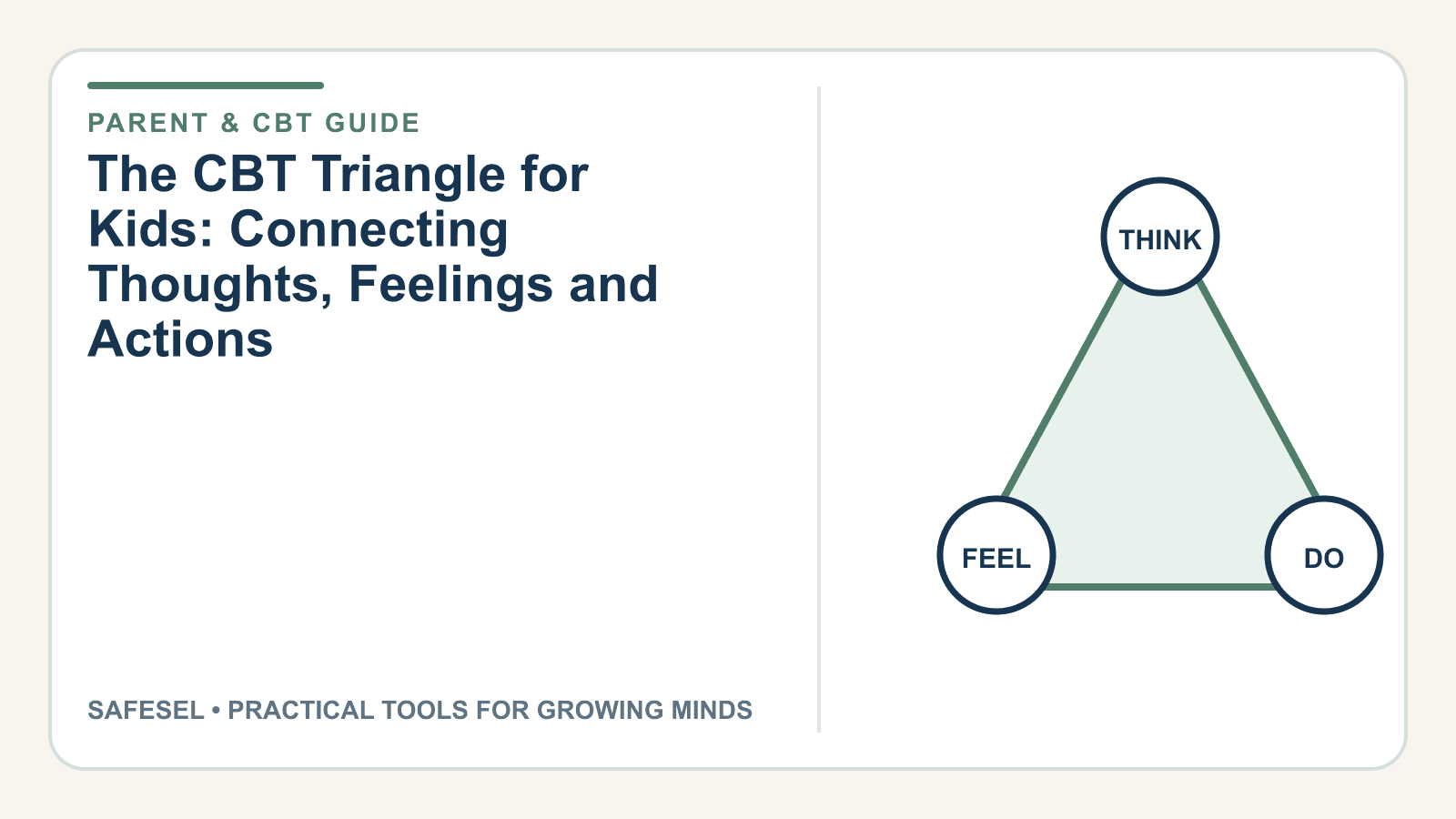
A basic CBT worksheet is a conversation aid, not an answer key. If a child writes 'Nobody likes me,' ask which event they had in mind and what the statement means to them. Explore the available evidence without insisting on a positive replacement. The CBT tool should help clarify a thought and a next action rather than demonstrate agreement with the adult.
For CBT examples, work with one event: a missed greeting, an unfamiliar task or a request for help. Ask which parts are known, which are guesses and what could be tried safely. If the child cannot engage, stop the review and return later. A well-filled worksheet is not proof that the underlying difficulty has improved.
Adapt the task when a child is too upset for a thought record
Start with what actually happens
Clarify why the worksheet is being reviewed: understanding a pattern, preparing an action or supporting a clinical conversation. A child's answer is information to explore, not a response to mark correct or incorrect.
A practical sequence
1. Ask what the child wants the worksheet to help with
Ask which part the child wants help with. A practical goal, such as knowing what to do before class, can make the review more useful than checking every box.
2. Begin with what is accurate or meaningful
Acknowledge the part that accurately describes their experience. Understanding the answer does not require agreeing with every prediction or conclusion.
3. Clarify vague entries through one concrete example
For an entry such as 'Everything went wrong,' ask for one example. Avoid replacing the child's words with an adult interpretation before understanding the event.
4. Explore alternatives without demanding a positive conclusion
Invite another possibility without insisting it be reassuring. An alternative may be uncertain, and a report of actual harm may require action rather than reframing.
5. Connect the worksheet to an action or experiment
Connect the discussion to a safe, specific next step. For clinical work, choose any experiment within the child's agreed treatment plan rather than setting a challenge simply to disprove a thought.
6. Summarize learning in the child’s language
Ask what they want to remember and record it in their language. Let them disagree with the adult summary or leave a question open.
What this can sound like
'Help me understand what made that answer fit for you. Is there another possibility worth considering?'
What can make the plan backfire
Praise for positive answers can teach a child to write what adults want. Avoid rewriting the page into an optimistic version that no longer represents the child's experience.
How to review progress
Return to what the child tried and learned. A useful review may produce a better question or an access adjustment rather than a more positive sentence.
Developmental and accessibility adjustments
Review orally, with pictures or through AAC if reading and writing obscure the purpose. Keep private information out of public classroom discussion.
When additional support is appropriate
Qualified clinicians should guide clinical interpretation and treatment decisions. Seek additional support when the worksheet reveals significant distress or safety concerns.
Sources and further reading
- Action & Expression — CAST
- Children and Mental Health: Is This Just a Stage? — NIMH
- Help Your Child Manage Anxiety — HealthyChildren.org
- What Is the CASEL Framework? — CASEL
- Child Trauma Toolkit for Educators — NCTSN