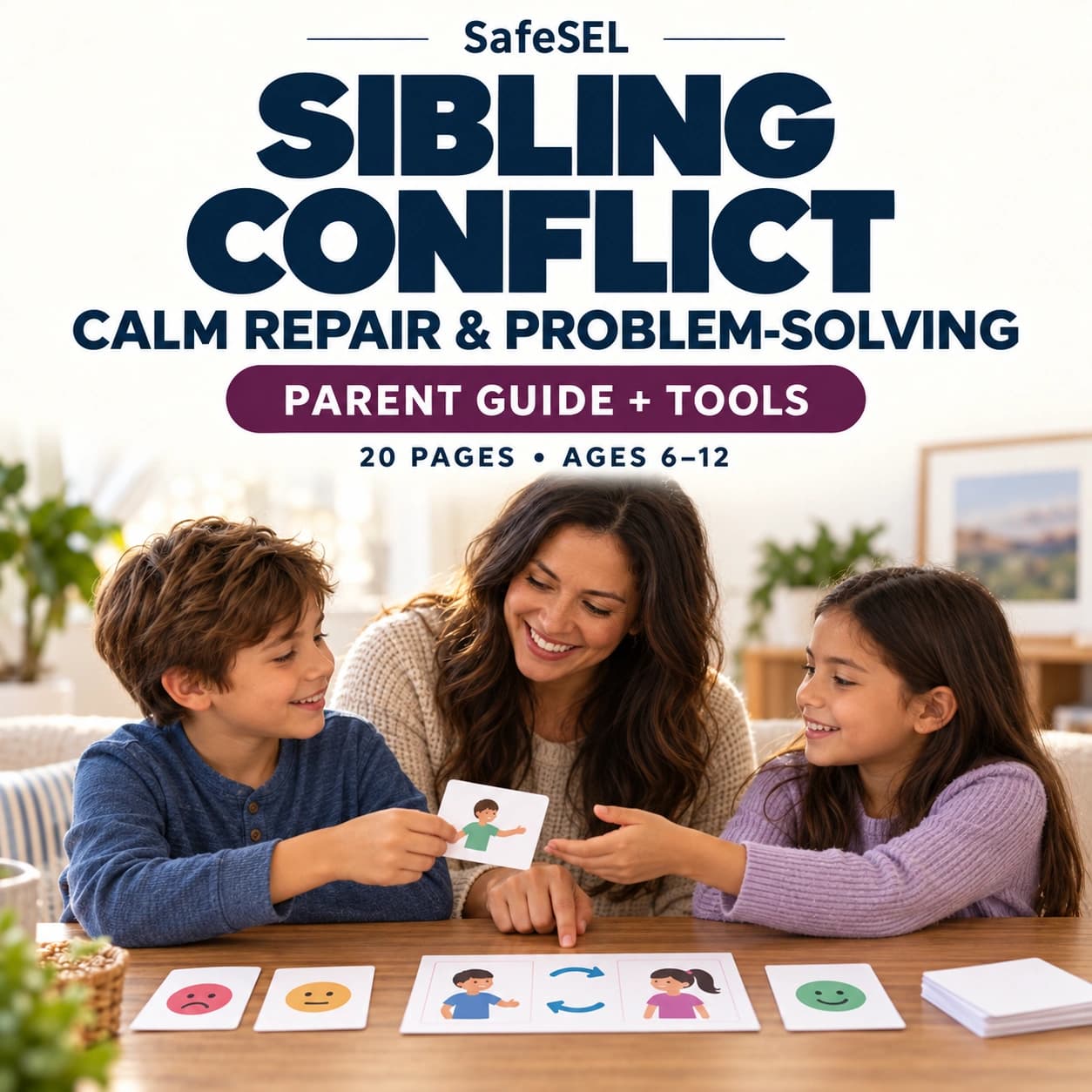
After a sibling fight, stop unsafe behavior first and postpone fact-finding until both children can think. Hear each account separately, identify concrete harm, choose a repair that fits the harm and change the condition that keeps restarting the conflict. Do not require a frightened or targeted child to negotiate face-to-face.
Separate ordinary conflict from intimidation
Siblings disagree, compete and annoy one another. But repeated threats, coercion, deliberate humiliation, destruction, sexualized behavior, injury or a pattern in which one child is consistently frightened requires a different response. Do not label everything “normal sibling rivalry” when power and safety are uneven.
During active hitting, throwing or destruction, separate children, check injuries and remove dangerous objects. Use fewer words: “I am stopping the hitting. We will talk later.” The immediate goal is protection, not a perfect account of who started it.
Do not hold a courtroom while bodies are still activated
At the peak, children interrupt, exaggerate and defend themselves because the nervous system is still oriented toward threat. Demanding a shared story can restart the fight. Give each child space, supervision and a clear time when the conversation will resume.
When you return, hear accounts separately first. Ask about sequence, not character: what happened just before, what did you do, what happened next, and what do you need adults to understand? Differences between stories are information. You do not need to settle every disputed motive before setting a boundary.
Match the repair to the harm
A forced “sorry” can end the adult’s discomfort while leaving the practical harm untouched. Repair might mean replacing or fixing an item, helping rebuild a project, returning access to space, telling the truth to someone affected, agreeing to a new rule or giving the other child time without contact.
Remorse can be welcomed but should not be performed as the price of safety. A child can take responsibility without feeling warm toward a sibling in that moment. The repair should be observable and achievable, and it should not require the harmed child to forgive on schedule.
Change the environment that keeps producing the same fight
If conflict always begins around one controller, one chair, borrowed belongings or the ten minutes before dinner, stop relying on children to improvise a fair system under pressure. Add turns, duplicate low-cost items, create protected storage, increase supervision or change timing.
Environmental changes are not surrender. They reduce unnecessary load so children can practise negotiation where success is possible. Keep rules visible and concrete: ask before borrowing, stop when someone says stop, and get an adult before taking an object back by force.
Coach skills when the conflict is genuinely mutual
When both children are safe and able to participate, parents can mediate rather than judge. Each child states the problem and what matters to them; the children generate options; the parent helps test whether the plan is specific and fair enough to try. Research on parent mediation suggests that structured practice can support more constructive negotiation.
Do not force mediation in cases of intimidation or fear. The ability to speak in a family meeting does not prove the power is equal. Protection and individual support come first when one child cannot safely disagree.
Protect each child from becoming a family role
“The difficult one,” “the sensitive one” and “the responsible one” become scripts children carry into the next conflict. Describe behavior and context instead: one child grabbed the item; the other hit; both need different limits and supports. Fairness does not require identical consequences.
Make room for positive contact that is not a lesson about getting along. Shared rituals, separate time with adults and permission to have different interests reduce the pressure to make siblings constant companions. A good sibling relationship includes boundaries and periods apart. Notice cooperation briefly without making one peaceful afternoon proof that the problem has disappeared. Patterns change through repeated practice.
Know when repeated sibling conflict needs outside support
Seek professional help when aggression is frequent, injuries occur, one child is afraid at home, sleep or school functioning changes, conflict involves cruelty or sexualized behavior, or parent strategies are not improving safety. Family stress, developmental differences, trauma and mental-health needs may all shape the pattern.
Immediate danger requires urgent local help. Document serious incidents and safety steps. A family guide can organize a calmer response, but it should never be used to normalize violence or place responsibility for protection on the targeted child.
When you ask for help, describe the pattern rather than presenting one child as the cause. Note frequency, triggers, injuries, power differences, recovery and what supervision changes the outcome. A clinician or family-support professional can then consider the relationship, individual needs and household conditions together instead of assigning a permanent role to either sibling. Also record calm periods, successful boundaries and activities that do not produce conflict. Those exceptions show what the children can already do and help prevent the assessment from becoming a list of failures.
A practical next step
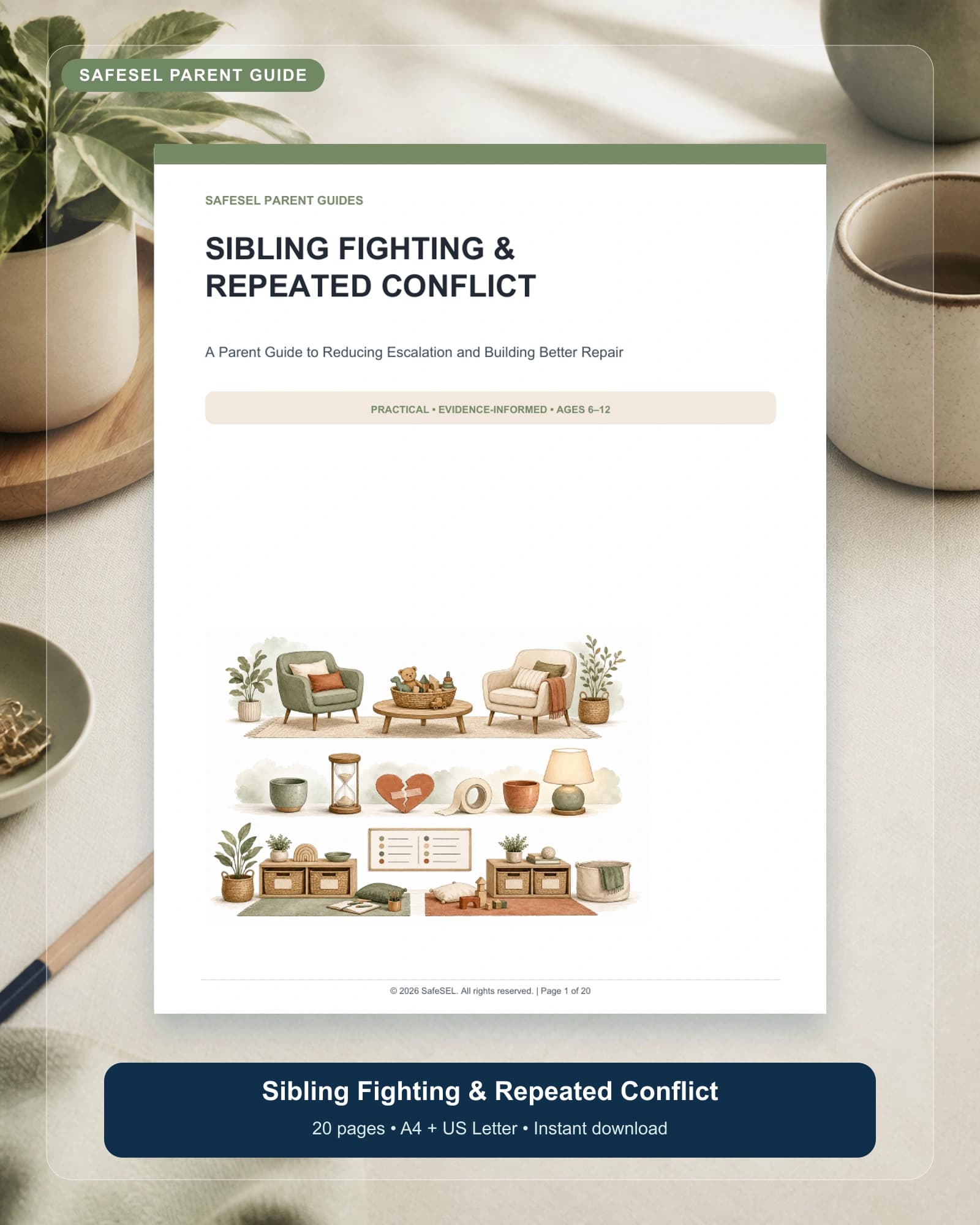
For the complete home-use framework, scripts and printable tracker, see the Sibling Fighting & Repeated Conflict parent guide.
Browse more parent and caregiver resources.
Continue with when siblings keep restarting the same conflict.
Sources and further reading
- The State of Interventions for Sibling Conflict and Aggression: A Systematic Review — PubMed / Trauma, Violence, & Abuse (2017)
- Training Parents to Mediate Sibling Disputes Affects Children’s Negotiation and Conflict Understanding — PubMed / Child Development (2007)