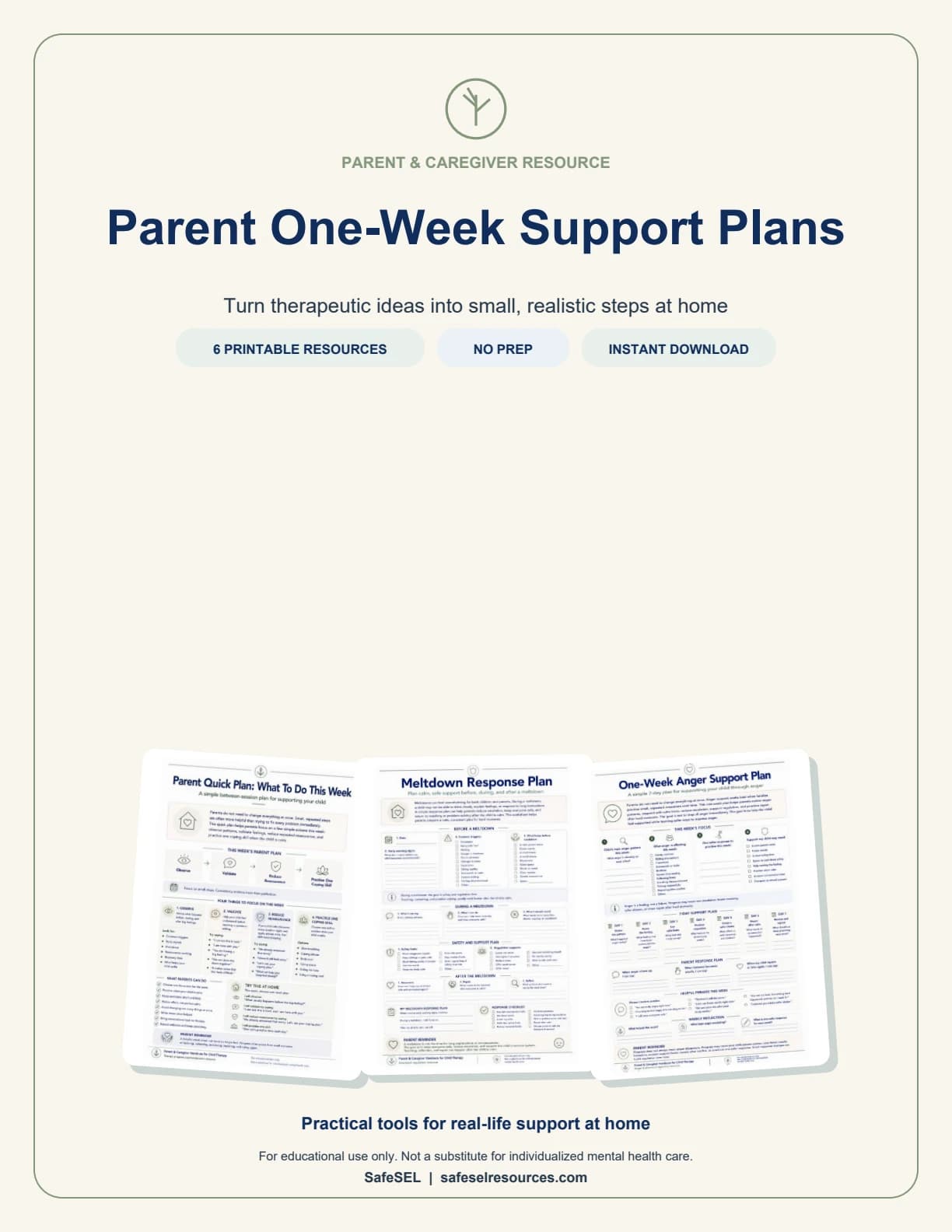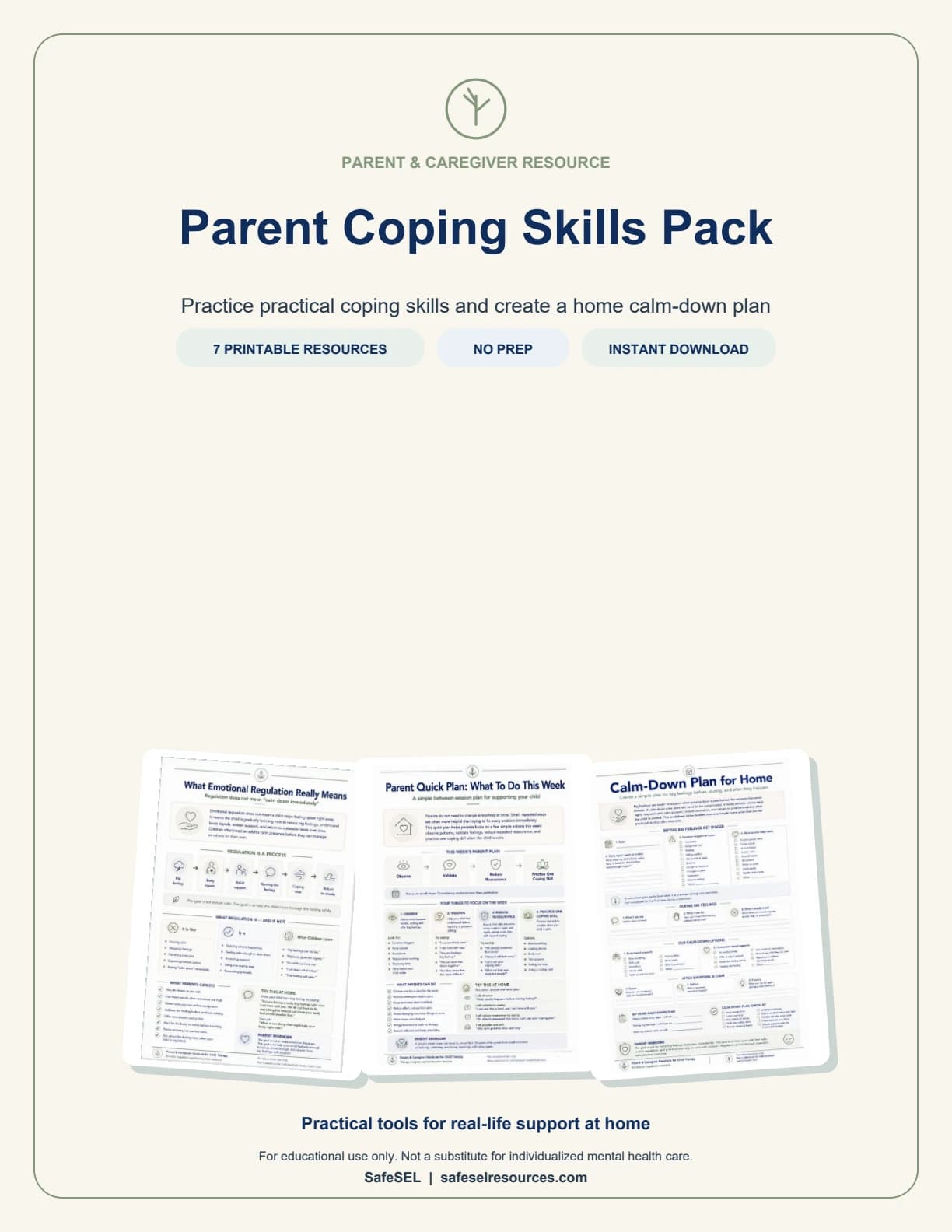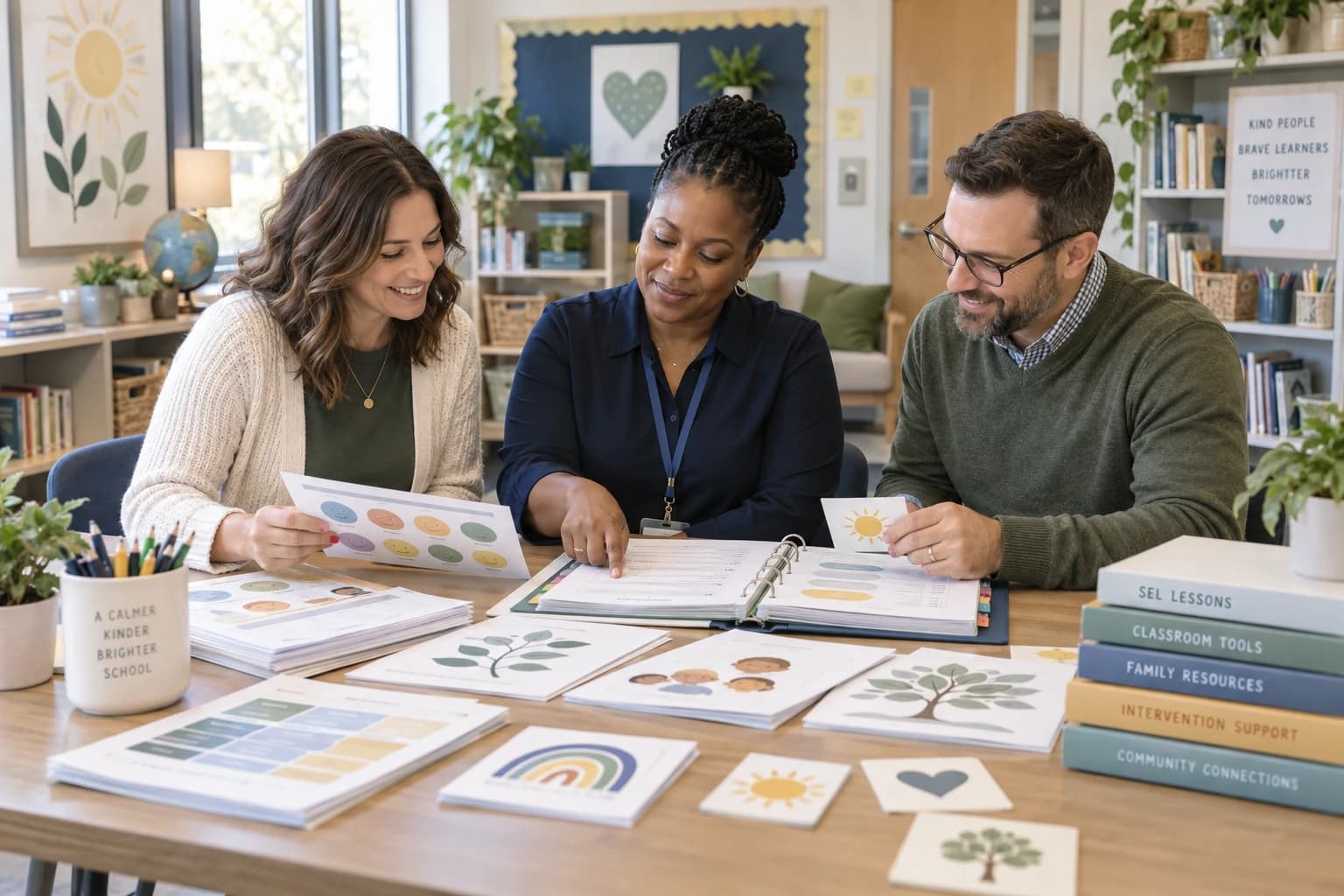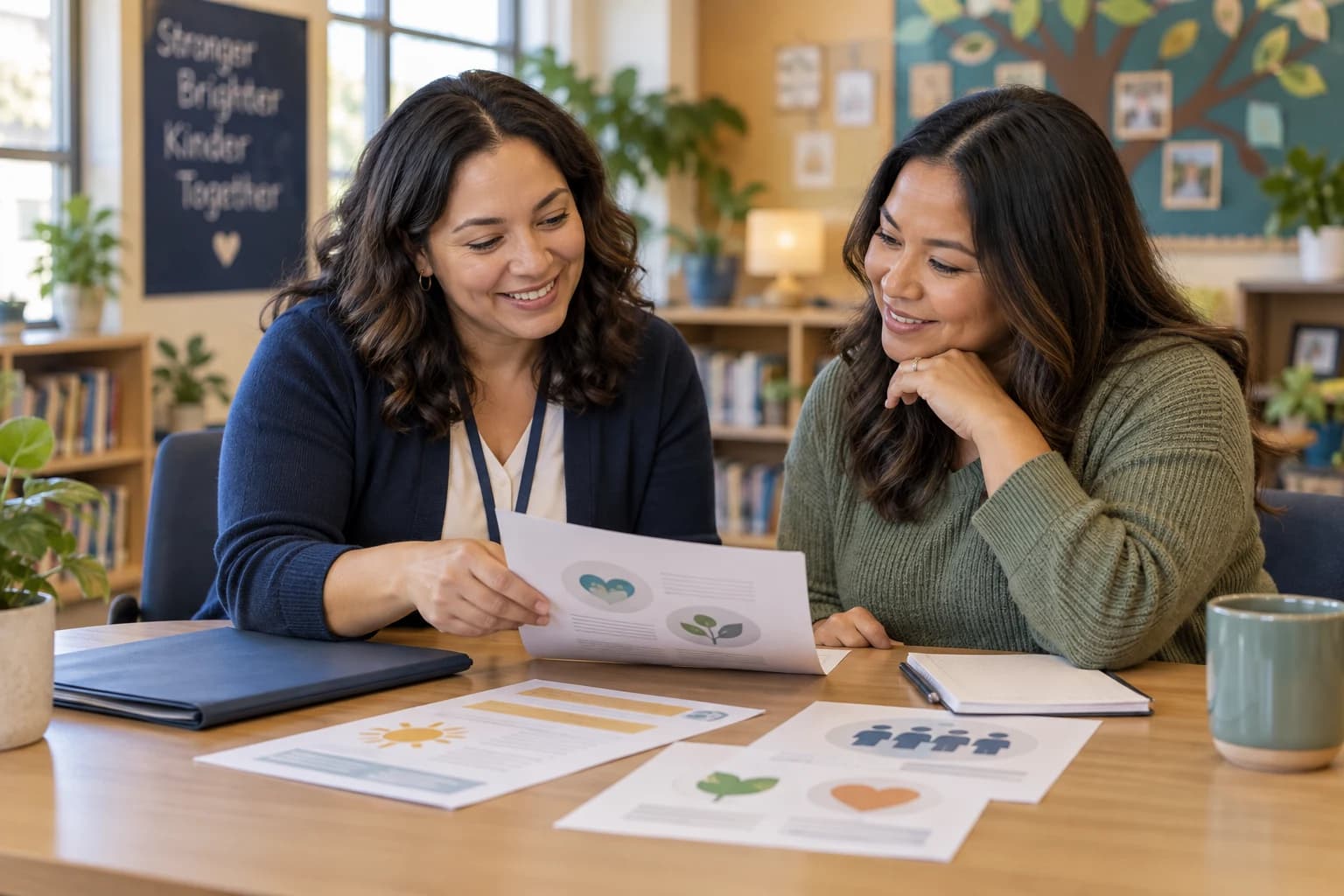
School-home SEL resources work best when schools share a small, relevant item at the right time, explain how it connects to school practice and invite families to adapt it to their context. A good plan includes universal communication, targeted guides for common concerns, accessible formats, privacy protections and a way for families to respond.
Begin with partnership, not information delivery
Families already hold knowledge about their children, culture, routines and previous supports. Ask what they notice and what kind of help would be useful before assuming the school has the complete picture.
The U.S. Department of Education frames family engagement as partnership. In practice, that means resources should open a conversation and support shared decisions rather than simply instruct caregivers what to do.
Create a small universal layer
Universal communication can explain the school’s SEL language, help-seeking routes, regulation supports and approach to conflict and repair. Keep it concise, translate it where needed and make it accessible on mobile devices and in print.
Share predictable materials at natural points in the year: the start of school, major transitions and before common periods of stress. Families should know why they are receiving the resource and whether any response is expected.
Use targeted guides for specific concerns
Maintain a curated set of guides for anxiety, routines, homework, school refusal, friendship, bullying, screen time, ADHD-related executive needs, relationships, consent and online safety. Select the guide that matches the current concern instead of sending the entire collection.
Sensitive guides should be shared thoughtfully, with age and context in mind. A resource can support a difficult conversation but does not replace safeguarding procedures, health education policy or individualized professional support.
Make the school connection explicit
Tell caregivers what the school is already doing and which part of the resource uses the same approach. For example, a teacher might name the problem-solving steps practised in class, or a counselor might highlight one page that supports an agreed plan.
Consistency does not mean families must reproduce a classroom at home. Offer adaptable options and invite families to say what will or will not fit their circumstances.
Protect privacy and license boundaries
Send individual handouts or guides only through approved channels and avoid including unnecessary student information. Keep the complete licensed library and download links inside the school’s access-controlled system.
Document what the school license permits. Staff should know whether they may print or digitally share individual family-facing resources and whether recipients may redistribute them. Clear boundaries support confident, lawful use.
Review usefulness, access and trust
Ask whether families could open the material, understood why it was sent and found it relevant. Track broad patterns rather than collecting sensitive details that are not needed. Low engagement may reflect timing, language, format or trust rather than lack of interest.
Use feedback to shorten messages, improve translations, change delivery channels and refine the guide collection. The goal is a sustainable exchange between school and home, not a growing archive of attachments.
Continue with the school resource plan
Explore the $149 Whole-School SEL Resource Library
View school licensing guidance
Plan SEL materials across the year
Browse parent and caregiver resources
Schoolwide SEL resource checklist