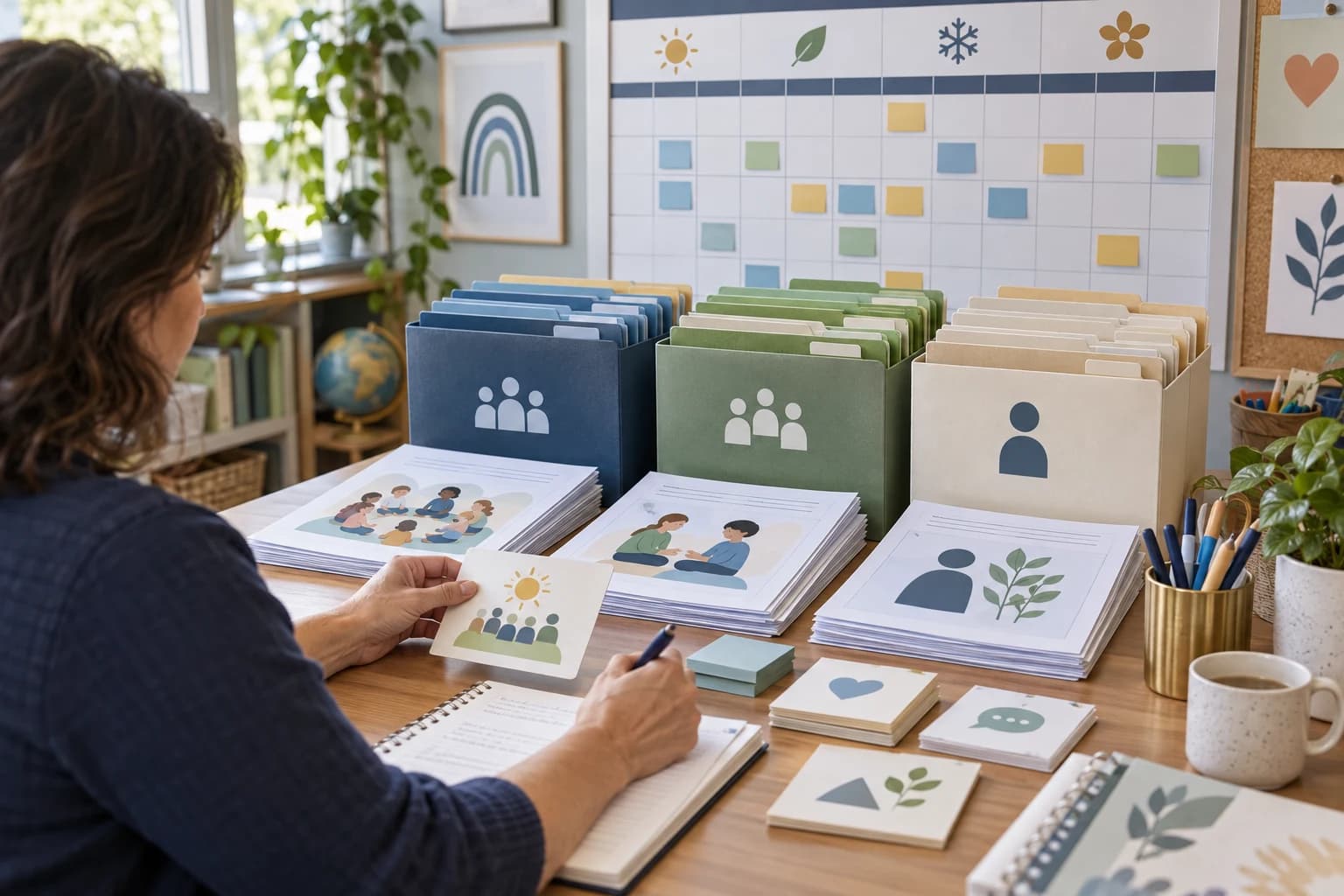
Plan SEL materials across the school year by aligning a small number of priorities with predictable school rhythms. Start with belonging and routines, revisit regulation and problem-solving before high-demand periods, prepare targeted resources for common concerns and schedule family communication. Keep room for local needs rather than assigning every file to a fixed week.
Choose a few schoolwide priorities
Start with existing data and staff experience: attendance patterns, behavior referrals, climate information, counselor requests and family concerns. Select a manageable set of skills or conditions to strengthen rather than trying to teach every possible SEL topic equally.
Write each priority as a practical student experience, such as knowing how to ask for help, having a shared repair process or using a familiar regulation routine across settings.
Use the opening weeks for belonging and predictability
The start of school is well suited to names and identities, classroom agreements, help-seeking, routines, body signals and the language of emotions. Staff should introduce visual supports and regulation options before students are expected to use them under stress.
Keep early lessons brief and revisit them. A single opening-week activity rarely creates a durable routine without teacher modeling and opportunities to practise.
Plan for predictable pressure points
Transitions, testing, holidays, weather disruptions, schedule changes and the final weeks of school create recurring demands. Place coping, flexibility, problem-solving and communication resources before these periods rather than waiting until strain is highest.
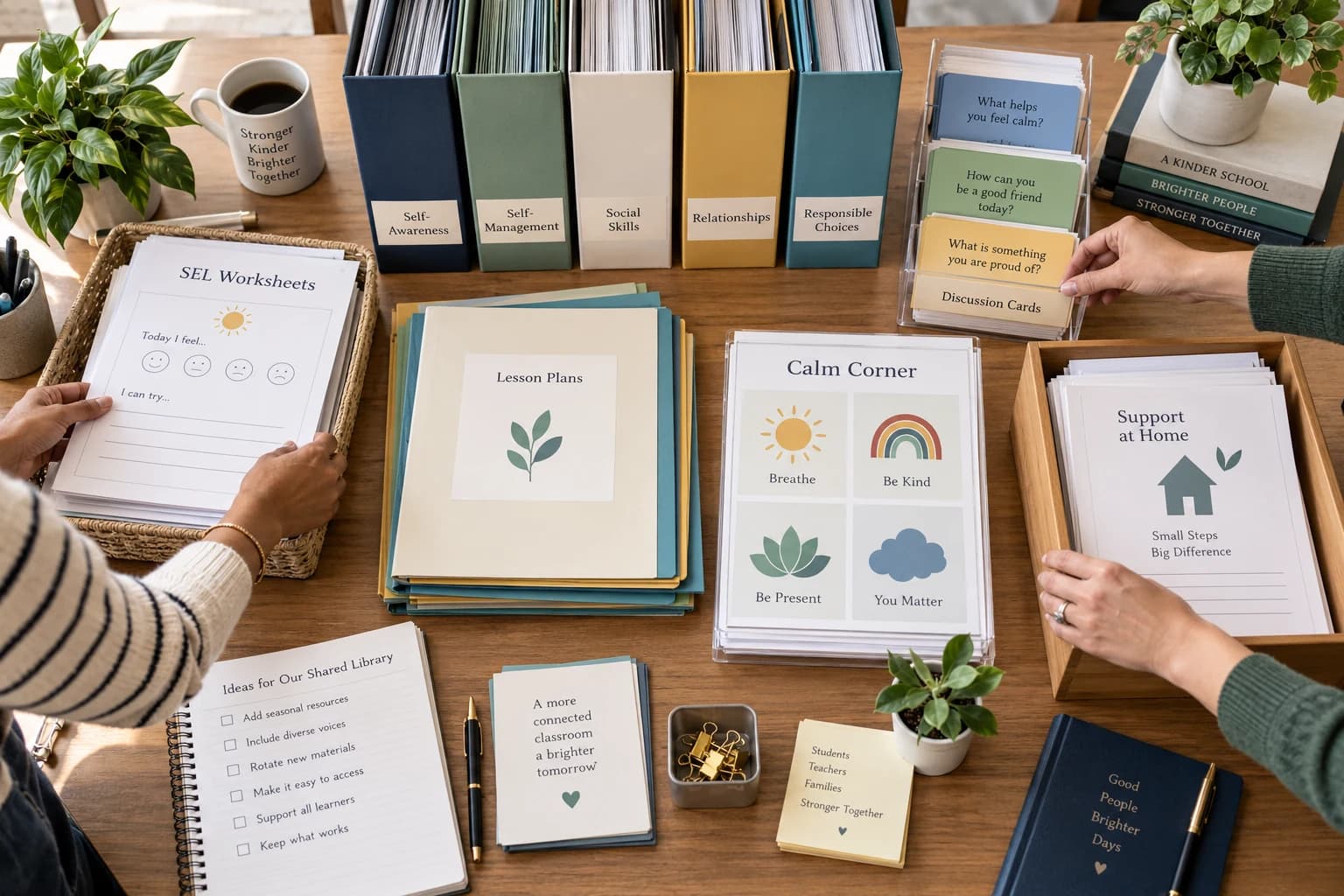
Counselors can prepare a small set of targeted materials for anxiety, friendship changes, grief and school avoidance while teachers continue universal support. The same library can serve both purposes when files are clearly labeled.
Coordinate classroom, counseling and family messages
For each priority, decide what teachers will introduce, what counselors can reinforce and what families may receive. The wording does not need to be identical, but the messages should be compatible.
A family handout is most useful when it connects directly to what students are learning and explains one or two realistic ways to continue at home. Avoid sending several unrelated guides at once.
Protect flexibility for real students and real events
A yearlong map is a guide, not a script. A community event, local concern or particular cohort may require a different emphasis. Reserve space in the calendar and keep adaptable activities that can be used without disrupting the whole plan.
Do not respond to every difficult event with an immediate worksheet. First consider safety, relationships, direct communication and whether students need space, information or individualized support.
Review each term and improve the next cycle
Ask what staff actually used, what took too long to prepare, which topics produced repeated requests and whether students encountered consistent language across settings. Combine those observations with appropriate school data.
Keep the resources that support useful practice, revise the timing and remove unnecessary duplication. Continuous improvement should make the plan simpler and more responsive, not merely larger.
Continue with the school resource plan
Explore the $149 Whole-School SEL Resource Library
Schoolwide SEL resources checklist
Build a shared resource library
Read about class meetings for SEL