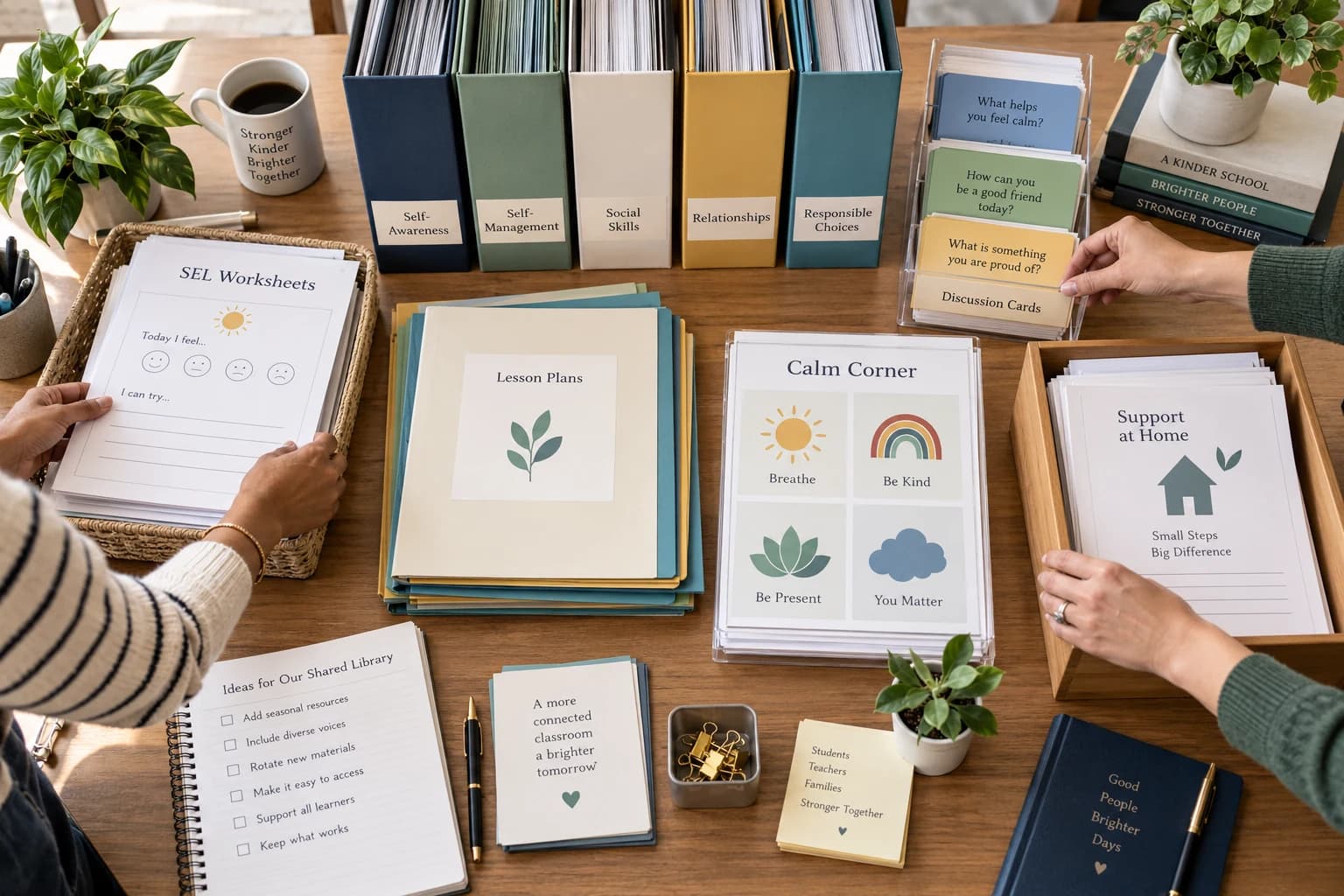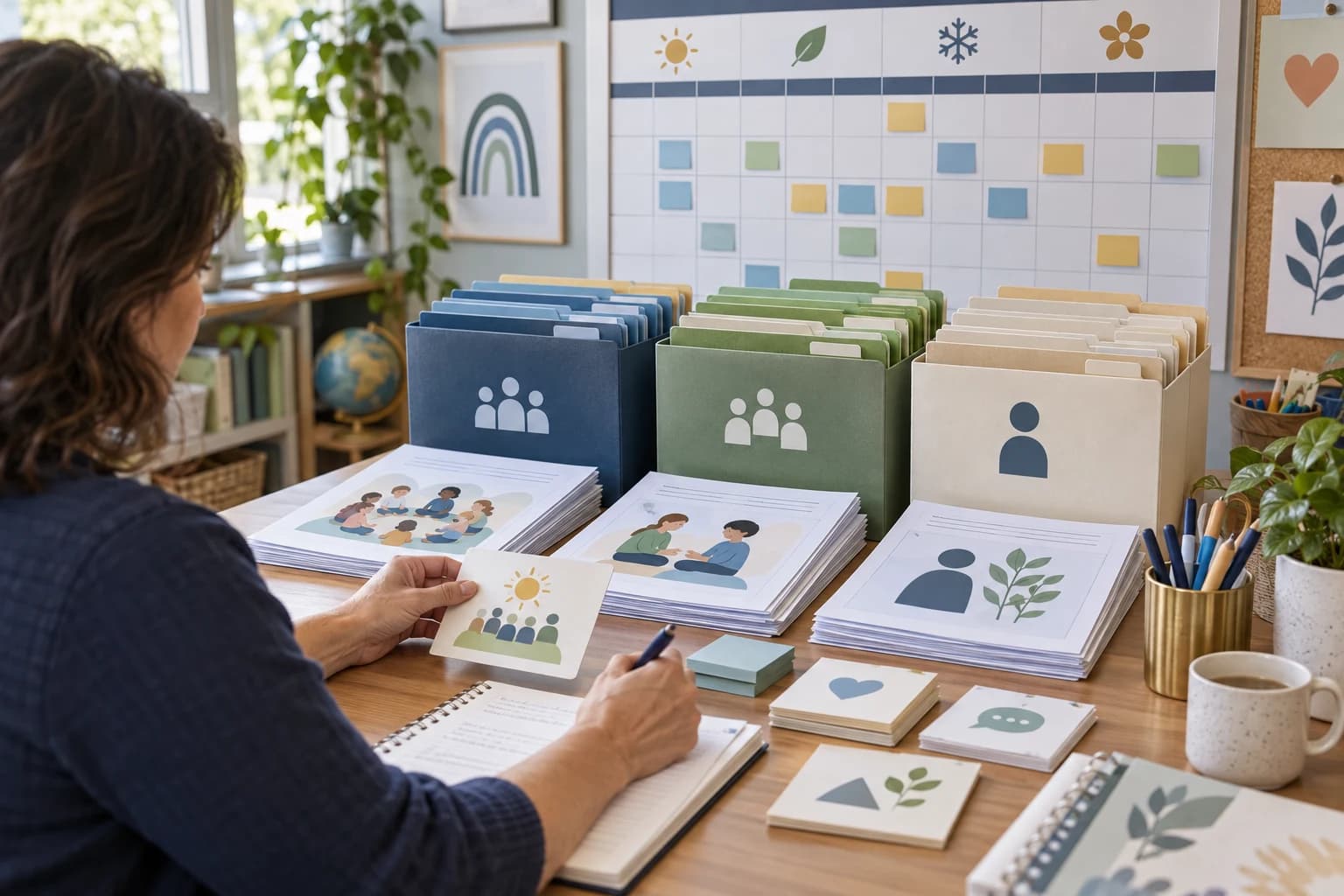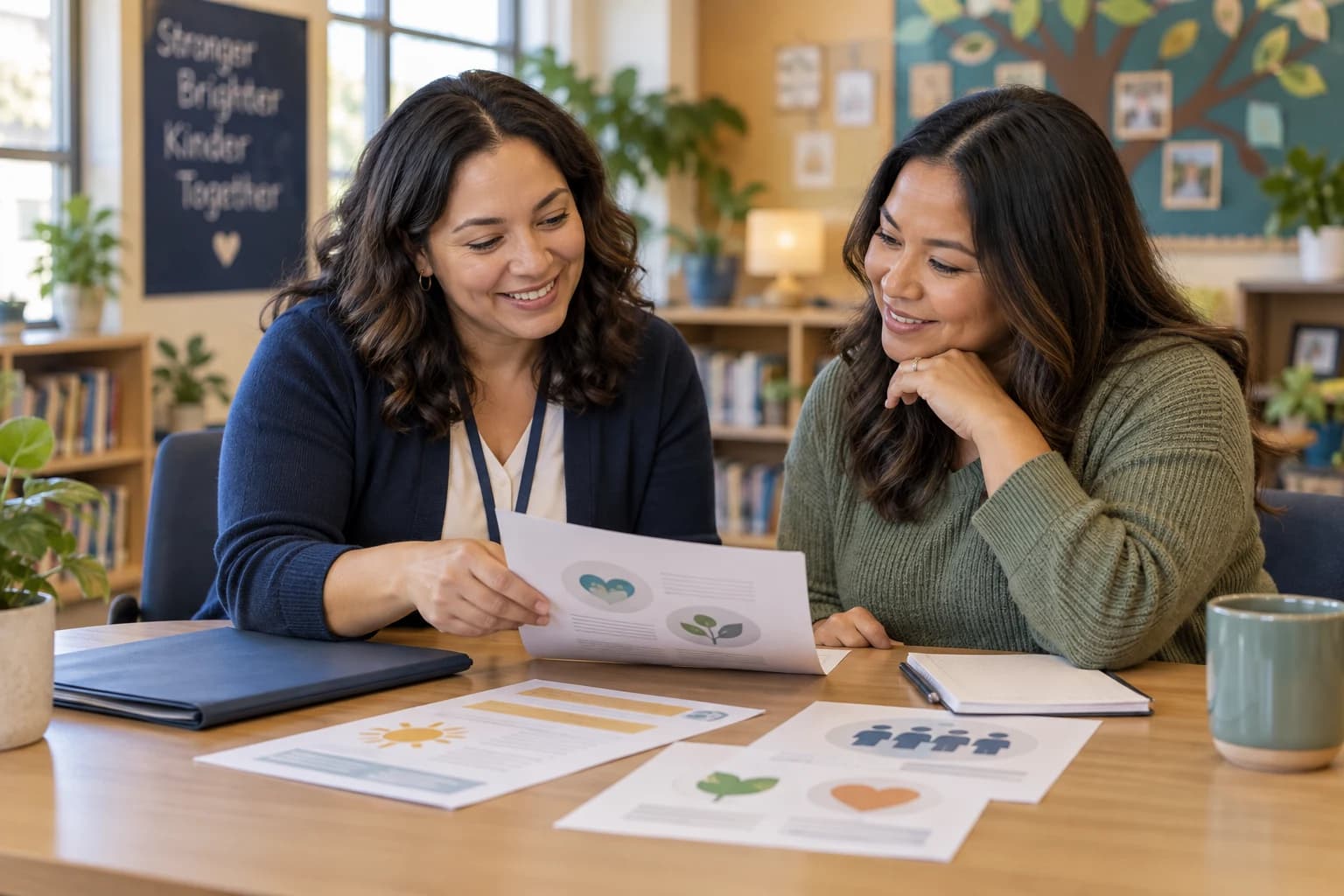
A useful elementary school SEL resource library gives staff a shared set of lessons, visual supports, discussion prompts, worksheets, social stories and family-facing materials. It should cover universal classroom use, small-group and individual support, common school situations and school-home communication. The library works best when it supports a broader schoolwide plan with clear ownership, staff learning and regular review.
Start with the jobs staff need the resources to do
The most useful question is not how many files a school owns. It is whether staff can quickly find something appropriate for the moment in front of them. An elementary library should help teachers introduce emotional vocabulary, practise coping and problem-solving, support friendship skills, prepare for difficult transitions and communicate consistent ideas to families.
List the recurring situations across classrooms, counseling, intervention and family contact. This keeps purchasing focused on practical coverage instead of collecting disconnected worksheets that look useful but are difficult to apply consistently.
Cover universal teaching and targeted support
Universal materials include short lessons, class discussion prompts, posters, routines and activities that can be used with many students. Targeted materials support small groups or individual work around topics such as anxiety, anger, school refusal, friendship problems and regulation. A balanced library needs both.
Printable resources should support professional judgment rather than assign a single explanation to a child’s behavior. Staff still need to consider development, culture, disability, context, safeguarding and school policy when deciding how to use a resource.
Create a shared language across classrooms
Schoolwide consistency does not require every teacher to deliver an identical script. It means students encounter compatible language for emotions, calming, problem-solving, repair and help-seeking as they move between adults and settings. Shared cards, visuals and brief lessons make that easier.
Choose a small core set of terms and routines first. Staff can then add age-appropriate activities without turning the school into a collection of competing systems. CASEL describes schoolwide SEL as a systemic approach across classrooms, schoolwide practices and family-community partnerships; a resource library is one practical component of that work.
Include school-home materials on purpose
Families benefit from concise handouts and guides that explain the language students hear at school and offer realistic ways to continue a skill at home. Useful topics include routines, anxiety, bullying, homework conflict, screen time, relationships and communication.
Family resources should be shared selectively and with context. Sending a large bundle without explanation creates more work for caregivers. A short note about why one guide was selected and how the school is using the same idea makes the handoff more useful.
Make access and licensing unambiguous
A library only becomes schoolwide when staff are allowed to use it schoolwide. Check whether a purchase covers one named person, a classroom, a building or an entire organization. A single-user license should not be placed on a shared staff drive.
For a building-wide license, document who can access the files, where they are stored, what may be sent to families and what must remain inside the school. Clear rights prevent both accidental misuse and unnecessary hesitation.
Use a simple first-90-days rollout
In month one, identify a small implementation team and organize the library by need. In month two, introduce a few common materials and gather staff feedback. In month three, fill coverage gaps and decide what evidence of use is worth reviewing.
Track access, staff confidence and whether materials reduce preparation time. Do not treat downloads as proof of student outcomes. The strongest sign of a usable library is that staff can name when and why they use particular resources.
Continue with the school resource plan
Explore the $149 Whole-School SEL Resource Library
Compare SEL curriculum and worksheets
Browse the Complete SEL Toolkit