For separation anxiety, make departures warm, brief and predictable; verify that the setting is safe; practise separations in manageable steps; and keep promises about when you will return. Reassure once with truthful information, then return to the agreed plan rather than trying to remove every possible worry.
Start by checking whether the child is safe apart
Not every refusal to separate is an anxiety problem. Ask who supervises, how pickup works, whether bullying or frightening discipline has occurred, and whether sensory, communication, medical or learning needs are supported. A child may be reacting to a chaotic handoff, an unexplained caregiver change or a setting where they cannot access help.
Repair concrete uncertainty before increasing practice. Tell the child who is responsible, where you will be, what happens if plans change and how they can contact a trusted adult. Supported separation is not the same as asking a child to tolerate an unsafe environment.
Notice what the long goodbye is teaching
Parents often stay because leaving a distressed child feels wrong. They add one more hug, answer one more question, return from the car or change the plan. Each action makes sense in isolation. Together, they can teach the child that the first goodbye was not reliable and that enough distress may keep the separation open.
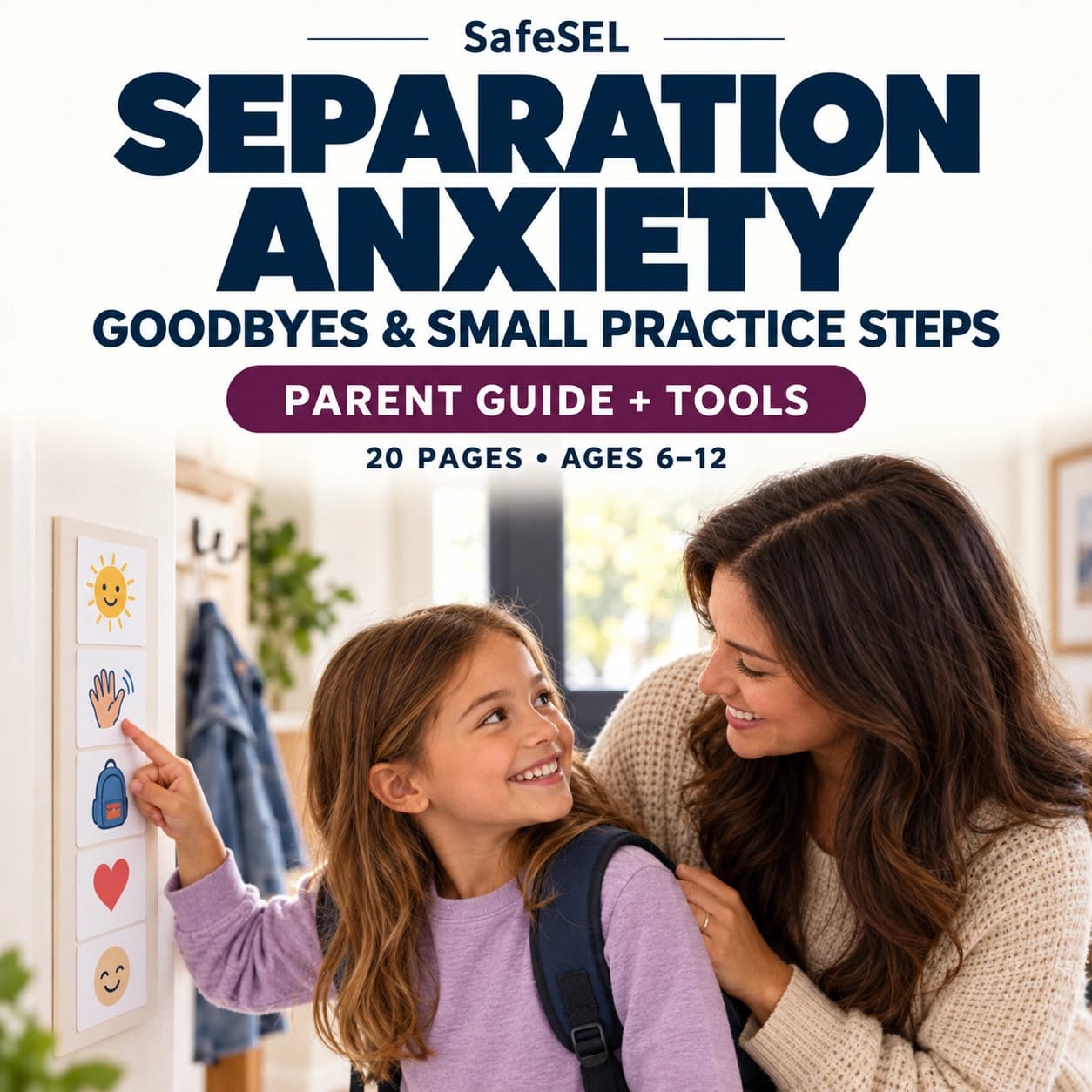
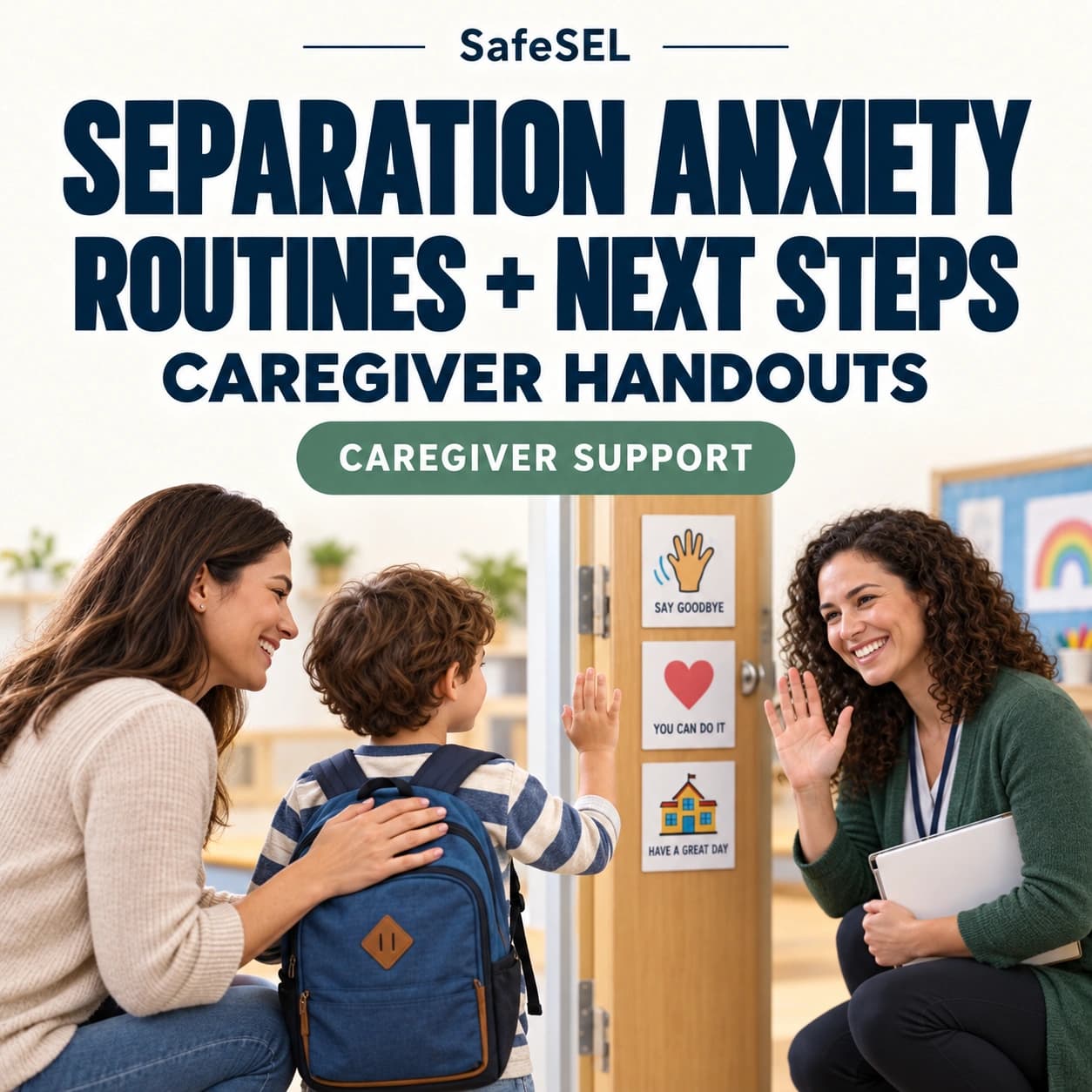
A better goodbye is warm, specific and repeatable: connect, state the plan, name the next reunion and leave. The child does not have to appear calm for the adult to follow through. The receiving adult needs to know the routine and have a simple next activity ready.
Use truthful reassurance, not impossible promises
“Nothing bad will happen” offers certainty no adult can guarantee. “You are safe, Ms. Lee knows the plan, and I will return after snack” gives the child accurate information and a visible sequence. If the same question returns, point back to the plan rather than inventing stronger assurances.
This is not refusing comfort. It is shifting comfort from endless prediction to connection and competence: “I know this feels hard. You know the first step. I will see you at the time we agreed.” A small card or visual schedule can carry the message when spoken words become part of the loop. Keep that message consistent across caregivers.
Practise separation outside the hardest moment
Do not make Monday morning the only practice. Build a ladder from easier to harder: staying with a familiar relative while the parent walks outside, attending part of an activity, using a predictable drop-off, or sleeping in one’s own bed with planned check-ins. The exact steps depend on the child, setting and current support.
Practice should be challenging enough for new learning but not so large that it repeatedly ends in panic or abandonment. Agree what the child can use for support and what the adult will not keep repeating. Afterward, ask what helped them stay and recover—not whether they were perfectly brave.
Make return promises boringly reliable
Children with separation fears pay close attention to timing. Use events they can recognize—after lunch, after the activity, when the clock shows a particular time—and arrive as agreed whenever possible. If plans change, have a backup adult and a clear communication route.
Reliability also means not secretly leaving to avoid the goodbye. A disappearance may prevent one difficult moment but can increase monitoring and mistrust at the next separation. A brief honest departure gives the child a sequence they can learn.
Avoid turning the whole day into anxiety monitoring
Repeatedly asking “Are you worried?” can keep attention fixed on internal threat. Prepare the plan, make room for the child to speak and then return to ordinary life. Connection, play, sleep, food and valued activities are not distractions from the work; they are the context in which confidence grows.
Track lightly. Record the separation attempted, support used, recovery and next step for a short period. Stop collecting information once it no longer changes the plan. The child deserves parts of the day in which they are not a project.
Know when parent strategies are not enough
Seek qualified help when separation distress is severe, persistent or interfering with school, sleep, medical care, family functioning or developmentally expected activities. Broader anxiety, trauma, depression, obsessive-compulsive symptoms, neurodevelopmental needs and family stress may change the plan.
Urgent safety concerns require urgent local support. If the child is already receiving care, align home practice with the clinician rather than running a separate treatment plan. Parents provide connection, structure and opportunities; they do not have to become the child’s therapist.
Bring concrete observations to the appointment: which separations are difficult, what the child fears, how adults respond, what temporarily reduces distress and how long recovery takes. This helps a professional distinguish a developmentally expected fear from a more impairing pattern and avoids expecting the child to explain everything under pressure. Include what still goes well, because preserved strengths and successful separations help identify where support can begin.
Choose separation anxiety activities that rehearse the actual handoff
Useful separation anxiety tools can be simple: a picture showing the receiving adult, a familiar goodbye phrase and a clear reunion point. Rehearse the sequence together when there is no immediate rush. If the fear of separation concerns a particular setting, first check that the adult there can provide the support you are describing.
Keep practice connected to a real situation rather than accumulating worksheets. A drawing of tomorrow’s arrival can help a child ask where to put their bag or whom to approach. Those practical questions need answers; they are not automatically reassurance rituals. Adapt the plan if the setting or the child’s needs change.
A practical next step
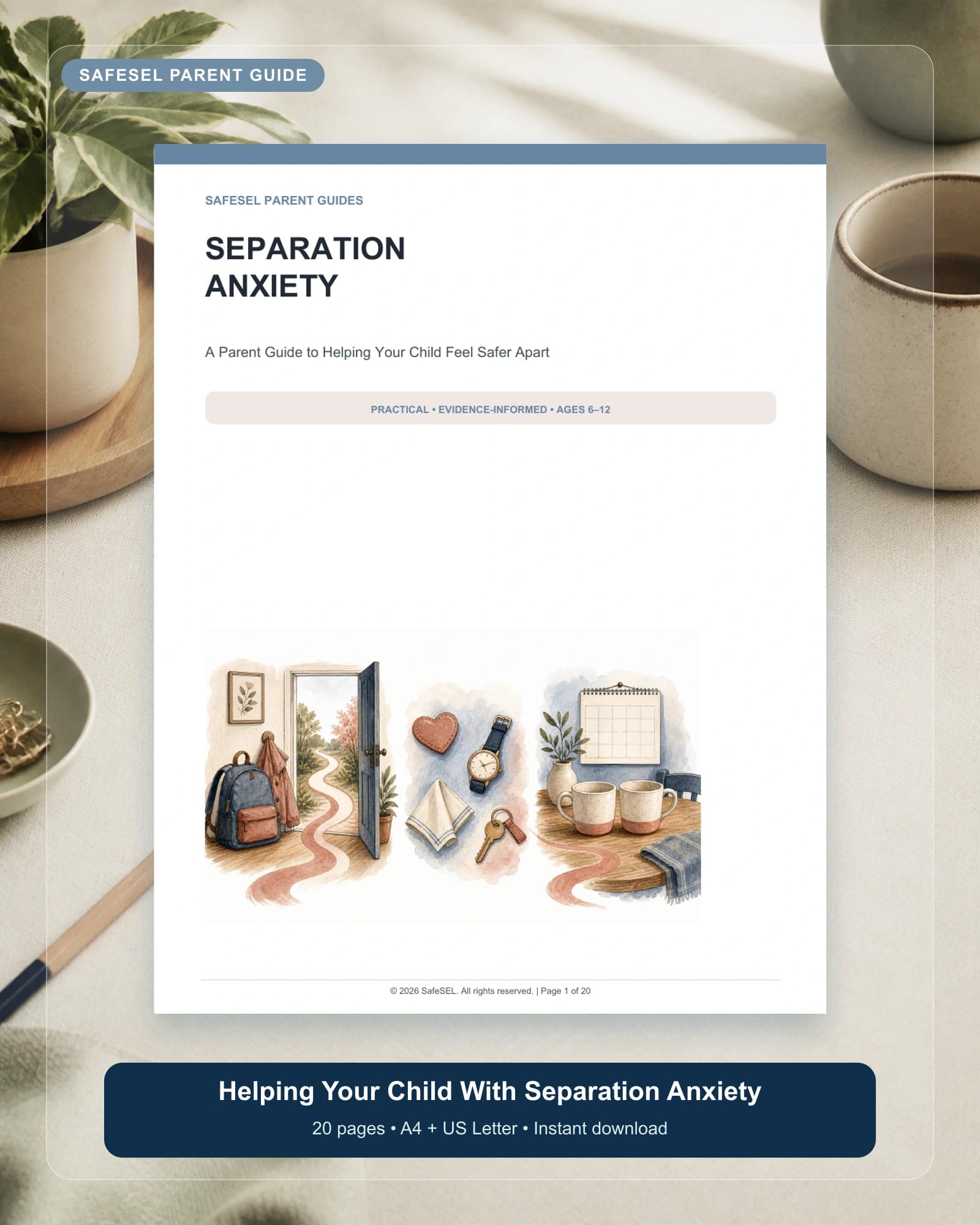
For the complete home-use framework, scripts and printable tracker, see the Helping Your Child With Separation Anxiety parent guide.
Browse more parent and caregiver resources.
Continue with separation anxiety at school drop-off.
Sources and further reading
- Anxiety and Children — American Academy of Child and Adolescent Psychiatry (2023)
- School Refusal — American Academy of Child and Adolescent Psychiatry (2026)