Worksheets
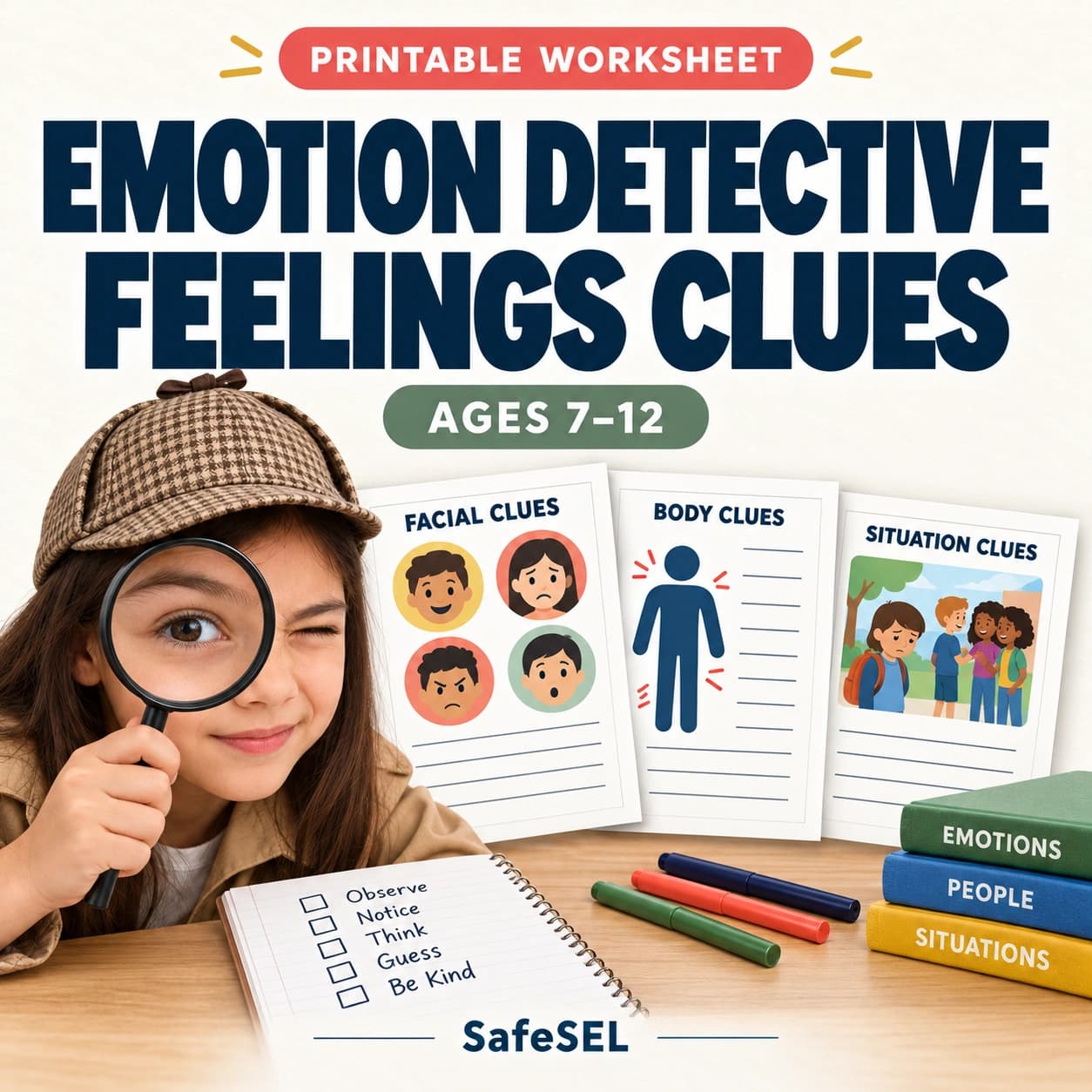
Emotion Detective Worksheet for Kids
Ages 7–12PNG
Emotion Detective Worksheet for Kids: a print-ready worksheet for ages 7–12 with clear prompts for guided practice.
Help kids identify, name and understand emotions with emotional worksheets, feelings charts, check-ins and printable feelings-and-emotions activities.
Emotion Detective Worksheet for Kids: a print-ready worksheet for ages 7–12 with clear prompts for guided practice.
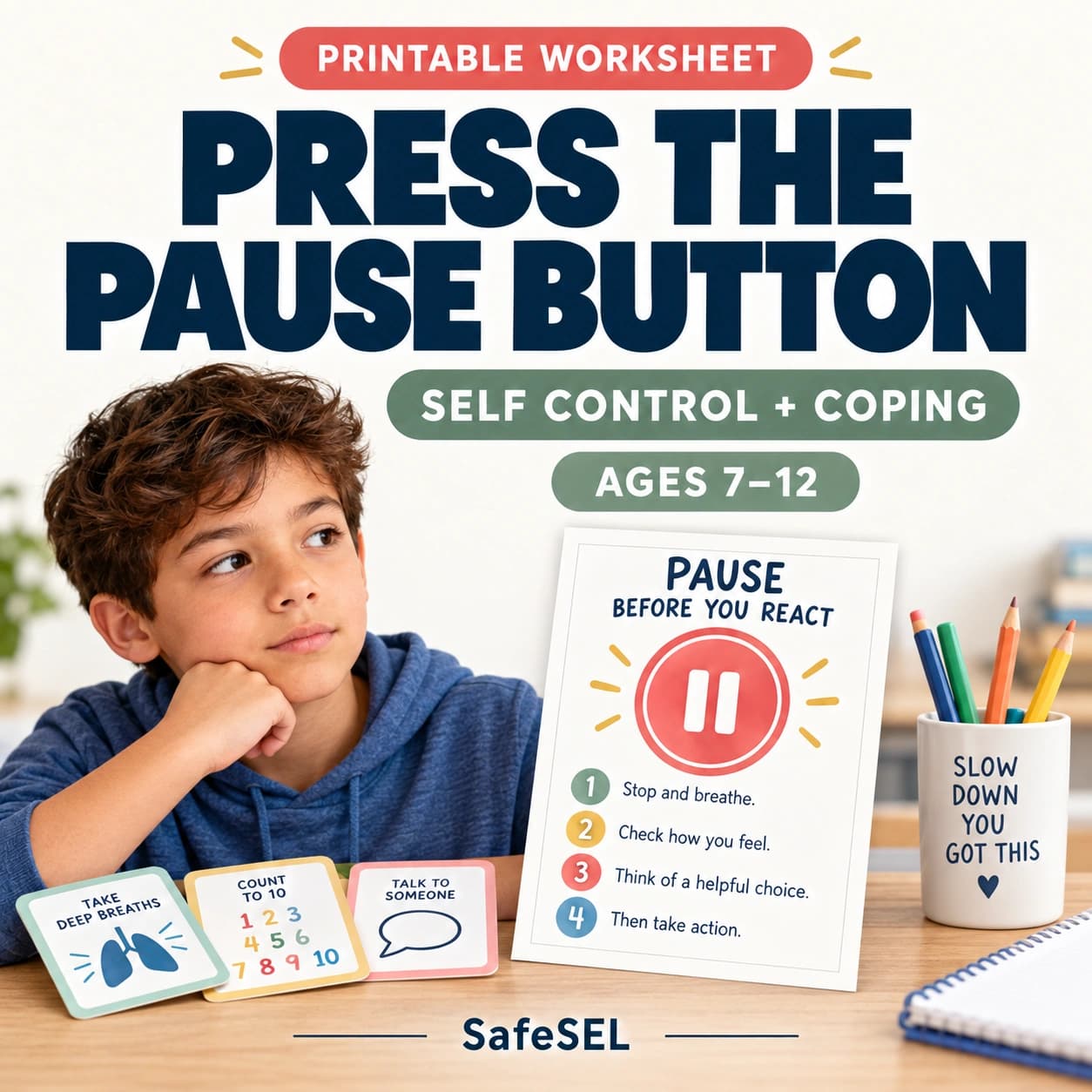
Self Control Worksheet for Kids: a print-ready worksheet for ages 7–12 with clear prompts for guided practice.
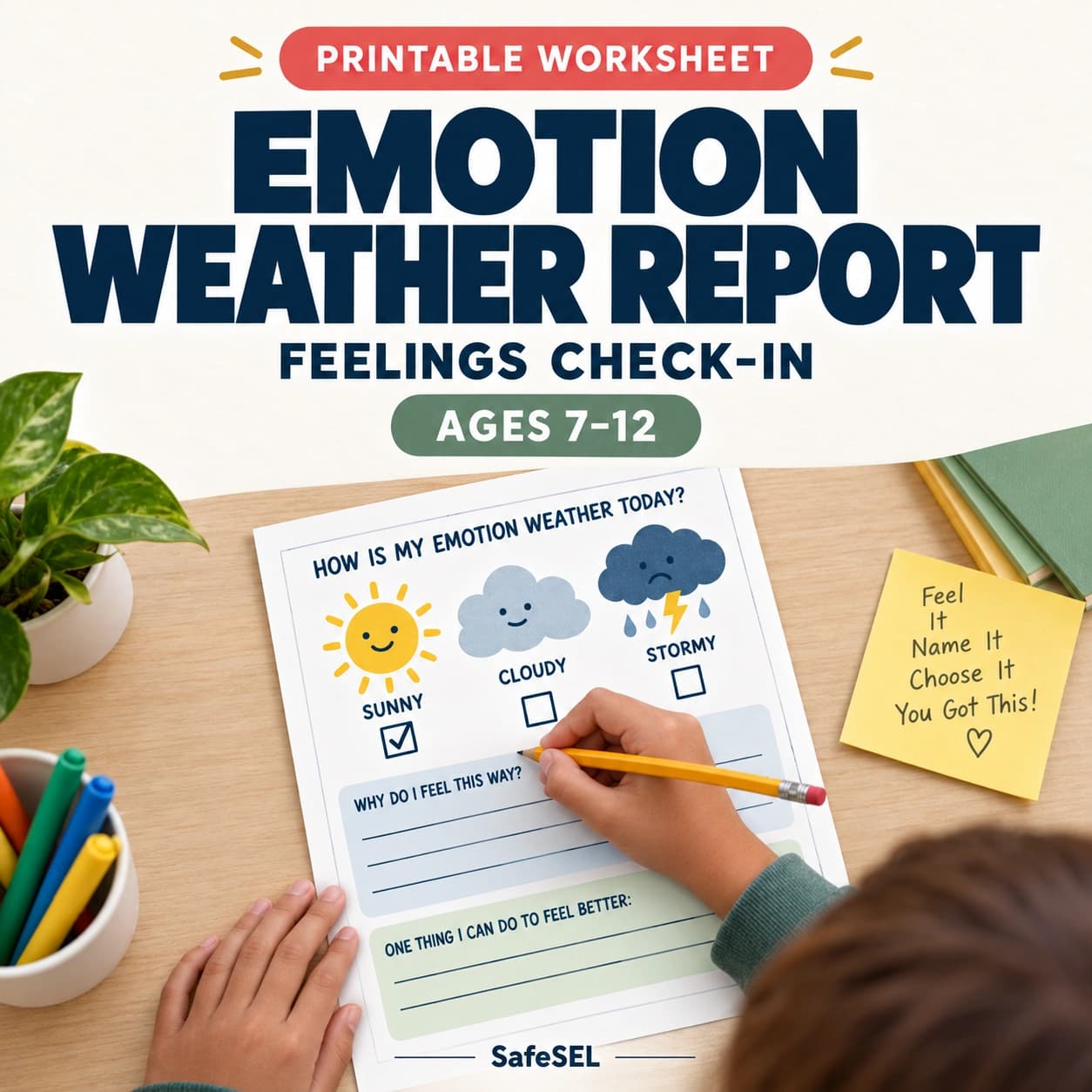
Emotion Check-In Worksheet for Kids: a print-ready worksheet for ages 7–12 with clear prompts for guided practice.
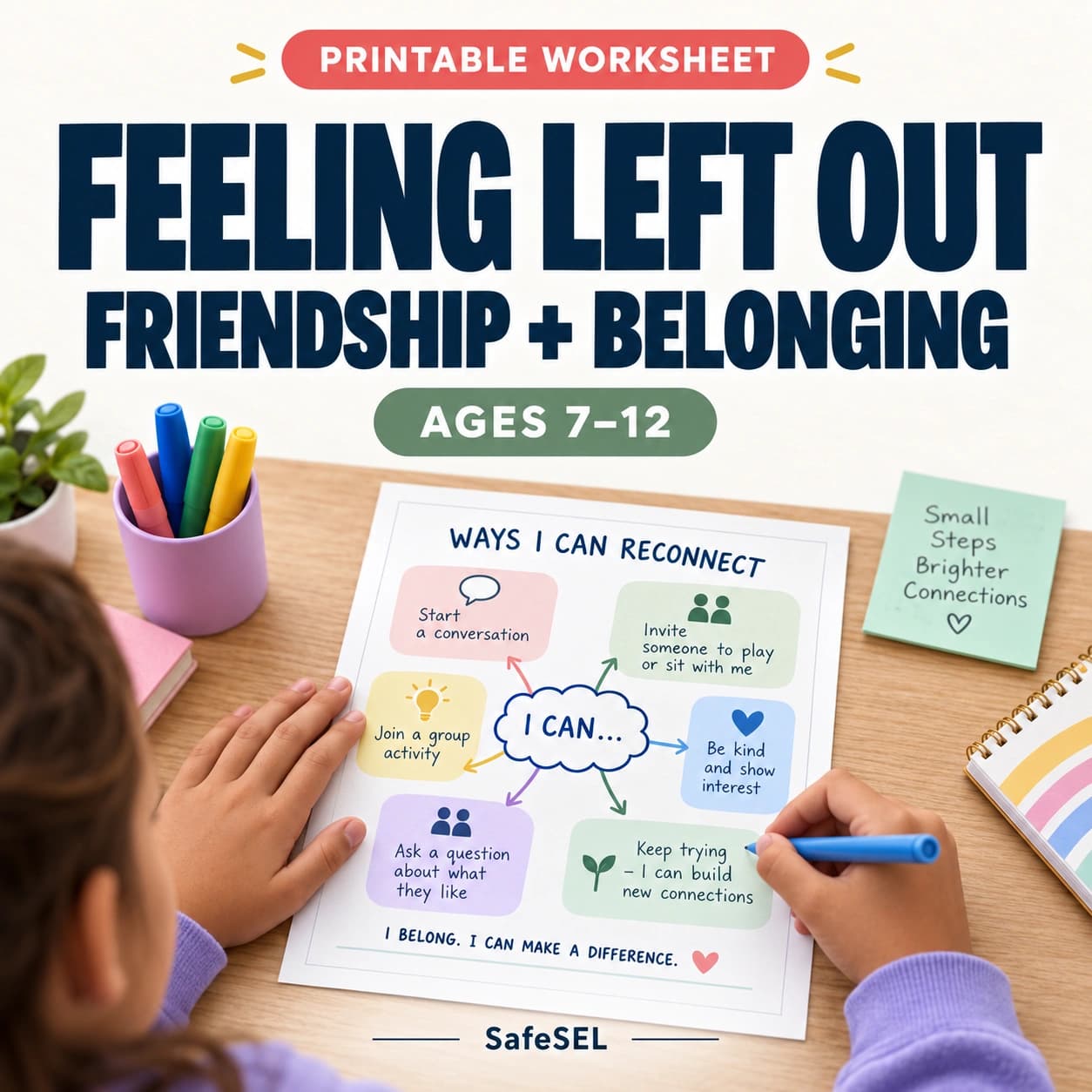
Support children working on feeling left out and coping skills with a printable SEL worksheet for ages 7–12 designed for guided reflection and practice.
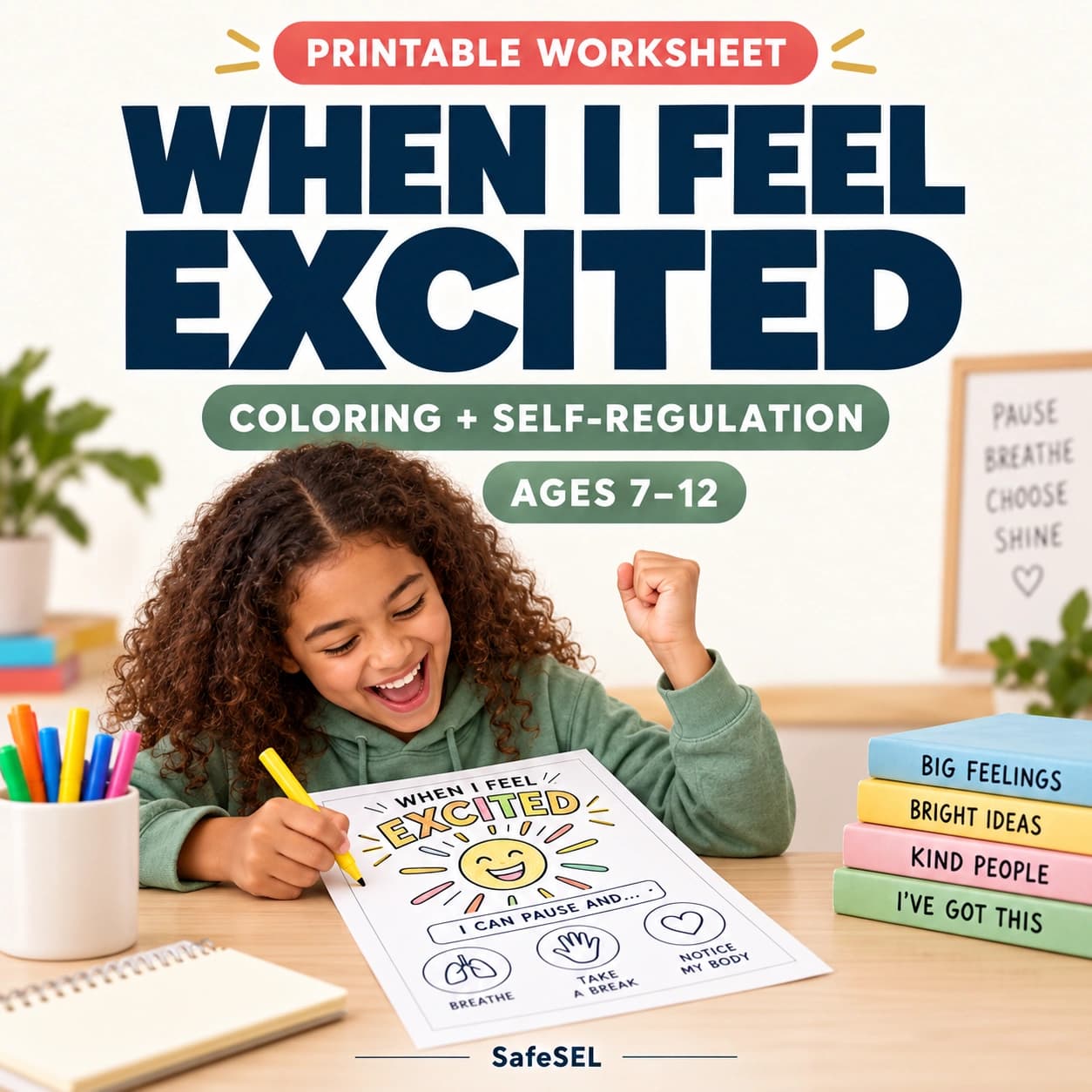
Excited Feelings Worksheet for Kids: a print-ready worksheet for ages 7–12 with clear prompts for guided practice.
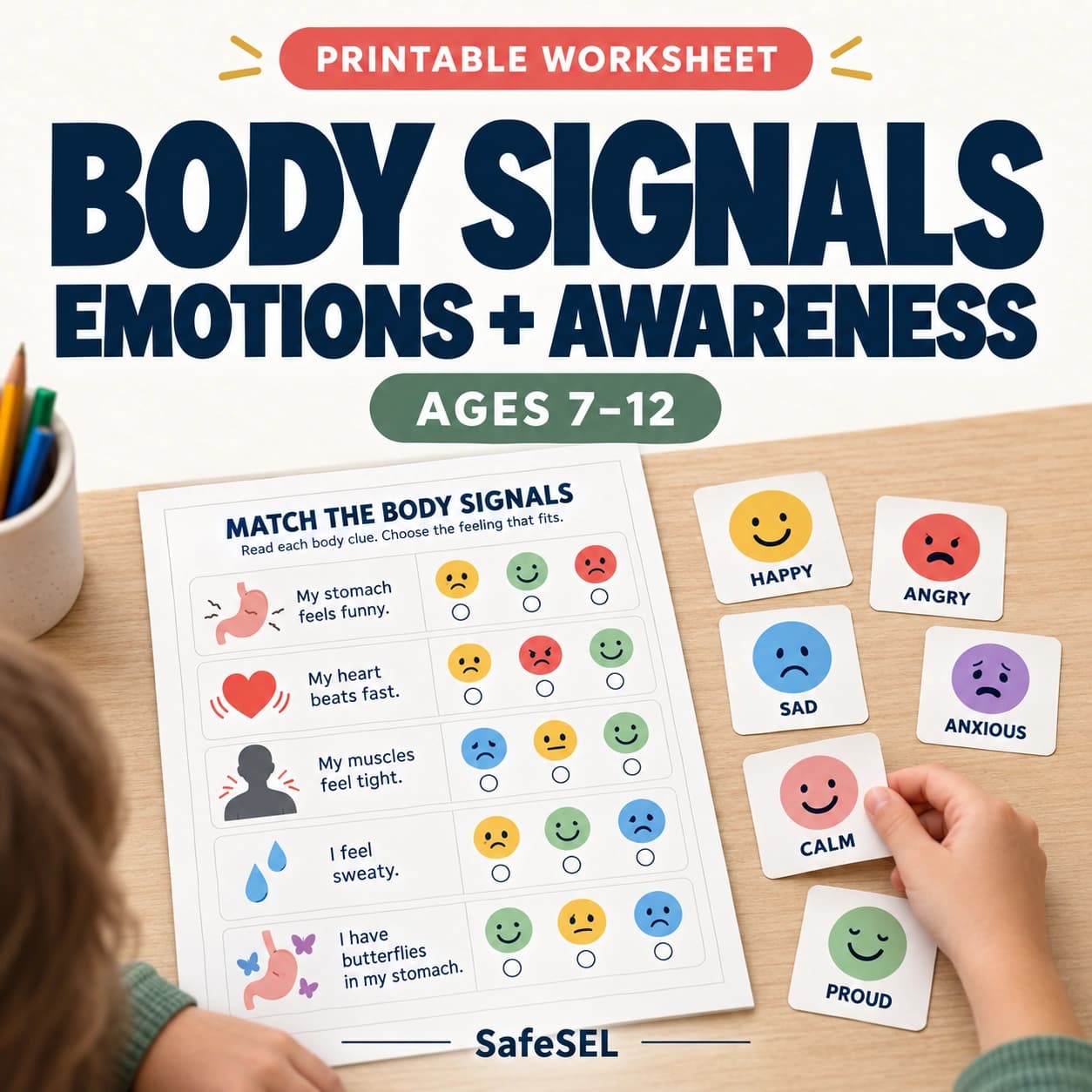
Body Signals of Emotions Worksheet: a print-ready worksheet for ages 7–12 with clear prompts for guided practice.
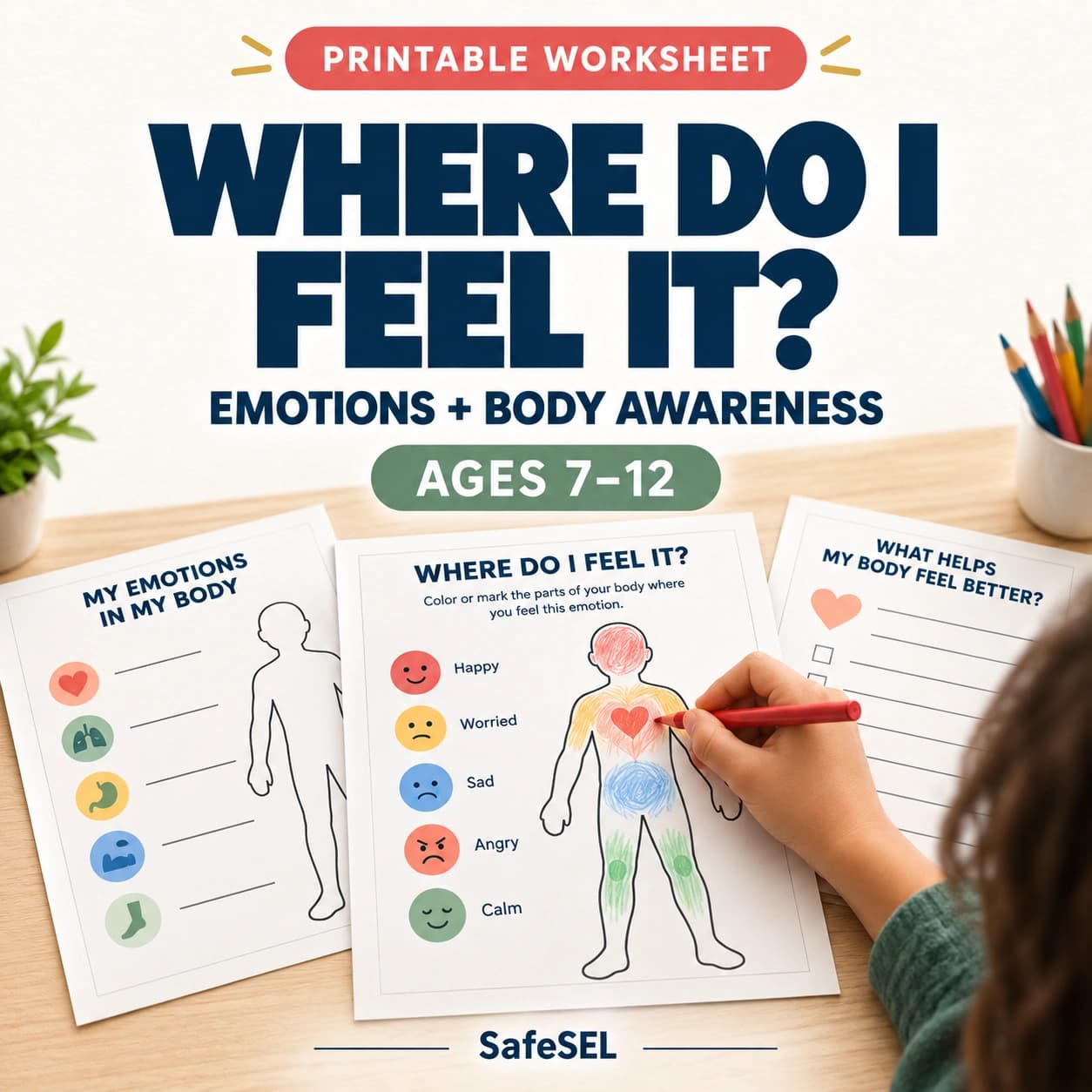
Where Do I Feel This Emotion Worksheet: a print-ready worksheet for ages 7–12 with clear prompts for guided practice.
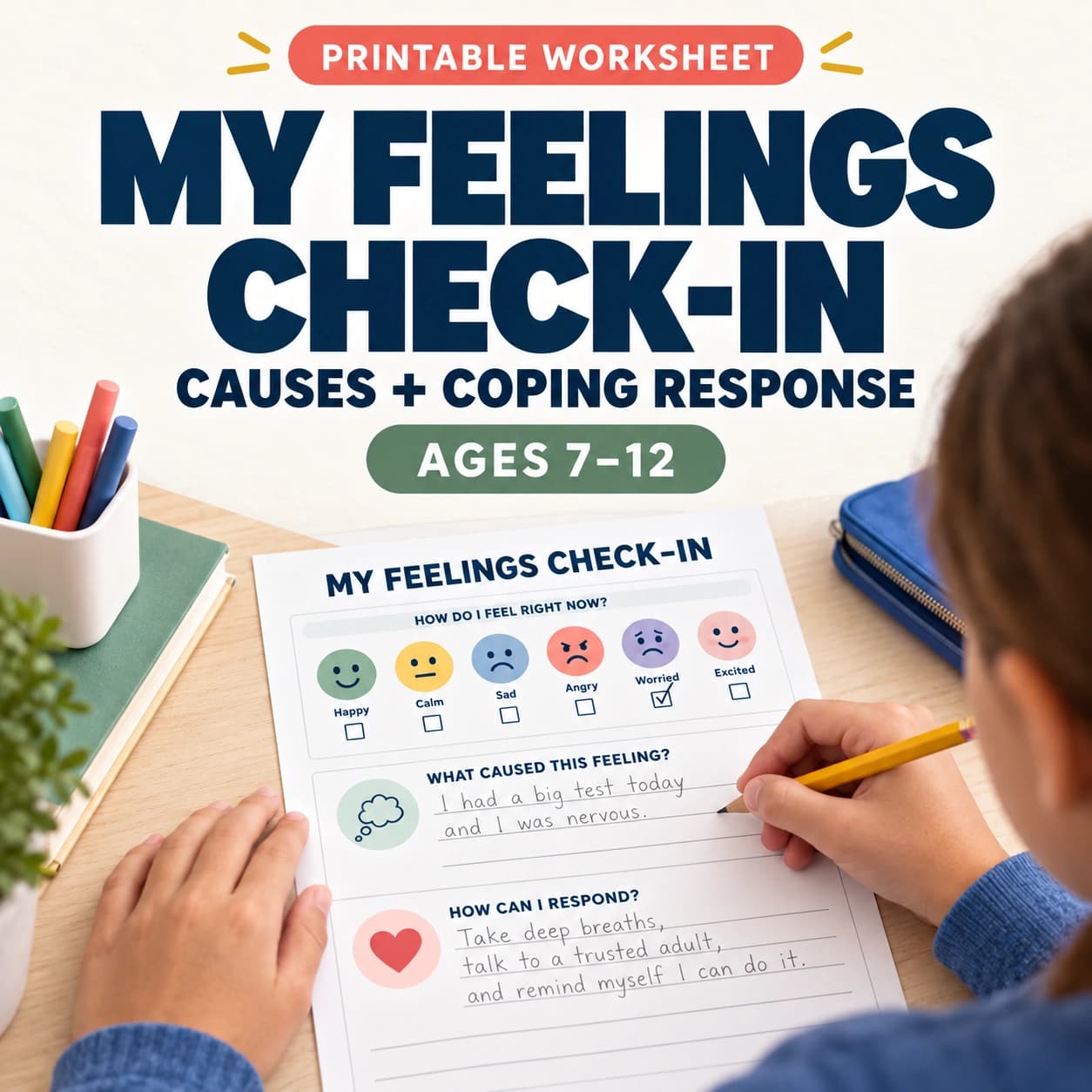
My Feelings Check-In Worksheet: a print-ready worksheet for ages 7–12 with clear prompts for guided practice.
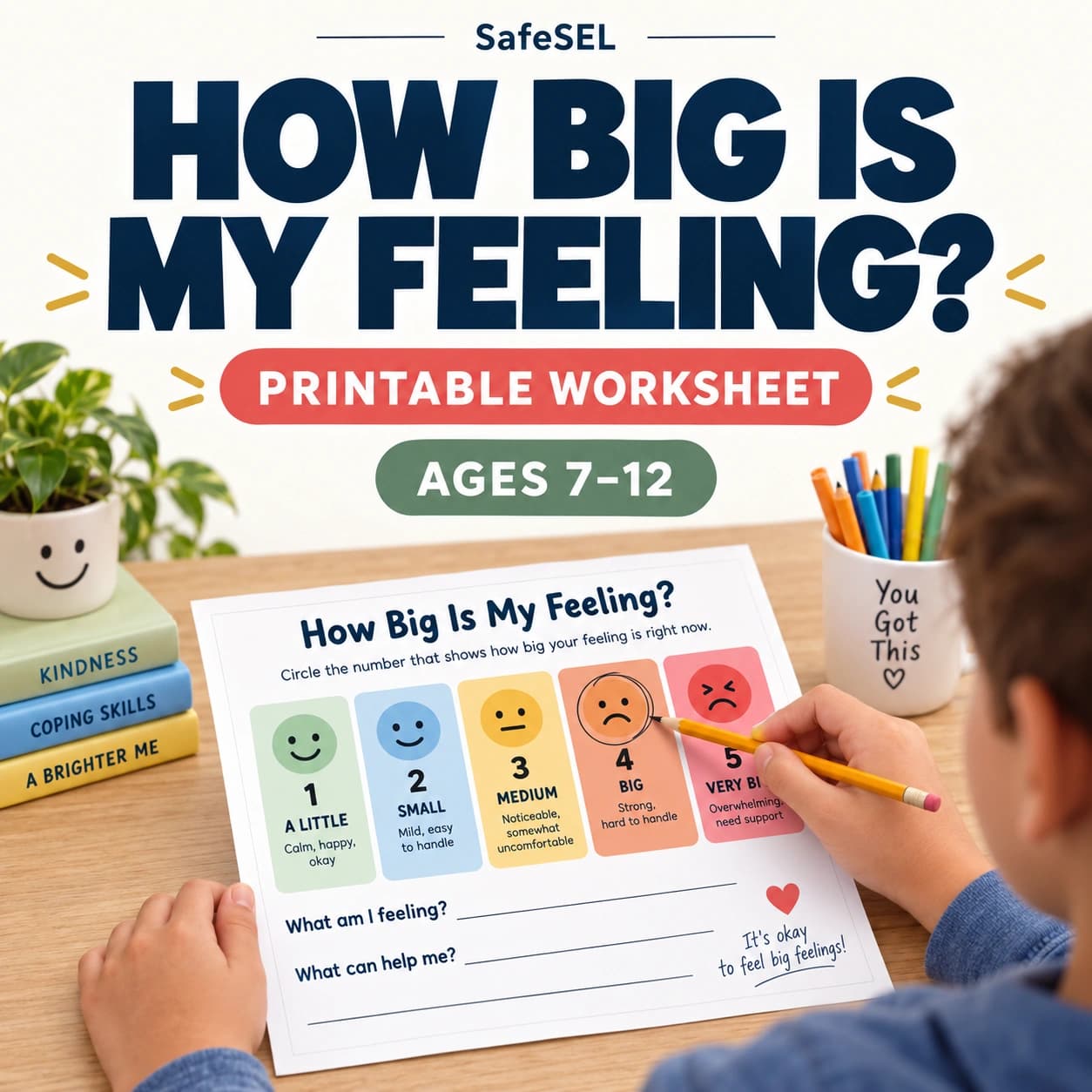
How Big Is My Feeling Worksheet: a print-ready worksheet for ages 7–12 with clear prompts for guided practice.
A feelings chart offers words or pictures to choose from; a feelings check-in worksheet asks about the present moment. Emotions worksheets may explore a situation in more detail. Choose the format by the task instead of expecting one page to do everything. Children can experience more than one feeling, and a drawing of a face does not establish what another person feels. Use examples that leave room for different answers.
Begin with a character in a familiar situation: a plan changes, a friend arrives, or a task is difficult. Invite possible feeling words and ask what information supports each idea. Leave room for uncertainty and different answers. For a personal check-in, offer privacy and a way to respond without writing a detailed account.
An emotions chart offers words or pictures to choose from; emotional literacy also involves explaining what those words mean in context. After a child chooses a feeling, an adult can invite a description, a drawing or a fictional example. There need not be one correct label. Compare the preview with that purpose in mind: a reference chart and a worksheet requiring a written response place different demands on the learner.
Use these feelings worksheets resources to teach one clear skill at a time, practise it with realistic examples and return to it when the child is calm enough to learn.
The collection includes child-friendly resources for elementary ages. Check each product for its exact age range and suggested setting.
Yes. SafeSEL digital resources are designed so you can select the relevant pages for the current skill, child or group.
Filter by resource type and age group to find the most useful printable.