Article archive: page 10
More practical, evidence-informed guidance for the real emotional and social situations children face.
Co-Regulation in Short School Interactions: What Can Fit Into Two Minutes
Use brief co-regulation exchanges to make help and the next action clear. Adapt voice, proximity and demands without promising calm in two minutes.
How Therapists Can Review Whether a Coping Strategy Is Actually Working
Review coping strategies through their immediate effects, later participation and fit with the treatment goal. Distinguish relief from broader progress.
How Teachers Can Coordinate One Regulation Plan Across the School Day
Coordinate classroom regulation support across teachers, recess and transitions with shared cues, clear roles and a concise review process.
How Therapists Can Review an Exposure Task That Did Not Go as Planned
An exposure task that ends early, produces unexpected distress or reveals a hidden barrier is not adequately summarized as success or failure. The review should establish what the child predicted, what actually occurred, whether the task remained safe and what the design taught the clinician.
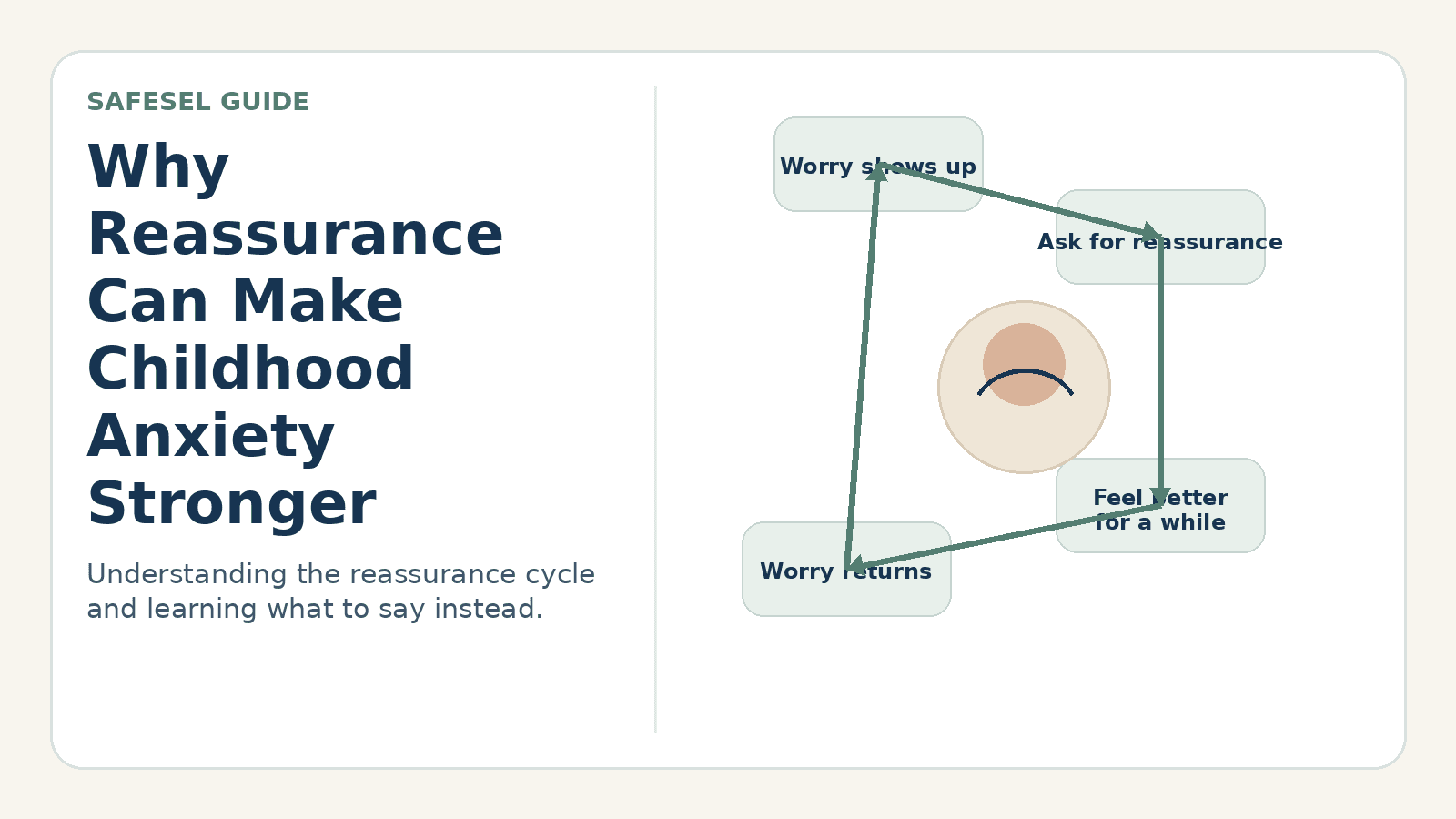
How Teachers Can Respond to Anxiety Without Becoming the Reassurance Source
Distinguish new information from repeated reassurance questions. Support anxious students while checking safety, access and the facts of the situation.
Supporting a Student Who Repeatedly Asks to Call Home
Explore why a student repeatedly asks to call home. Check health and safety needs, follow contact arrangements and plan classroom support with the family.
How School Counselors Can Build a Graded Practice Ladder With a Student
Plan manageable school participation steps with a student, clear adult support and appropriate professional oversight. Distinguish practice from forced exposure.
When a Child Gives Gifts to Stop Friends From Leaving
Practical guidance for responding when a child gives gifts to stop friends from leaving, with a clear first step, realistic adult language, and functional measures of progress.
Designing Accessible SEL Activities for Different Communication, Sensory, and Motor Needs
Design accessible SEL activities with meaningful response options, communication access and manageable sensory and motor demands. Keep the learning goal.
When a Child Does All the Work to Keep a Friendship
Practical guidance for responding when a child does all the work to keep a friendship, with a clear first step, realistic adult language, and functional measures of progress.
Executive Function in Everyday Childhood Tasks: A Practical Guide for Adults
Explore executive function skills through ordinary childhood tasks. Identify where a sequence breaks down and match practical support to that step.
When a Child Agrees to Unsafe Dares to Fit In
Practical guidance for responding when a child agrees to unsafe dares to fit in, with a clear first step, realistic adult language, and functional measures of progress.