Article archive: page 20
More practical, evidence-informed guidance for the real emotional and social situations children face.
Anger vs. Sensory Overload: What Adults Can Observe Before Responding
A practical, evidence-informed guide to anger vs. sensory overload, with concrete examples, accessible next steps, and clear limits on what the guidance can establish.
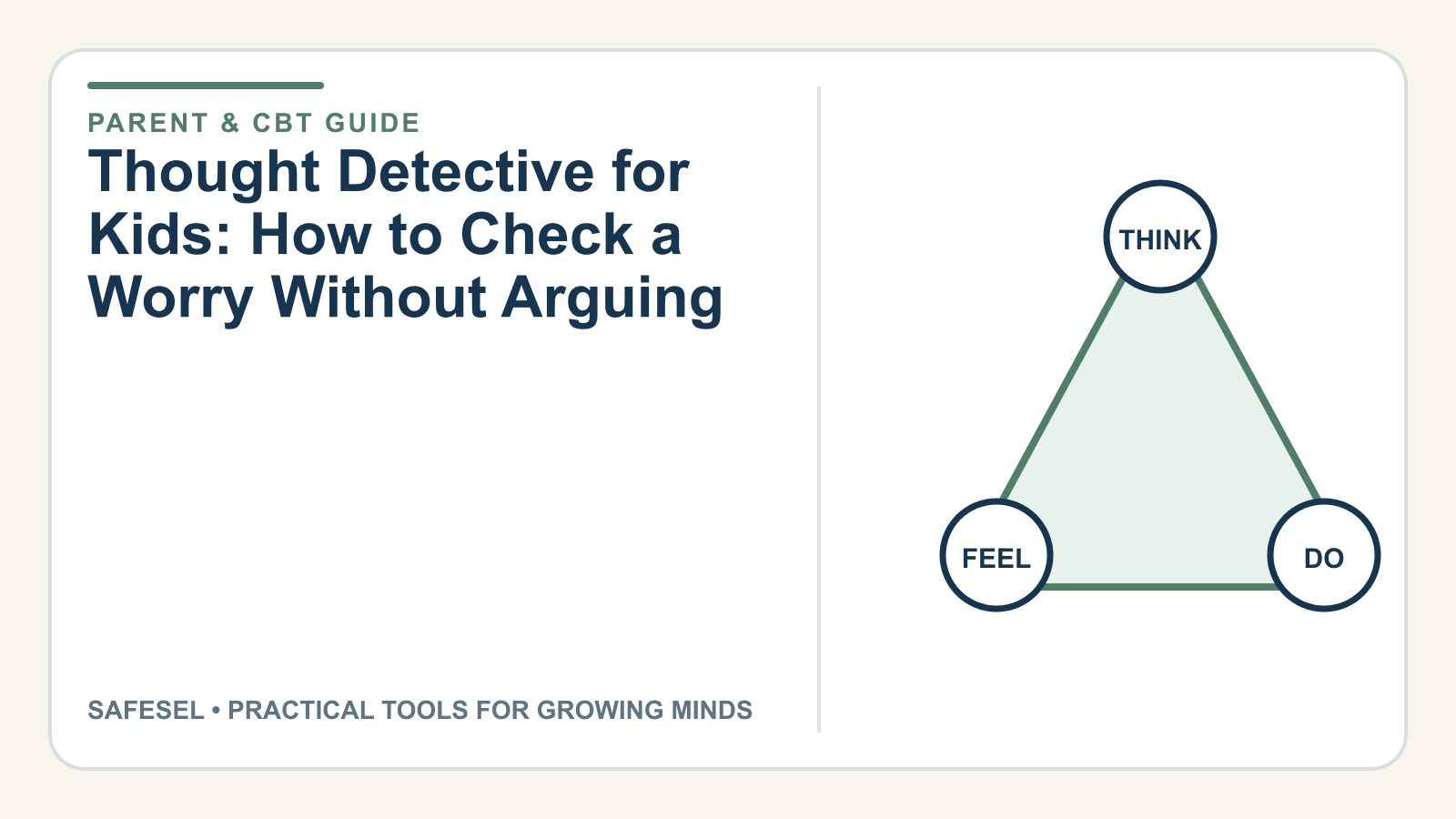
Self-Talk Cards for Children: How to Choose Statements They Can Believe
Choose self-talk cards with realistic words a child can believe. Pair each coping statement with a situation and a small action, without forced positivity.
Anger Support for Ages 10–12: Privacy, Responsibility, and Repair
A practical, evidence-informed guide to anger support for ages 10–12, with concrete examples, accessible next steps, and clear limits on what the guidance can establish.
How to Use a Circle of Control Worksheet Without Dismissing Real Problems
Use a circle of control worksheet to separate choices, influence and problems needing adult help. Keep real bullying, safety and access concerns visible.
Anger Support for Ages 7–9: Teaching Early Warning Signs and Choices
A practical, evidence-informed guide to anger support for ages 7–9, with concrete examples, accessible next steps, and clear limits on what the guidance can establish.
Thought Detective Worksheet for Kids: 5 Skills to Include
A practical guide to the five skills a useful thought detective worksheet should teach, with a worked example and developmentally appropriate prompts.
Anger Support for Ages 4–6: Safety, Simple Language, and Co-Regulation
Children ages 4–6 often need adults to make safety, language and the environment manageable before a coping instruction is usable. A plan for anger at this age should be short enough for adults to remember and concrete enough for a young child to practice later through play.
Choosing a Home Calm-Down Plan for Different Ages and Needs
Build a short home calm-down plan around early signals, accessible choices and adult support. Adapt the response rather than relying on age alone.
From Co-Regulation to Independence: How Support Can Change Over Time
A practical, evidence-informed guide to from co-regulation to independence, with concrete examples, accessible next steps, and clear limits on what the guidance can establish.
How to Use a One-Week Parent Support Plan Without Trying to Fix Everything
A practical guide to using a one-week parent support plan without trying to fix everything, with realistic steps, language adults can use, and ways to judge whether the plan is helping.
Emotional Regulation in Upper Elementary: A Guide for Ages 9–12
A practical, evidence-informed guide to emotional regulation in upper elementary, with concrete examples, accessible next steps, and clear limits on what the guidance can establish.
Parent Handouts for Child Therapy: What Makes Them Useful Between Sessions
Choose parent handouts and printable therapy worksheets with one clear goal, realistic home practice and a useful way to report back to the therapist.