A school refusal support plan should identify why attendance has become difficult, rule out health and safety concerns, coordinate family, school and clinical roles, reduce avoidable barriers and define gradual, reviewable steps toward participation. It should not rely on punishment or treat every absence as the same problem.
Clarify what is happening
Look for patterns by day, lesson, transition, person, physical symptom and recent event. Consider anxiety, bullying, learning difficulty, sensory load, health needs, sleep, family stress and other barriers.
Address health and safety first
Physical symptoms need appropriate medical attention, and safeguarding concerns require the relevant procedures. Supporting attendance must not mean ignoring illness, victimization or unsafe conditions.
Create a coordinated return plan
- Named contact person at school
- Predictable arrival and check-in
- Agreed response to distress and nurse visits
- Necessary accommodations and workload decisions
- Small attendance step with a review date
- Plan for missed learning without overwhelming catch-up
Use calm, consistent language
Adults can communicate confidence in the plan without arguing about whether distress is real. Avoid lengthy morning negotiations, threats or surprise changes. The child should know what support is available and what the next step is.
Review data and adjust
Track attendance, distress, recovery and support required. If the plan is not improving access, revisit the formulation and involve qualified health, mental health or educational professionals as needed.
This guide answers a different question from immediate school-anxiety advice
If the immediate question is how to respond on a difficult morning, start with the SafeSEL guide on what to do when a child refuses school because of anxiety. This article focuses on the next layer: building a written, coordinated return-to-school plan when absence or partial attendance has become a pattern. The two pages therefore support different stages of the same problem rather than competing for the same intent.
Build the plan around the barrier—not around a generic attendance target
A plan for separation anxiety may emphasize a predictable handoff and brief caregiver communication. A plan for bullying must address safety. A plan for sensory overload or an unidentified learning difficulty requires accommodations and assessment. A plan for depression or medical illness needs appropriate healthcare. “Return full time tomorrow” is not a formulation.
A minimum viable written plan
- Named family and school contacts, including who updates the clinician when authorized.
- The current barrier hypothesis and evidence still being gathered.
- A specific first attendance step and what support makes it possible.
- Arrival, class transition, nurse visit and early-departure procedures.
- Learning priorities that prevent an impossible catch-up load.
- A review date, measures of access and distress, and criteria for changing the plan.
Example: measure support needs as well as attendance
A student moves from no attendance to two morning lessons but spends most of that time in the counselor’s office. Attendance has increased, yet classroom access remains limited. Recording location, recovery and adult support prevents the team from declaring success too early and helps choose the next step.
Related SafeSEL guides
What to Do When a Child Refuses School Because of Anxiety — manage the immediate parent response
Parent & Caregiver Support Resources — browse the parent resource hub
Common reasons a return plan fails
- The plan begins with a step the child cannot yet access.
- Every adult uses different language or consequences.
- The child returns to the same bullying, sensory or learning barrier.
- Missed work creates an impossible second problem.
- Leaving school becomes the only available response to distress.
- The team measures presence but not classroom access, recovery or support required.
A failed step is information, not proof that the child is unwilling or that gradual return never works. Review whether the barrier hypothesis was wrong, the support was unavailable, the step was too large or a health and safety issue was missed. Record the revision and avoid repeatedly restarting the same plan under a new name.
Parent & Caregiver Resources — browse the parent resource hub
Give the attendance support plan a named owner and backup
Specify who receives the child, who communicates a change and what happens if that person is absent. A school counselor may coordinate part of this work, but the plan should name actual responsibilities rather than assume one role handles every barrier. Check that classroom staff know the supports relevant to their part of the day.
Review student attendance alongside access to learning and the support required. A child present in the building but unable to reach a class needs a different next step from one participating comfortably for a shorter day. Record the distinction and agree who will follow up, rather than repeatedly increasing the attendance target without changing the barrier.
A practical next step
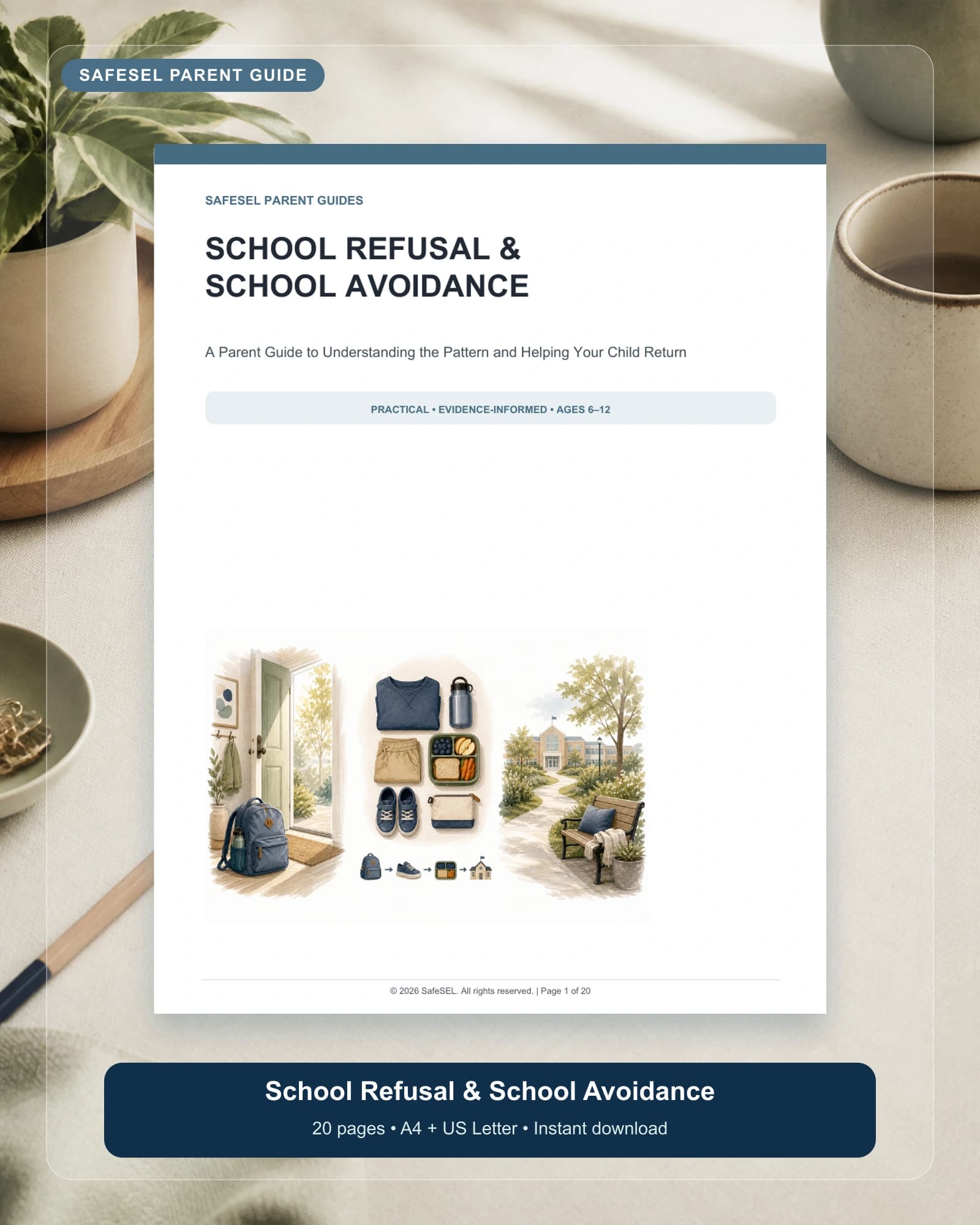
Coordinate barriers, roles, return steps and reviews with the School Refusal Parent Support Toolkit.
Browse the complete Parent & Caregiver resource library.
For a fuller parent-facing walkthrough, read When a Child Refuses School: What Parents Should Check Before Pushing Harder.
Sources and further reading
- School Attendance — American Academy of Pediatrics (2024)
- Supporting Students with Anxiety in School — American Academy of Pediatrics (2023)
- Anxiety and Children — American Academy of Child and Adolescent Psychiatry