After a friendship rupture, exclusion or bullying concern, parents should first create a low-pressure route for the child to communicate. Listen for what happened, what the child wants, whether there is a power imbalance or safety issue and which adults need to act. Confidence grows through safety, accurate support and workable choices—not forced disclosure or generic praise.
Open the door without turning the conversation into an interview
Begin with an observation and an invitation: “You seemed quiet after school. I’m here if you want company or want to tell me anything.” Then allow a pause. Repeating questions can make a child protect themselves by saying less.
Communication may come through fragments, behavior, writing or a later conversation. Accepting a slower route does not mean ignoring serious changes in mood, attendance or safety.
Clarify the pattern before naming it
A disagreement between relatively equal peers is not the same as repeated aggression involving a power imbalance. Deliberate exclusion, coercion, threats, humiliation and online behavior may require different school or safeguarding responses.
Ask what happened more than once, who was present, what the child tried, whether they feel safe and what they fear will happen if adults become involved. Do not promise secrecy you cannot keep when safety is at stake.
Validate without confirming every interpretation
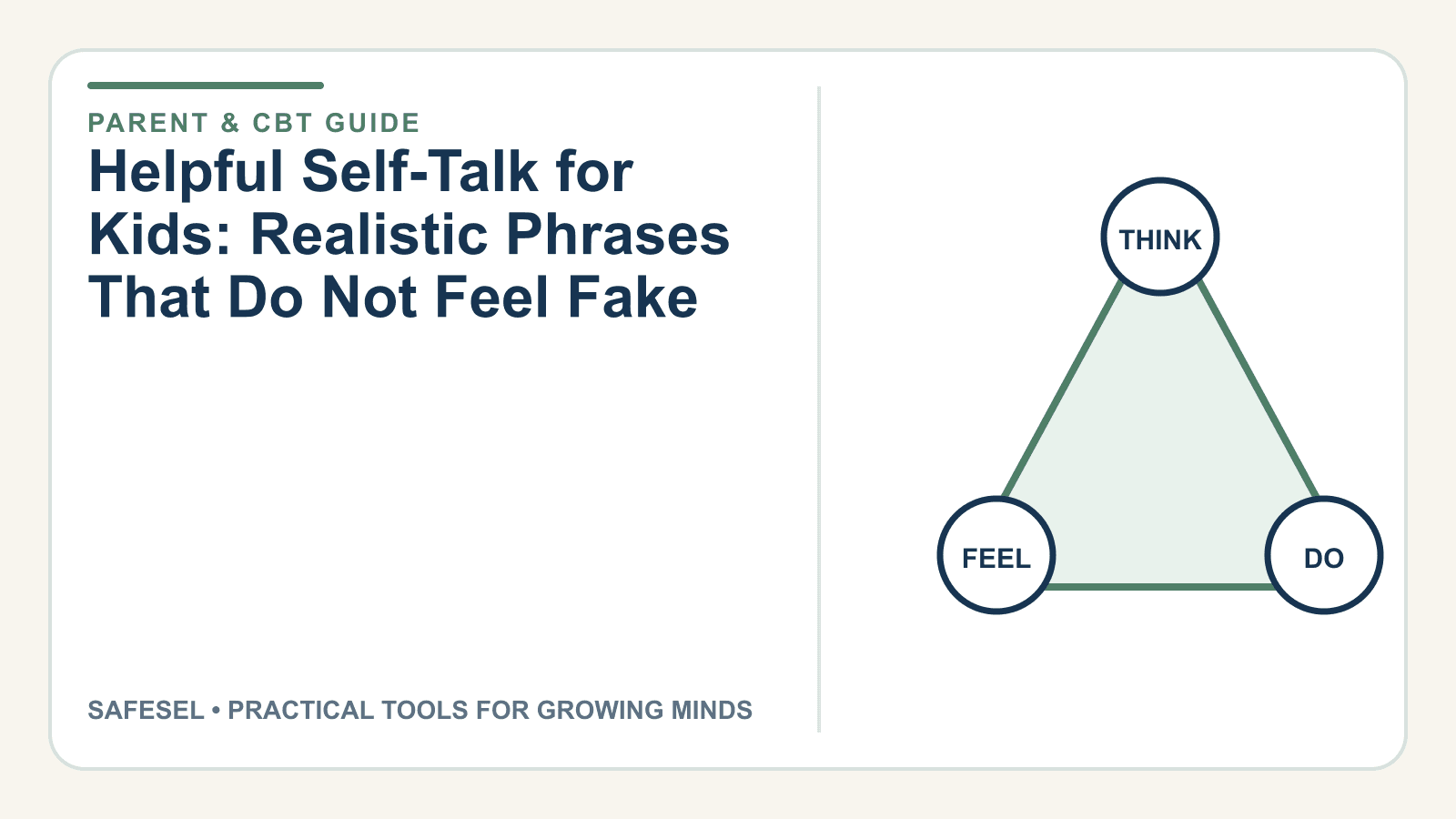
You can say, “That sounds painful,” without deciding immediately that every assumption is correct. Help the child separate what they saw or heard from what they fear it means about their worth.
Avoid minimizing the problem as drama. Also avoid making the child responsible for repairing a relationship that is unsafe or persistently one-sided.
Restore choices and useful support
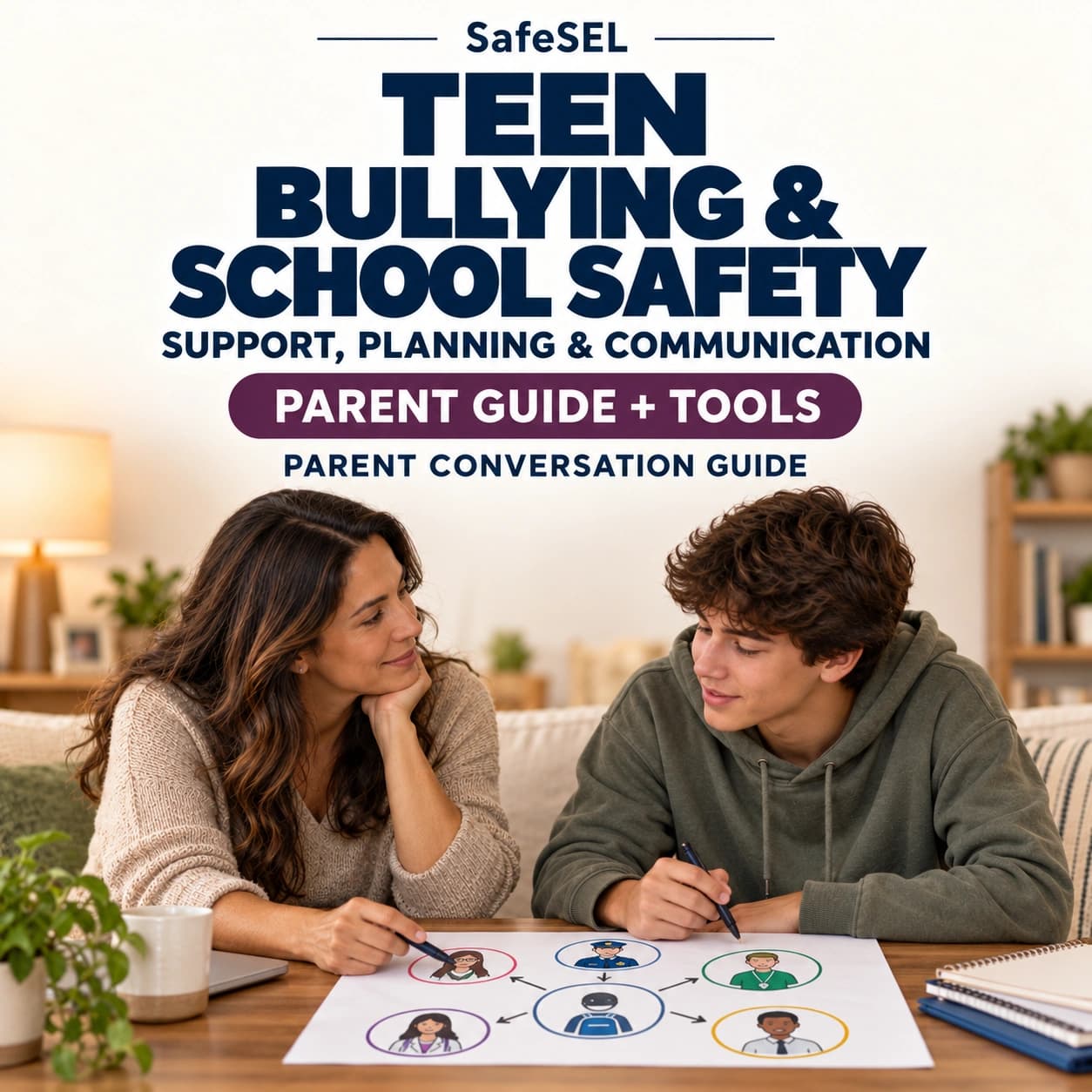
Ask whether the child wants help listening, planning words, documenting incidents, contacting school or finding a safer place at break. Adults remain responsible for protection, but the child can have a voice in how support is delivered.
Practise one response only if it fits the situation. Assertive words may help in some conflicts; they are not a substitute for adult intervention when bullying continues or retaliation is likely.
Build confidence through evidence, not slogans
Notice specific actions: asking for help, setting a boundary, trying a new group or recovering after disappointment. Broad praise such as “You are amazing” may feel disconnected when a child is hurting.
Seek additional help when peer problems are persistent or accompanied by school avoidance, sleep change, self-harm talk, major withdrawal or significant loss of functioning. Immediate safety concerns require urgent local support.
A practical next step
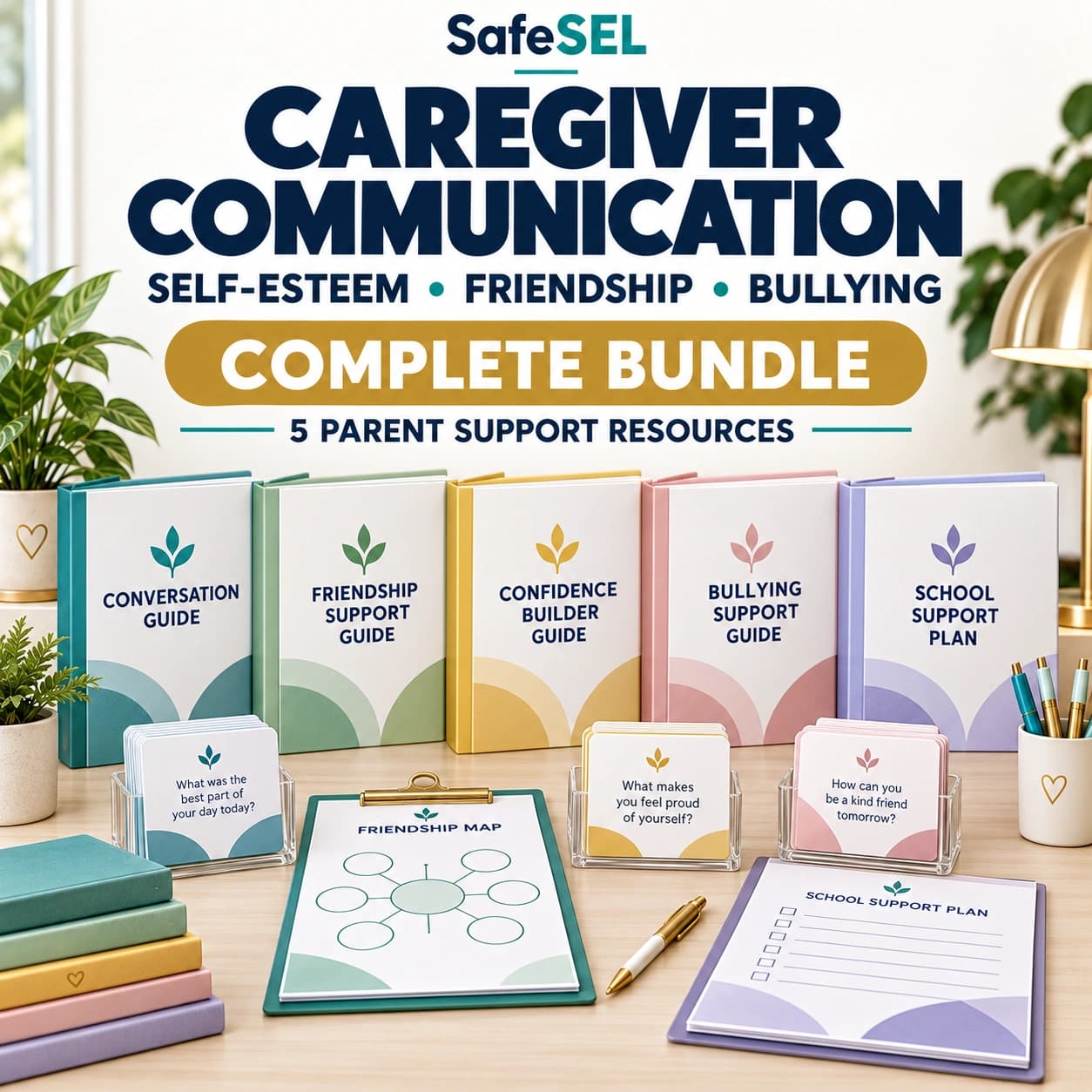
For a structured set of materials, see the Communication, Confidence & Peer Relationships Parent Bundle.
You can also browse parent and caregiver resources or continue with our
bullying or conflict in children.
Sources and further reading
- What You Can Do — StopBullying.gov (2024)
- Why Bullying Hurts All Children—and What Parents Can Do About It — American Academy of Pediatrics / HealthyChildren.org (2025)
- Communication Skills Start at Home — American Academy of Pediatrics / HealthyChildren.org (2023)