Therapy can support a child living with chronic illness by addressing uncertainty, disrupted routines, identity, grief, social changes, school access, family stress and developmentally appropriate autonomy. Psychological care should complement medical treatment and must not imply that symptoms are caused by attitude or insufficient coping.
Understand the illness context
Learn enough about the condition, treatment burden, fatigue, pain and unpredictability to avoid unrealistic goals. Stay within scope and obtain medical clarification through appropriate channels rather than making assumptions.
Make room for mixed responses
Children may feel fear, anger, grief, relief, boredom, embarrassment or nothing they can name. Adjustment is not a linear path toward positivity. Normalizing complexity is different from dismissing persistent distress.
Assess participation and identity
- School attendance and accommodations
- Friendships and disclosure choices
- Family roles and sibling impact
- Changes in independence
- Activities, strengths and identities beyond illness
Support agency without blame
Offer choices that are genuinely available and help the child communicate needs. Avoid framing adherence, optimism or calmness as proof of being a “good patient.” Medical decisions remain with the qualified care team and family.
Coordinate when mental health needs intensify
Persistent anxiety, depression, traumatic stress, self-harm risk or major functional change requires appropriate assessment and care coordination. Therapy is supportive treatment, not a cure for the medical condition.
Adjustment is affected by the condition and by everything the condition changes
Symptoms, pain and treatment matter, but so do missed school, altered friendships, family logistics, financial stress, uncertainty and the loss of activities that supported identity. A child may be coping well with procedures while grieving reduced independence, or appear emotionally stable because there has been little safe space to discuss what changed.
Avoid the resilience trap
Calling a child resilient can recognize real strength, but it can also become a reason to overlook fatigue, anger or support needs. Ask what the child is carrying, what adults are handling and what has become harder to access. Coping should expand options; it should not require the child to make illness easier for everyone else.
Coordinate practical and emotional support
- Clarify medically necessary limits with the care team rather than guessing.
- Identify school accommodations and a communication route for changing capacity.
- Support age-appropriate choice about disclosure to peers.
- Make space for sibling and caregiver impact without assigning the child responsibility for it.
- Preserve interests, roles and relationships that are not defined by illness.
Example: pacing instead of all-or-nothing participation
A child wants to return to an after-school activity but cannot manage the full session. Therapy can help name uncertainty and advocate for a shorter, flexible role while medical guidance defines safe limits. The aim is meaningful participation with realistic pacing, not proving determination by ignoring symptoms.
Related SafeSEL guides
Medical Anxiety vs Pediatric Medical Traumatic Stress — differentiate anticipatory fear and traumatic stress responses
Child Therapist Resources & Clinical Tools — browse the clinician resource hub
Revisit the formulation when the medical picture changes
Adjustment work is not completed once a child understands the diagnosis. Symptoms, prognosis, medication, mobility, school access and family capacity may change. A new procedure can reactivate fear; an improvement can bring pressure to “catch up”; a stable period can create space for grief that was postponed during crisis. Schedule review around transitions rather than assuming one static coping plan.
Be careful with psychological explanations for physical symptoms. Anxiety can intensify pain, nausea or fatigue, but therapists should not infer that symptoms are “just anxiety” or advise changes to medical treatment. Document what the child reports, coordinate within consent and scope, and direct medical questions to the qualified team.
Therapy Printables for Kids — browse the clinician resource hub
Keep emotional support connected to a real choice
Ask which part of the coming week the child most wants help with: explaining an absence, joining a shorter activity or deciding what to tell a friend. Clarify the medical limits with the appropriate team. Then work on the communication or planning task within those limits, without promising that a positive attitude will change physical capacity.
Therapy resources can help map the people involved and prepare a conversation. Leave room to update the page when capacity changes. A child who needs more help this week has not failed an adjustment goal; the plan may need a different level of support or a new medical clarification.
A practical next step
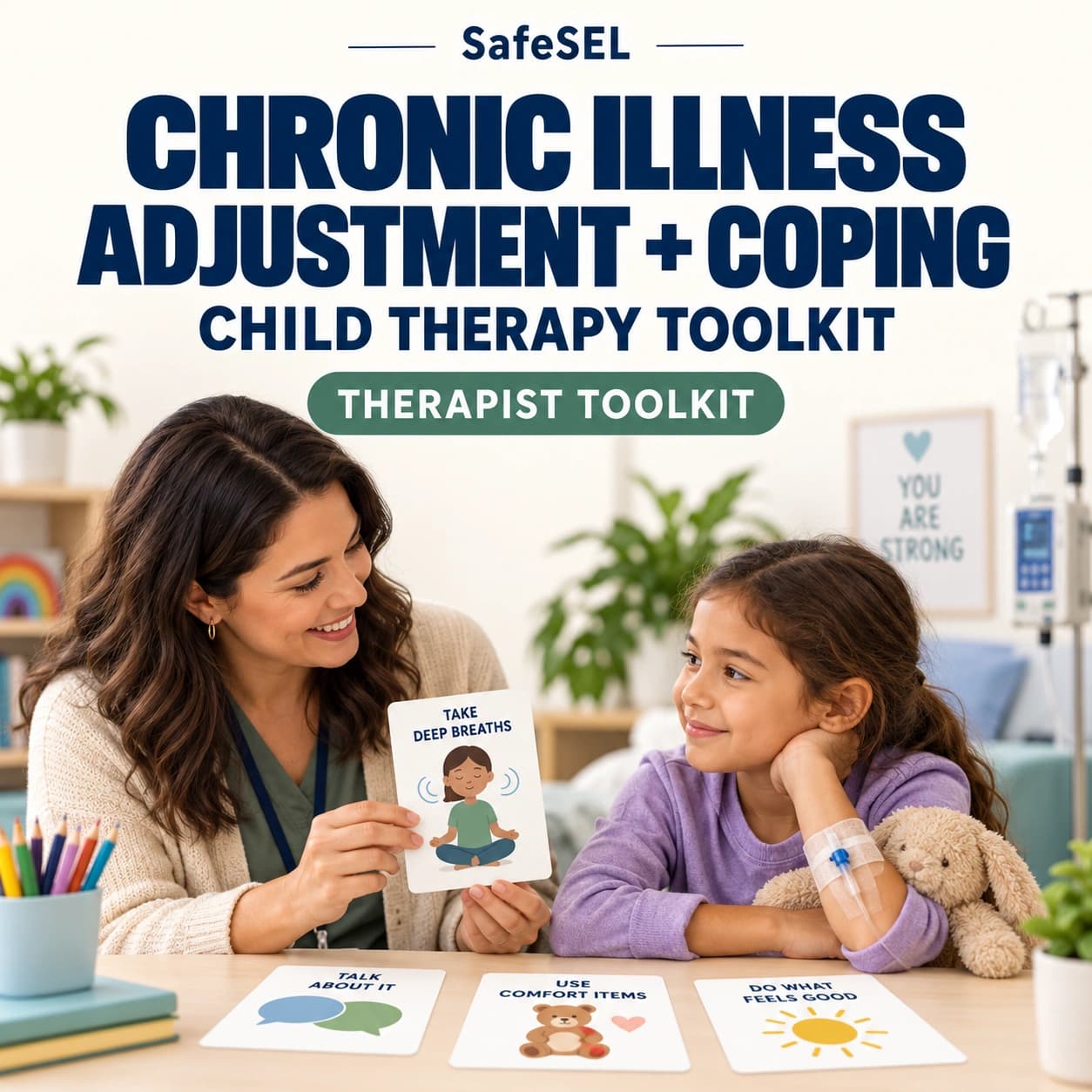
Structure adjustment, identity, family and school conversations with the Chronic Illness Adjustment Toolkit for Child Therapy.
Browse the complete child therapist resource library.
Sources and further reading
- Clinical and Economic Burden of Mental Disorders Among Children With Chronic Physical Conditions — Centers for Disease Control and Prevention (2016)
- About Children's Mental Health — Centers for Disease Control and Prevention (2025)
- Pediatric Medical Traumatic Stress Toolkit for Health Care Providers — National Child Traumatic Stress Network (2014)