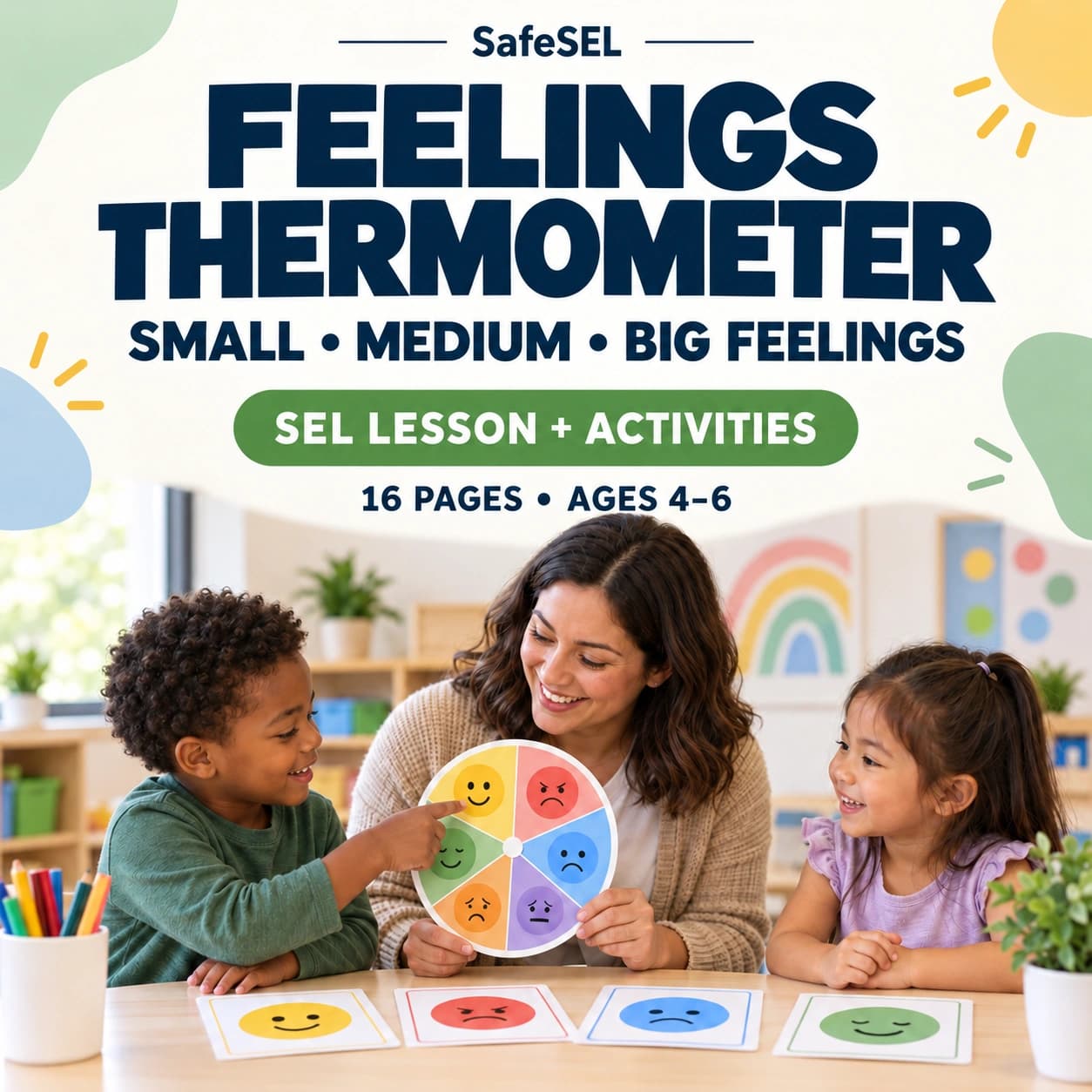
Social and emotional learning helps children develop self-awareness, emotional regulation, relationship skills, social awareness and responsible decision-making through explicit teaching and repeated practice.
Learn the core social-emotional learning skills children need and explore practical SEL activities, lessons and printable resources for elementary ages.
Social-emotional learning in plain language
Social-emotional learning, often shortened to SEL, is the explicit teaching and practice of skills children use to understand emotions, work toward goals, build relationships and make thoughtful decisions. It is not a demand that children appear calm or cheerful. Useful SEL helps children notice what is happening, communicate needs and choose safer or more effective responses.
Social emotional learning in the classroom: one complete example
Social emotional learning in the classroom might begin with a fictional disagreement over a shared game. Children identify different perspectives, practise a sentence for joining the conversation and consider what a fair next step could be. The adult models the language and offers accessible ways to participate.
SEL activities for elementary students need a learning goal beyond finishing a page. If the goal is asking for help, look for whether children can identify a suitable person and rehearse a request. Social emotional learning worksheets can support that practice, but completing them does not by itself demonstrate how a skill transfers into a real situation.
Core skills children practise
A balanced elementary SEL approach includes emotional vocabulary, self-awareness, regulation, perspective taking, communication, problem solving and repair. These skills overlap. A child may need to notice body signals before choosing a coping strategy, or understand another person’s point of view before repairing a friendship conflict.
What SEL looks like in elementary settings
SEL can be taught in short lessons, classroom routines, counseling groups and individual conversations. Practical instruction names one skill, models it, gives children a low-pressure opportunity to practise and returns to the skill in real situations. Worksheets and cards are most useful when they support conversation and rehearsal rather than becoming tests.
Choosing age-appropriate activities
For younger children, use concrete examples, visuals, movement and short choices. Older elementary students often benefit from realistic social scenarios, more privacy and opportunities to explain nuance. Keep reading and writing demands separate from the emotional skill whenever possible.
Building a usable SEL sequence
Start with shared language for feelings and body cues, then teach several coping and communication options. Add problem solving, friendship and decision-making practice. Revisit skills across the year instead of expecting one lesson to transfer automatically to the playground, home or a stressful classroom moment.
How SafeSEL resources fit
SafeSEL provides printable lessons, worksheets, stories, cards and games that can supplement an existing program or help adults build a flexible sequence. Choose only the pages that match the current goal and adapt examples to the child, group and setting.
Related guide: Coping Skills for Kids
Related guide: Emotions & Feelings for Kids: Skills, Activities & Resources