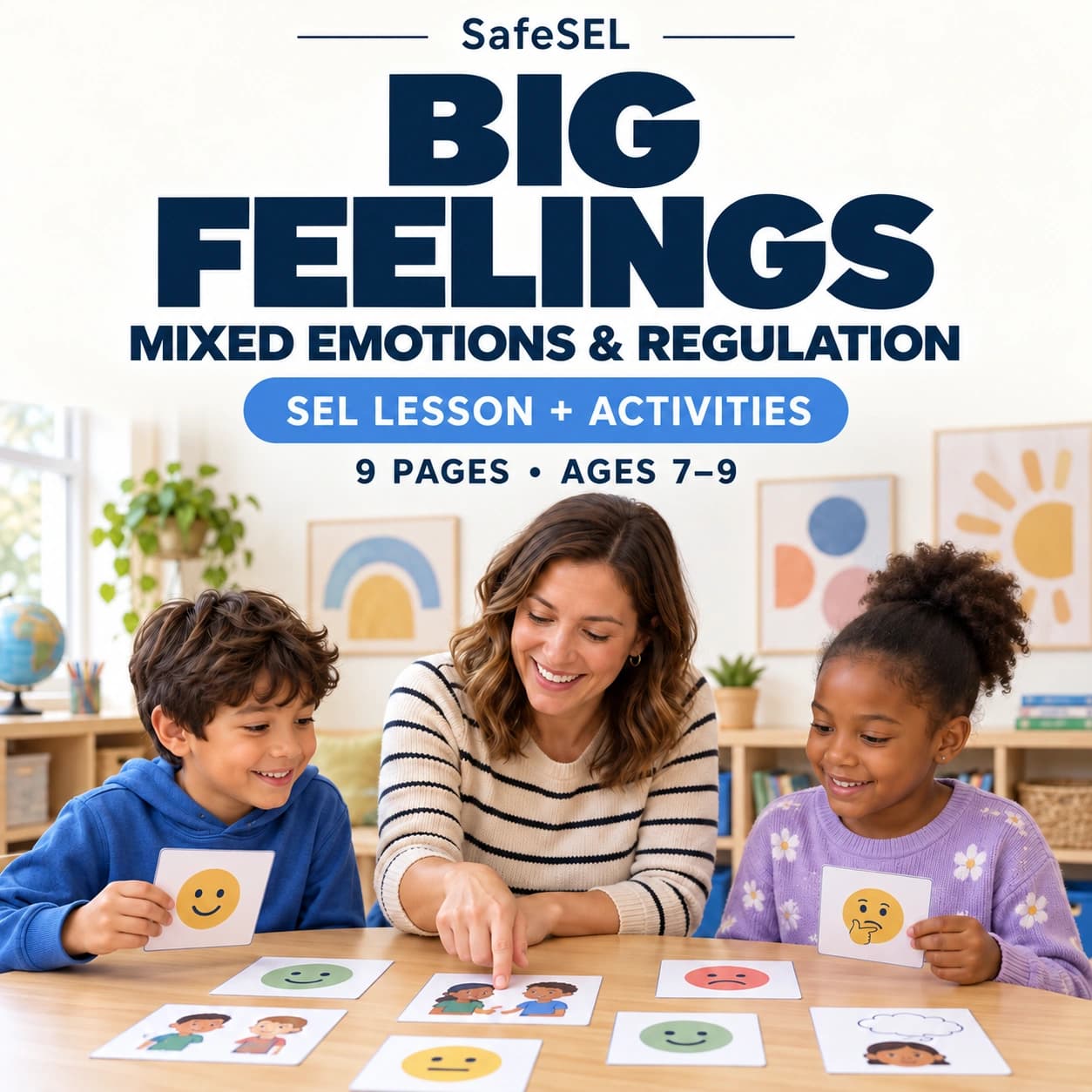
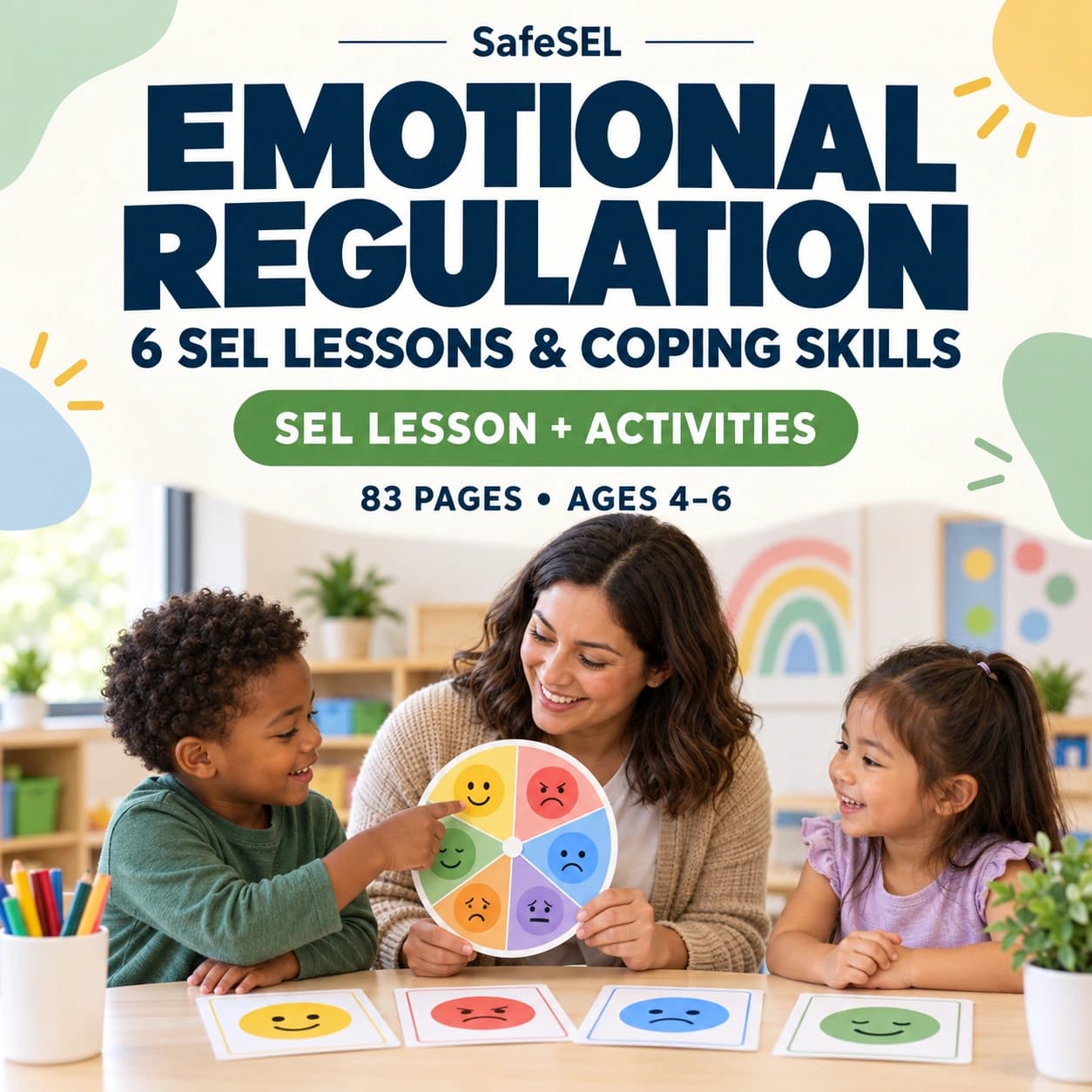
Social and emotional skills grow when children learn to identify feelings, understand their intensity and choose a response that fits the situation.
Help kids identify, name and understand emotions with practical activities, feelings charts, check-ins and printable emotional-literacy resources.
Why emotional vocabulary matters
Words for feelings give children more ways to describe an experience than “good,” “bad” or “mad.” A larger vocabulary can support communication, but naming an emotion is not the same as regulating it. Children also need help noticing intensity, body signals, context and what the feeling may be communicating.
Use an emotions chart without making it a guessing test
An emotions chart offers possible words; it cannot tell an adult exactly what a child feels. Start with “Does any of this fit, or is it something else?” A child can select more than one word, decline to answer or describe a body sensation instead. Keep a private option for personal responses.
For emotional literacy activities, compare two fictional characters in the same situation. One may feel relieved when a game ends while another feels disappointed. Feelings and emotions activities can explore those differences without grading a child’s own feeling as correct or incorrect. The aim is more useful communication, not perfect matching to a face picture.
Feelings are information, not instructions
An emotion can provide useful information without deciding the next action. Anger may signal unfairness or a crossed boundary, while anxiety may signal uncertainty or possible danger. Adults can validate the feeling and still guide safe behavior and thoughtful choices.
Use charts as conversation tools
A feelings chart works best when it opens a conversation rather than requiring the one correct label. A child may point to several words, choose an image, describe a body sensation or say they are unsure. Accepting uncertainty keeps the activity accessible and respectful.
Connect words with body and situation
Ask what happened, what the child noticed in their body and what urge appeared. Compare several moments rather than treating one answer as a fixed trait. This helps children see patterns and distinguish similar experiences such as worry, excitement, frustration and embarrassment.
Practise with low-pressure examples
Stories, cards and hypothetical situations let children explore emotions without disclosing personal information. Use realistic examples and allow more than one reasonable interpretation. The goal is flexible noticing, not guessing what an adult wants to hear.
Choose the right printable
Select a chart or worksheet with age-respectful visuals, manageable language and more than one response format. Use only the relevant section, then connect it to a practical next step such as asking for help, taking space or choosing a coping strategy.
Related guide: Self-Regulation in Children
Related guide: Social Stories for Kids: Examples, Uses and Printable Resources