Worksheets
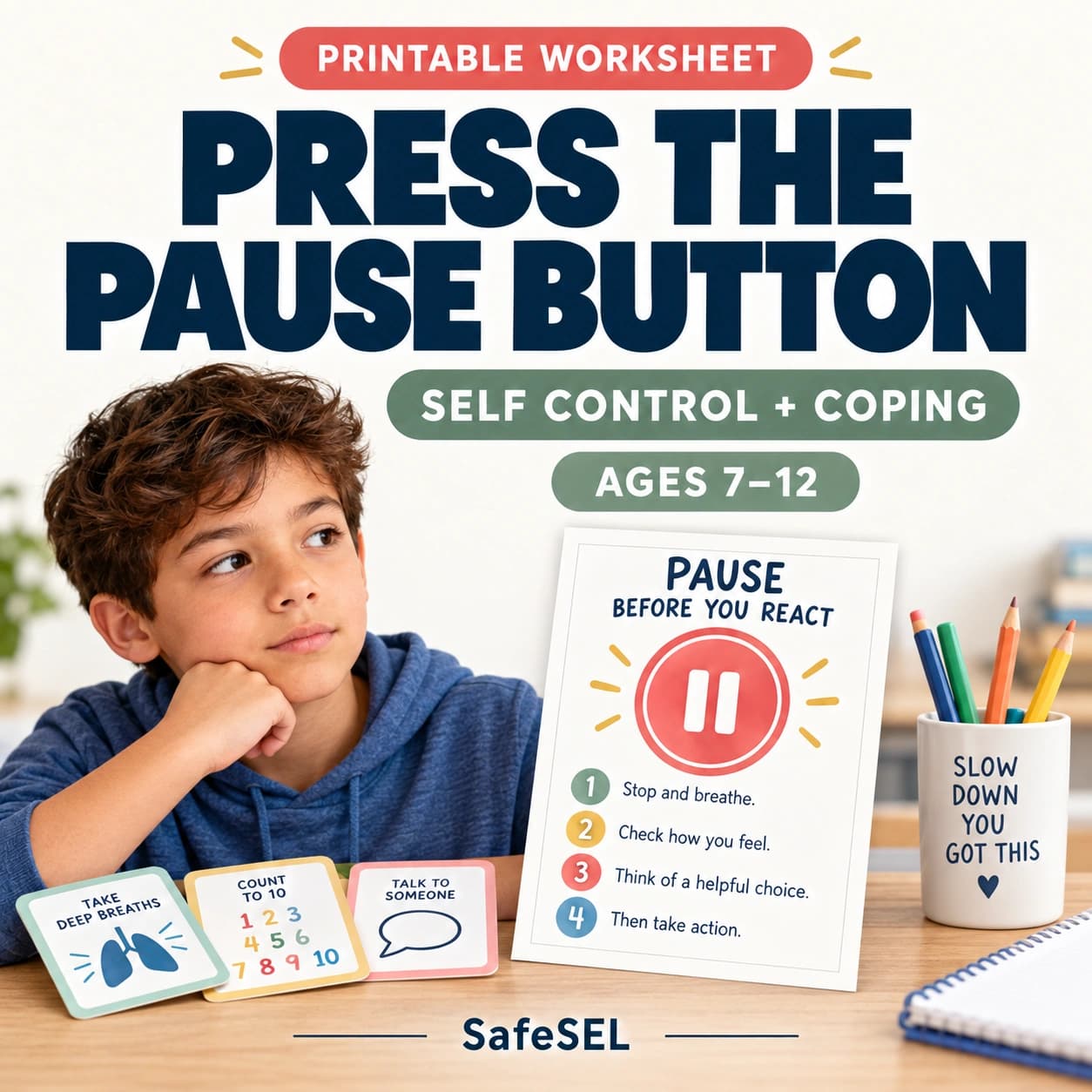
Self Control Worksheet for Kids
Ages 7–12PNG
Self Control Worksheet for Kids: a print-ready worksheet for ages 7–12 with clear prompts for guided practice.
Explore visual calming strategies, printable calming cards and practical activities for classrooms, counseling and home.
Self Control Worksheet for Kids: a print-ready worksheet for ages 7–12 with clear prompts for guided practice.
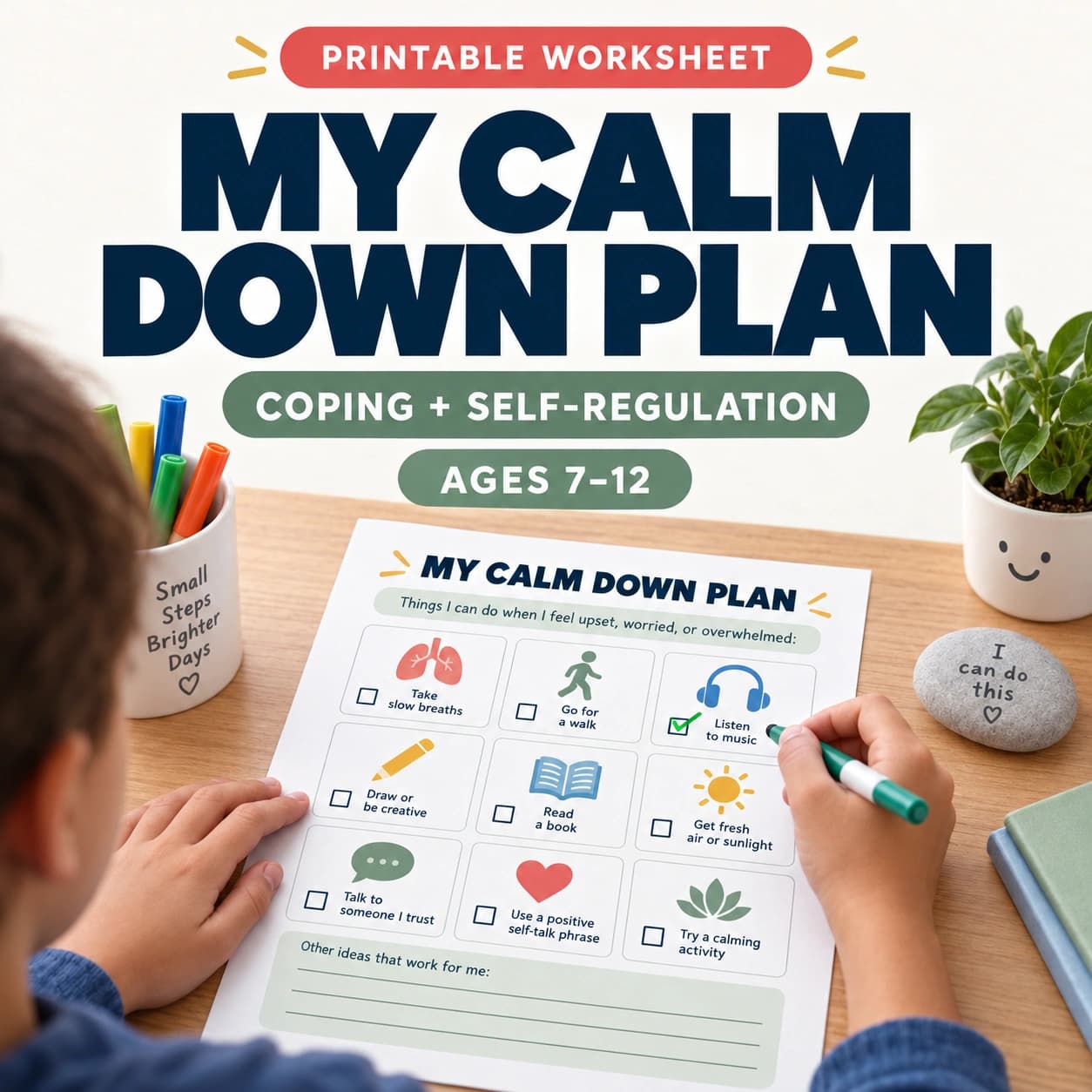
Calm Down Plan Worksheet: a print-ready worksheet for ages 7–12 with clear prompts for guided practice.
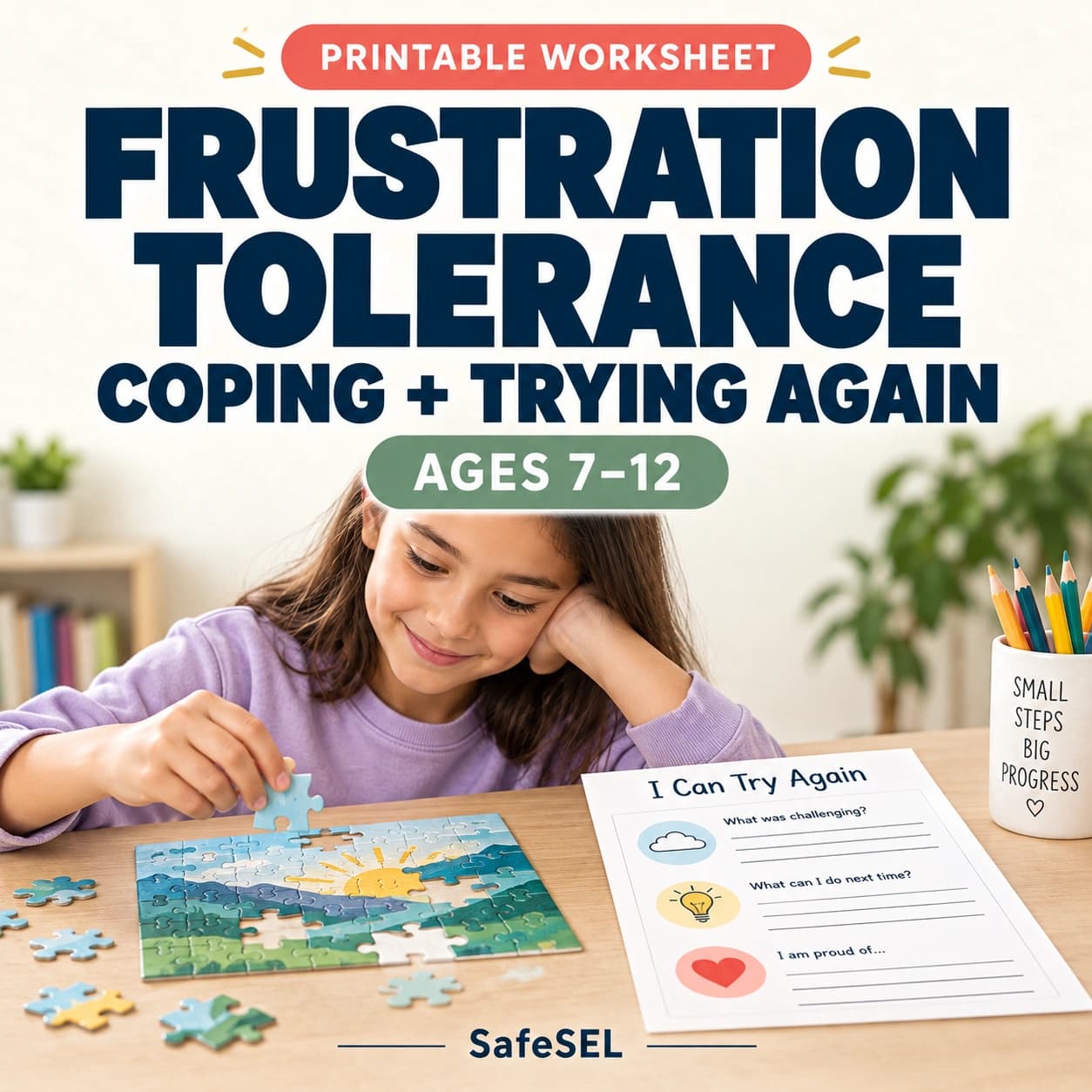
Frustrated Kids SEL Worksheet: a print-ready worksheet for ages 7–12 with clear prompts for guided practice.
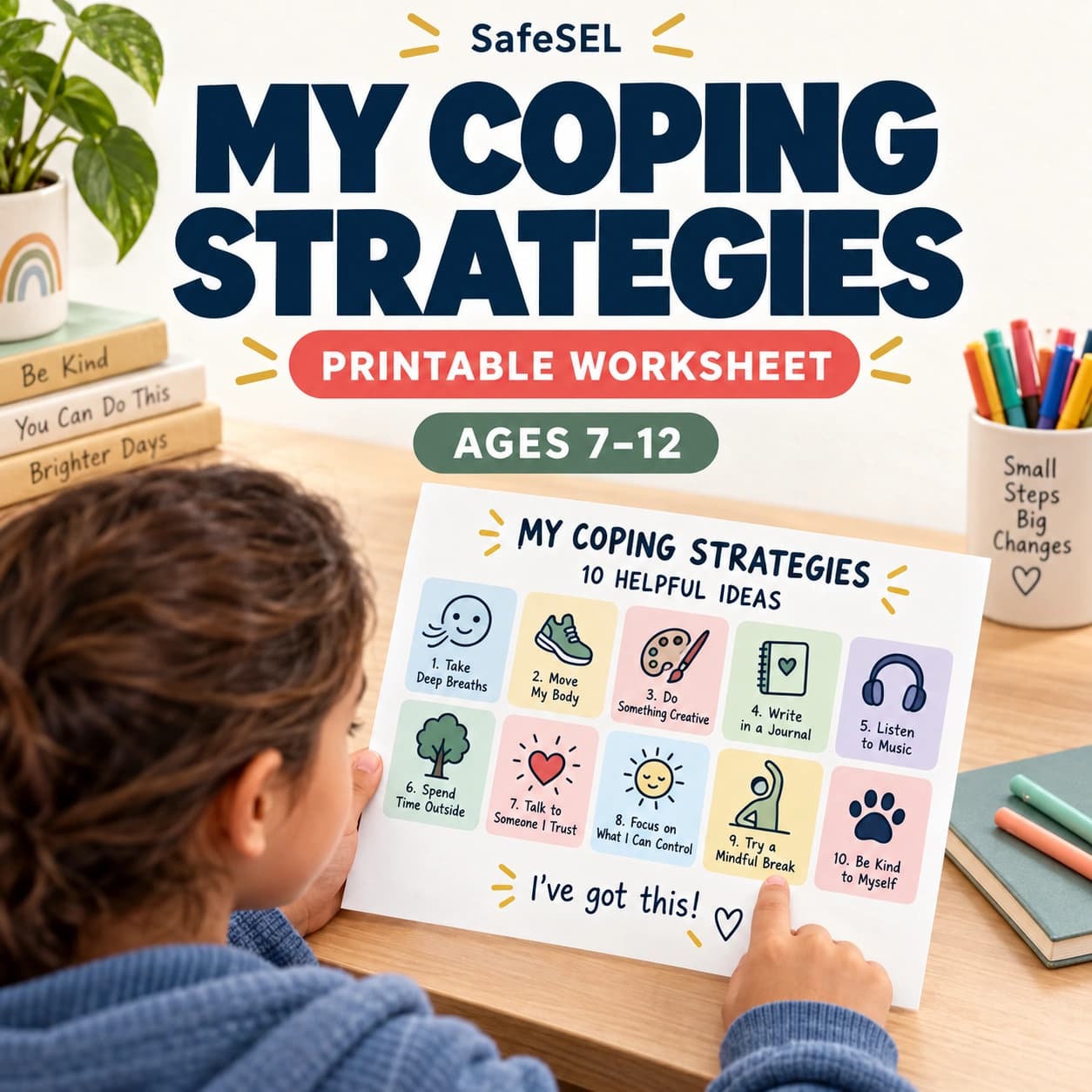
Use My Coping Strategies as a focused worksheet for noticing rising emotion and choosing a calming response that fits the situation. The single printable JPG supports guided reflection and practice in a classroom, counseling session or at home.
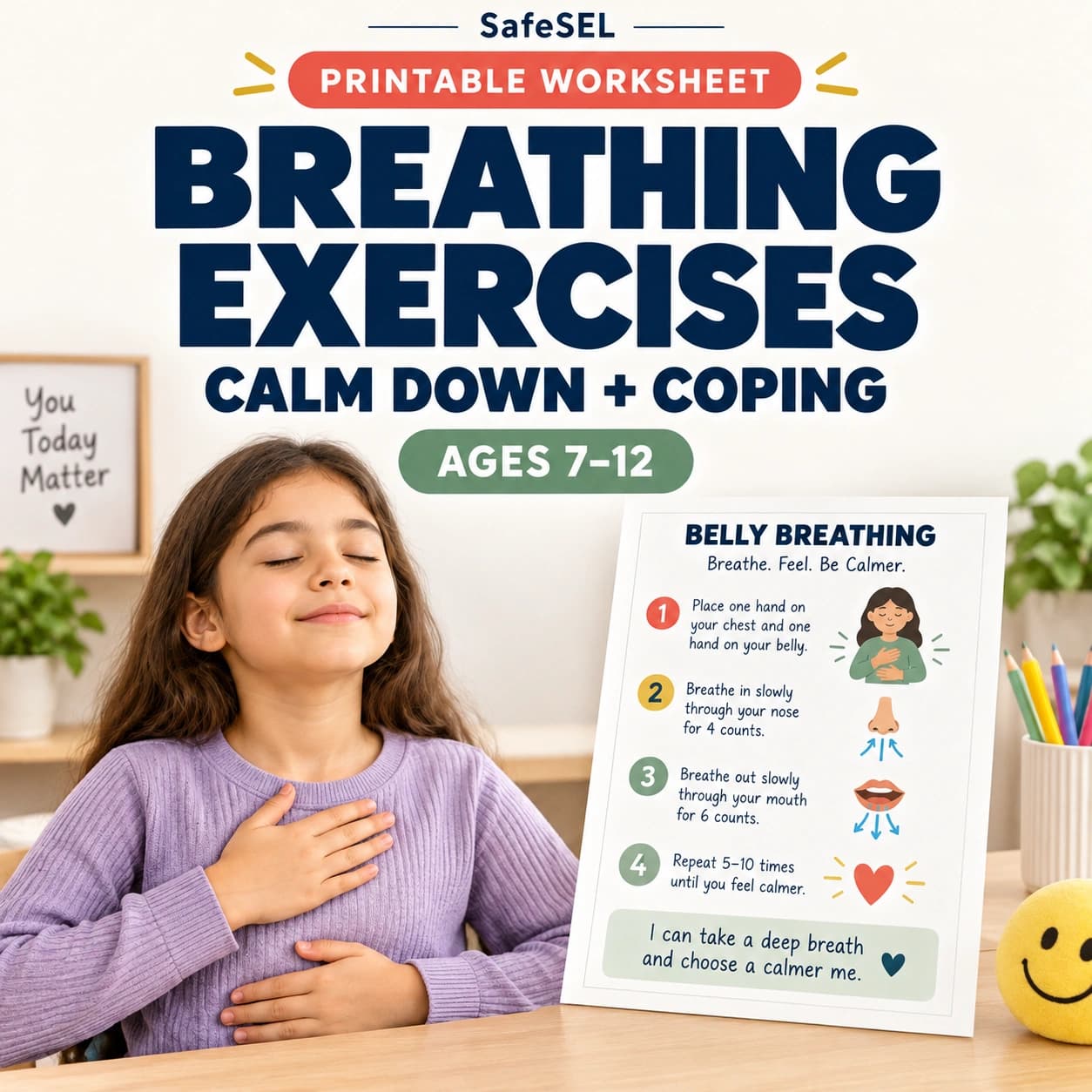
Breathing Calm Down Worksheet: a print-ready worksheet for ages 7–12 with clear prompts for guided practice.
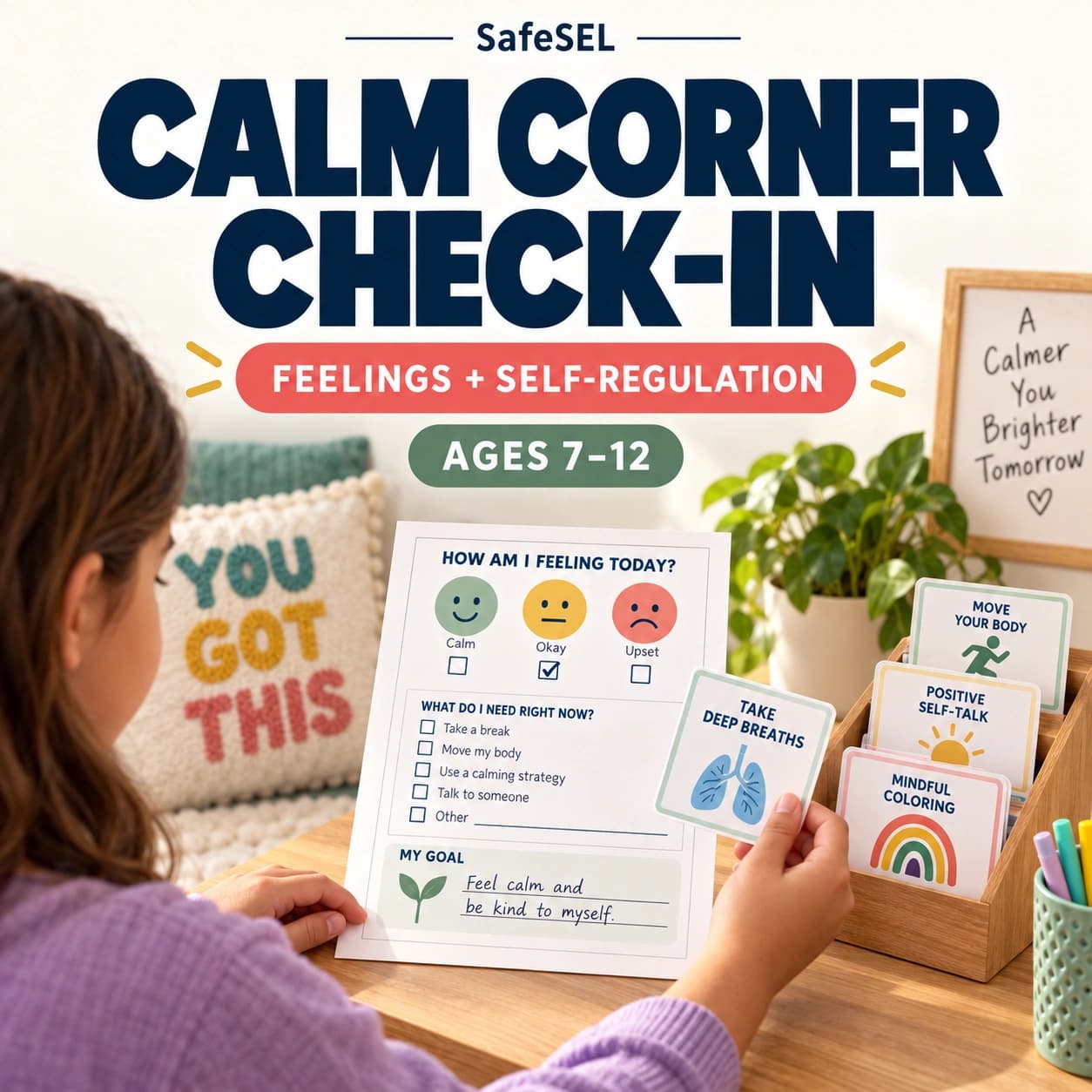
Calm Corner Check In Sheet: a print-ready worksheet for ages 7–12 with clear prompts for guided practice.
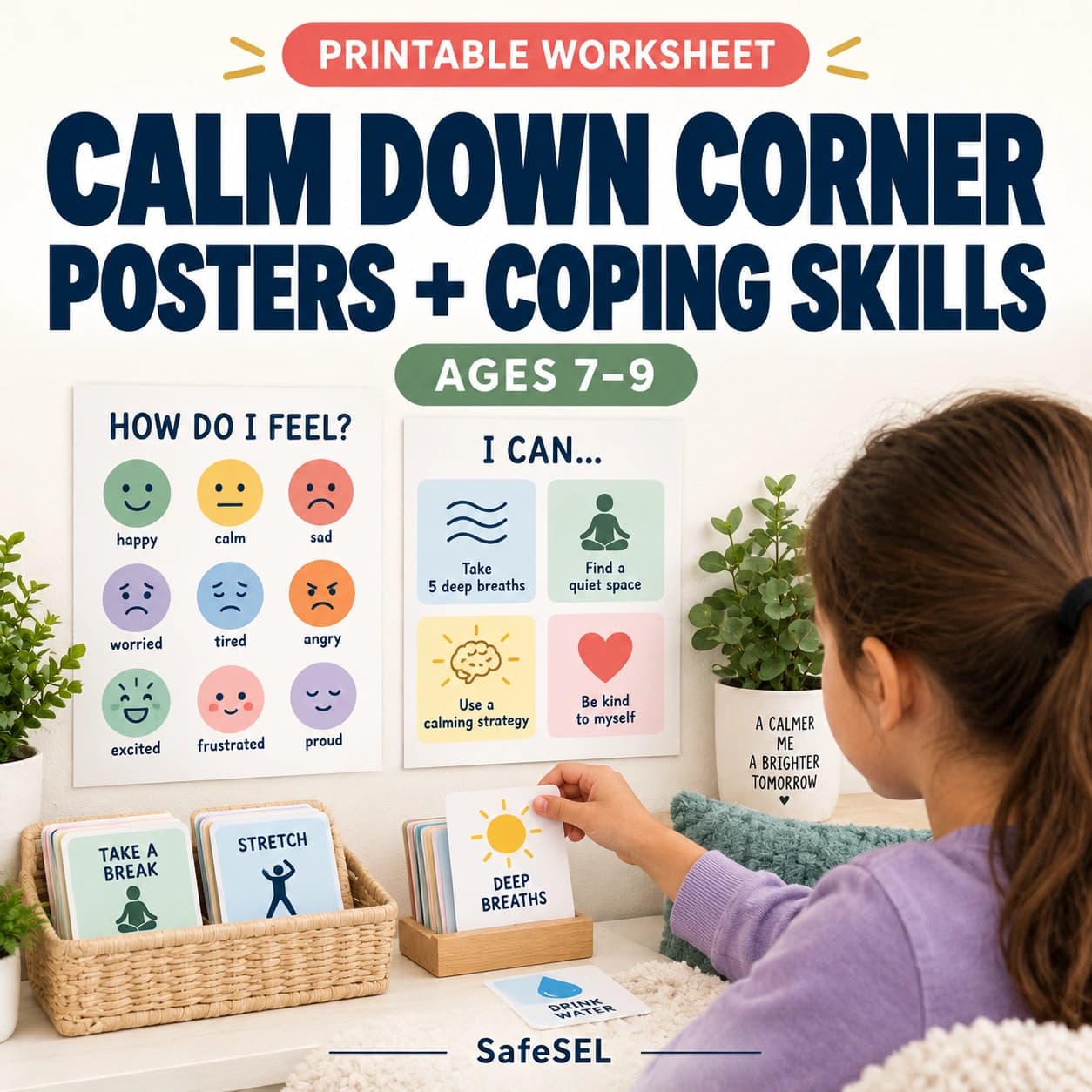
Printable calm-down corner materials and regulation tools for children ages 7–9. Introduce the visuals with an adult and use them to support calm-down routines.
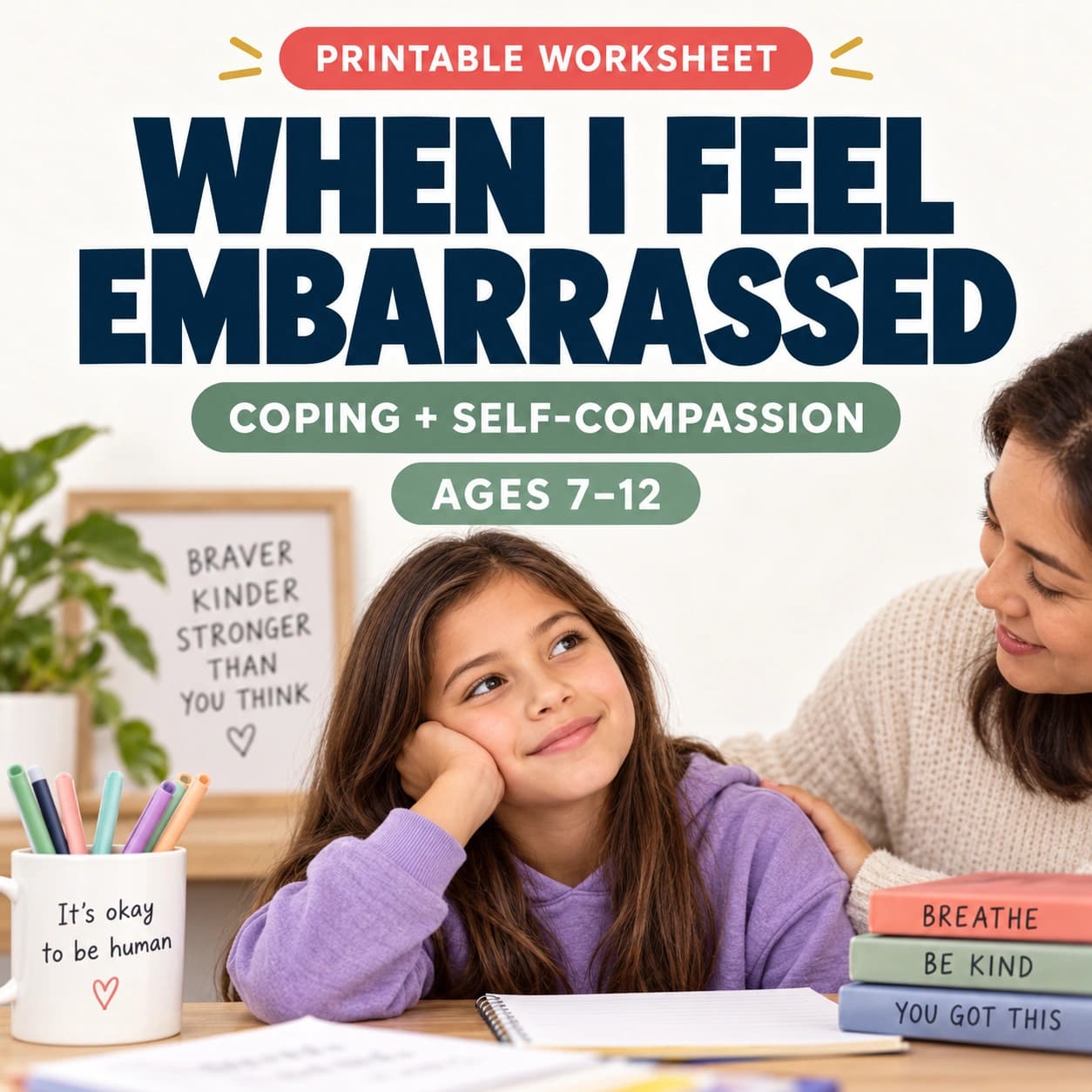
Embarrassment Social Emotional Learning Worksheet for Kids Ages 7-12: a print-ready worksheet for ages 7–12 with clear prompts for guided practice.
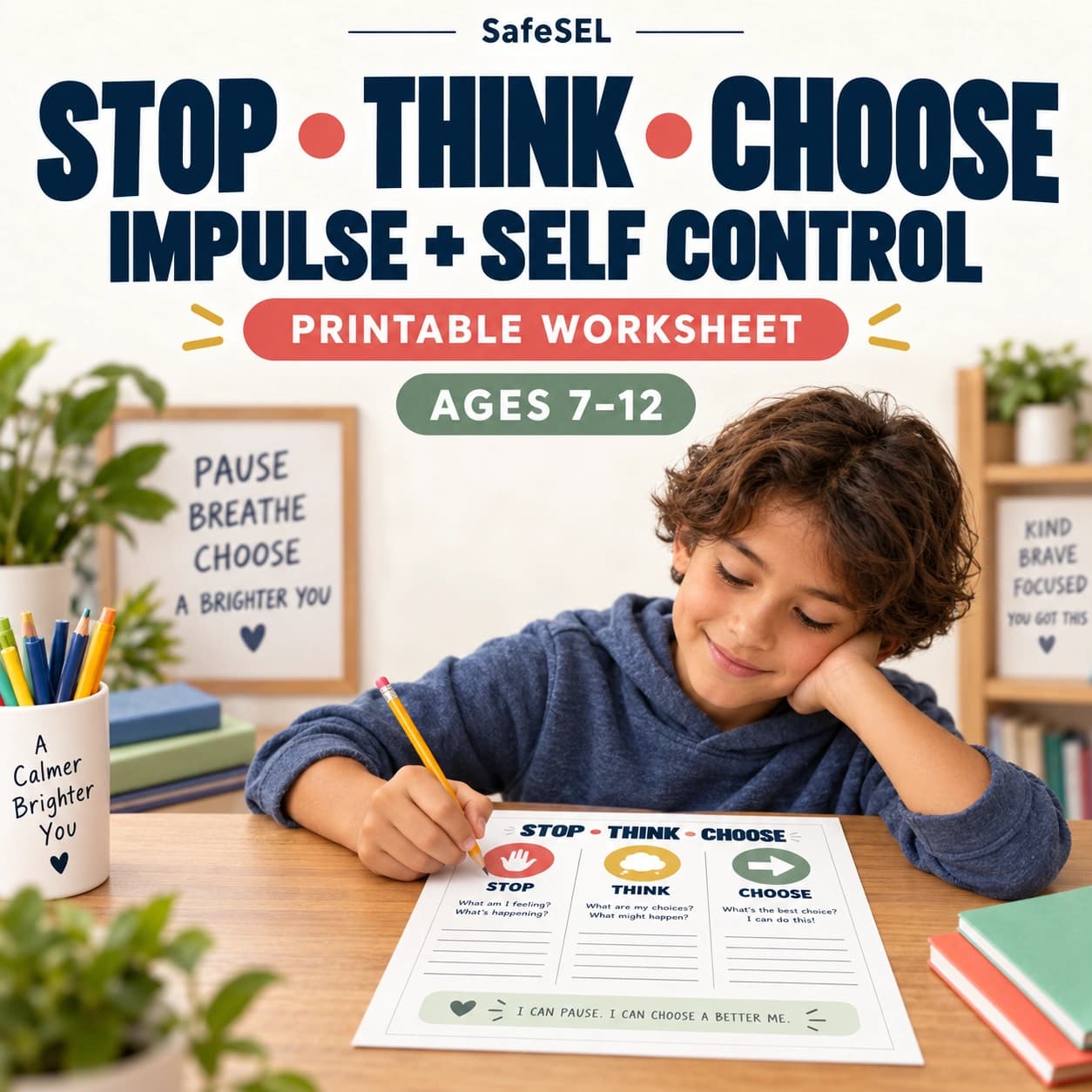
Stop Think Choose Worksheet: a print-ready worksheet for ages 7–12 with clear prompts for guided practice.
Understand what coloring may practise, where evidence is limited and how to choose an accessible activity for the child.
Read the guide →Choose calming tools by how they will be used. Calming cards or another visual reminder can refer back to familiar options, while an activity gives time to explore them. Introduce calming-down strategies before expecting a child to use a reminder independently. Discuss what support is available and leave room to say an option is uncomfortable or unhelpful. A printable is not a universal solution for distress.
Decide how the child can access the space, what an adult will do, and how they can return to the activity. A check-in sheet can support a later conversation; it need not be completed while the child is distressed. A calm corner is not simply a time-out with posters added.
A visual reminder can point back to something the child already knows, while a coping skills activity introduces a task to explore with support. When comparing self-regulation strategies, check the instructions and the intended moment of use. Choose the preview that fits your purpose rather than presenting many unfamiliar options at once. Keep a way for the child to communicate that a suggested activity is not helpful or comfortable.
Use these calming strategies resources to teach one clear skill at a time, practise it with realistic examples and return to it when the child is calm enough to learn.
The collection includes child-friendly resources for elementary ages. Check each product for its exact age range and suggested setting.
Yes. SafeSEL digital resources are designed so you can select the relevant pages for the current skill, child or group.
Filter by resource type and age group to find the most useful printable.